You already know how to shop online. You probably do it every week – comparing prices, hunting for deals, adding things to your cart at midnight. But what if that same habit could point you toward something bigger? What if the apps you use to save money could inspire you to build something that actually makes you money?
This guide covers the best shopping apps available right now – what they offer, what they cost, and who they work best for. We will walk through the top picks, compare them honestly, and help you figure out which one fits your life. And at the end, we will show you something that takes the shopping mindset and flips it into a real income opportunity.
Quick Answer: The best shopping apps in 2026 include Amazon, Walmart, Target, eBay, and AliExpress. Each one offers something different – from same-day delivery to auction-style deals – so the right pick depends on what you need and how fast you need it.
What are the best shopping apps?
Shopping apps are mobile platforms that let you browse, compare, and buy products from your phone. Some are the digital storefronts of major retailers you already know. Others are marketplaces that connect you with millions of sellers from around the world. A few specialize in one category – groceries, fashion, or electronics – while others try to carry everything.
What makes a shopping app worth your time in 2026 is a mix of things: how easy it is to use, how fast it gets things to you, whether the prices are actually competitive, and how secure your payment information is. The best ones combine all four.
The market for mobile shopping keeps growing. Americans now do more than half of all online purchases through a phone or tablet, and that number climbs every year. That means the apps that started as conveniences have become full retail ecosystems – with loyalty programs, exclusive deals, and delivery windows that sometimes measure in hours rather than days.
How much can you realistically save (and earn) with shopping apps?
Savings vary a lot depending on how actively you use each platform. Casual users might save $20 to $50 a month by taking advantage of loyalty rewards, promo codes, and sale events. Power users who stack multiple apps – price comparison tools, cashback extensions, reward programs – can push that number to $100 or more per month.
Here is a quick look at what each major app typically offers in terms of value:
These savings add up over time, but they are still savings – not income. There is a ceiling to how much you can save, and it is always less than what you spend. If you are looking to actually grow your financial situation rather than just trim it, building a store of your own changes that equation entirely.
The best shopping apps in 2026 – reviewed
Here is a close look at each of the top shopping apps. We will cover what makes each one stand out, who it works best for, and what the catch is.
Apps for everyday shopping and essentials
Amazon
Amazon is still the go-to for most American shoppers, and for good reason. The selection is enormous – electronics, clothing, household staples, books, groceries, pet supplies, and just about everything else you can think of. The app is clean and fast, checkout takes about thirty seconds once your information is saved, and if you have Prime, your orders often show up the next day or even the same day.
The personalized recommendations can be genuinely useful when you are looking for something but not sure exactly what you want. The review system, while imperfect, helps you make faster decisions. Deal hunters can check the Gold Box and Lightning Deals sections for time-limited offers that can save 30% to 60% on specific items.
Earning potential: Savings of $10–$40/month for regular Prime members who use deal sections consistently.
Important note: The best perks – free two-day shipping, Prime Video, Prime Music – require a paid membership at $14.99/month or $139/year. Factor that into your real savings math.
Walmart
Walmart is the smart pick if groceries and everyday household items are your main shopping categories. The app gives you everyday low prices on thousands of products, and the combination of online ordering with in-store pickup is hard to beat for convenience. You can order your groceries in five minutes, pull into the parking lot, and have them loaded into your car without ever going inside.
Walmart Plus membership adds free delivery and fuel discounts for around $12.95/month, but even without it the base prices are competitive enough to make a real dent in your monthly grocery bill. The rollback pricing system flags temporary price cuts in a way that makes it easy to stock up on things you use regularly.
Earning potential: Regular grocery shoppers can save $15–$50/month by switching their weekly shop to Walmart’s app and using Walmart Plus.
Target
Target occupies a sweet spot between discount retailer and style destination. The app is well designed and easy to use, and the Target Circle rewards program gives you personalized offers based on what you actually buy – not generic coupons that have nothing to do with your life. You earn 1% back on every purchase automatically, and the app surfaces targeted discounts that can add up to meaningful savings over a month.
The same-day delivery option through Shipt works reliably in most major metro areas, and in-store pickup is often ready within two hours of ordering. For parents, the baby and kids sections are a particular strong point – quality is consistently solid and prices are reasonable.
Earning potential: Circle members save an average of $10–$30/month depending on purchase frequency and whether they take advantage of weekly personalized offers.
Apps for deals, auctions, and unique finds
eBay
eBay is still the best place on the internet for finding things you cannot easily get anywhere else. Vintage clothing, out-of-print books, sports memorabilia, spare parts for appliances, rare electronics – if it exists, someone on eBay is probably selling it. The auction format can work strongly in your favor if you have the patience to wait out a listing and snipe the final minutes.
The buyer protection program has improved significantly over the years. If an item arrives not as described, or does not arrive at all, eBay’s resolution center handles disputes fairly quickly. The “Buy It Now” option on most listings means you do not always have to wait for an auction to end if you just want something gone today.
Important: Shipping times on eBay vary widely because you are buying from individual sellers, not a centralized warehouse. Always check the seller’s estimated delivery window before you commit.
AliExpress
AliExpress is where price-conscious shoppers go when they are not in a hurry. The platform connects buyers directly with manufacturers and wholesalers, mostly based in China, which means prices can be shockingly low on everything from phone cases to kitchen gadgets to clothing. Some items that retail for $40 in the US cost $5 to $8 on AliExpress.
The tradeoff is shipping time. Standard shipping can take two to four weeks, sometimes longer. AliExpress Standard Shipping has gotten faster in recent years, and premium shipping options can cut that to 10–15 days, but this app is not the right tool when you need something by Friday. It is, however, excellent for stocking up on things you use regularly and do not need urgently.
Earning potential: Shoppers who switch regular non-urgent purchases to AliExpress can realistically save 40% to 80% compared to domestic retail prices on those items.
What to look for when choosing a shopping app
With so many options, it helps to narrow down what actually matters to you before downloading five different apps and never using most of them. Here are the factors worth thinking through.
What you buy most often
This is the single most useful filter. If your household spending is dominated by groceries, Walmart should be your first download. If you mostly buy gadgets and household gear and you value speed, Amazon Prime is hard to compete with. If you love fashion and home decor but want to stay on a budget, Target Circle membership pays for itself quickly.
If you are a collector, a reseller, or someone who enjoys the hunt for unique items, eBay is in its own category. And if you can plan ahead for non-urgent purchases and want to stretch every dollar as far as it goes, AliExpress is worth the learning curve.
Delivery speed vs. price
These two usually trade off against each other. Amazon and Target are the champions of fast delivery – you can often get things the same day or the next day. But that speed costs money, either directly through shipping fees or indirectly through the membership required to unlock it. AliExpress and eBay give you potentially much lower prices, but you are waiting longer.
Think about which category of purchase you are making. For paper towels, hand soap, and household staples, waiting two weeks from AliExpress makes total sense. For a gift you need by the weekend or a part for something that is broken right now, Amazon is the right call even at a higher price.
Security and payment protection
All five apps covered in this guide use secure payment processing and have buyer protection policies. That said, eBay and AliExpress carry more risk by their nature because you are buying from third-party sellers rather than directly from a major retailer. Always check seller ratings and read recent reviews before placing an order on either platform.
Major red flags on any marketplace: sellers with fewer than 20 ratings, listings with only one or two reviews that all sound similar, and prices that seem impossibly low even for that platform. Trust your instincts – if something feels off, it usually is.
The real pros and cons of shopping apps
It is easy to get caught up in the convenience and the deals. But shopping apps also come with some genuine downsides that are worth naming honestly.
The genuine benefits
The convenience alone is hard to overstate. You can reorder something you ran out of in about fifteen seconds. You can compare prices across multiple platforms in under a minute. Flash sales and personalized deals mean that if you pay attention, you genuinely can save meaningful money over time. For people on fixed incomes or tight budgets, that is not trivial.
The variety is also remarkable. Platforms like Amazon and AliExpress carry millions of SKUs across every category imaginable. If you live somewhere without easy access to major retail stores – and plenty of Americans do – a shopping app is genuinely life-changing for access to products and pricing that simply were not available locally ten years ago.
The honest drawbacks
Impulse buying is the biggest trap. These apps are engineered to make purchasing as frictionless as possible, and that frictionlessness works against your budget if you are not intentional. The saved card, the one-click checkout, the countdown timer on a lightning deal – all of it is designed to reduce the pause between wanting something and buying it.
Shipping costs also add up. Free shipping is rarely unconditional on any platform. Amazon requires Prime. Walmart has minimum order thresholds. AliExpress free shipping is slow. Budget for it honestly when you are comparing prices across apps.
And there is one larger point worth making: shopping apps, no matter how good they are, have a ceiling. The best-case scenario is that you spend less money. You cannot earn more money from them. For people who are living paycheck to paycheck, in debt, or on a fixed income, spending less helps – but it is not the same thing as building a new income source.
How to choose the right shopping app for your situation
Here is a straightforward breakdown by what matters most to you.
If you are primarily trying to save money on everyday spending
Start with Walmart for groceries and essentials. Add Target Circle for household goods and clothing. Both apps are free to use and will start saving you money the first week. If you do a lot of online shopping generally, look into whether Amazon Prime pays for itself given how often you order.
If you enjoy finding unique or secondhand items
eBay is your best home base. The selection of used, vintage, and rare items is unmatched on any other platform covered here. Learn how the auction system works, check seller ratings carefully, and you can find genuinely remarkable deals on things you would not find in a store.
If price is the only thing that matters
AliExpress wins on price, consistently and significantly. For anything non-urgent – phone accessories, small appliances, clothing basics, home organization – it is hard to argue with prices that are often 50% to 80% below what you would pay domestically. The key is planning ahead and being comfortable with the longer wait.
If you want to go beyond saving and start earning
All of the apps above are tools for spending money smarter. But if you are at the point where you are looking to actually build income – not just trim expenses – the mindset shift is from “where can I find the best deal” to “how do I become the one who offers deals.” That is where Sellvia comes in.
Why Sellvia is a game-changer for your online store 🚀
Sellvia isn’t just another ecommerce tool. We are a trusted name in the industry, recognized by Forbes and even ranked in Inc.’s list of the 5,000 fastest-growing companies in the U.S. So if you’re serious about starting as a solopreneur, this is a smart place to begin.
Starting an online business can feel overwhelming, but that’s exactly where Sellvia steps in. It takes care of the tricky parts, so you can focus on making sales and growing your brand. Let’s break down what makes it such a great choice.
Get a ready-to-go store hassle-free 🎯
Want to start selling but don’t know where to begin? No worries! Just share your ideas, and Sellvia’s team will build a free ecommerce website that’s fully set up and ready to take orders from day one. No coding, no stress – just a store that works right out of the box.
A $100 welcome gift to grow your business faster 🎁
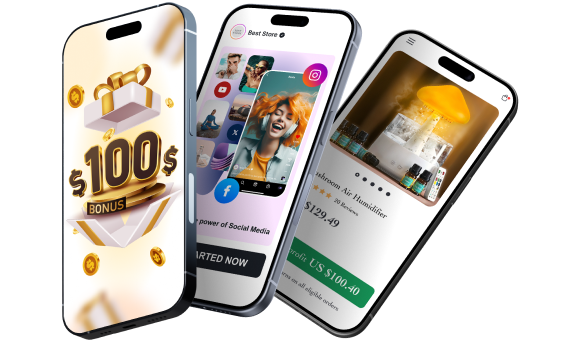
Starting a business takes momentum – and Sellvia gives you a head start. When you claim your free store today, you also get a $100 welcome gift to put toward growing your business. Use it to upgrade your store, boost your marketing, or unlock new tools. It is a real dollar value, handed to you on day one, with no catch and no hoops to jump through.
A massive catalog of digital products to sell 🏆
One of the biggest struggles in starting an online business is figuring out what to sell. Sellvia solves that completely. Your store comes pre-loaded with digital products – guides, courses, checklists, and tools – all created by Sellvia. You keep 50–70% of every sale. No inventory. No shipping. No logistics headaches.
Everything in one easy-to-use platform 🔥
Managing an online store shouldn’t be complicated. With Sellvia, you can handle orders, add new products, and even chat with customers – all from a simple and user-friendly platform. No need to mess with confusing tools or deal with unnecessary tech stuff. It’s all smooth sailing.
No upfront costs, just start selling 💰
A big reason people hesitate to start an online business is the cost. But here’s the good news: With Sellvia, you don’t need to invest in stock, storage, or shipping supplies. You can run your store with no upfront costs, keeping things low-risk while still making money.
Support that’s always got your back 🤝
Running a business comes with questions, but you’re never alone. Sellvia’s dedicated support team is available 24/7 to help with anything you need. Whether it’s a small question or a big challenge, they’ve got you covered.
You already know how to find value online – now build something that creates value for others. Claim your free Sellvia store and start turning your online savvy into real income today.
What are the best shopping apps for deals in 2026?
Which shopping app is best for groceries?
Walmart is the strongest choice for groceries among shopping apps, combining everyday low prices with same-day pickup and delivery options. The Walmart app allows you to build your cart in advance, choose a pickup window, and have your order loaded into your car at the store. Instacart is another strong option if you prefer delivery from multiple local grocery stores in one order. Amazon Fresh and Whole Foods delivery through Amazon Prime also work well in larger metro areas. For most households, Walmart offers the best balance of price and convenience for weekly grocery shopping.
Are shopping apps safe to use for payments?
Yes, all major shopping apps including Amazon, Walmart, Target, eBay, and AliExpress use secure encrypted payment processing and offer buyer protection policies. Amazon and Walmart are as secure as any major retailer since you are purchasing directly from them. eBay and AliExpress carry slightly more risk because you are buying from third-party sellers, but both platforms have dispute resolution systems that protect buyers if an item is not as described or does not arrive. Checking seller ratings and reading recent reviews before purchasing on marketplace platforms is always a good habit.
What is the best shopping app for finding secondhand or rare items?
eBay is the best shopping app for secondhand, vintage, and rare items by a wide margin. The platform connects buyers with millions of individual sellers and supports both auction bidding and instant purchase options. Categories like vintage clothing, sports memorabilia, rare electronics, out-of-print books, and collectibles are where eBay has no real competition. Facebook Marketplace and Poshmark are also worth checking for secondhand fashion and local pickup options. Always review seller ratings and read item descriptions carefully before bidding or buying.
Can you make money with shopping apps or just save money?
Shopping apps are primarily tools for saving money, not earning it. A consistent and intentional shopper might save 20 to 100 dollars per month by using loyalty rewards, cashback programs, and sale events across multiple platforms. However, savings have a natural ceiling since you can only save as much as you spend. If you want to actually grow your income rather than just manage expenses, starting your own online store with a platform like Sellvia allows you to sell digital products and keep 50 to 70 percent of every sale, which is a fundamentally different financial outcome.