Everyone wants to earn more money online – but with so many options, it is easy to get stuck asking the same question: which business is more profitable, and which one is actually worth your time?
The honest answer depends on a few things – your starting budget, how many hours you can put in, and whether you want to trade time for dollars or build something that grows on its own. This article breaks down the most popular online business models, compares their real earning potential, and helps you figure out which one fits where you are right now.
Quick Answer: Online stores selling digital products consistently rank among the most profitable business models in 2026 – especially for beginners – because they offer low startup costs, no inventory, and scalable income. Freelancing and affiliate marketing are solid alternatives, but their earning potential depends heavily on existing skills or an audience you may not have yet.
Before jumping into the comparisons, it helps to understand what “profitable” actually means. A business with high revenue is not automatically the most profitable one. Profit is what is left after your costs – tools, ads, time, and overhead. With that in mind, let us look at what each model really delivers.
What does “most profitable online business” actually mean?
Profitability is a ratio, not just a revenue number. A freelancer billing $5,000 per month but spending 160 hours to get there is earning around $31 per hour before taxes. An online store generating $4,000 per month with 15 hours of weekly management is effectively earning far more per hour invested.
So when people ask which business is more profitable, the real question is: profitable relative to what – your time, your money, or your stress level?
In 2026, the most profitable online businesses share a few traits. They carry no inventory risk. They can run without the owner being present every minute. They serve customers anywhere. And they do not require years of audience-building before the first dollar arrives.
Online stores selling digital products tick all of those boxes, which is why this model keeps appearing at or near the top of every honest profitability comparison.
That said, the best model is the one you will actually stick with long enough to see results. The fastest path to profit for a skilled writer is not the same as the fastest path for someone starting from scratch. Keep that in mind as you read through the comparisons below.
How much can you realistically earn from an online business?
Most online income figures you see in headlines are outliers, not averages. The person earning $50,000 per month from affiliate marketing has typically been building their platform for three to five years. The freelancer charging $200 per hour spent years getting to that rate. That does not mean those numbers are impossible – it just means they take time and consistency to reach.
Here is an honest breakdown of what each major model tends to deliver, especially in the first six to twelve months.
Online stores show the strongest combination of low startup cost, moderate effort, and scalable returns. Freelancing pays well but is capped by available hours. Affiliate marketing and content creation often take 12–18 months before meaningful income arrives.
One note on the ceiling figures: The top-end numbers above reflect consistent, full-time effort with smart setup and product selection. Most part-time operators in months two to four earn in the lower half of each range. A realistic target for a beginner running an online store with 10–15 hours per week is $500–$1,500 per month by month three, growing toward $3,000–$5,000 by month six with reinvestment.
It also helps to remember that these models are not mutually exclusive. Many successful online earners start with one model to build cash flow – often an online store or freelancing – and then layer in other income streams over time. The question of which business is more profitable often becomes: which combination works best for my situation right now?
The most profitable online business models compared
Below is a detailed breakdown of the six most common models people use to earn money online in 2026. Each section covers how it works, its real profitability profile, and who it suits best.
Online store selling digital products
How it works
An online store selling digital products lets you sell things like guides, courses, checklists, and tools – all delivered instantly when a customer buys. There is no inventory to manage, no shipping cost, and no physical logistics. When a sale happens, the product goes straight to the buyer digitally.
In 2026, this model is one of the most accessible entry points into online business because the barrier to starting is genuinely low. You do not need a product idea, a tech background, or a large budget. Platforms like Sellvia provide a fully built store with a catalog of digital products already loaded – created and managed for you.
Earning potential: $500–$5,000+ per month by month two to six, growing significantly as your built-in ad system brings in more customers.
Why digital products are so profitable
Digital products carry no per-unit cost after they are created. That means your profit margin does not shrink with each sale the way it does with physical goods. With Sellvia, store owners keep 50–70% of every sale – without sourcing, packing, or shipping a single thing.
Why this works in 2026: Demand for online learning, self-improvement tools, and digital guides has grown steadily for years. People are comfortable buying digital products – and instant delivery means zero wait time for the customer, which drives higher satisfaction and repeat purchases.
Who it suits
This model is ideal for beginners with limited capital, people who want scalable income without trading hours for dollars, and anyone who wants to build something real without needing a product idea first. It does take some patience in the first 60–90 days as you learn what works – but the learning curve is gentler than most people expect, especially with built-in advertising to get you started.
Freelancing
How freelancing works
Freelancing means selling your skills directly to clients – writing, design, coding, video editing, marketing, consulting, and dozens of other categories. Platforms like Upwork and Fiverr connect freelancers with businesses willing to pay for specific deliverables. The appeal is obvious: if you already have a skill, you can start earning quickly.
Earning potential: $800–$4,000 per month for mid-level skills; $5,000–$15,000+ monthly for specialists with strong client networks.
The limitation is equally clear: freelancing is time-for-money. Every dollar you earn requires you to deliver work. There is no income when you stop working. When comparing which business is more profitable over a five-year horizon, freelancing tends to plateau while an online store can compound – especially one that runs on built-in advertising with minimal daily involvement.
Who it suits
Freelancing suits people who already have a defined skill and want income fast. It is one of the quickest ways to generate cash flow – often within the first two to four weeks. Many successful store owners actually start with freelancing to fund their online store and transition away from client work once the store income grows.
Affiliate marketing
How affiliate marketing works
Affiliate marketing involves promoting other companies’ products and earning a commission on each sale you drive. You build an audience – usually through a blog, YouTube channel, newsletter, or social media – and share tracked links. When someone buys through your link, you earn a percentage, typically between 3% and 50% depending on the program.
Earning potential: $100–$500 per month in the first year for most beginners; $2,000–$10,000+ per month for established content creators with significant organic traffic.
The time problem with affiliate marketing
Affiliate marketing is one of the most common answers to “which business is more profitable” in online discussions – but the timeline is rarely addressed honestly. Building the kind of audience that generates consistent affiliate income usually takes 12–24 months of consistent content creation. You are essentially building a media business first, with monetization as a secondary layer.
Important note: Affiliate income depends entirely on platforms and programs you do not control. Commission rates change, programs close, and algorithm shifts can reduce your traffic overnight.
Who it suits
Affiliate marketing suits people who enjoy creating content or already have an audience. It is not the fastest path to profitability, but once an affiliate site gains organic traction, it can produce consistent income with minimal ongoing effort. It works well as a supplement to an online store – not as a replacement for one if you need income soon.
Content creation and YouTube
How content creation works as a business
Content creators earn through ad revenue, sponsorships, merchandise, memberships, and affiliate deals. The top tier earns millions per year. The median creator earns far less, and many earn nothing in their first 12–24 months.
Earning potential: $0–$500 per month in year one for most channels; $1,000–$10,000+ once a channel has 50,000–100,000 engaged subscribers.
YouTube ad revenue pays roughly $2–$5 per 1,000 views depending on niche and geography. A channel averaging 100,000 monthly views earns about $200–$500 from ads alone. Sponsorships and affiliate deals can multiply that – but only once you have a following worth sponsoring.
Who it suits
Content creation suits people who genuinely enjoy making videos, writing, or podcasting and are prepared to work without income for an extended stretch. It is one of the slowest paths to profitability per hour invested in year one. For comparison, a beginner online store typically reaches its first $1,000 month well before a new YouTube channel reaches 1,000 subscribers.
Print on demand
How print on demand works
Print on demand lets you sell custom-designed products – t-shirts, mugs, phone cases, posters – without holding stock. A third-party service prints and ships each item when an order comes in. Platforms like Printful and Printify integrate with popular store platforms.
Earning potential: $100–$1,500 per month for active sellers; top print on demand stores with strong design portfolios can exceed $5,000 per month.
Profit margins in print on demand are narrower than in digital product stores – typically 15–25% per product – because printing base costs are high. The model works best when combined with a strong niche identity and a loyal audience that connects with your visual style.
Who it suits
Print on demand suits designers and artists who want to monetize visual work without managing a traditional product business. It is a lower-ceiling model compared to a digital product store, but a good fit for someone with a defined aesthetic and a following that already resonates with their creative work.
Service business and coaching
How service businesses work online
Service businesses – consulting, coaching, tutoring, virtual assistance – are built around delivering expertise or support directly to clients. Unlike freelancing, which tends to focus on deliverable tasks, service businesses often involve ongoing relationships and recurring monthly retainers.
Earning potential: $300–$3,000 per month in early stages; $5,000–$20,000+ monthly for established coaches or consultants with a strong personal brand.
The profitability of a service business depends almost entirely on how well you can communicate your value and acquire clients. It scales poorly beyond a certain point – adding more income almost always means adding more hours or hiring help, both of which compress your margin.
Who it suits
Service businesses suit people with specialized knowledge and strong communication skills who are comfortable selling themselves. They can generate income relatively quickly – faster than affiliate marketing or content creation – but they share freelancing’s core limitation: your income is tied to your availability. For most people asking which business is more profitable over the long term, a scalable online store remains the stronger answer.
Which business is more profitable: A side-by-side look at the real numbers
Here is how the main models compare on the metrics that actually determine profitability – not just revenue, but margin, time to your first $1,000, and how well each scales without more of your time.
Online stores selling digital products stand out as the best balance of strong profit per sale, a reasonable time to first income, and genuine scalability. Freelancing gets to cash faster but does not scale. Digital stores are the only model here where you can reasonably expect income to grow without proportional increases in your own time.
Tips to maximize your online business profitability in 2026
Whichever model you choose, a few consistent principles separate people who see strong results from those who give up after two months of slow progress.
Pick a niche before you think about products
The biggest mistake new online entrepreneurs make is going too broad. The most profitable stores in 2026 are built around a specific audience – pet owners, home gym enthusiasts, personal finance beginners – not a general “everything” approach. A niche audience is easier to reach with ads, more likely to buy again, and far more likely to recommend your store to others.
Treat your first 90 days as a testing phase
No business becomes profitable immediately. The first 60–90 days in an online store are largely about learning – which ads get clicks, which products convert, which audiences respond. Beginners who treat this phase as expensive failure often quit just before their data becomes valuable. Think of early ad spend as market research, not wasted money.
Reinvest early profits
The compounding effect of reinvesting your first $500–$1,000 in profit back into ads or expanding your product selection is what separates stores that plateau at $500 per month from those that reach $5,000 per month within a year. Resist the temptation to treat early earnings as salary. Treat them as fuel for the next stage of growth.
Focus on one traffic channel before diversifying
Facebook ads, Google Shopping, TikTok, Pinterest, and organic search are all legitimate ways to drive traffic to an online store. The most common beginner mistake is trying all of them at once and becoming mediocre at each. Master one channel first – the one that fits your budget and product type – and only expand once that channel is consistently profitable.
Know your true costs before scaling
Scaling a business that is not yet truly profitable just creates bigger losses faster. Before increasing your ad budget or expanding your product range, understand your actual cost to get one sale versus what that sale earns you. If your numbers are profitable at small scale, scaling becomes straightforward. If they are not, more budget will not fix the problem.
Legal and ethical considerations for online businesses
Whichever model you choose, staying on the right side of the law is not just good ethics – it is essential for long-term profitability. Accounts that get banned, stores that face chargebacks, and content creators who lose platform access all pay a steep price for short-term shortcuts.
What to avoid
Fake reviews are the most common grey-area practice in online selling, and they carry real risk. Platforms including Google, Trustpilot, and major marketplaces actively remove fake reviews and can delist stores that use them.
Misleading income claims in affiliate content or sponsored posts are another area to approach carefully. The FTC in the US requires disclosure of paid partnerships and prohibits unsubstantiated income claims. Implying guaranteed earnings without proper context is both misleading and potentially illegal.
Important: Always disclose affiliate or paid relationships clearly – a simple statement near the top of your content is sufficient and required in most jurisdictions.
What to do instead
Build your store’s reputation through genuine product value and real customer service. Respond to questions and feedback professionally. Use authentic customer experiences to build trust, and make your refund or returns process clear and fair.
These practices do not just keep you compliant – they build the kind of trust that drives repeat purchases and word-of-mouth referrals, both of which are among the most profitable outcomes any online store can achieve.
Key principle: A business built on transparency and real value is far more durable – and ultimately more profitable – than one built on inflated claims and platform loopholes.
Which business is more profitable for you – choosing by reader profile
There is no single universal answer to which business is more profitable – only the right answer for your specific situation. Here is a breakdown by where you are starting from right now.
Complete beginner with limited budget
If you are starting with under $500, no existing audience, and no skill you can immediately sell, an online store is your clearest path to profitability. A ready-built store with digital products already loaded gives you the fastest route from zero to operational, and no inventory means your downside is capped from the start.
Start with a niche that genuinely interests you, learn one traffic source, and give yourself 60–90 days before drawing conclusions.
Intermediate – part-time income goal
If you already have some online experience and are targeting $1,000–$3,000 per month as a supplement to your current income, an online store with a built-in advertising system is a strong starting point. The ads bring in customers while you manage and grow the store during spare hours. Within 6–12 months, a well-run store can reach part-time replacement income without requiring full-time hours.
Advanced – full-time income goal
If your target is replacing a full-time income – typically $3,000–$8,000+ per month – you need a model that scales without proportional increases in your personal time. An online digital products store, run through a platform with automation and built-in advertising, is one of the most profitable combinations available in 2026. Your store generates consistent revenue; built-in features handle order delivery automatically.
Career switcher or side hustler with an existing skill
If you have a professional skill – copywriting, design, video editing, or coaching – consider freelancing for three to six months to build initial savings, then use that runway to launch and grow an online store. This is one of the fastest paths from zero to a diversified income. You earn while you learn, and your freelance experience often reveals exactly what kind of digital products would sell well to the audience you are already serving.
Final thoughts: Which business model is right for you in 2026?
After comparing all the main models honestly, one thing stands out: most profitable online businesses in 2026 share the same core traits. Low startup cost. No inventory. Instant delivery. Income that does not require you to be present every minute.
Online stores selling digital products hit all of those marks – and they are the only beginner-accessible model where you can get a fully built store, a catalog of products to sell, and a built-in advertising system working from day one.
For complete beginners, for people working two jobs and looking for a way out, and for anyone who has wondered which business is more profitable without a clear answer – this is the model worth starting with. Over 1,500,000 stores have launched through Sellvia, with more than $1.5 billion earned by store owners so far. Those numbers reflect a platform that works for real people starting from scratch.
Why Sellvia is a game-changer for your online store 🚀
Sellvia isn’t just another ecommerce tool. We are a trusted name in the industry, recognized by Forbes and even ranked in Inc.’s list of the 5,000 fastest-growing companies in the U.S. So if you’re serious about starting as a solopreneur, this is a smart place to begin.
Starting an online business can feel overwhelming, but that’s exactly where Sellvia steps in. It takes care of the tricky parts, so you can focus on making sales and growing your brand. Let’s break down what makes it such a great choice.
Get a ready-to-go store hassle-free 🎯
Want to start selling but don’t know where to begin? No worries! Just share your ideas, and Sellvia’s team will build a free ecommerce website that’s fully set up and ready to take orders from day one. No coding, no stress – just a store that works right out of the box.
A $100 welcome gift to grow your business faster 🎁
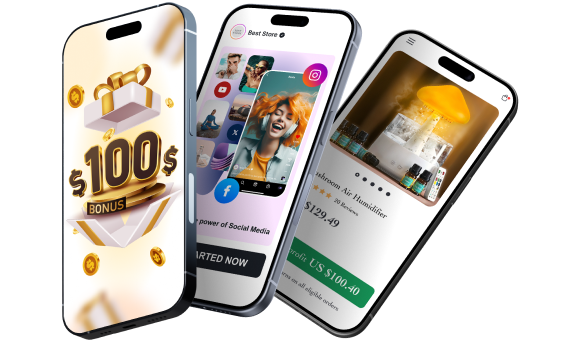
Starting a business takes momentum – and Sellvia gives you a head start. When you claim your free store today, you also get a $100 welcome gift to put toward growing your business. Use it to upgrade your store, boost your marketing, or unlock new tools. It is a real dollar value, handed to you on day one, with no catch and no hoops to jump through.
A massive catalog of digital products to sell 🏆
One of the biggest struggles in starting an online business is figuring out what to sell. Sellvia solves that completely. Your store comes pre-loaded with digital products – guides, courses, checklists, and tools – all created by Sellvia. You keep 50–70% of every sale. No inventory. No shipping. No logistics headaches.
Everything in one easy-to-use platform 🔥
Managing an online store shouldn’t be complicated. With Sellvia, you can handle orders, add new products, and even chat with customers – all from a simple and user-friendly platform. No need to mess with confusing tools or deal with unnecessary tech stuff. It’s all smooth sailing.
No upfront costs, just start selling 💰
A big reason people hesitate to start an online business is the cost. But here’s the good news: With Sellvia, you don’t need to invest in stock, storage, or shipping supplies. You can run your store with no upfront costs, keeping things low-risk while still making money.
Support that’s always got your back 🤝
Running a business comes with questions, but you’re never alone. Sellvia’s dedicated support team is available 24/7 to help with anything you need. Whether it’s a small question or a big challenge, they’ve got you covered.
Of all the business models compared in this article, a Sellvia store selling digital products offers the strongest combination of low startup cost, high profit per sale, and real scalability for beginners. Claim your free store today and start building the income you have been looking for.
Which business is more profitable: online store or freelancing?
What is the most profitable online business for beginners in 2026?
An online store selling digital products is widely regarded as the most accessible and profitable starting point for beginners in 2026. It does not require a pre-existing skill, audience, or large budget. Platforms like Sellvia provide a ready-built store with digital products already loaded, which removes most of the setup barrier. Most beginner stores reach their first 500 to 1,500 dollars per month within two to four months of consistent effort. Affiliate marketing and content creation are also profitable but typically require 12 to 18 months before generating meaningful income.
How long does it take for an online store to become profitable?
Most beginner online stores begin to see consistent sales within the first 30 to 60 days. Profitability – meaning income exceeding all costs including ads – typically arrives between months two and four. Full-time income levels of 3,000 to 5,000 dollars per month are realistic within six to nine months for stores that reinvest early profits into ads and product selection. The timeline varies based on niche, ad budget, and how quickly the store owner learns from early data. Treating the first 90 days as a testing and learning phase leads to far better long-term results than expecting immediate profit.
What is a realistic profit for a beginner selling digital products online?
Beginners selling digital products through a platform like Sellvia typically keep 50 to 70 percent of every sale as their profit. That means a 30-dollar digital product sale puts 15 to 21 dollars directly in your pocket with no additional cost per order. In the first few months, realistic income for a part-time store owner is 500 to 1,500 dollars per month, growing toward 3,000 to 5,000 dollars monthly by month six with consistent effort and ad reinvestment. Results vary based on niche selection, ad budget, and how actively the store is managed.
Can you run a profitable online business with no experience?
Yes, running a profitable online business with no prior experience is genuinely achievable in 2026, particularly with models designed for beginners. Ready-built store solutions remove the technical barrier entirely, and built-in advertising systems handle targeting and promotion without requiring marketing knowledge. Most successful beginner store owners spend their first few weeks learning the basics of their platform before turning on ads. Starting with a defined niche, a modest initial ad budget, and a willingness to test and adjust is a realistic blueprint for a profitable first year.