Millions of people are searching for real small business ideas from home right now – not because it sounds exciting, but because they need things to change. Maybe you are tired of your paycheck disappearing before the next one arrives. Maybe you are working two jobs and still falling behind. Or maybe you just want more time with the people who matter most.
Whatever brought you here, this guide gives you an honest look at the home business options that actually work in 2026 – what each one pays, how long it takes, and what kind of effort is really involved. No hype. No vague promises. Just clear, real information you can act on today.
Quick Answer: The best small business ideas from home in 2026 include selling digital products online, freelancing, virtual assistant work, content creation, and tutoring. Most people see their first consistent income within 60–90 days, with meaningful monthly earnings coming after 3–6 months of steady effort.
What are small business ideas from home?
A home-based small business is any way to earn income from your own space – no commute, no office, no employer controlling your schedule. In 2026, that covers more ground than ever. You can sell digital products, offer services to clients, create content, tutor students, or run an online store – all from your kitchen table or spare bedroom.
What makes this possible today is access. You no longer need a business degree, a pile of startup cash, or a tech background to launch something real. Platforms have removed most of the old barriers. What you do need is a clear direction, consistent effort, and the right model for your situation.
Why this works in 2026: Global online shopping keeps growing, remote work tools are everywhere, and digital products can be delivered instantly to anyone in the world – making home-based income more reachable than at any point in history.
How much can you realistically earn from a home business?
Income from home businesses varies a lot depending on the model, how many hours you put in, and how quickly you learn. Here is an honest comparison of the most popular options:
These ranges reflect what real people earn working part-time to full-time over 60–90 days. The higher figures are achievable but not typical in the first few months. Most people should plan for 3–6 months before seeing consistent income. “Full-time effort” here means 25–40 focused hours per week – not occasional dabbling.
One note on the top figures: Numbers like $5,000+/month for online stores reflect businesses that have been running for 6–12 months with good product selection and consistent promotion. New stores typically earn $30–$80/day in the first 60–90 days when set up properly.
The best small business ideas from home in 2026
Here are the most practical and proven options, broken down by category. Read through each one and notice which feels most like a fit for your time, skills, and situation.
Online product-based businesses
Selling digital products through your own store
This is one of the most powerful small business ideas from home in 2026 – and the one most people overlook. Digital products like guides, courses, checklists, and online tools are created once and sold over and over with no manufacturing cost, no packaging, and no delivery delays. When a customer buys, the product arrives in their inbox instantly.
The challenge most beginners face is figuring out what to sell and how to build the store. Platforms like Sellvia solve both problems by giving you a ready-made store pre-loaded with digital products from their catalog – so you start with something real to sell from day one. Your profit on each sale runs 50–70%.
Earning potential: $30–$80/day within the first 60–90 days for a well-set-up store, growing to $500–$5,000+/month after 6–12 months of consistent effort.
Print-on-demand
Print-on-demand lets you sell custom-designed products – t-shirts, mugs, phone cases, tote bags – without holding any stock. You upload your designs to a platform like Printful or Printify, connect it to your store, and they handle printing and delivery on each order.
The upside is low risk. The downside is thinner margins and heavy competition. If you have a creative eye and a specific niche in mind, it can work well as a side income. But most beginners find that selling digital products with a ready-made catalog is faster and more reliable than building a design library from scratch.
Earning potential: $200–$800/month for a focused niche store after 3–6 months of consistent product and listing work.
Selling handmade goods on Etsy
If you already make things – candles, jewelry, art prints, soaps, home decor – Etsy gives you built-in traffic without needing to build your own audience. You list your products, manage orders, and ship from home.
The trade-off is time. You are trading hours for every item made and shipped. As your order volume grows, so does your workload. It is a genuine business, but it has a ceiling that purely digital businesses do not have.
Earning potential: $300–$1,500/month for a focused product range with strong reviews and consistent new listings.
Service-based home businesses
Freelance writing and copywriting
If you can write clearly, businesses will pay you for it. Blogs, product descriptions, email sequences, social media content, and ad copy are in constant demand. Platforms like Upwork, Fiverr, and ProBlogger Job Board connect writers with paying clients every day.
The income grows with your niche. Generalist writers often start at $15–$30 per article. Specialist copywriters in finance, health, or tech can reach $100–$500 per piece within 12–18 months. The ceiling is high, but the early months require consistent pitching and portfolio building.
Earning potential: $500–$2,500/month part-time within 3–6 months for a writer with a clear niche and steady client outreach.
Virtual assistant services
Virtual assistants handle tasks for businesses remotely – calendar management, email inbox, data entry, customer support, social media scheduling, and more. It is one of the most accessible small business ideas from home because you do not need a specific technical background to get started.
General VA rates start at $15–$25/hour. Specialists in areas like bookkeeping, project management, or platforms like HubSpot or Asana can charge $35–$60/hour. Sites like Belay, Zirtual, and Upwork are good starting points for finding your first few clients.
Earning potential: $800–$2,000/month part-time, growing significantly as you specialize and move to monthly retainer arrangements.
Online tutoring and coaching
If you have knowledge others want – in academics, professional skills, or life experience – you can turn it into income through tutoring or coaching. Academic platforms like Tutor.com, Preply, and Wyzant connect you with students, while personal coaching can be self-run over Zoom with clients found through social media or word of mouth.
Rates depend on your subject and credentials. Maths and science tutors often charge $25–$60/hour. Business and life coaches can charge $100–$300/hour or more once they have testimonials and an audience. The key in the early months is consistency – both with outreach and with delivering results for your first clients.
Earning potential: $600–$2,500/month for a tutor or coach with 5–15 regular weekly clients after 60–90 days of consistent client work.
Social media management
Small businesses know they need social media but most do not have time to manage it well. That gap creates steady demand for home-based social media managers. You handle content creation, scheduling, community engagement, and basic reporting for clients – all from your laptop.
You do not need a marketing degree. You need a solid understanding of 2–3 platforms, experience with tools like Buffer or Later, and the ability to communicate a brand’s voice consistently. Build a small portfolio with 2–3 starter clients, even at a reduced rate, and use those results to pitch higher-paying work.
Earning potential: $500–$2,000/month managing 3–5 client accounts part-time.
Digital and content-based businesses
Creating and selling your own digital products
Templates, ebooks, Notion dashboards, Canva kits, and Lightroom presets are all examples of digital products you create once and sell repeatedly. Platforms like Gumroad and Teachable make it straightforward to list and deliver them.
The challenge is the upfront work. A strong digital product takes research, time, and iteration. But once it is live and you have found your audience, even a $27 template selling ten times a month compounds steadily over time.
Earning potential: $100–$1,500/month within 3–6 months for a creator with a specific niche and at least one high-quality product.
Blogging and affiliate marketing
Blogging with affiliate marketing is one of the most long-term home business models available. You write content that ranks in search engines, recommend products with affiliate links, and earn a commission on sales. The income can become largely hands-off over time.
The honest reality is that a new blog typically takes 9–18 months to generate meaningful traffic. Blogs that succeed stay tightly focused on a specific niche and publish consistently useful content over a sustained period. It is not a quick path to income – but as a long-term project alongside a faster-moving income stream, it builds real value.
Earning potential: $200–$2,000/month after 12–18 months for a focused niche blog with 20,000+ monthly visitors.
YouTube and short-form video
YouTube is a strong long-term platform but requires patience. Ad revenue does not start until you hit 1,000 subscribers and 4,000 watch hours. Most successful channels combine ad income with sponsorships, affiliate links, and their own digital products.
Short-form video on TikTok and Instagram Reels grows faster but is harder to monetize directly. The creators who turn it into a real business use it as a traffic channel leading to something else – a course, a store, or a service. On its own, it rarely pays the bills in the first year.
Earning potential: $50–$500/month from YouTube ads within the first year; significantly more when combined with sponsorships and affiliate income after 18–24 months.
Legal and ethical considerations for home businesses
Starting a home business is exciting, but a few practical basics will protect you from problems down the line – and keep your business credible from the start.
What to register and declare
In most states, you are required to register your business and declare income above a certain threshold, even as a sole trader working from home. In the US, income above $400 from self-employment is generally taxable. Most business registrations are free or low cost and take less than an hour to complete online.
Important: Operating without proper registration does not avoid tax liability – it just creates risk. Register early, keep records, and set aside a percentage of every payment for taxes.
What to avoid
Fake reviews on your own products, misleading income claims, and selling counterfeit or copyright-infringing items are the most common pitfalls for new home business owners. Beyond being wrong, they carry real consequences – account bans, legal action, and reputational damage that is hard to recover from.
Key principle: Build your business on real results and honest marketing. Every shortcut that looks tempting now creates a problem you will have to deal with later.
Zoning and home business rules
Most purely online businesses have no restrictions. If your business involves customers visiting your home, creating noise, or displaying signage, check your local zoning rules first. Anything with a physical element – like a workshop or stored inventory – may require a home occupation permit in some municipalities.
How to choose the right home business for you
With this many options, picking one can feel overwhelming. Here is a simple way to narrow it down based on where you are starting from.
Complete beginner
If you have no existing skills to sell and limited time, the most accessible starting point is an online store with products already loaded and ready to sell. You do not need to create anything – you just need to get your first customers. Sellvia is built for exactly this: a free store, digital products from their catalog, and a built-in advertising system that can get you orders the same day you activate it.
If you prefer service work, general virtual assistant roles require the least technical background and have consistent demand across industries.
Intermediate / part-time
If you have 10–20 hours per week and some transferable skills, freelancing is your fastest path to consistent income. Writing, design, social media management, and bookkeeping all convert well to freelance work. Build your client base over 6–12 months, then reinvest some of that income into a digital product store as a second income stream.
Advanced / full-time goal
If you are aiming for full-time home income within 12 months, the most reliable route is combining two models: an active income stream like freelancing or coaching that pays the bills right away, alongside a scalable store that grows over time. The people who make this work are consistent, strategic, and willing to reinvest early earnings instead of spending them immediately.
The home business landscape in 2026 is genuinely growing – more tools, more platforms, more people buying online than ever before. The window for getting started on a well-chosen model is still wide open. The people building real income today started exactly where you are now.
Why Sellvia is a game-changer for your online store 🚀
Sellvia isn’t just another ecommerce tool. We are a trusted name in the industry, recognized by Forbes and even ranked in Inc.’s list of the 5,000 fastest-growing companies in the U.S. So if you’re serious about starting as a solopreneur, this is a smart place to begin.
Starting an online business can feel overwhelming, but that’s exactly where Sellvia steps in. It takes care of the tricky parts, so you can focus on making sales and growing your brand. Let’s break down what makes it such a great choice.
Get a ready-to-go store hassle-free 🎯
Want to start selling but don’t know where to begin? No worries! Just share your ideas, and Sellvia’s team will build a free ecommerce website that’s fully set up and ready to take orders from day one. No coding, no stress – just a store that works right out of the box.
A $100 welcome gift to grow your business faster 🎁
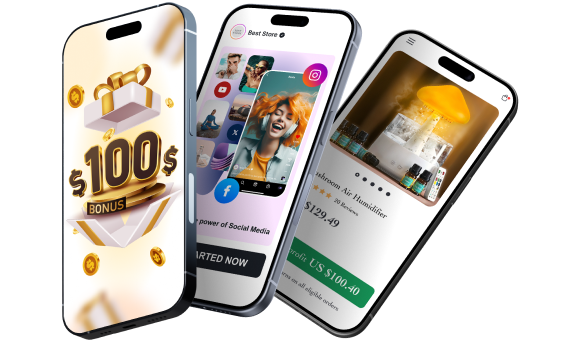
Starting a business takes momentum – and Sellvia gives you a head start. When you claim your free store today, you also get a $100 welcome gift to put toward growing your business. Use it to upgrade your store, boost your marketing, or unlock new tools. It is a real dollar value, handed to you on day one, with no catch and no hoops to jump through.
A massive catalog of digital products to sell 🏆
One of the biggest struggles in starting an online business is figuring out what to sell. Sellvia solves that completely. Your store comes pre-loaded with digital products – guides, courses, checklists, and tools – all created by Sellvia. You keep 50–70% of every sale. No inventory. No shipping. No logistics headaches.
Everything in one easy-to-use platform 🔥
Managing an online store shouldn’t be complicated. With Sellvia, you can handle orders, add new products, and even chat with customers – all from a simple and user-friendly platform. No need to mess with confusing tools or deal with unnecessary tech stuff. It’s all smooth sailing.
No upfront costs, just start selling 💰
A big reason people hesitate to start an online business is the cost. But here’s the good news: With Sellvia, you don’t need to invest in stock, storage, or shipping supplies. You can run your store with no upfront costs, keeping things low-risk while still making money.
Support that’s always got your back 🤝
Running a business comes with questions, but you’re never alone. Sellvia’s dedicated support team is available 24/7 to help with anything you need. Whether it’s a small question or a big challenge, they’ve got you covered.
Of all the small business ideas from home covered in this guide, Sellvia gives you the most complete, beginner-ready package – a free store, digital products loaded, and a built-in advertising system that can get you orders on day one. Claim your free store and start building your home income today.
What are the most profitable small business ideas from home?
How do I start a small business from home with no money?
Starting a home business with no money is possible by focusing on service-based models that only require your existing skills and a free account on platforms like Fiverr, Upwork, or LinkedIn. Selling digital products through a platform like Sellvia is another strong option since you can claim a free store with products already loaded, removing the need for any upfront investment. Free social media content on TikTok, Instagram, or Pinterest can replace a paid advertising budget in the early stages. The key is starting with what you already have and reinvesting your first earnings rather than spending them on things you do not yet need.
How long does it take to make money from a home business?
Most home businesses take 60 to 90 days to generate their first consistent income and 6 to 12 months to reach a meaningful monthly figure. Service-based businesses like freelancing and virtual assistant work tend to produce income fastest because each client pays directly for work delivered. Online stores and digital product businesses typically take 3 to 6 months to find traction, depending on product selection and how consistently you promote your store. Content-based businesses like blogs and YouTube channels have the longest ramp-up, often 12 to 18 months before real revenue arrives.
Is selling digital products a good home business idea in 2026?
Selling digital products is one of the strongest home business ideas in 2026 because the products are delivered instantly with no inventory, no packaging, and no delivery logistics. Platforms like Sellvia solve the hardest part by providing a ready-made store pre-loaded with digital products from their catalog, so you start with something real to sell from day one. Your profit on each sale runs 50 to 70 percent, and the built-in advertising system can bring in your first orders the same day you activate it. New stores that focus on consistent promotion typically see results within 60 to 90 days of launch.
What is the easiest home business to start for beginners?
The easiest home business to start for beginners is an online store built on a platform that handles the setup and product selection for you, like Sellvia. General virtual assistant work is another accessible starting point since it requires no specialized degree and demand is consistent across industries. Both options allow you to start part-time without quitting your current job or making a large upfront financial commitment. Beginners who focus on one model and stay consistent for at least 90 days see the best early results.