More than 26 million online stores are active right now – and a huge share of them were started by everyday people selling products online from home with no experience and no technical background. If you have been wondering whether you can still build real income from your living room in 2026, the answer is yes.
The good news is that the tools available today make it easier than ever to start. You do not need a warehouse. You do not need to create your own products. And you do not need to understand marketing jargon to get your first sale.
Quick Answer: Selling products online from home works best when you have the right store, the right products, and a simple way to get traffic. Most people who start with a ready-built store and a built-in advertising system begin seeing sales within the first few days – not months.
This guide covers every method worth considering in 2026, what each one realistically pays, and which approach fits your time, budget, and goals.
Whether you want a few hundred extra dollars a month or you are trying to replace your full-time income, there is a home-based selling model that fits your situation. Let us walk through all of them.
What is selling products online from home?
Selling products online from home means running an online business entirely from your own space – no commute, no office, no warehouse. You list products through an online store, customers buy them, and the products are delivered without you ever touching anything physically.
In 2026, this is not a niche activity anymore. It is a mainstream way to earn income, backed by a global network of platforms, payment processors, and digital delivery systems built specifically for everyday people running solo businesses from their kitchen table or spare bedroom.
The biggest shift in recent years is the rise of digital products. Instead of shipping physical goods across the country, sellers now offer guides, courses, checklists, and online tools that are delivered instantly the moment someone buys.
There is no inventory, no packing tape, and no logistics headaches. Your profit on each sale runs between 50 and 70 percent – and the product gets to the buyer in seconds.
Why this works in 2026: Buyers increasingly expect instant delivery. Digital products meet that expectation perfectly – and they let home-based sellers operate at scale without adding staff, storage, or shipping costs.
How much can you realistically earn selling products online from home?
Earnings vary depending on the method you choose, how much time you put in, and how quickly you find products that resonate with buyers. Below is an honest overview of what each approach realistically pays.
An online store with ready-made digital products offers the highest ceiling for home-based sellers because it is not limited by production time or physical stock. Once your store is running and your ads are on, the income can grow without you adding hours to your week.
One note on the title figure: The upper ranges above reflect sellers who are 6–12 months in, running consistent ads, and treating their store like a real business. Beginners realistically earn $30–$150 in their first 30–60 days while learning the ropes. Full-time results typically take 3–6 months of focused effort before they become reliable.
That said, the path from zero to $1,000–$2,000 per month is well-documented. Thousands of store owners have done it by following a simple system: get a store, load it with proven products, turn on ads, and learn from the data.
The best methods for selling products online from home in 2026
Each option below has a different starting point, income ceiling, and time requirement. Read through all of them – many home sellers run two complementary methods at once once they have built a foundation.
Online store with digital products: The most scalable model
Running an online store stocked with digital products is the most accessible and scalable way to start selling products online from home in 2026. You skip the hardest parts entirely – no product creation, no shipping, no inventory – and go straight to earning.
Here is how it works: your store comes pre-loaded with ready-made digital products like guides, courses, checklists, and online tools. When a customer buys, the product is delivered to them instantly. You keep 50–70% of every sale. The products were created by the platform, so you never have to write, record, or build anything yourself.
How to get started
The fastest route is a ready-built store with products already loaded and a built-in advertising system already connected. Instead of spending weeks setting up a website, installing apps, and figuring out where to find products, you get a store that is ready to go on day one. You turn on ads, choose your daily budget ($10–$50), and start getting traffic almost immediately.
Most people who activate the built-in ad system start receiving their first orders the same day. That is a very different experience from building everything from scratch.
Earning potential: $500–$5,000+/month within 3–9 months with consistent ad spend and product testing.
Selling on Etsy and eBay: Lower barrier, lower ceiling
Etsy and eBay are popular starting points because they already have millions of buyers. You create a seller account, list your products, and potentially start making sales without building your own website or worrying about traffic.
Etsy works best for handmade goods, vintage items, and digital downloads like printables, templates, and planners. eBay suits reselling, collectibles, and used electronics. Both platforms are accessible to complete beginners with no technical experience.
The honest trade-off
Marketplace platforms charge fees on every sale – typically 6–15% depending on the platform and category. More importantly, every customer you earn on Etsy or eBay belongs to the platform, not you. You cannot email them directly, build loyalty, or retarget them. When the platform changes its algorithm or fee structure, your income changes with it.
Marketplaces are a good place to test product ideas. They are not the best place to build a lasting income, because you are always one policy change away from losing your traffic.
Earning potential: $100–$1,500/month depending on product category, listing volume, and how much time you invest in SEO and photography.
Selling handmade goods: Turning a skill into income
If you already make something – candles, jewelry, ceramics, knitwear, soap, art prints – selling handmade goods online is one of the most direct paths to home income. Etsy remains the dominant marketplace for handmade products, with tens of millions of active buyers searching for items they cannot find in regular stores.
How to find buyers for handmade products
Etsy’s internal search is the main traffic source for most new sellers, so the words you use in your product titles, tags, and descriptions matter enormously. Beyond Etsy, Instagram and Pinterest are both highly effective for visual products – a single well-shot product photo can drive organic discovery without any ad spend.
The main constraint with handmade goods is time. Every item you sell takes time to produce. That ceiling is real, and it limits how far you can scale unless you bring in help or find ways to charge premium prices for your most popular items.
Earning potential: $200–$3,000/month depending on product type, price point, and how much you can produce per week.
Selling digital products: Near-zero cost per sale
Digital products – PDFs, templates, courses, ebooks, printables – have margins close to 100% after platform fees because there is no physical item to produce or ship. You create them once and sell them as many times as you like. The challenge is that creating good digital products takes real effort upfront, and marketing them requires either an existing audience or paid promotion.
What digital products sell well in 2026
Canva templates for social media and small business use are consistently among the highest-selling digital product categories on Etsy. Resume templates, meal planners, budget trackers, and educational printables for parents also convert strongly year-round. Courses and tutorial packages perform well on platforms like Gumroad and Teachable when backed by even a small audience.
The platform-based approach to digital products – where someone else creates the products and you simply sell them through your store – removes the creation barrier entirely. That is exactly what Sellvia does: it provides a full catalog of ready-made digital products that your store is pre-loaded with, so you can start selling without writing a single word of content yourself.
Earning potential: $50–$2,000/month for self-created digital products; significantly higher with a ready-stocked store and built-in advertising.
Reselling and retail arbitrage: Low startup cost, high effort
Reselling means buying products at low prices – from clearance sales, charity shops, liquidation lots, or wholesalers – and listing them at a profit on platforms like eBay, Facebook Marketplace, or Poshmark. It requires more active sourcing than other methods but has a low barrier to entry and almost no startup cost if you already own items worth selling.
How to source products for reselling
The most reliable sources for home resellers are local charity shops and car boot sales for branded clothing and collectibles, online liquidation platforms for bulk lots, and clearance sections at major retailers during seasonal changeovers. Electronics, branded fashion, toys, and sports equipment are consistently strong categories on eBay and Facebook Marketplace.
The ceiling with reselling is determined almost entirely by how much time you spend sourcing and listing. It is an active income model – stop sourcing, and the income stops. That is very different from a store with built-in ads and digital products that can continue generating sales while you are doing something else.
Earning potential: $300–$2,500/month; scales with sourcing time and how quickly you can turn inventory.
How to choose the right platform for selling products online from home
Your platform choice shapes almost every aspect of your business – fees, traffic, branding, and how scalable the whole thing can become. The two main options are marketplaces and independent stores, and they suit very different goals.
Marketplaces provide built-in traffic but charge fees on every sale and own the customer. An independent store costs more effort to drive traffic initially, but every customer you earn is yours – you can email them, retarget them, and build loyalty that no platform can take away from you.
For most people starting out with no experience, an independent store with a built-in advertising system handles the traffic problem for you – so you get the best of both worlds: easy setup and real traffic from day one.
Tips for making more money selling products online from home
Validate before you scale
Do not spend a lot of money on ads until you have evidence that people want what you are selling. Run a small test first – a few dollars a day – and look at the data before committing a bigger budget. If you cannot get a handful of sales at a low spend, throwing more money at the problem will not fix it. Most platforms give you enough data within 3–5 days to know whether a product is worth pushing harder.
Focus on one niche, not everything
The most common beginner mistake is building a store that tries to appeal to everyone. Niche stores convert better because they speak directly to a specific buyer. A store dedicated to personal finance guides for young families will outperform a general digital products store with the same content, because the branding feels personal and relevant. The buyer feels like you built this specifically for them.
Treat your product pages as your sales team
Most new sellers use whatever default description comes with a product. That is a missed opportunity. Write your own copy – even just two short paragraphs – that speaks to what the buyer actually wants from this product. Focus on outcomes, not features.
“Helps you pay off debt in 12 months” is more compelling than “24-page financial planning guide.” Even a small rewrite can meaningfully improve your conversion rate.
Build your email list from the start
Email remains the highest-return marketing channel in ecommerce. A list of 500 people who have already bought from you or opted in is worth far more than thousands of cold social media followers.
Use a simple pop-up offering a discount to collect emails from store visitors, and send a short update every week or two featuring new products or a promotion. It is one of the fastest ways to generate repeat sales without spending more on ads.
Use real reviews to overcome buyer hesitation
For a new store, trust is your biggest conversion barrier. People who have never heard of you need a reason to believe you are legitimate. Collect reviews actively – follow up with buyers after they receive their product and ask them directly. Even 5–10 genuine reviews on a product page can significantly lift your conversion rate. Real photos or screenshots from customers work even better.
Legal and ethical considerations when selling products online from home
Running a legitimate home-based online business is straightforward – but there are a few things worth understanding before you scale, both to protect yourself and your customers.
Business registration and taxes
In the US, income from online selling is generally taxable once you exceed around $600 per year. Most people start as sole traders or set up a simple LLC once their income becomes consistent.
Your platform will usually provide an annual sales summary that makes reporting straightforward. It is worth speaking to an accountant once you pass $1,000 per month – the cost of an hour of professional advice is nothing compared to the headache of getting it wrong.
Important: Platforms like PayPal, Etsy, and eBay are required to report seller earnings to the IRS once you cross certain thresholds – so declaring income is not optional once you are earning consistently.
Product compliance for digital goods
If you are selling digital products created by a third-party platform like Sellvia, the compliance burden is minimal compared to physical goods. There are no safety certifications to chase, no import restrictions to navigate, and no labeling requirements to meet. The products are delivered digitally, which removes the entire physical compliance layer that makes physical goods more complicated.
What to avoid absolutely
Fake reviews are among the fastest ways to get permanently banned from any major platform. Buying reviews, offering incentives for positive-only feedback, or creating fake buyer accounts violates every marketplace’s terms of service and, in some cases, consumer protection law. It also destroys the trust you are trying to build with real buyers.
Never sell products you do not have the rights to. If a product uses a brand name, character, or logo you did not create and were not authorized to use, do not list it. Stick to products you own the rights to or that were provided to you through a platform like Sellvia, where the products are already cleared for sale.
Key principle: Sustainable income from selling products online comes from building genuine trust with buyers – every shortcut you take risks the whole business you are building.
How to choose your method: Recommendations by reader profile
Not every approach suits every person. Here is how to think about your starting point based on where you are right now.
Complete beginner with no technical background
Start with a ready-built store loaded with digital products and a built-in advertising system. You skip store design, product sourcing, and technical setup entirely – and go straight to the part that generates income. A free store with pre-loaded products and a $40 ad coupon removes the steepest part of the learning curve. Expect your first 30 days to be more about learning than earning – that is completely normal.
Intermediate seller with some online experience
If you have already sold on Etsy or eBay and want to grow beyond marketplace limitations, an independent store is your next move. You already understand buyer psychology and what makes a product convert. An independent store gives you the control and margin structure to turn that knowledge into a scalable business that you fully own.
Full-time income goal
For anyone targeting $3,000–$5,000+ per month, the combination of a standalone store, a built-in ad system, and consistent product testing is the proven path. At this level, you treat the business like a job: monitoring ad performance daily, testing new products every few weeks, and building an email list you can market to repeatedly.
The income potential is real, but it requires the commitment to match. Most people who hit full-time income were at it consistently for 6–12 months before it clicked.
Side income alongside a full-time job
If you have 5–10 hours per week, a digital products store running on a built-in ad system is your best fit. The ad system handles promotion for you. The digital delivery handles fulfillment for you. Your job is to check in, monitor what is selling, and let the platform do the heavy lifting. Many part-time store owners earn an extra $300–$800 per month without it interfering with their day job.
Home-based online businesses are continuing to grow in 2026 as more tools lower the barrier to entry. The opportunity is largest for people who start now, choose a simple model, and stay consistent long enough to see results.
Why Sellvia is a game-changer for your online store 🚀
Sellvia isn’t just another ecommerce tool. We are a trusted name in the industry, recognized by Forbes and even ranked in Inc.’s list of the 5,000 fastest-growing companies in the U.S. So if you’re serious about starting as a solopreneur, this is a smart place to begin.
Starting an online business can feel overwhelming, but that’s exactly where Sellvia steps in. It takes care of the tricky parts, so you can focus on making sales and growing your brand. Let’s break down what makes it such a great choice.
Get a ready-to-go store hassle-free 🎯
Want to start selling but don’t know where to begin? No worries! Just share your ideas, and Sellvia’s team will build a free ecommerce website that’s fully set up and ready to take orders from day one. No coding, no stress – just a store that works right out of the box.
A $100 welcome gift to grow your business faster 🎁
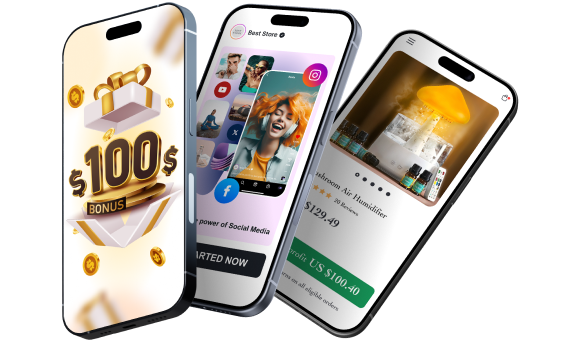
Starting a business takes momentum – and Sellvia gives you a head start. When you claim your free store today, you also get a $100 welcome gift to put toward growing your business. Use it to upgrade your store, boost your marketing, or unlock new tools. It is a real dollar value, handed to you on day one, with no catch and no hoops to jump through.
A massive catalog of digital products to sell 🏆
One of the biggest struggles in starting an online business is figuring out what to sell. Sellvia solves that completely. Your store comes pre-loaded with digital products – guides, courses, checklists, and tools – all created by Sellvia. You keep 50–70% of every sale. No inventory. No shipping. No logistics headaches.
Everything in one easy-to-use platform 🔥
Managing an online store shouldn’t be complicated. With Sellvia, you can handle orders, add new products, and even chat with customers – all from a simple and user-friendly platform. No need to mess with confusing tools or deal with unnecessary tech stuff. It’s all smooth sailing.
No upfront costs, just start selling 💰
A big reason people hesitate to start an online business is the cost. But here’s the good news: With Sellvia, you don’t need to invest in stock, storage, or shipping supplies. You can run your store with no upfront costs, keeping things low-risk while still making money.
Support that’s always got your back 🤝
Running a business comes with questions, but you’re never alone. Sellvia’s dedicated support team is available 24/7 to help with anything you need. Whether it’s a small question or a big challenge, they’ve got you covered.
Selling products online from home has never been more accessible – and Sellvia gives you everything you need to get started in one place. Claim your free store today and start building the income you have been looking for.
What is the easiest way to start selling products online from home?
How much money do you need to start selling products online from home?
Startup costs depend on the model you choose. A ready-built store through Sellvia can be launched during a 14-day free trial with no monthly fee due until after the trial ends. The only charge during the trial is order processing fees if you make sales. Many sellers cover their first month cost from sales they make during the trial period itself. Selling on Etsy or eBay requires little upfront cost beyond a phone and internet access. Reselling requires some sourcing capital, typically 100 to 300 dollars to start.
What products sell best online from home in 2026?
Digital products are among the strongest-performing categories for home-based sellers in 2026 because they deliver instantly and require no physical handling. Guides, courses, checklists, and online tools sell consistently across a wide range of niches including personal finance, health and wellness, parenting, and home organization. For Etsy sellers, Canva templates, meal planners, and budget trackers convert reliably year-round. The key across all categories is finding a product that solves a specific problem for a specific buyer.
Can you really make a full-time income selling products online from home?
Yes, but it takes consistent effort over time rather than quick results. Most sellers who reach 2000 to 5000 dollars per month are 6 to 12 months into their business and treating it seriously. The model that offers the highest ceiling for home-based sellers is an online store with digital products and built-in advertising, because income is not limited by production time or physical stock. Reaching a consistent full-time income typically takes 3 to 9 months of focused work depending on how quickly you learn and how much you invest in marketing.
What is the best platform for selling products online from home?
The best platform depends on your goals. Etsy suits handmade goods and digital downloads for sellers who want built-in traffic without setting up their own site. eBay works well for reselling. For building a real income and owning your customer relationships, an independent store is the strongest long-term choice. Sellvia provides a fully ready independent store with pre-loaded digital products, a built-in advertising system, and 24/7 support – making it the most beginner-friendly option for people starting from zero.