Running an online store sounds exciting until you realize how many moving parts there are. Marketing, customer service, inventory, analytics – it never stops. That is exactly why so many store owners turn to Shopify apps. The right apps can save you hours every week and help you earn more without working harder.
But with thousands of apps in the Shopify App Store, knowing which ones are actually worth your time is not easy. This guide breaks down the best Shopify apps by category – marketing, sales, customer support, and store management – so you can build a smarter, more efficient store in 2026.
Quick Answer: The best Shopify apps depend on your goals, but the top picks for most store owners in 2026 include Klaviyo for email marketing, ReConvert for upsells, Tidio for customer support, and Plug In SEO for search visibility. Each one solves a specific problem that directly impacts your bottom line.
What are Shopify apps and why do they matter in 2026?
Shopify apps are add-on tools that plug directly into your store to handle tasks you would otherwise have to do manually. Think of them like hiring a team of specialists – except each one costs a fraction of what a real employee would. Some are free. Many have a small monthly fee. The best ones pay for themselves many times over.
In 2026, the online business landscape is more competitive than it has ever been. Customers expect fast responses, smooth checkout experiences, and personalized marketing. Without the right tools, it is nearly impossible to keep up – especially if you are running your store solo or with a small team.
Here is what the best Shopify apps can do for you:
- Automate repetitive tasks like order confirmations and email follow-ups
- Recover sales you would otherwise lose from abandoned carts
- Help your store rank higher on Google without needing an SEO expert
- Build customer trust through reviews and loyalty programs
- Give you clear data so you know what is working and what is not
The key is choosing apps that solve real problems in your store – not just installing every popular tool you see. More on that later.
How much can you realistically earn with a well-optimized Shopify store?
Before we get into specific apps, it helps to understand what kind of income a Shopify store can generate – and what it realistically takes to get there. The numbers below reflect store owners using a combination of the right tools, consistent effort, and a solid product selection.
These figures reflect realistic outcomes across a range of store owners, not overnight results. Most stores take 60–90 days of consistent effort before generating reliable income. The right apps can shorten that timeline, but they are not a substitute for showing up every day.
One note on ceiling figures: The higher end of these ranges requires real marketing investment, strong product selection, and consistent effort. Apps are tools – they amplify what you are already doing, not a replacement for strategy.
Best Shopify apps for marketing and SEO
Marketing is where most store owners struggle. These apps make it easier to get found on Google, stay in front of past customers, and run ads that actually convert.
SEO tools
Search engine traffic is free and consistent once you have it. These are two of the best Shopify apps to help you get there.
Plug In SEO
If you are new to SEO, Plug In SEO is one of the most beginner-friendly tools available. It scans your entire store and flags issues that could be hurting your search rankings – broken links, missing meta descriptions, slow page speed, and more. You do not need any technical knowledge to use it. It tells you what is wrong and how to fix it in plain language.
Earning potential: Better rankings mean free organic traffic – which can generate consistent sales without any ongoing ad spend.
SEO Manager
For store owners who want to go deeper, SEO Manager gives you control over structured data, keyword tracking, JSON-LD, and meta tag optimization. It is a step up from Plug In SEO and worth the upgrade once your store starts getting traction. Used together, these two apps cover almost everything you need from an SEO standpoint.
Email and SMS marketing apps
The money is in the list. These apps help you build one and actually profit from it.
Klaviyo
Klaviyo is widely considered the gold standard for email and SMS marketing in ecommerce. It lets you set up automated flows – welcome sequences, abandoned cart emails, post-purchase follow-ups – that run in the background and bring in sales while you focus on other things. The analytics are detailed enough to show you exactly which emails are generating revenue.
Why this works in 2026: Email marketing returns an average of $36 for every $1 spent, making it one of the highest-ROI channels available to any store owner.
Omnisend
Omnisend combines email, SMS, and push notifications in one platform. It is slightly easier to get started with than Klaviyo and offers a generous free plan, making it a great choice for new store owners who want professional-grade marketing without a big upfront cost.
Social media and ad tools
Running ads on social platforms is one of the fastest ways to get traffic – if you do it right. These apps make the technical side much simpler.
Facebook and Instagram shopping
This app syncs your Shopify product catalog directly with your Facebook and Instagram pages, making it easy to tag products in posts and run dynamic ads. For stores targeting a broad U.S. audience, Facebook and Instagram remain two of the most effective paid channels available.
TikTok for business
TikTok’s advertising platform has grown dramatically over the past two years. This app lets you run TikTok ads, tag products in videos, and track conversions – all from inside Shopify. If your target customer is under 40, TikTok is no longer optional.
Best Shopify apps to increase sales
Getting traffic is only half the battle. These apps help you convert more of that traffic into paying customers – and get more out of every sale you make.
Upsell and cross-sell apps
Increasing your average order value is one of the fastest ways to grow revenue without getting more traffic. These apps do exactly that.
ReConvert
ReConvert adds a customizable thank-you page to your store that appears after a customer completes a purchase. Instead of just showing an order confirmation, it presents a targeted upsell offer – a complementary product, a bundle deal, or a discount on a future order.
Because the customer has just bought from you, they are already in buying mode. This is one of the highest-converting moments in the entire customer journey.
Earning potential: Many store owners report a 10–15% increase in overall revenue just from adding a well-designed post-purchase upsell.
Frequently bought together
Modeled after Amazon’s recommendation engine, this app suggests related products to customers while they are shopping. It is simple, effective, and works especially well for stores with a clear product catalog. Set it up once and it runs automatically.
Customer reviews and trust-building apps
Most online shoppers read reviews before they buy. These apps make it easy to collect and display social proof that converts browsers into buyers.
Loox
Loox lets customers leave photo and video reviews, which are far more persuasive than text reviews alone. A real photo of someone using your product does more for conversions than any copywriting trick. It also sends automated review request emails after each purchase, so you collect reviews on autopilot.
Judge.me
Judge.me is one of the most feature-rich review apps available on Shopify, and it has a genuinely useful free plan. It imports reviews, supports multiple languages, and integrates with Google Shopping so your star ratings show up directly in search results. For a brand-new store, this is one of the first apps you should install.
Cart recovery tools
On average, around 70% of online shopping carts are abandoned before checkout. Cart recovery apps exist to win those customers back.
CartHook
CartHook goes beyond standard abandoned cart emails by adding post-purchase offers directly into the checkout flow. It is one of the more sophisticated options available and works best for stores that are already generating consistent traffic.
SMSBump
Text message reminders have significantly higher open rates than email – often 90% or more. SMSBump sends automated SMS messages to customers who left items in their cart, giving you another chance to close the sale. It integrates directly with Klaviyo if you are already using both.
Best apps for store management and automation
The less time you spend on repetitive admin tasks, the more time you have to grow. These apps handle the back-end so you can focus on what matters.
Inventory and order management
Keeping track of stock levels and orders manually is one of the fastest ways to make costly mistakes. These apps keep everything organized automatically.
Stock Sync
Stock Sync connects your store to multiple suppliers and automatically updates your inventory levels whenever stock changes on their end. This prevents overselling – one of the most common problems for new store owners – and keeps your product listings accurate without any manual checking.
ShipStation
ShipStation is one of the most widely used shipping management tools in ecommerce. It consolidates orders from multiple channels, negotiates discounted shipping rates, and supports every major carrier. For stores handling significant order volume, it can save hundreds of dollars per month on shipping costs alone.
Accounting and finance tools
Staying on top of your finances is not optional – and these apps make it far less painful.
QuickBooks connector
This app syncs your Shopify transactions directly with QuickBooks, eliminating the need to manually reconcile your books at the end of every month. It tracks sales, refunds, fees, and taxes automatically – which becomes invaluable as your store grows.
Xero
Xero is a cloud-based bookkeeping platform that handles invoicing, tax reporting, and financial dashboards. Many accountants prefer it over QuickBooks for its cleaner interface and more intuitive tax tools. If you are already working with a bookkeeper or accountant, ask which one they prefer before choosing.
Top customer service apps for better engagement
A customer who gets a fast, helpful response is far more likely to buy again. These apps make it easy to deliver great service without being glued to your inbox.
Live chat and support tools
Tidio
Tidio combines live chat with AI-powered chatbots that can answer common questions automatically – even when you are offline. It is easy to set up, looks professional, and has a free plan that covers everything a new store needs. Customers who can get a quick answer are much less likely to abandon their cart.
Why this works in 2026: Response time is one of the top factors customers cite when deciding whether to trust an online store. A live chat widget signals that a real business is behind the website.
Gorgias
Gorgias centralizes all your customer messages – email, live chat, social media DMs, and SMS – into one shared inbox. It is built specifically for ecommerce and pulls in order data automatically, so your support team can see exactly what a customer ordered before replying. For growing stores handling 50+ messages per day, it is a genuine time-saver.
Loyalty and rewards programs
Keeping an existing customer is far cheaper than finding a new one. Loyalty apps give people a reason to come back.
Smile.io
Smile.io is one of the most popular loyalty and referral platforms on Shopify. It lets you reward customers with points for purchases, referrals, and social shares – then redeem those points for discounts. Setup takes less than an hour, and the free plan covers most of what small stores need.
Yotpo Loyalty
Yotpo Loyalty goes further with VIP tier programs, gamified shopping experiences, and detailed analytics. It is a stronger fit for stores that have already built a customer base and want to formalize their retention strategy. Pair it with Yotpo Reviews for a fully integrated experience.
How to pick the best Shopify apps for your store
The biggest mistake most new store owners make is installing too many apps at once. Every app adds code to your store, which can slow down your site and hurt your conversion rate. Here is a simple framework for choosing apps that actually earn their place.
Start with your biggest problem
Do not add apps randomly. Ask yourself: what is the single thing that is costing me the most sales right now? If it is traffic, start with an SEO app. If it is cart abandonment, start with a recovery tool. Solve one problem at a time and measure the result before adding anything else.
Check the reviews carefully
A high star rating with thousands of reviews is a good sign, but read the one-star and two-star reviews too. Common complaints about billing issues, poor support, or technical bugs are red flags that a shiny rating can hide. Shopify’s App Store lets you filter reviews by rating, so use that.
Always use the free trial first
Almost every paid app on Shopify offers a 7 to 14-day free trial. Use it. Install the app, run it for a week, and check whether it is actually moving a number that matters to you. If it is not, uninstall it before the billing date. This one habit will save you dozens of dollars in unnecessary subscriptions every month.
Watch your store speed
Every app you install adds code that your customer’s browser has to load. Use Google’s PageSpeed Insights to check your store speed before and after adding a new app. If an app slows your site down significantly, the sales it costs you in bounce rate may outweigh whatever benefit it provides.
Think about long-term fit
Some apps are designed for beginners and become limiting as your store grows. Others are powerful but require more technical setup than a brand-new store owner can manage. Be honest about where you are in your journey and choose tools that match your current stage – not the stage you hope to be at in two years.
Final thoughts on choosing the best Shopify apps
The best Shopify apps are not the most popular ones – they are the ones that solve your specific problems without adding unnecessary complexity. For most store owners in 2026, that means a solid SEO tool, an email marketing platform, a review app, and a cart recovery tool. Start there and build from that foundation.
If you are a complete beginner
Start with Plug In SEO, Judge.me, and Tidio. All three have free plans, solve real problems, and are easy enough to set up in a single afternoon. Do not overthink it.
If you are running a part-time store
Add Klaviyo and ReConvert to your stack. Klaviyo will build your email list and automate follow-ups. ReConvert will recover revenue you are leaving on the table every day without any ongoing work from you.
If you are ready to go full-time
Layer in Gorgias for customer support, Yotpo Loyalty for retention, and ShipStation for order management. At this stage you are running a real operation, and these tools will help you scale without burning out. Focus on apps that remove you as a bottleneck, not ones that add more tasks to your plate.
One thing worth noting: building a Shopify store from scratch and finding the right combination of apps takes time. Many store owners spend weeks testing tools before they find a setup that actually works for their business. If you want a faster path to your first sale, there is an option worth knowing about.
Why Sellvia is a game-changer for your online store 🚀
Sellvia isn’t just another ecommerce tool. We are a trusted name in the industry, recognized by Forbes and even ranked in Inc.’s list of the 5,000 fastest-growing companies in the U.S. So if you’re serious about starting as a solopreneur, this is a smart place to begin.
Starting an online business can feel overwhelming, but that’s exactly where Sellvia steps in. It takes care of the tricky parts, so you can focus on making sales and growing your brand. Let’s break down what makes it such a great choice.
Get a ready-to-go store hassle-free 🎯
Want to start selling but don’t know where to begin? No worries! Just share your ideas, and Sellvia’s team will build a free ecommerce website that’s fully set up and ready to take orders from day one. No coding, no stress – just a store that works right out of the box.
A $100 welcome gift to grow your business faster 🎁
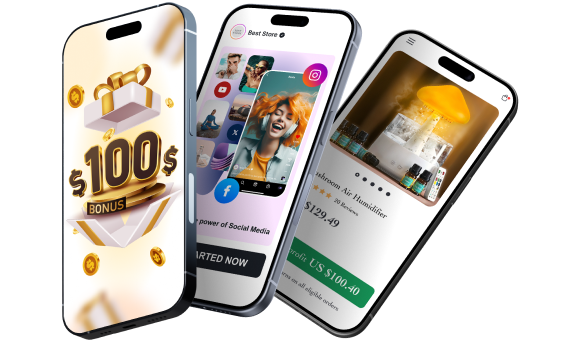
Starting a business takes momentum – and Sellvia gives you a head start. When you claim your free store today, you also get a $100 welcome gift to put toward growing your business. Use it to upgrade your store, boost your marketing, or unlock new tools. It is a real dollar value, handed to you on day one, with no catch and no hoops to jump through.
A massive catalog of digital products to sell 🏆
One of the biggest struggles in starting an online business is figuring out what to sell. Sellvia solves that completely. Your store comes pre-loaded with digital products – guides, courses, checklists, and tools – all created by Sellvia. You keep 50–70% of every sale. No inventory. No shipping. No logistics headaches.
Everything in one easy-to-use platform 🔥
Managing an online store shouldn’t be complicated. With Sellvia, you can handle orders, add new products, and even chat with customers – all from a simple and user-friendly platform. No need to mess with confusing tools or deal with unnecessary tech stuff. It’s all smooth sailing.
No upfront costs, just start selling 💰
A big reason people hesitate to start an online business is the cost. But here’s the good news: With Sellvia, you don’t need to invest in stock, storage, or shipping supplies. You can run your store with no upfront costs, keeping things low-risk while still making money.
Support that’s always got your back 🤝
Running a business comes with questions, but you’re never alone. Sellvia’s dedicated support team is available 24/7 to help with anything you need. Whether it’s a small question or a big challenge, they’ve got you covered.
While the best Shopify apps can improve a store you already have, Sellvia gives you a complete store, a catalog of digital products to sell, and a built-in advertising system – all in one place. Claim your free store today and see what your first sales feel like.
What are the best Shopify apps for beginners?
How many Shopify apps should I install on my store?
Most experienced store owners recommend keeping your total number of installed apps between 5 and 10. Every app adds code to your store that has to load each time a customer visits a page. Too many apps slow down your site, which hurts your search rankings and your conversion rate. Install one app at a time, measure its impact over 7 to 14 days, and remove any tool that is not moving a number that matters to your business.
Do Shopify apps slow down your store?
Yes, some Shopify apps do slow down your store – especially ones that load large scripts or images on every page. A slower store means higher bounce rates and lower sales. Before installing any new app, check your store speed using Google PageSpeed Insights. Run the test again after installing the app to see whether it has made a measurable difference. Well-coded apps from established developers tend to have a much smaller impact on load time than lesser-known alternatives.
Are paid Shopify apps worth it?
Paid Shopify apps are worth it when they solve a problem that is directly costing you sales. Klaviyo, for example, pays for itself many times over once you have an email list of even a few hundred subscribers. ReConvert typically recovers 10 to 15 percent of revenue that would otherwise be lost. Before committing to any paid plan, use the free trial period – usually 7 to 14 days – to confirm the app is delivering measurable results in your specific store.
What are the best Shopify apps for increasing sales?
The best Shopify apps for increasing sales target three specific moments in the customer journey. ReConvert captures revenue after purchase with upsell offers on the thank-you page. CartHook and SMSBump recover abandoned carts through automated emails and text message reminders. Loox and Judge.me build social proof with customer photo reviews, which increases trust and conversion rates for new visitors. Used together, these tools can meaningfully increase revenue without requiring any additional traffic.