Millions of people search for ways to earn money online every month. Most of them hit the same wall: complicated tech, upfront costs, and business models that sound good on paper but fall apart in real life. Digital dropshipping is different – and in 2026, it has become one of the most accessible ways to start a real online business from scratch.
Quick Answer: Digital dropshipping means selling digital products – guides, courses, templates, and tools – through your own online store. When a customer buys, they receive the product instantly. You keep 50–70% of every sale. No warehouse, no shipping, no inventory to manage.
If you have been looking for a business model that does not require a computer science degree, thousands of dollars upfront, or quitting your job to get started, this guide is for you. We will break down exactly what digital dropshipping is, how much you can realistically earn, what kinds of products sell well, and how to get your first store running – even if you have never done anything like this before.
What is digital dropshipping?
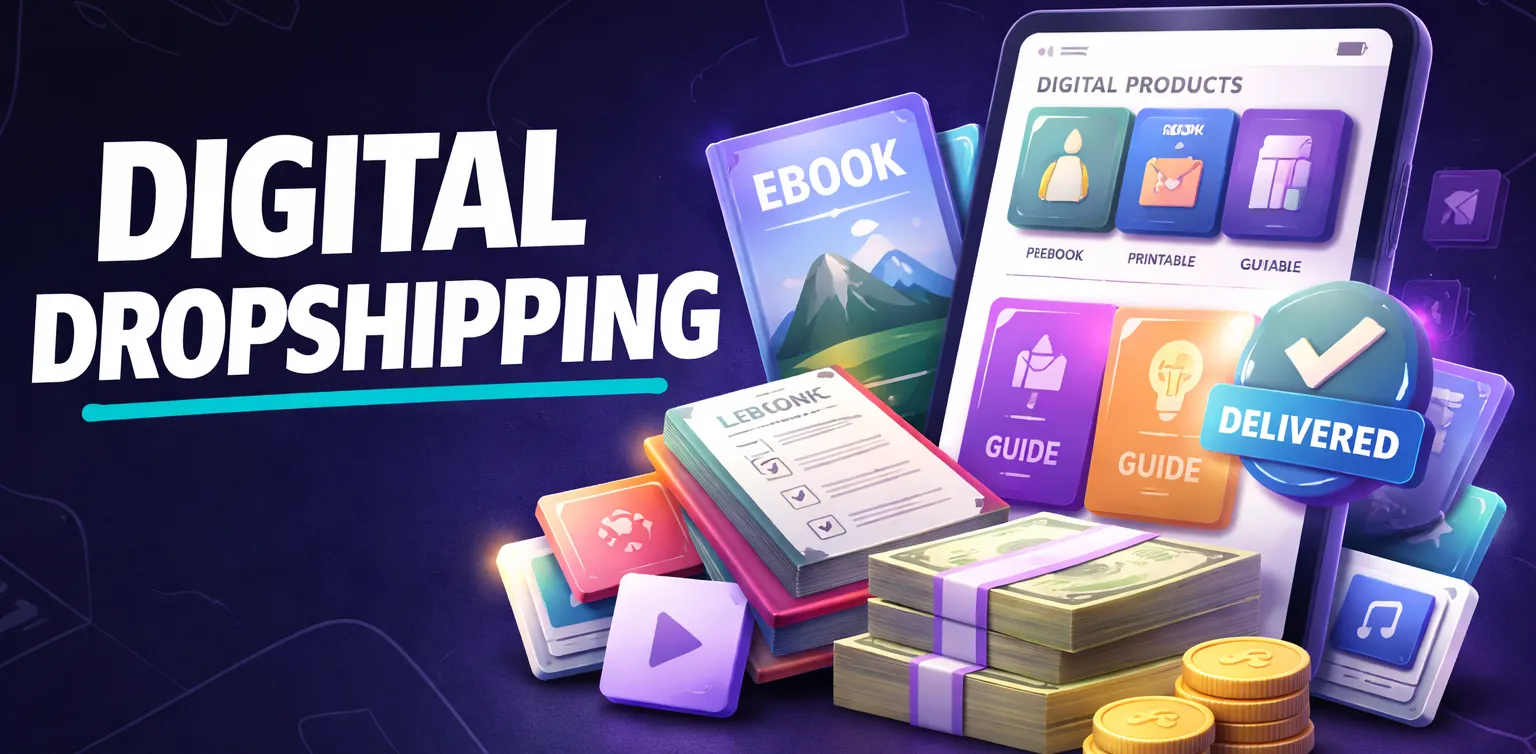
Digital dropshipping is an online business model where you sell digital products through your own store – without creating those products yourself and without dealing with any physical inventory. The products already exist. You get access to them through a platform, list them in your store, and when someone buys, they receive instant digital delivery. You earn your share of the sale automatically.
Think of it this way. In a traditional physical store, you would need to buy stock, find somewhere to store it, pack orders, and arrange shipping. With digital dropshipping, none of that exists. There is no box to pack, no label to print, no supplier in another country to chase. A customer clicks “buy,” the product lands in their inbox, and your earnings update.
expect it. That shift has created a wide-open opportunity for store owners who move now, before this space gets as crowded as physical ecommerce already is.
The products themselves – guides, checklists, mini-courses, online tools, and more – are created by the platform and made available for you to sell. Your job is to run the store and drive traffic. The platform handles everything behind the scenes.
Why this works in 2026: Consumer demand for instantly downloadable content has grown sharply since 2022. People are comfortable buying guides, templates, and courses online – they
How much can you realistically earn with digital dropshipping?
Earnings depend on how much time you put in, which niche you target, and how consistently you promote your store. The table below gives you a realistic breakdown so you can set honest expectations before you start.
These figures reflect what real sellers commonly report in online communities and ecommerce forums. They are income potential ranges – not guarantees. Results will vary based on niche, traffic, and consistency. Most sellers building from zero see meaningful traction after 60–90 days of consistent effort, so treat the first two months as a learning window, not an income window.
One note on the upper figures: The $8,000+/month range is achievable but takes time and real effort to reach. The advantage digital dropshipping has over most side income models is that once your store is set up and your traffic is flowing, every additional sale costs you almost nothing to fulfill.
That is the structural difference that makes this model appealing. A physical store handling 100 orders a day has 100 packing tasks. A digital store handling 100 orders a day has zero. The work you put in up front keeps paying off long after you have stopped actively working that day.
What digital products can you sell?
One of the first questions new store owners ask is: what exactly are digital products, and which ones actually sell? The answer is broader than most people expect. In 2026, demand spans dozens of niches – and the right platform gives you access to a ready-made catalog so you never have to figure out what to create.
Here is a look at the categories that consistently perform well.
Guides and educational content
Self-improvement and productivity guides
Guides covering goal-setting, time management, habit building, and mindset are some of the strongest-selling digital products online. Buyers in this niche are motivated and willing to pay for actionable content they can apply right away. Price points typically range from $7 to $27 per guide, and bundles convert especially well.
Earning potential: $400–$1,200/month for a focused productivity niche store running consistent social traffic.
Business and finance guides
How-to guides on starting a business, managing personal finances, understanding investing basics, and building side income consistently attract buyers with real purchase intent. This niche tends toward slightly higher price points – $15 to $47 – because buyers connect the content directly with financial outcomes they care about.
Earning potential: $600–$2,000/month with a targeted promotion strategy or a growing email list.
Health, fitness, and wellness guides
Meal plans, workout programs, mental wellness workbooks, and nutrition guides are among the highest-converting digital products available. The health niche has massive organic search volume and strong social shareability, making it ideal for content-driven stores.
Earning potential: $500–$1,800/month with consistent content marketing across Pinterest, Instagram, or a blog.
Templates and tools
Productivity and planning templates
Budget trackers, project planners, content calendars, and goal-setting worksheets have exploded in popularity. They are fast to deliver, easy to understand, and priced accessibly at $5 to $19 – which keeps cart abandonment low and order volume high. Pinterest and TikTok drive strong organic traffic to this category.
Earning potential: $300–$900/month at moderate volume, scaling quickly with the right social media strategy.
Social media and marketing packs
Content packs for small business owners – caption templates, branding kits, social media calendars – sell steadily to people who need polished output fast but lack the time or skills to create it themselves. This is a high-repeat-purchase niche. Buyers tend to come back for more once they see results.
Earning potential: $400–$1,400/month with a consistent presence targeting small business owners and creators.
Courses and skill-building packs
Mini-courses on practical skills
Short, focused courses on copywriting, social media growth, freelancing, photography, and similar topics are in high demand. Unlike long university-style courses, mini-courses priced at $27 to $97 convert well without requiring a heavy time commitment from the buyer. They deliver clear, fast value – which is exactly what today’s online shopper wants.
Earning potential: $800–$3,500/month at higher price points, especially when combined with email marketing.
Language learning and skill packs
Language guides, pronunciation workbooks, and skill-building resources attract a broad audience with evergreen demand. Strong organic search traffic and year-round interest make this a reliable long-term niche for stores focused on SEO-driven traffic.
Earning potential: $300–$1,000/month with an SEO-optimized store and consistent content output.
How to start a digital dropshipping business in 2026
Getting started is more straightforward than most people expect – especially when you use a platform that handles the heavy lifting. Here is the core process in clear steps.
Step 1 – Choose your niche
Niche selection is the single biggest decision you will make. A general store trying to sell every type of guide to every type of person converts poorly. A store focused on, say, wellness guides for busy moms, or finance guides for people living paycheck to paycheck, has a clear audience and far stronger conversion rates.
Use Google Trends or browse communities on Reddit and Quora to see what people are actively asking about before you commit to a direction.
Step 2 – Get access to your digital products
You have two options: create products yourself (which takes significant time and expertise) or use a ready-made catalog. For most beginners, a pre-loaded product catalog is the faster, lower-risk path. Platforms like Sellvia provide your store pre-loaded with digital products across dozens of niches – guides, courses, checklists, and tools – so you can skip the creation phase entirely and move straight to selling.
Step 3 – Set up your online store
Your store needs to handle digital delivery automatically. That means when a customer pays, they receive their product without you doing anything manually. Sellvia builds your store for you, so there is no coding, no design work, and no technical setup to figure out. The store comes ready to take orders from day one.
Step 4 – Drive traffic to your store
Traffic is the variable that determines everything else. The most effective channels for digital product stores in 2026 are SEO-optimized blog content, Pinterest (which drives strong organic traffic to downloadable products), and short-form video on TikTok and Instagram Reels.
Sellvia also includes a built-in advertising system that handles targeting, creatives, and optimization for you – with a daily budget between $10 and $50 that you control. Most store owners who activate ads start receiving orders the same day.
Step 5 – Optimize as you grow
Once traffic is flowing, focus on your product pages. Clear descriptions that explain the benefit (not just the contents), simple checkout, and a satisfaction guarantee all reduce hesitation and lift conversion rates. Digital product buyers cannot physically inspect what they are buying before checkout – so building trust on your product page pays off directly in sales.
Digital dropshipping vs selling physical products: Which is better in 2026?
This is one of the most common questions from people who have looked at online business models before. The comparison is not about one being universally better – it is about which fits your situation.
The core difference is operational drag. Selling physical products means managing supplier relationships, tracking delivery windows, and handling customer questions about where their package is. Digital dropshipping, once set up, is largely self-running. A customer buys, they receive their product instantly, and you focus your energy on growing traffic and making more sales.
Legal and ethical considerations
Digital dropshipping is a fully legitimate business model – but there are a few important things to understand before you start, especially around product rights and customer expectations.
Product licensing and resale rights
Before listing any digital product in your store, you need to confirm you have the right to resell it. Legitimate platforms provide products with resale licenses included – this is non-negotiable. Selling a product you do not have resale rights for can expose you to copyright claims. When you use a platform like Sellvia, all digital products in the catalog come with the appropriate rights already in place.
Key principle: If the product license does not explicitly grant resale rights, do not list it.
Accurate product descriptions
Describe your products honestly. Overpromising outcomes – like “this guide will make you $10,000 in 30 days” – is both ethically wrong and legally risky under consumer protection laws in most U.S. states. Describe what the product contains and what value it provides. Clear, honest descriptions also convert better than hype, because they set accurate expectations and reduce refund requests.
Important: Vague or exaggerated income claims can trigger payment processor reviews and damage your store standing.
Refund policies
Because digital products are delivered instantly, your refund policy needs to be clearly stated before purchase. Many sellers offer a 7–14 day satisfaction guarantee. This builds buyer trust and reduces chargebacks – which are far more damaging to your store than a straightforward refund. A clear policy up front makes your store feel safer to buy from.
Taxes and business setup
Digital sales are taxable in most U.S. states and many international markets. If you are selling to customers across state lines – or internationally – check your obligations early. Using a payment processor that handles tax collection automatically (such as Stripe or PayPal) removes most of this burden from your daily operations.
Which approach is right for you?
Not everyone starts digital dropshipping from the same place. Here is a quick breakdown by profile so you can identify where to put your energy first.
Complete beginner
If you are brand new to online business and have never run a store before, your priority should be speed to launch and simplicity. Use a platform that builds your store for you, loads it with products, and gives you a built-in advertising system so you can skip the technical phase and focus on learning how to reach customers.
Expect your first 60 days to be about understanding your niche and testing what works – not chasing revenue targets yet. That comes once the foundation is in place.
Intermediate / part-time seller
If you have some online marketing experience – maybe you have grown a social media account or run a blog – digital dropshipping gives you a high-profit-margin outlet to apply those skills. Focus on a specific niche, build a content strategy around it through Pinterest, short-form video, or a blog, and treat the store as a scalable income stream rather than a one-time project.
Advanced / full-time goal
If you are aiming for $3,000–$8,000/month within 6–12 months, you need a multi-channel approach: SEO content, paid social ads, email marketing, and possibly affiliate partnerships. At this level, digital dropshipping is a real business – and the profit structure rewards scale far more than selling physical products does. The margin you keep on every sale compounds as your traffic grows.
Whichever profile fits you, the underlying advantage stays the same. Low overhead, instant delivery, and a profit structure that physical products simply cannot match. The demand for digital content is growing, buyer behavior supports it, and the tools available to launch a store have never been more accessible.
Why Sellvia is a game-changer for your online store 🚀
Sellvia isn’t just another ecommerce tool. We are a trusted name in the industry, recognized by Forbes and even ranked in Inc.’s list of the 5,000 fastest-growing companies in the U.S. So if you’re serious about starting as a solopreneur, this is a smart place to begin.
Starting an online business can feel overwhelming, but that’s exactly where Sellvia steps in. It takes care of the tricky parts, so you can focus on making sales and growing your brand. Let’s break down what makes it such a great choice.
Get a ready-to-go store hassle-free 🎯
Want to start selling but don’t know where to begin? No worries! Just share your ideas, and Sellvia’s team will build a free ecommerce website that’s fully set up and ready to take orders from day one. No coding, no stress – just a store that works right out of the box.
A $100 welcome gift to grow your business faster 🎁
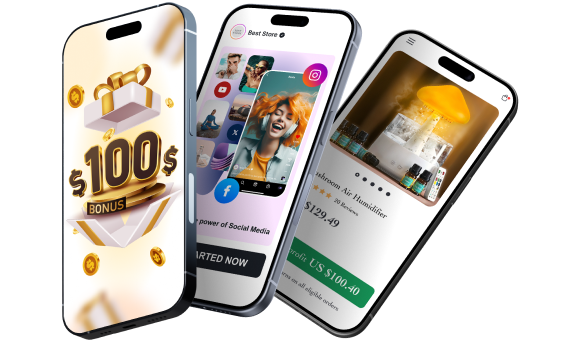
Starting a business takes momentum – and Sellvia gives you a head start. When you claim your free store today, you also get a $100 welcome gift to put toward growing your business. Use it to upgrade your store, boost your marketing, or unlock new tools. It is a real dollar value, handed to you on day one, with no catch and no hoops to jump through.
A massive catalog of digital products to sell 🏆
One of the biggest struggles in starting an online business is figuring out what to sell. Sellvia solves that completely. Your store comes pre-loaded with digital products – guides, courses, checklists, and tools – all created by Sellvia. You keep 50–70% of every sale. No inventory. No shipping. No logistics headaches.
Everything in one easy-to-use platform 🔥
Managing an online store shouldn’t be complicated. With Sellvia, you can handle orders, add new products, and even chat with customers – all from a simple and user-friendly platform. No need to mess with confusing tools or deal with unnecessary tech stuff. It’s all smooth sailing.
No upfront costs, just start selling 💰
A big reason people hesitate to start an online business is the cost. But here’s the good news: With Sellvia, you don’t need to invest in stock, storage, or shipping supplies. You can run your store with no upfront costs, keeping things low-risk while still making money.
Support that’s always got your back 🤝
Running a business comes with questions, but you’re never alone. Sellvia’s dedicated support team is available 24/7 to help with anything you need. Whether it’s a small question or a big challenge, they’ve got you covered.
Digital dropshipping in 2026 offers one of the clearest paths to building a real income online – and Sellvia gives you everything you need to start without the guesswork. Claim your free store today and start making sales with digital products that are already loaded and ready to go.
What is digital dropshipping and how does it work?
How much can you earn with digital dropshipping in 2026?
Earnings depend on the niche you target, how much traffic you drive to your store, and how consistently you promote. Part-time sellers running low-effort strategies typically earn 200 to 600 dollars per month. Sellers who invest in social media content and built-in advertising regularly reach 800 to 2,500 dollars per month. Full-time focused sellers have reported 3,000 to 8,000 dollars or more per month. Most store owners see meaningful traction after 60 to 90 days of consistent effort, so the first two months should be treated as a learning phase rather than an income phase. Results may vary.
What are the best digital products to sell online?
The strongest-performing categories in 2026 include self-improvement and productivity guides, personal finance and business guides, health and wellness programs, planning and productivity templates, social media content packs, and mini-courses on practical skills. These niches benefit from high organic search demand, strong social shareability, and buyers with clear purchase intent. Guides and templates priced between 7 and 27 dollars tend to have the highest conversion rates for new stores.
Is digital dropshipping a legitimate business model?
Digital dropshipping is a fully legal and legitimate business model when products are sourced with the appropriate resale licenses. The key requirement is confirming that any product you list grants you the right to resell it. Legitimate platforms provide pre-licensed products as part of their catalog. Beyond licensing, sellers are expected to describe products accurately, provide a clear refund policy, and comply with applicable sales tax rules in their target markets.
How is digital dropshipping different from creating your own digital products?
The core difference is product origin. When you create your own digital products, you own them outright and typically keep a higher share of every sale, but the upfront time investment is significant. Digital dropshipping means you access products that already exist and are ready to sell, which dramatically lowers the barrier to entry. You do not need to be a writer, designer, or subject matter expert to start. The trade-off is that your profit per sale may be slightly lower than if you owned the products outright, but the speed to launch and reduced effort make digital dropshipping the more practical starting point for most people.