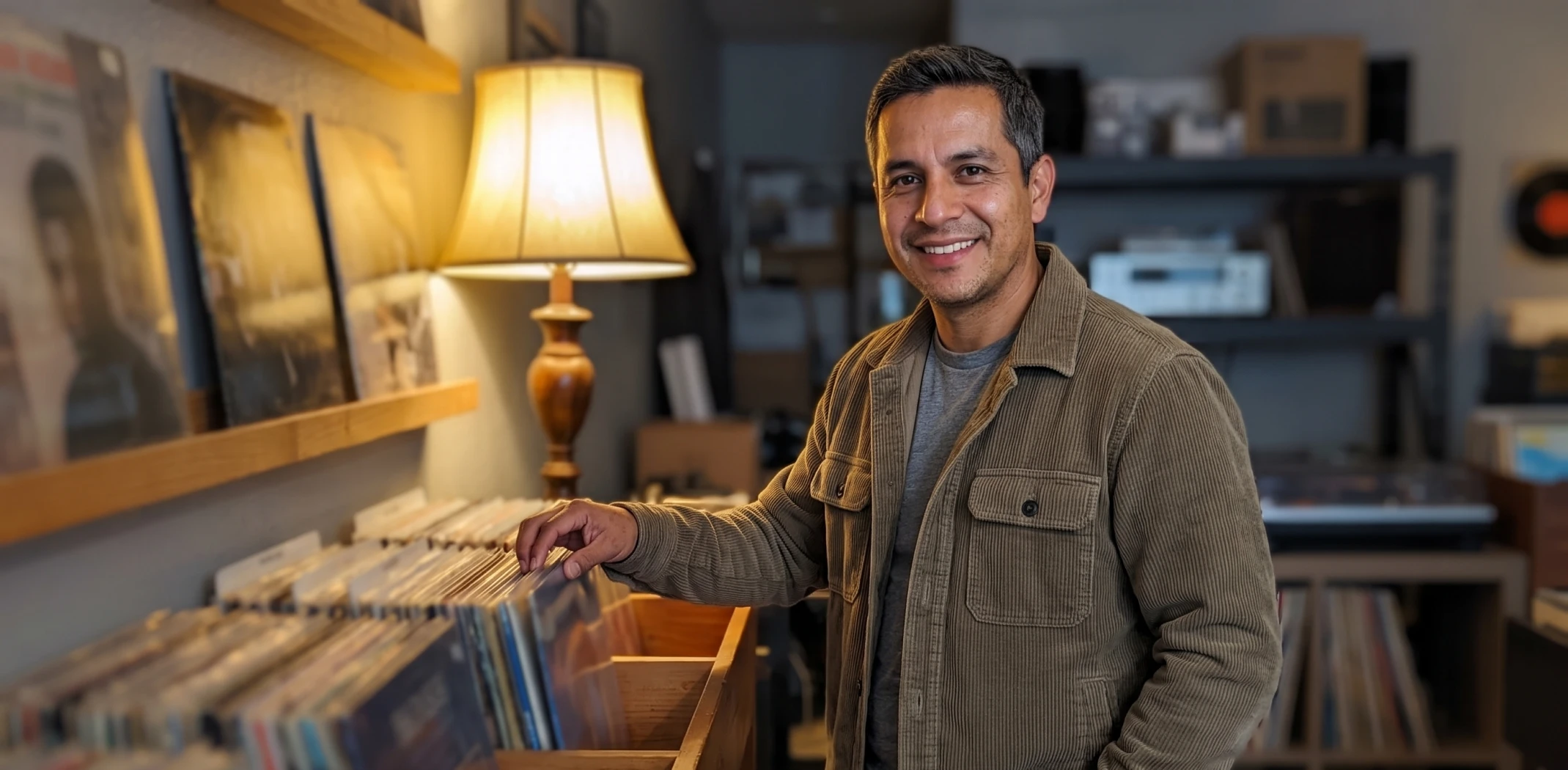
Nothing at all is what Marek Sobczak spent launching his rewriting service, and for eleven weeks that was entirely accurate. A free site builder, a free booking link, a free invoicing tool, a free inbox. He rewrote résumés and profiles for people changing careers, charged eighty dollars a session, and paid out nothing whatsoever.
Then customer number eleven tried to book a second session and could not, because the free scheduler permits a single calendar. That was the week Marek ran into the hidden costs of starting an online business, none of which are hidden exactly. Starting really was free. Working turned out to have a price.
So he stopped asking what beginning costs and started asking what it costs once people actually arrive, which is precisely what a map of your free limits answers.
Free tiers are not a trick. They have a shape.
A free plan is neither charity nor a con. It is a shape with edges, and those edges sit precisely where a hobby turns into a business: one calendar, two hundred contacts, a slice of every payment, a banner across the page you send to clients. None of it matters on day one and all of it matters the week somebody tries to pay you twice. The difficulty is that people discover the edges by walking into them, usually mid-conversation with a customer, and then buy four things in a single panicked evening, when naming the edges in advance would have cost nothing.
Carelessness was not the issue. Marek had followed exactly what every honest guide recommends, which is launch for nothing and pay later. What none of them specified was which later, in what sequence, or how to distinguish a cost that unblocks a customer from one that merely makes you feel like a proper company, which is what a proper spending order settles.
The fifteen minutes that priced the next six months
Rather than buy the bundle sitting in two open tabs, Marek fed his service, his volume and his free stack into the Zero Cost Online Biz Starter. It confirmed that everything he used could legitimately stay free a while longer. Then came the part nobody else had covered: where each free tier ends, and what to do at each edge.

What Marek got back · in about fifteen minutes
one calendar, a contact ceiling, a percentage on every payment, a banner on his booking page. Four edges, every one of them foreseeable.
at his volume the scheduler would give way before anything else, making it the only thing yet worth paying for.
what to buy first, what to buy only once the first has covered itself, and what never to buy at all.
a logo, a custom-built site, project management software for a business containing one person.
He bought one scheduler and a domain. Nineteen dollars monthly, funded by the work, arriving in the order the work required. That bundle he nearly purchased at launch came to roughly ninety-five a month, and would have been paid from savings by a man with four customers.
The spend ladder, step by step
Rung 1 · Launch on free tiers on purpose – not from poverty, but because paying before customers exist buys a guess rather than a solution.
Rung 2 · Pay once a customer is blocked – your first genuine expense should have a name attached, namely the person who could not book. Anything else is anticipation.
Rung 3 · Fund the second purchase from revenue – if the work has not yet covered the first purchase, the second is not a business decision at all.
Rung 4 · Decline anything merely professional-looking – logos, bespoke sites and elaborate systems alter how you feel, never what the customer receives.
Rung two is where the savings sat. Every expense tempting him at launch anticipated a problem he did not have, and by the time those problems genuinely arrived, two of the four had dissolved on their own because he had altered how he worked instead of what he paid for.
Why the panic purchase always lands in month three
The timing is remarkably consistent: the business begins working, something breaks, and the breakage reads as proof that the amateur stage is over. Four subscriptions get bought in one evening, most solving problems that have not occurred, and the monthly outlay quietly overtakes the monthly income. It is not a foolish decision. It is what happens when nobody has ever set out which costs are real and in what order they turn up.
Here is what earned its keep, and what did not.
- Knowing which free limits are coming before you reach them
- Attaching a customer’s name to your first paid expense
- Buying the second thing only once the first is covered
- Altering how you work before buying a tool to avoid it
- Testing every subscription against what a client actually receives
- Purchasing a bundle at launch to feel legitimate
- A logo and a bespoke site before anybody has paid you
- Software designed for teams when the team is you
- Assuming a percentage on payments is negligible at low volume
- Treating one broken free tier as a reason to spend broadly
The discipline is entirely in the order: launch free deliberately with the limits mapped first, pay when somebody is blocked, fund the next from revenue, refuse the decorative.

The cost, next to the usual options
Working this out by walking into every edge in turn was available to Marek, as it is to everyone. Here is how the options compare, and where a mapped set of limits and an order to spend sits among them, when the question is not whether to begin but what follows.
| Approach | Cost | What it does about the money |
|---|---|---|
| Discover the limits by hitting them | Free | Effective, and generally discovered mid-conversation with a client |
| Buy the bundle at launch | ~$95/mo | Solves problems you lack, using savings you have |
| A business course | $50–300 | Usually covers launching, seldom the sequence of costs afterwards |
| Zero Cost Online Biz Starter | $9 | Maps the free limits, when each lands, and the order to spend |
“Nothing is truly free, so what is the point?” The free tiers are real, and Marek genuinely paid nothing for eleven weeks. The point was never that free lasts forever. It is that free lasts long enough to establish whether anyone will pay you, and that the spending which follows has a correct sequence. Free tiers, fees and limits change frequently, so verify any specifics against current terms, and bear in mind that what any of it earns depends wholly on the work.
Two more who priced it before it broke

“Four subscriptions arrived before four clients did, because that is what starting a business looks like in your head. Cancelling three was the first profitable thing I managed. Same income, sixty dollars a month lighter.”
Winnie Achterberg · virtual bookkeeping, Boulder CO

“My free tier collapsed on a Friday with a client waiting. Having known it was coming meant upgrading one thing in ten minutes rather than panic-buying a stack. The list of what not to pay for was worth more than the list of what to pay for.”
Sam Oyelaran · voiceover work, Little Rock AR
Marek sits at nineteen dollars a month and expects it to climb, which is the right direction when the work is growing. The change is that each rise now follows a customer instead of a feeling. Money arriving unevenly creates its own difficulty, namely budgeting against a month you cannot forecast, and the Irregular Income Budget Plan exists for precisely that. Results vary; this is general educational guidance and not a promise of income.
Five short answers, and the map of your own free limits lands the same day.
Find out which edge arrives first before a penny leaves your account.
*Individual results may vary.