Most business owners reach the same point eventually. You have something worth selling, the idea is solid – but getting people to actually notice it feels harder than it should. You post on social media, you tell everyone you know, and the results are still underwhelming. The problem is almost never the product. It is almost always the promotion strategy, or the lack of one.
Quick answer: The most effective ways to promote your business in 2026 combine free organic channels – social media, SEO content, and Google Business Profile – with targeted paid ads once you understand your audience. Most businesses see their first measurable results within 30–90 days of consistent, focused effort across one or two channels.
In 2026, the tools available to small business owners are more powerful and accessible than ever. You do not need a large marketing budget to grow. You need a clear channel strategy, consistent execution, and a realistic understanding of what each platform can deliver. This guide covers both – from zero-cost social media tactics to paid campaigns that scale.
Whether you are promoting a brand-new project or trying to grow an existing business, the strategies below give you a practical, channel-by-channel roadmap. Some are free, some require a modest budget, and a few can completely reshape your monthly income when applied consistently over time.
One of the most common mistakes with business promotion is trying to do everything at once. Spreading yourself across Instagram, TikTok, a blog, email, and paid ads simultaneously with limited resources produces mediocre results everywhere. The most effective approach is almost always the opposite – pick one or two channels, commit for 90 days, and build from there. That single shift has made the difference for thousands of business owners who went from stagnating to growing consistently.
What is business promotion and why does it matter?
Business promotion is the process of communicating your product or service’s value to the people most likely to buy it. In practice, it covers everything from social media posts and blog articles to email newsletters, Google Ads, and word-of-mouth referrals. At its core, promotion answers one question: how do you reach the right person before your competitor does?
In 2026, that question carries more weight than ever. There are over 33 million small businesses in the United States, and global ecommerce is projected to exceed 7.4 trillion dollars this year. The businesses that grow consistently are not the ones with the biggest budgets – they are the ones with the clearest, most repeatable promotion system. A business with a focused strategy and consistent output will outpace a well-funded competitor relying on sporadic campaigns every time.
There is also a compounding effect that makes early promotion especially valuable. A blog article published today can drive search traffic for years. An email list you build this quarter generates income every time you send a campaign. Promotion is not just an expense – it is infrastructure that keeps working even when you step away.
How much can effective business promotion realistically earn you?
Realistic outcomes depend on your industry, your starting audience, and how consistently you execute. That said, there are clear benchmarks across the major promotional channels. The table below shows what small business owners can realistically expect once their chosen channel is established – not on day one, but after 60–90 days of consistent effort.
These figures represent revenue attributed to the channel, not pure profit. A business running Google Ads at $50/day could see $3,000 in monthly sales – but that figure needs to account for ad spend, product costs, and margin before you know what you actually earned.
One note on these figures: The ranges above reflect the difference between a new account posting sporadically and an established channel with 90 days of momentum behind it. Treat the lower end as a realistic 30-day target and the upper end as a 6-month goal with consistent effort.
The most reliable long-term approach is stacking channels. Businesses that combine organic content with a small paid budget consistently see 2–3x the results of those relying on a single channel. Email marketing in particular delivers an average return of around 36 dollars for every 1 dollar spent – making it one of the highest-return channels available at any budget level.
No channel replaces a solid product and a clear value proposition. Promotion amplifies what you already have. The more clearly you define your audience and your offer, the better every strategy below will perform.
The strategies below are split into free organic methods, paid channels, and practical tips for getting results faster. Wherever you are starting from, there is a clear path forward.
Free ways to promote your business online
The best free promotional channels in 2026 are not a secret. Most businesses underuse them because they treat promotion as a one-off effort rather than a system. The methods below cost nothing to start and can generate significant revenue when applied consistently.
Social media marketing for small business
Social media remains one of the most accessible ways to promote your business, particularly at an early stage. The key is picking one or two platforms where your audience actually spends time – and building a content rhythm that keeps you visible without burning you out.
Instagram is one of the most effective platforms for product-based businesses and personal brands. Its visual format rewards quality photography, behind-the-scenes content, and lifestyle imagery. Reels – short vertical videos – currently receive significantly more reach than static posts, making them the highest-value content format on the platform in 2026. Businesses with fewer than 10,000 followers can realistically reach 5,000–20,000 new accounts per week through consistent Reels and strategic hashtag use. Converting that reach into revenue depends on a clear product link in your bio, strong calls to action, and a consistent brand look.
Earning potential: $300–$2,500/month for product-based businesses once a consistent content rhythm is established.
Facebook organic reach has declined over the past decade, but the platform still delivers for businesses that use it correctly. Facebook Groups are particularly powerful – creating or participating in niche groups relevant to your product builds trust and brings qualified traffic without ad spend. Facebook Business Pages also benefit from cross-posting Instagram Reels, which receive decent organic distribution on the platform. Local service businesses continue to see strong results from Facebook, particularly in markets with active community groups and buy-and-sell pages.
Earning potential: $200–$2,000/month from organic Facebook activity for most small businesses.
TikTok
TikTok offers the highest organic reach potential of any major social platform in 2026. A first video from a brand-new account can reach hundreds of thousands of users if the content resonates – something essentially impossible on Instagram or Facebook without a paid budget. The algorithm rewards watch time and completion rate rather than follower count, which levels the playing field for new businesses. TikTok Shop is now integrated directly into the feed, allowing users to buy products without leaving the app – a significant advantage for sellers willing to create regular short-form video content.
Earning potential: $500–$5,000+/month for businesses that post consistently and lean into trending formats.
Content marketing and SEO
Content marketing – primarily blogging and video – is the highest-ceiling organic channel for long-term business promotion. It takes 3–6 months to see meaningful search traffic from a blog, but once that traffic is established it compounds month over month at virtually no additional cost.
Blogging and SEO
A business blog targeting keywords your ideal customers are already searching for can become your single most valuable free traffic source within 12 months. The key is producing content that answers real questions – specific, in-depth guides that search engines reward with page-one rankings rather than generic posts. Use free tools like Google Search Console and Ubersuggest to identify low-competition keywords in your niche. Publishing two focused articles per month from a new site will outperform ten scattered posts with no keyword strategy every time.
Earning potential: $500–$8,000+/month in attributed revenue once 20–30 articles are indexed and ranking.
YouTube
YouTube is the second-largest search engine in the world, and its content has an unusually long shelf life – a tutorial published today can still drive traffic three years from now. For businesses, the most effective content is practical: product walkthroughs, how-to guides, comparisons, and demonstrations. YouTube videos also rank in Google search results, giving you two traffic sources from a single piece of content. A channel does not need millions of subscribers – 1,000 targeted subscribers in a focused niche can drive consistent referral sales each month.
Earning potential: $300–$5,000+/month in referred business revenue for niche channels with 500–5,000 subscribers.
Local and community channels
For businesses with a local or community component, these channels are often the fastest and lowest-cost path to early customers – and they are consistently underused.
Google Business Profile
Google Business Profile is the single most underused free promotion tool available to local businesses. A fully optimized profile – with updated hours, product photos, regular posts, and a strong review count – can place your business in the Local Pack, which appears above organic results for most local searches. Businesses in the Local Pack receive 44% of all clicks for that query, according to recent industry data. Getting there requires consistent effort: requesting reviews from every satisfied customer, posting updates at least once per week, and responding to all reviews publicly. It takes time, but costs nothing.
Earning potential: $1,000–$8,000+/month in locally attributed revenue for service businesses and local retailers.
Online communities and forums
Reddit, Facebook Groups, Quora, and niche forums are full of people actively asking questions that your product or service can answer. The approach that works is not promotional – it is genuinely helpful. Answering questions and establishing yourself as a trusted voice builds organic visibility and warm referral traffic over time. A well-placed answer on a busy Reddit thread can send hundreds of targeted visitors to your site within days. Specialty product sellers and service providers see particularly strong results from community-based promotion.
Earning potential: $200–$2,000/month from community-driven traffic at early stages.
Free channels are powerful on their own, but combining them with even a modest paid budget can significantly accelerate results – particularly in competitive niches where organic visibility takes longer to build.
Paid promotion strategies worth the investment
Paid advertising is not essential for every business at launch, but it is often the fastest way to validate a product, reach a cold audience, or scale what is already working organically. The key is starting with a clear objective and a budget you can sustain for at least 30 days without expecting to break even immediately.
Google Search Ads remain the highest-converting paid channel for businesses selling products or services people are already searching for. Because users are actively looking for a solution, intent is high and conversion rates reflect that. Meta Ads – covering Facebook and Instagram together – are better suited for product discovery: reaching people who do not yet know they need what you sell.
For most small businesses starting paid advertising, Meta Ads is the most forgiving entry point. The minimum daily budget is as low as $5, and the platform algorithm is effective at finding your audience with relatively limited data. Start with retargeting – showing ads to people who have already visited your website – before attempting cold audience campaigns. Retargeting typically delivers 2–5x the conversion rate of cold campaigns at the same budget.
Regardless of which paid channel you choose, track your cost per acquisition from day one. Knowing what it costs to bring in one paying customer tells you whether a channel is profitable and gives you a clear signal for when to scale or pull back spending.
With your channel options mapped out, the next step is understanding how to make each of them work harder – and faster. That is exactly what the tips below are designed to do.
Small business marketing tips to get faster results
The difference between businesses that grow and ones that stagnate is rarely the channel they choose. It is almost always execution quality and consistency. These five tips apply across every method covered above and will materially improve your results on any platform you work with.
Go deep on one channel before expanding
The most common small business marketing mistake is spreading effort across too many channels at once. Businesses that dominate a single channel – mastering one platform before layering in another – consistently outperform those that diversify too early. Pick the channel where your audience is most active and commit to it for 90 days before deciding whether to expand. The focus alone will improve your results significantly.
Build your email list from day one
Email is the only promotional channel you truly own. Social platforms can change their algorithms, reduce organic reach, or suspend accounts without warning. Your email list cannot be taken away. A list of 1,000 engaged subscribers is worth more than 10,000 social media followers who rarely see your content. Offer a clear incentive – a discount, a free resource, or early access – and make the sign-up visible on every page of your website.
Track your metrics every week
You cannot improve what you do not measure. Set up Google Analytics 4 on your website (free), connect it to Google Search Console (also free), and review your traffic, conversion rate, and top-performing content every week. The goal is to identify what is already working and put more effort there. Most businesses struggling with promotion are putting equal effort into channels delivering very different results – and they only find this out months later, after significant wasted time.
Repurpose every piece of content
A single blog post can become a YouTube script, three Instagram captions, an email newsletter, and a Pinterest graphic. A one-hour video can become five short-form clips. Repurposing does not mean copying – it means reformatting your best ideas for each platform’s native style. Businesses that repurpose systematically publish 5–10x more content than those creating from scratch every time, with a fraction of the effort.
Make collecting reviews a process, not an afterthought
Social proof – verified reviews, testimonials, and user-generated content – is one of the highest-leverage promotion tools available, and it costs almost nothing to generate. A business with 50 genuine five-star Google reviews will consistently outperform one with only 5 reviews in local search and on product pages. Ask every satisfied customer for a review immediately after a positive experience. Automate the request with a simple follow-up email and make the review link as easy to click as possible.
How to choose the right promotion strategy for your business
The best promotion strategy depends on where you are starting from – your budget, your time, your product type, and your target audience. Here is a breakdown by reader profile to help you prioritize the right channels at the right stage.
Complete beginner
If you are starting from zero with no existing audience and a tight budget, focus on three things: one social media platform where your audience is most active, a Google Business Profile if you have any local component, and the foundation of an email list. Do not run paid ads until you have validated your offer organically – you will spend money targeting an audience you do not yet understand. Commit to 90 days of consistent organic effort before deciding whether to double down or pivot channels.
Intermediate / part-time marketer
If you already have some social media presence or early organic traffic, the next step is systematizing what is working. Start a blog targeting low-competition keywords in your niche, build out your email automation, and consider retargeting ads to convert the traffic you are already generating. A modest daily budget of $5–$15 at this stage can meaningfully accelerate organic momentum without a major financial commitment.
Advanced / full-time goal
If your goal is a full-time income, you need a multi-channel system that works even when you are not actively managing it. That means SEO content generating traffic in the background, email automation converting subscribers on a schedule, paid ads running on a tested and profitable cost-per-acquisition, and social media content batched in advance. At this stage, delegation becomes as important as strategy – outsourcing content creation or ad management frees your time for higher-leverage decisions.
Across every profile, the most important thing is to start. The businesses that build lasting promotional systems are not the most talented – they are the most consistent. Choose one channel, execute well for 90 days, then review, learn, and expand.
Legal and ethical considerations when promoting your business
Every promotion channel comes with rules – and understanding them protects your business from costly mistakes. The most important legal framework for U.S. business owners is the Federal Trade Commission (FTC) guidelines on advertising and endorsements.
Key principle: All advertising claims must be truthful, substantiated, and not misleading. If you make an income claim in your marketing, it must be based on real, verifiable results – not a best-case scenario presented as typical.
- Sponsored content and influencer partnerships: If you pay someone to review or mention your product – including through influencer agreements – the endorsement must be clearly disclosed. This applies to social media posts, YouTube videos, blog articles, and email newsletters.
- Review practices: Incentivizing reviews by offering discounts, refunds, or gifts in exchange for positive feedback violates both FTC guidelines and the terms of most review platforms including Google and Yelp. Fake reviews can result in platform bans and regulatory fines.
- Email compliance: If you send promotional emails, you must comply with the CAN-SPAM Act. This means including a clear unsubscribe option in every email, identifying the message as an advertisement, and providing a valid physical address.
Important: Grey-area tactics – buying fake followers, posting misleading before-and-after claims, or using bait-and-switch pricing – may generate short-term vanity metrics, but they destroy long-term trust and can result in legal consequences.
The good news is that ethical promotion is also more effective promotion. Genuine reviews, honest content, and real customer success stories consistently outperform manipulative tactics over any meaningful time horizon. Build your promotional strategy on transparency and you build it to last.
The best next step for your business promotion
Every strategy in this guide drives attention and traffic to your business. But to turn that attention into consistent income, you need something worth promoting – a real product your customers want, and a store that is ready to take orders from day one.
Most people who start promoting a business spend months building a website, sourcing products, figuring out payment processing, and setting up ads – all before making their first sale. By the time they are ready to promote, they are already exhausted and behind. Sellvia removes that barrier entirely. You get a fully built store, a ready-made catalog of digital products to sell, and a built-in ad system that can start bringing in orders the same day you launch. Promotion becomes the exciting part – not the bottleneck.
Why Sellvia is a game-changer for your online store 🚀
Sellvia isn’t just another ecommerce tool. We are a trusted name in the industry, recognized by Forbes and even ranked in Inc.’s list of the 5,000 fastest-growing companies in the U.S. So if you’re serious about starting as a solopreneur, this is a smart place to begin.
Starting an online business can feel overwhelming, but that’s exactly where Sellvia steps in. It takes care of the tricky parts, so you can focus on making sales and growing your brand. Let’s break down what makes it such a great choice.
Get a ready-to-go store hassle-free 🎯
Want to start selling but don’t know where to begin? No worries! Just share your ideas, and Sellvia’s team will build a free ecommerce website that’s fully set up and ready to take orders from day one. No coding, no stress – just a store that works right out of the box.
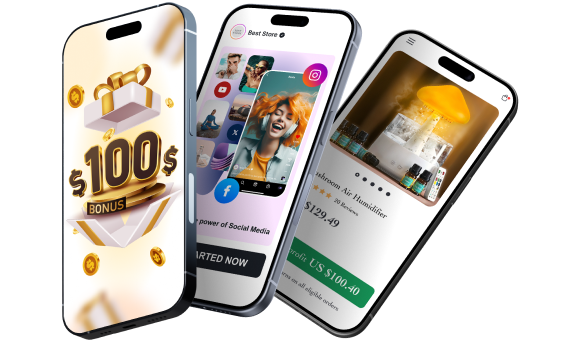
A $100 welcome gift to grow your business faster 🎁
Starting a business takes momentum – and Sellvia gives you a head start. When you claim your free store today, you also get a $100 welcome gift to put toward growing your business. Use it to upgrade your store, boost your marketing, or unlock new tools. It is a real dollar value, handed to you on day one, with no catch and no hoops to jump through.
A massive catalog of digital products to sell 🏆
One of the biggest struggles in starting an online business is figuring out what to sell. Sellvia solves that completely. Your store comes pre-loaded with digital products – guides, courses, checklists, and tools – all created by Sellvia. You keep 50–70% of every sale. No inventory. No shipping. No logistics headaches.
Everything in one easy-to-use platform 🔥
Managing an online store shouldn’t be complicated. With Sellvia, you can handle orders, add new products, and even chat with customers – all from a simple and user-friendly platform. No need to mess with confusing tools or deal with unnecessary tech stuff. It’s all smooth sailing.
No upfront costs, just start selling 💰
A big reason people hesitate to start an online business is the cost. But here’s the good news: With Sellvia, you don’t need to invest in stock, storage, or shipping supplies. You can run your store with no upfront costs, keeping things low-risk while still making money.
Support that’s always got your back 🤝
Running a business comes with questions, but you’re never alone. Sellvia’s dedicated support team is available 24/7 to help with anything you need. Whether it’s a small question or a big challenge, they’ve got you covered.
Every promotion strategy in this guide is more powerful when you have a real business behind it – and Sellvia gives you that business, built and ready, from day one. Claim your free Sellvia store today and start turning your marketing efforts into real income.