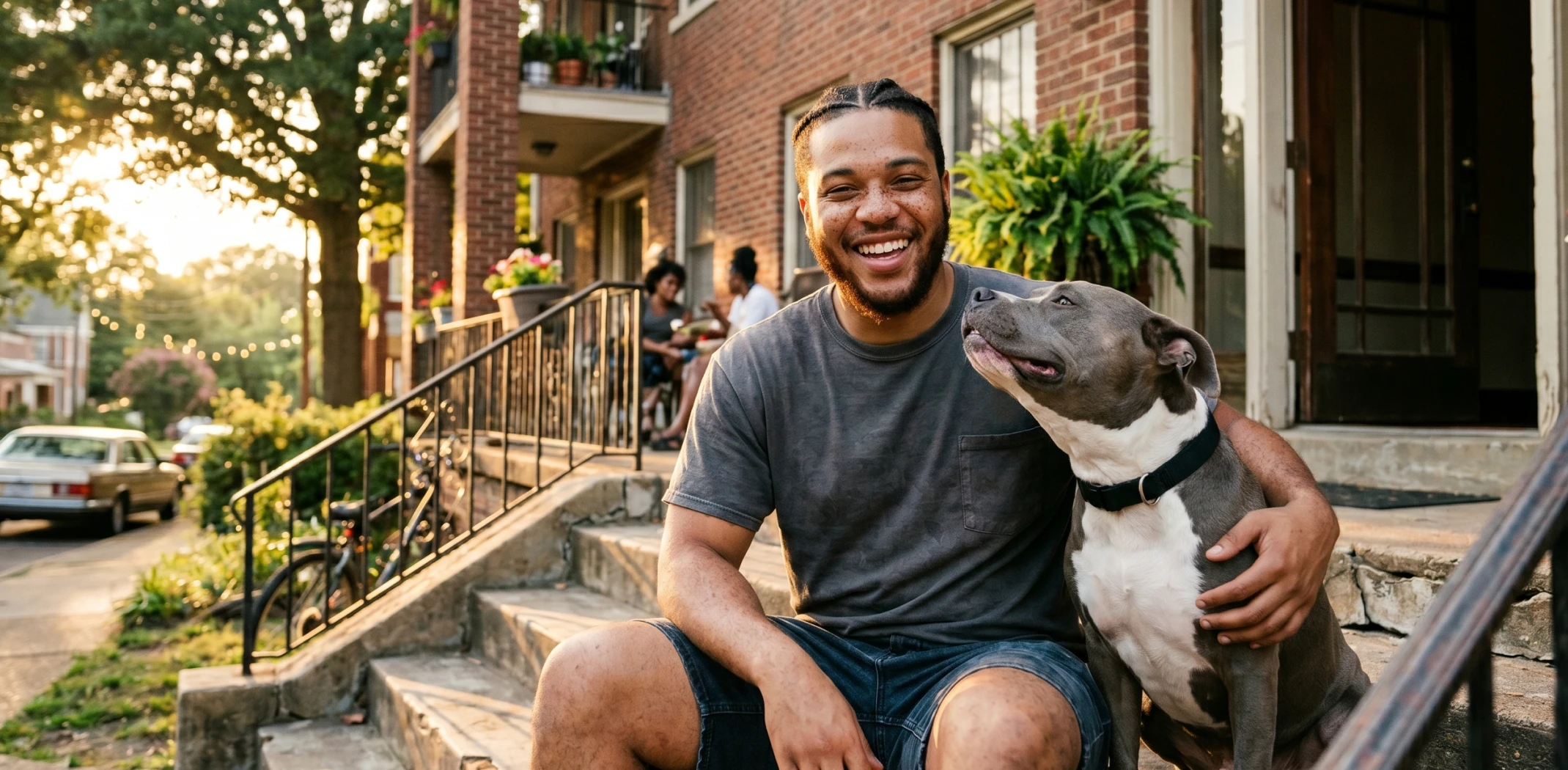
Darius Webb watched his debit card get declined at the Kroger self-checkout, a line building behind him and $43 left to his name. One June week – a $387 brake job, a $164 vet bill, and overtime axed by new managers – had drained everything. That night he searched for how to save money fast on a low income, wanting a real plan, not another lecture about coffee.
Darius is 27, an apartment maintenance tech in Memphis making $19 an hour, sharing the place with his rescue dog Biscuit. Reckless he was not – three bills and a schedule cut simply collided with no buffer to absorb them. Every “set aside 20%” article assumed money he did not have the month that card died.
What worked was neither willpower nor a no-spend month. It was a five-question audit that dug out money he was already bleeding, put a price on things he never used, and drew thirty days to $500. Here is how it went.
Why saving $500 fast has nothing to do with quitting coffee
The advice you always hear – drop the lattes, show more grit – aims at the wrong target. On a stretched income there is no “grit” budget left; the leaks are forgotten subscriptions and idle possessions, not the odd small treat. Darius’s issue was never discipline. It was that nobody had shown him the money slipping out of his account each month.
That gap – $219 really spent on subscriptions versus the $86 people picture – is the whole point: the money is already there, tucked out of sight. Locating it beats slogging through one more doomed budget.
Darius was not careless with money – he was blindsided by three bills and a cut shift with nothing behind him. With no way to spot the leaks or the idle cash, a $500 buffer stayed something other people mysteriously managed to have.
Like plenty of people looking up how to save money fast on a low income, Darius was not after wealth. He wanted a first $500 standing between him and the next declined card – built from money he was already spending or already owned.
What Darius tried first – and why none of it stuck
Before the roadmap, he ran at the usual quick fixes:
A budgeting app
Bright pie charts of being broke. It sorted every dollar once it was already spent and never told him a single thing to cut or sell.
A no-spend month
Dead by day six. White-knuckling deprivation is not a plan – a single bad day ends it, and it never went near the real leaks in the first place.
A cash-advance app
A $9.99-a-month subscription to staying broke. It fronted money he had to pay back with a fee attached – the exact opposite of a cushion.
Each fix recorded the past, punished him, or loaned him his own future paycheck. None touched the question that mattered: where is money leaking right now, and what do I own that could be cash today?
Sitting in the truck, my mom rang about $50 for grandma’s birthday dinner. I said sure, Mom – because admitting ‘I’m at negative twelve dollars’ out loud was worse than the overdraft. That was the night I went hunting for an actual plan.
At 1:14 in the morning he answered five questions about his pay, his bills and his belongings. The audit came straight back.
The 4 things the Roadmap built from Darius’s numbers
A couple of minutes of questions later, four things came back – all pointed at $500 in thirty days, and all built from money he was already spending or already sitting on:
The receipt it spat out is what did it. Gym +$39, meal kit +$70, streamers +$12, DoorDash trimmed to $115, sales $285, one on-call shift $96 – five hundred and seventeen dollars. And not one coffee was harmed.
The first step was free: cancel the ghost subscriptions and open a separate high-yield account so the money could not park itself next to his spending.

From $43 to $517 in 30 days: Darius’s timeline
No month of going without – just reclaimed money and idle belongings moving into a separate account, a bit more each week.
Five hundred dollars is not wealth. But at grandma’s birthday Darius slipped his $50 into the card without secretly doing the math – and the next declined card would be an annoyance, not a crisis.

Why “just spend less” never builds a cushion quickly
There is a reason fast-savings advice collapses on a real budget. It is not weakness – it is that “spend less” goes after treats, not the actual leaks, and overlooks the cash already sitting in your closet. Speed comes from unearthing forgotten money and pricing idle stuff, not from a heroic month of self-denial.
The other options are not useless – a coach helps with bigger goals, apps track. But a first $500 does not call for a strategist or a monthly fee. It calls for the leaks found and the idle stuff priced – the part nobody does for you.
What if $500 in 30 days just is not doable on my income?
Then it gives you an honest 60-day pace instead. The plan flexes to whatever the audit turns up – if your leaks and idle stuff total less, it lengthens the timeline rather than faking it. One reader on a fixed income reached $500 in week six on the 60-day mode. Slower still gets you there.
What other people did with the same $500 Roadmap

“It surfaced $94 a month I was throwing away and put a price on a closet full of things I never touched. I had $500 in the bank by day 26 – without dropping one thing I genuinely enjoy.”
Alyssa K. · daycare teacher, Boise ID

“At 61 on a custodian’s wage, $500 in a month sounded like a fantasy. It handed me the honest 60-day pace instead. I got to $500 by week six, and it never made me feel like I’d failed.”
Pete D. · school custodian, Scranton PA
Alongside the audit and 30-day plan, $500 Emergency Fund Roadmap comes with the found-money receipt, a quick-sell pricing guide for everyday items, a high-yield account shortlist, the auto-transfer setup, and an honest 60-day mode for tighter incomes. One purchase, re-runnable any time.
How to save money fast on a low income: the 5-step playbook
Hunt the leaks before you touch treats
Open your statements and track down the ghost subscriptions. The real total is usually roughly twice what you would have guessed.
Cash in the things gathering dust
That drawer of forgotten gear is a war chest. One weekend of listings – a gaming console, an unused phone, a gift that stayed boxed – can clear a few hundred dollars.
Cut a habit in half, do not outlaw it
Taking DoorDash from nine orders down to four freed genuine money and skipped the deprivation that sinks every no-spend attempt. The right tool picks out the habit worth halving.
Park it where you cannot casually reach it
Send it to a high-yield account nowhere near your everyday spending, so the money you found does not quietly drain away again.
Automate a little so it never stalls
A standing $15 a week is enough to keep the buffer rising once the first $500 lands – and it asks nothing further of you.
Darius went without nothing. He audited the leaks, priced his stuff, halved a single habit, shifted it to a separate account and automated the rest – in that order. Anyone one declined card away from a crisis can do the same.
That is what a $500 roadmap is really about: stop white-knuckling your way to savings, surface the money already slipping away, and move it somewhere it can grow.
Build your own first $500 fast – the same roadmap Darius used to go from a declined card to $517 in 30 days.
*Individual results may vary. Educational budgeting guidance, not personalized financial advice.