Most people who search “how to start affiliate marketing with no money step-by-step” are not marketing students. They are regular people who need more income, have very little to invest, and are trying to figure out if this is actually real.
The short answer: yes, you can start affiliate marketing for free. But the longer answer matters just as much – because most beginners quit before they ever see a dollar, and it is usually because no one told them the truth upfront.
This guide will walk you through every step, from picking a niche to making your first sale, with zero budget required. You will also find out which methods work fastest, which take the longest, and what a realistic income looks like in your first 30, 60, and 90 days.
Before we get into the steps, it helps to understand what you are actually signing up for. Affiliate marketing is not a job. It is not a gig. It is a business – and like any business, it rewards people who show up consistently and think long-term.
What is affiliate marketing?
Affiliate marketing is when you promote someone else’s product and earn a commission every time someone buys through your unique link. You do not create the product. You do not handle payments or customer service. You just share the link – on a blog, a video, a social post – and get paid when someone clicks and buys.
It sounds simple, and the basic idea really is. But the part people underestimate is the “getting people to click” part. That is where the real work lives. In 2026, affiliate marketing is a $17 billion industry, and it is growing. More companies than ever are willing to pay regular people to send them customers.
The opportunity is real. The question is whether you are willing to put in the consistent effort it takes to earn from it.
Why this works in 2026: Companies are pulling back on paid ads and leaning harder on affiliate partnerships because they only pay when results happen. That means more programs, better commissions, and more room for beginners to get started.
Affiliate marketing works across dozens of niches – personal finance, health and wellness, software tools, home improvement, parenting, and more. You do not need to be an expert. You need to be helpful, consistent, and honest with the people reading or watching your content.
How much can you realistically earn from affiliate marketing with no money?
Here is the honest breakdown. Affiliate marketing income varies wildly depending on the niche, the platform, and how much time you put in. The table below gives you a realistic picture based on common paths beginners take.
These numbers are realistic for people putting in 1 to 2 hours per day with consistent effort over 60 to 90 days. The ceiling figures represent experienced affiliates with established audiences – not what most beginners earn in month one.
One note on these figures: Affiliate marketing income is not linear. Many beginners earn nothing for 60 days and then see a spike once content starts ranking or a video goes semi-viral. Patience is not optional here.
The most important thing to understand is that affiliate marketing with no money means you are trading time instead of cash. That trade is completely fair – but it is still a trade. If you go in expecting fast results with minimal effort, this path will disappoint you. If you go in ready to work consistently for 90 days before expecting significant income, the math starts to work in your favor.
How to start affiliate marketing with no money step-by-step
Here is the full step-by-step process. Follow these in order. Skipping steps – especially the early ones – is the number one reason beginners stall out.
Step 1: Pick a niche you can actually talk about
A niche is just a topic. Personal finance. Weight loss for busy moms. Budget travel. Home organization. Dog training. You do not need to be a certified expert – you need to care enough about the topic to create content about it consistently for months.
How to choose your niche
Write down three things you know more about than the average person – or three problems you have personally solved. Then check whether there are affiliate programs in those areas. If companies are selling products related to your topic and offering commissions, you have a workable niche.
Avoid picking a niche purely because it pays well. Finance and software niches pay high commissions, but they are also extremely competitive. If you have no connection to the topic, your content will feel hollow and readers will sense it.
Best niches for affiliate beginners with no budget
Some niches are more beginner-friendly than others because they have large free audiences, easy-to-create content, and multiple affiliate programs at different commission levels. Health and wellness, personal finance basics, parenting, home improvement, and self-improvement all fit this profile well in 2026.
Step 2: Sign up for free affiliate programs
You do not need your own website to join most affiliate programs. Many programs accept content creators with social media profiles or free blogs. Here are the best free options for beginners.
Amazon Associates
Amazon’s affiliate program is the most beginner-friendly entry point. Commission rates are low – typically 1% to 4% – but the product range is enormous, and almost anything you recommend can be found on Amazon. The low commission means you need volume to earn meaningfully, but it is a solid starting point while you build your audience.
Earning potential: $20 – $200/month for a beginner with consistent content output.
ShareASale and Impact
These are affiliate networks – one account gives you access to hundreds of programs across many niches. Commission rates vary widely, from 5% to 50% depending on the brand. Both are free to join and beginner-friendly. Look for programs in your niche that offer recurring commissions – those pay every month a customer stays subscribed, which adds up fast.
ClickBank
ClickBank specializes in digital products – online courses, guides, software – and commissions can run as high as 75%. The flip side is that product quality varies, so you need to vet what you promote carefully. Stick to products with strong reviews and a refund rate below 10%. ClickBank is one of the fastest programs to get approved for as a beginner.
Earning potential: $50 – $500/month for beginners promoting mid-ticket ClickBank products with consistent traffic.
Digistore24
Similar to ClickBank, Digistore24 focuses on digital products and info-based offers. It is slightly less saturated than ClickBank in some niches, which can mean less competition for new affiliates. Approval is fast and the dashboard is easy to navigate on a phone.
Step 3: Choose your free platform
This is where most beginners freeze. They think they need a website to do affiliate marketing. You do not – at least not to start. Here are your best free options and what each one is best suited for.
TikTok
TikTok gives new accounts a chance to go viral with zero followers. Short videos – 30 to 60 seconds – work best for product recommendations, tutorials, and “things I found online” style content. You can include your affiliate link in your bio and direct viewers there. TikTok’s algorithm rewards consistency, so posting 1 to 2 videos per day for 30 days straight is the fastest path to early traction.
YouTube
YouTube has a longer ramp-up but higher long-term income potential. Videos rank in Google search results, which means a single good video can send traffic for years. Put your affiliate links in the video description and mention them naturally in the video. Your first 10 videos will likely get almost no views – that is normal. The growth comes from the compound effect of many videos over time.
Pinterest is an underrated free platform for affiliate marketers. Pins last far longer than social posts – a single pin can drive traffic for 12 to 24 months. Create simple, vertical graphics using free tools like Canva, write a helpful description with your target keyword, and link to your affiliate offer or a free blog post that contains your links. Pinterest works especially well in home decor, food, parenting, and wellness niches.
Free blog on Blogger or WordPress.com
A free blog takes longer to gain traction than social platforms, but it builds something more permanent. Search engine traffic compounds over time.
Write articles that answer specific questions your niche audience is already searching – “best [product type] for [specific problem],” “how to [do something] step by step,” and “is [product] worth it” are all strong formats for affiliate content. Blogger (by Google) and the free tier of WordPress.com both let you publish for zero cost.
Step 4: Create content that converts
Content is the engine of affiliate marketing. Without it, you have no traffic. Without traffic, you have no clicks. Without clicks, you have no commissions. Here is what content actually converts in 2026.
Product reviews and comparisons
These are the highest-converting content formats in affiliate marketing. People searching “product A vs product B” or “is [product] worth it” are already close to buying – they just need a nudge. Be honest. If a product has a real downside, say so. Readers trust honest reviews far more than glowing ones, and that trust is what drives clicks.
“Best of” lists
Articles or videos titled “7 best [products] for [specific audience]” perform consistently well in both search and social. Each item on the list gets its own affiliate link, which multiplies your chances of a commission from a single piece of content. Keep each recommendation short and specific – two to four sentences explaining who it is best for and why.
Tutorial and “how to” content
Teaching someone how to do something naturally leads to product recommendations. “How to start a podcast” leads to microphone and hosting recommendations. “How to meal prep for a week” leads to container and tool recommendations. The affiliate link is a natural part of the answer, not a forced insertion.
Step 5: Drive free traffic consistently
Free traffic comes from one of two sources: search engines finding your content or social platforms distributing it. Both require consistency. Here is how to maximize both without spending money.
SEO basics for free blogs
Use free tools like Google’s Search Console, Ubersuggest’s free tier, or AnswerThePublic to find questions people are already searching in your niche. Write one article per question. Use the question as your article title. Answer it fully in the first paragraph, then expand on it throughout the post. This is the foundation of free search traffic.
Hashtags and keywords on social platforms
On TikTok, Instagram, and Pinterest, keywords in your captions and hashtags determine who sees your content. Research what terms your audience uses when they search for your topic – not industry terms, but the plain-English phrases real people type. Use those phrases naturally in every post description.
Consistency over virality
Chasing viral posts is a distraction. The affiliates who earn consistently are the ones posting regularly – not the ones who went viral once. Set a schedule you can actually keep. Three videos per week or two blog posts per week, done consistently for six months, will outperform one burst of ten posts followed by silence.
Step 6: Track your links and improve what works
Most affiliate programs give you a basic dashboard showing clicks and conversions. Check it weekly. If a specific type of content is driving more clicks, make more of that. If a certain product is converting better than others, feature it more prominently. Free affiliate marketing does not mean untracked affiliate marketing – the data is free and it tells you exactly where to focus your time.
Legal and ethical considerations for affiliate marketers
This section matters more than most beginners realize. The FTC requires affiliate marketers to disclose when they have a financial relationship with the products they promote. Skipping this disclosure is not just an ethical issue – it is a legal one, and the FTC has issued fines to both influencers and companies for non-disclosure.
Key principle: If you earn a commission from a product you recommend, you must disclose that clearly – before the link, not buried in the footer.
What to avoid absolutely
Do not promote products you have not used or vetted just because the commission is high. Your audience’s trust is the only real asset you are building – burning it for a short-term payout destroys everything. Also avoid fake scarcity (“only 2 left in stock” when that is not true), fake reviews, and any program that asks you to pay to join or buy their product before you can promote it.
What to do instead
Only promote products that are genuinely relevant to your niche and that you would recommend to a friend. Add a short disclosure at the top of every affiliate post – something like “This post contains affiliate links. I may earn a commission if you buy through them, at no extra cost to you.” Keep it simple and upfront. Readers respect transparency far more than you might expect.
How to choose your path – recommendations by reader profile
Not everyone starting affiliate marketing with no money is in the same situation. Here is how to match the right approach to where you actually are.
Complete beginner
If you have never made money online before, start with TikTok or Pinterest. Both reward new accounts, require no investment, and have shorter feedback loops than blogging. Pick one affiliate program – Amazon Associates or a single ShareASale program – and create content about one specific product category for 30 days before adding more. Simplicity wins at this stage.
Some experience, part-time goal
If you have dabbled online before and are looking to earn $300 to $1,000 per month on the side, combine a free blog with a Pinterest or YouTube presence. The blog builds long-term search traffic. The social platform drives early momentum. Target mid-commission programs – 20% to 50% – to make sure the time you invest can actually translate into meaningful income.
Aiming for full-time income
If your goal is to replace a full-time salary through affiliate marketing, plan for a 12 to 18 month runway. Build a content-rich blog in a mid-competition niche, grow a YouTube channel in parallel, and build an email list from day one – even using free tools like Mailchimp’s free tier. Full-time affiliate income is real, but it requires full-time effort over a sustained period before the compounding effect kicks in.
Parent or caregiver with limited time
If you have one hour per day or less, focus on one platform only – TikTok or Pinterest – and one affiliate program. Quality over quantity. Two genuinely helpful posts per week will outperform seven rushed ones. Set realistic expectations: $50 to $200 per month in your first 90 days with this schedule is achievable and worth building on.
From affiliate marketer to store owner – a smarter next step
Affiliate marketing is a legitimate path. But there is one limitation that most guides do not talk about: you are always working to build someone else’s business. Every click, every sale, every piece of content you create sends a customer to a brand that is not yours. You get a percentage. They keep the relationship.
That is fine when you are starting out. But many people who learn how to start affiliate marketing with no money step-by-step eventually realize they want more control – over the products, the pricing, the customer experience, and the income ceiling. That is when owning your own online store starts to make sense.
The good news is that in 2026, you do not need a warehouse, a product development team, or a tech background to run an online store. Platforms like Sellvia have changed that entirely.
Why Sellvia is a game-changer for your online store 🚀
Sellvia isn’t just another ecommerce tool. We are a trusted name in the industry, recognized by Forbes and even ranked in Inc.’s list of the 5,000 fastest-growing companies in the U.S. So if you’re serious about starting as a solopreneur, this is a smart place to begin.
Starting an online business can feel overwhelming, but that’s exactly where Sellvia steps in. It takes care of the tricky parts, so you can focus on making sales and growing your brand. Let’s break down what makes it such a great choice.
Get a ready-to-go store hassle-free 🎯
Want to start selling but don’t know where to begin? No worries! Just share your ideas, and Sellvia’s team will build a free ecommerce website that’s fully set up and ready to take orders from day one. No coding, no stress – just a store that works right out of the box.
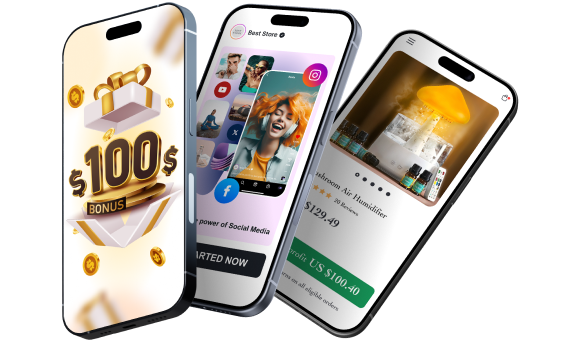
A $100 welcome gift to grow your business faster 🎁
Starting a business takes momentum – and Sellvia gives you a head start. When you claim your free store today, you also get a $100 welcome gift to put toward growing your business. Use it to upgrade your store, boost your marketing, or unlock new tools. It is a real dollar value, handed to you on day one, with no catch and no hoops to jump through.
A massive catalog of digital products to sell 🏆
One of the biggest struggles in starting an online business is figuring out what to sell. Sellvia solves that completely. Your store comes pre-loaded with digital products – guides, courses, checklists, and tools – all created by Sellvia. You keep 50–70% of every sale. No inventory. No shipping. No logistics headaches.
Everything in one easy-to-use platform 🔥
Managing an online store shouldn’t be complicated. With Sellvia, you can handle orders, add new products, and even chat with customers – all from a simple and user-friendly platform. No need to mess with confusing tools or deal with unnecessary tech stuff. It’s all smooth sailing.
No upfront costs, just start selling 💰
A big reason people hesitate to start an online business is the cost. But here’s the good news: With Sellvia, you don’t need to invest in stock, storage, or shipping supplies. You can run your store with no upfront costs, keeping things low-risk while still making money.
Support that’s always got your back 🤝
Running a business comes with questions, but you’re never alone. Sellvia’s dedicated support team is available 24/7 to help with anything you need. Whether it’s a small question or a big challenge, they’ve got you covered.
Everything you have learned about building an audience and driving traffic can go straight to work inside your own Sellvia store. Claim your free store today and start earning on your own terms.
How to start affiliate marketing with no money step-by-step?
Which free affiliate program is best for beginners with no experience?
Amazon Associates is the easiest program to get approved for with no prior experience. It requires no minimum traffic threshold to apply and covers millions of products across every niche. Commission rates are low at 1 to 4 percent, but the broad product range makes it easy to recommend relevant items. Once you have some content published, adding a higher-paying network like ShareASale or Impact gives you access to programs paying 20 to 50 percent commissions.
How long does it take to make money with affiliate marketing starting from zero?
Most beginners earn their first commission within 30 to 60 days if they are posting content consistently on a platform like TikTok or Pinterest. Reaching 100 dollars per month typically takes 60 to 90 days of daily effort. Blog-based affiliate marketing takes longer – usually 3 to 6 months before search traffic starts to build – but has stronger long-term compounding potential. The biggest factor is not the platform chosen but the consistency of content creation during the first 90 days.
Can you do affiliate marketing without a website?
Yes, you can do affiliate marketing without a website. Platforms like TikTok, Pinterest, Instagram, and YouTube all allow you to share affiliate links in your bio or video descriptions. Pinterest is particularly well-suited to this because pins can drive traffic for 12 to 24 months without any website required. A free blog on Blogger or WordPress.com is a good middle-ground option if you want a web presence without paying for hosting.
How much can a beginner realistically earn from affiliate marketing in the first 90 days?
A beginner posting content consistently every day for 90 days can realistically earn between 50 and 300 dollars in that window, depending on the niche and platform. TikTok and Pinterest tend to produce faster early results than blogging. Most of that income comes from a handful of well-performing pieces of content rather than evenly from everything published. The first 90 days are about building momentum, not maximizing earnings – the real payoff typically comes in months 4 through 6 as content compounds.