Most articles about starting a free online business set you up for disappointment. They leave out the filing fees, skip the tax part, and never mention what happens after month one. If you are a Connecticut resident who has been Googling “how to start an online business in Connecticut for free,” this article is going to give you a real answer – not a sales pitch, not a list of things that are technically free but actually cost you time and money you do not have.
Connecticut has a median household income of around $96,000 – one of the highest in the country – but that number hides a wide gap. Tens of thousands of residents live on fixed incomes, work multiple part-time jobs, or are trying to recover from a layoff. If you are in that group, you are not looking for theory. You are looking for a real path forward, and you need to know exactly what it will cost you before you take the first step.
Quick Answer: Yes, you can start an online business in Connecticut with very little money – or close to nothing – using platforms with free trials, free tools like Canva and Google Analytics, and free mentorship through the Connecticut SBDC and SCORE. The honest caveat: Connecticut’s LLC registration costs $120, and some tools have limits at the free tier. This article breaks down every cost so you can decide what is right for you.
Before we get into specific models and tools, it helps to understand what “free” actually means in the context of starting an online business. Some things cost zero dollars. Some things cost a small one-time fee. And a few costs are unavoidable no matter what you do. The sections below map this out clearly so you go in with both eyes open.
Can you really start an online business for free in Connecticut?
The honest answer is: mostly yes, with a few things to understand upfront. Connecticut does not make starting a business completely free – there are state fees involved if you want legal protection for your business. But the actual online part? That can be started with zero dollars on day one.
Here is what the “free” landscape looks like for Connecticut residents in 2026:
- Business registration: Registering as a sole proprietor under your own name costs nothing in Connecticut. If you want an LLC – which gives you legal protection – the state charges a $120 Certificate of Organization filing fee with the Connecticut Secretary of State, plus an $80 annual report fee each year after that. If you also need a sales and use tax permit (required if you sell taxable goods), that is an additional $100. So the true all-in cost to become a formally registered LLC in Connecticut is around $220 upfront.
- Online store platform: Many platforms offer free trials – including 14-day trials with no credit card required. This means you can test your store, set up your products, and even make your first sales before paying anything.
- Design and marketing tools: Canva (free tier), Google Analytics (free), Buffer’s free plan for social scheduling, and Mailchimp’s free tier for email marketing are all genuinely free for new businesses at low volume.
- Payment processing: This is the one cost you cannot avoid. Every payment processor charges a percentage of each sale – typically 2.9% plus a small flat fee per transaction. This is not a startup cost, though – you only pay it when you earn money.
Important note: Connecticut’s economic nexus rules for sales tax kick in when you exceed both $100,000 in gross sales and 200 separate transactions in a 12-month period. Most new Connecticut online businesses will not hit those thresholds in their first year, so sales tax registration may not be immediately required. That said, if you grow quickly, you will want to register with the Connecticut Department of Revenue Services before crossing those thresholds.
The bottom line: you can legitimately start generating income online in Connecticut for $0 out of pocket by using free trials and free tools. If you want formal legal structure, budget around $120–$220 for the Connecticut filing fees.
What “free” actually covers – and what it does not
Let’s go category by category so there are no surprises.
Business registration costs in Connecticut
If you operate under your own legal name (sole proprietorship), there is no registration fee in Connecticut. You can start earning money online as yourself with zero paperwork. The risk: your personal assets are not legally separated from your business. If something goes wrong, your personal savings could be at stake.
If you want an LLC – the most popular structure for solo online business owners – the costs are:
- Certificate of Organization: $120 (filed with the Connecticut Secretary of State)
- Annual report fee: $80/year
- Sales and use tax permit (if selling taxable goods): $100
Connecticut does not have a franchise tax on LLCs – which is a real advantage compared to some neighboring states. The Secretary of State’s Business One Stop portal at business.ct.gov lets you file the Certificate of Organization online, which is faster than mailing a paper form.
One note on digital products: If you sell digital products in Connecticut – downloadable guides, courses, tools – these are generally subject to the standard 6.35% sales tax for consumer use. As your business grows, consult with a Connecticut accountant about your specific obligations.
Tools and platforms – genuinely free options
The tools category is where “free” is most real. Here is what Connecticut entrepreneurs can use at zero cost:
- Store platform: Free trials (14 days, no credit card required) are available on major ecommerce platforms. This is enough time to set up your store, add products, and start marketing.
- Design: Canva’s free plan covers logos, social media graphics, product images, and basic branding – no design skills required.
- Email marketing: Mailchimp’s free tier covers up to 500 contacts and 1,000 emails per month. More than enough to start building a list.
- Social media scheduling: Buffer’s free plan lets you schedule posts to three social accounts, which is enough to maintain a presence on Instagram, Facebook, and Pinterest without paying anything.
- Analytics: Google Analytics is free and gives you detailed data on where your visitors come from and what they do on your site.
Important: Free tiers always have limits. As your business grows past those limits, you will face a choice: upgrade to a paid plan or work around the restrictions. Plan for this – it is a sign of success, not a problem.
Marketing – free organic methods
Paid advertising is optional, especially at the start. Connecticut online business owners who are working with zero budget can build an audience through:
- Short-form video on TikTok or Instagram Reels (zero cost, high reach potential)
- Pinterest, which drives strong organic traffic to digital product stores
- Facebook groups related to your niche – genuine participation builds trust over time
- SEO – writing content that answers questions your target customers are already searching
Free marketing is slower than paid advertising. Expect 60–90 days to see meaningful organic traction. If you want faster results, platforms like Sellvia include a built-in one-click advertising system with a $10–$50/day budget that you control – and many store owners see their first orders the same day they activate it.
Payment processing – the unavoidable cost
Every payment processor charges a fee per transaction. Standard rates are around 2.9% plus $0.30 per transaction (Stripe, PayPal, and similar services). This is not a startup cost – you only pay it when you make a sale. For a $30 digital product sale, the fee would be roughly $1.17. You keep the rest.
Free or near-zero online business models for Connecticut residents
Connecticut’s broadband adoption rate is among the highest in the nation – 92.2% of households now have access to broadband internet, and gigabit-speed service has reached around 850,000 locations statewide. That means the infrastructure for running an online business from home is available to most Connecticut residents. The question is which model fits your situation.
Digital product store
Selling digital products – guides, courses, checklists, tools – is one of the lowest-barrier online business models available. There is no inventory, no shipping, no physical product to create if you use a platform that provides ready-made products. Profit margins run 50–70% per sale, and delivery is instant.
Sellvia is the fastest way to get started with this model in Connecticut. You get a complete store built for you – pre-loaded with digital products, with a built-in advertising system – and a 14-day free trial with no credit card required. For Connecticut residents who want a ready-to-sell setup from day one, it is the closest thing to a genuinely free start. If you are exploring how to start an online business in Connecticut in the most straightforward way possible, this model removes almost every barrier that normally slows people down.
Earning potential: $30–$80/day with consistent effort and ad activation over 60–90 days. Results vary based on niche, effort, and marketing consistency.
Freelancing
If you have a marketable skill – writing, graphic design, video editing, bookkeeping, social media management, web development – you can offer it to clients through platforms like Upwork, Fiverr, or LinkedIn. Zero startup cost. You earn by trading your time for money, which is a real limitation as you scale, but it is a fast way to generate income while you build something bigger on the side.
Connecticut’s proximity to New York and Boston means there is strong demand for remote freelancers from local businesses. Many Hartford-area companies, financial services firms in Stamford, and healthcare organizations throughout the state hire freelancers for project work.
Earning potential: $15–$75/hour depending on skill and experience. Top freelancers in high-demand fields can earn significantly more, but new freelancers typically start at the lower end.
Affiliate marketing
Affiliate marketing means promoting other people’s products and earning a commission when someone buys through your link. You can start a blog, YouTube channel, or social media account around a topic you know well, then recommend relevant products. The Amazon Associates program, ShareASale, and individual brand affiliate programs are all free to join.
Important: Affiliate marketing typically takes 6–12 months to build meaningful income through organic content. It is not a fast solution. But as a second income stream alongside another model, it compounds over time.
Earning potential: $50–$500/month for beginners after 6–12 months of consistent content creation. Experienced affiliates with established audiences can earn significantly more.
Content creation
YouTube, TikTok, and Instagram all allow Connecticut residents to monetize their content – through ad revenue, brand deals, and platform monetization programs. The startup cost is zero if you use your smartphone. The reality check: most platforms require at least 1,000 subscribers or followers before monetization kicks in, and building that audience takes consistent effort over months.
Content creation works well as a marketing channel for another business (like a digital product store) rather than as a standalone income source at the beginning.
Earning potential: Highly variable. Small creators might earn $100–$500/month. Established creators with 50,000+ followers can earn $2,000–$10,000/month or more through multiple revenue streams.
Online tutoring
Connecticut has a well-educated workforce – the state ranks among the top in the country for educational attainment. If you have a degree or strong knowledge in a subject, platforms like Tutor.com, Wyzant, and Varsity Tutors let you offer sessions with zero upfront cost. You pay a platform commission on each session instead.
Earning potential: $20–$75/hour depending on subject and level. SAT prep, math, and science tutors typically earn at the higher end of this range.
Free tools to get started
Here is a practical toolkit for Connecticut online business owners starting with zero budget. Every tool listed here has a genuinely free tier that is useful at the start.
- Store platform: Sellvia – 14-day free trial, no credit card required, complete store built for you, digital products pre-loaded, built-in advertising system
- Design: Canva (free) – logos, social graphics, product mockups, presentations
- Email marketing: Mailchimp (free up to 500 contacts) – newsletters, welcome sequences, product announcements
- Social media scheduling: Buffer (free for 3 channels) – schedule posts in advance so you are consistent without being online all day
- Analytics: Google Analytics (free) – track traffic, conversions, and where visitors come from
- Writing and editing: Grammarly (free tier) – catches errors in your product descriptions, emails, and content
- Link management: Linktree (free) – one link in your social bio that points to your store, email list, and other platforms
Pro Tip: Set up your store and your analytics on day one. Knowing where your visitors come from helps you double down on what is working instead of guessing.
Free Connecticut-specific resources
Connecticut has a strong network of free business resources that many residents do not know about. These are real programs that cost nothing to access.
Connecticut Small Business Development Center (CTSBDC) – Hosted at the University of Connecticut, the CTSBDC offers free, confidential one-on-one advising for both new and existing Connecticut businesses. Advisors can help with business planning, financial projections, marketing strategy, and more. Visit ctsbdc.uconn.edu to connect with an advisor near you.
SCORE Connecticut – SCORE provides free mentoring from experienced business owners and executives. Connecticut has multiple SCORE chapters covering Eastern CT, Fairfield County, Greater Hartford, Greater New Haven, Northwest CT, and Western CT. Mentoring is available in person and online. Visit score.org to find your local chapter.
SBA Connecticut District Office – The Small Business Administration has offices in both Bridgeport and Hartford. They offer free counseling, training, and resources for Connecticut entrepreneurs. No business too small – sole proprietors and solo operators are welcome.
Connecticut DECD Small Business Programs – The Connecticut Department of Economic and Community Development (DECD) offers several grant programs for eligible small businesses. One active program awards approximately 20 grants of up to $15,000 per year to registered Connecticut businesses. Another awards approximately 100 grants of up to $10,000 per year to qualifying women-owned businesses. These are not guaranteed, but they are real money available to Connecticut residents. See current programs at portal.ct.gov/DECD.
Connecticut’s Business One Stop Portal – The state’s official resource for starting a business: business.ct.gov. It includes a New Business Checklist Tool that generates a personalized step-by-step list based on your business type.
Realistic timeline – what “free” leads to in 30, 60, and 90 days
This is the section most articles skip. Starting for free usually means starting slower. Here is an honest breakdown of what to expect at each stage – because how to start an online business in Connecticut for free is only half the question. The other half is: how long until it actually earns?
By day 30 with consistent effort: Your store is live, your social accounts are set up, and you have published your first content or run your first low-budget ad test. You have learned what your audience responds to. Sales are possible in week one if you activate advertising – many Sellvia store owners see their first orders within the first few days of launching ads. Organic-only stores typically take longer to gain traction.
By day 60 with consistent effort: If you have been showing up every day – posting content, engaging with potential customers, refining your store – you should start seeing a real pattern. Some products sell, some do not. You know which platforms your audience uses. If you have activated a $10–$20/day ad budget, you may be covering your costs and earning a modest profit. This is the stage where people who started for free often choose to reinvest their early earnings into paid promotion.
By day 90 with consistent effort: A Connecticut resident who has put in consistent daily work over 90 days – content, ads, customer engagement – can realistically target $30–$80/day in revenue with a digital product store. That is not a guarantee. Results vary based on niche, effort, ad spend, and consistency. But it is a realistic range for someone who has taken it seriously. That works out to roughly $900–$2,400 per month – not retirement money, but real supplemental income that can change how a Connecticut family manages month to month.
The honest reality: “free” typically means slower growth. The zero-dollar path requires more of your time and patience in exchange for less upfront financial risk. That trade-off is worth it for many people – especially if money is tight right now. As soon as you have $10–$20 to put toward advertising, the curve accelerates significantly.
Common myths about starting a free online business
There is a lot of bad information online about free online businesses. Here are the most common myths – and what is actually true for Connecticut residents in 2026.
Myth 1: “You need a business license before you can earn anything online.”
Not true in Connecticut. You can start earning money as a sole proprietor without any formal registration. You do have a legal obligation to report that income on your taxes – but you do not need a license to make your first sale. If you want an LLC, you can register one later once you have proven the model works.
Myth 2: “Free platforms are too limited to build a real business.”
Not true – at least in the early stages. Canva, Mailchimp, Buffer, and Google Analytics all provide genuinely useful free tiers for new businesses. The limits become real as you scale, but most people hit those limits because they are growing, which is a good problem to have.
Myth 3: “You can build passive income with no work.”
No legitimate online business runs itself – especially at the beginning. Every successful Connecticut online business owner put in real hours learning, setting up, creating content, or managing their store. What changes over time is that consistent effort compounds: your content keeps driving traffic, your store keeps converting, your ads keep running. That is not passivity – that is leverage. There is a real difference.
Myth 4: “Connecticut taxes will wipe out your online income.”
Connecticut does have an income tax – rates range from 2% to 6.99% depending on your income level. But as a self-employed person, you have business deductions available (home office, internet, tools, education, platform fees) that can significantly reduce your taxable income. Talking to a Connecticut CPA once you start earning is worth the investment. The CTSBDC also offers free financial advising to help you understand your obligations.
See your state tax breakdown at a glance
Simply enter your annual net profit, select your state, and the calculator will instantly generate a detailed tax breakdown while showing how your state’s tax burden compares to others.
Why Sellvia is a game-changer for your online store 🚀
Sellvia isn’t just another ecommerce tool. We are a trusted name in the industry, recognized by Forbes and even ranked in Inc.’s list of the 5,000 fastest-growing companies in the U.S. So if you’re serious about starting as a solopreneur, this is a smart place to begin.
Starting an online business can feel overwhelming, but that’s exactly where Sellvia steps in. It takes care of the tricky parts, so you can focus on making sales and growing your brand. Let’s break down what makes it such a great choice.
Get a ready-to-go store hassle-free 🎯
Want to start selling but don’t know where to begin? No worries! Just share your ideas, and Sellvia’s team will build a free ecommerce website that’s fully set up and ready to take orders from day one. No coding, no stress – just a store that works right out of the box.
A $100 welcome gift to grow your business faster 🎁
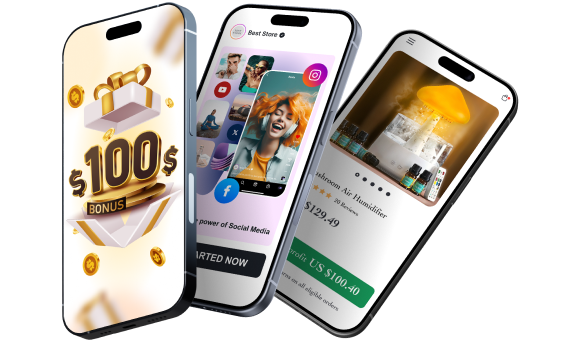
Starting a business takes momentum – and Sellvia gives you a head start. When you claim your free store today, you also get a $100 welcome gift to put toward growing your business. Use it to upgrade your store, boost your marketing, or unlock new tools. It is a real dollar value, handed to you on day one, with no catch and no hoops to jump through.
A massive catalog of digital products to sell 🏆
One of the biggest struggles in starting an online business is figuring out what to sell. Sellvia solves that completely. Your store comes pre-loaded with digital products – guides, courses, checklists, and tools – all created by Sellvia. You keep 50–70% of every sale. No inventory. No shipping. No logistics headaches.
Everything in one easy-to-use platform 🔥
Managing an online store shouldn’t be complicated. With Sellvia, you can handle orders, add new products, and even chat with customers – all from a simple and user-friendly platform. No need to mess with confusing tools or deal with unnecessary tech stuff. It’s all smooth sailing.
No upfront costs, just start selling 💰
A big reason people hesitate to start an online business is the cost. But here’s the good news: With Sellvia, you don’t need to invest in stock, storage, or shipping supplies. You can run your store with no upfront costs, keeping things low-risk while still making money.
Support that’s always got your back 🤝
Running a business comes with questions, but you’re never alone. Sellvia’s dedicated support team is available 24/7 to help with anything you need. Whether it’s a small question or a big challenge, they’ve got you covered.
Connecticut residents searching for a genuinely free way to start an online business in 2026 have a real option – a complete store, pre-loaded products, and a $100 welcome gift, all waiting on the other side of a 14-day free trial. Claim your free Connecticut store today and see why over 1.5 million stores have launched with Sellvia.