Maryland has one of the highest median household incomes in the country – around $102,900 a year. But if you live here, you already know that a high average does not mean everyone is doing well. Rent in Baltimore, childcare costs, and the price of just getting through the week have a way of stretching every dollar thin. If you have been thinking about starting something on the side – or building a real income source that does not depend on a single employer – you are not alone. Thousands of Maryland residents are doing exactly that right now, from small apartments in Baltimore City to quieter towns on the Eastern Shore.
Quick Answer: You can start an online business in Maryland in 2026 with no experience and no technical skills. The fastest path for beginners is a fully built digital product store – you get a pre-loaded store, products, and a built-in advertising system from day one. You will need to register your business with the Maryland State Department of Assessments and Taxation (SDAT), understand the state’s 6% sales tax rules for online sellers, and set aside money for quarterly estimated taxes. Everything else can be handled from your phone or laptop, from anywhere in the state.
This guide walks you through every step – from picking your business model to registering in Maryland, handling taxes, and finding the resources that can help you grow. Whether you are looking for online business ideas in Maryland, want to understand the legal basics, or are ready to launch today, it is all here.
Why Maryland is a good place to start an online business
Maryland is a genuinely strong state for online entrepreneurs – not because of hype, but because the fundamentals are solid. With a population of over 6.2 million people and a location sandwiched between Washington D.C., Virginia, Pennsylvania, and Delaware, Maryland sits at the heart of one of the most economically active corridors in the country. That proximity to major metro areas creates a large, digitally connected consumer base – and a ready audience for online sellers.
According to the 2024 American Community Survey, approximately 80% of Maryland households have some form of broadband access. That puts the vast majority of the state’s residents online and in a position to discover, research, and buy from online businesses like yours. Mobile commerce is growing fast – nearly 44% of all US online purchases in 2024 happened on a smartphone, which matters for any Maryland resident building a customer base.
Ecommerce is no longer a niche channel. US ecommerce sales reached $1.19 trillion in 2025 – and online sales now account for nearly 16% of all retail transactions nationally. Maryland residents are part of that shift, both as buyers and increasingly as sellers. The state’s business infrastructure supports entrepreneurs at every level: Maryland Business Express makes registration straightforward, and the Maryland SBDC network has 24 locations across the state offering free consulting.
Best online business models for Maryland residents
There is no single right way to start an online business in Maryland. The model that works for you depends on your time, your budget, and what you are trying to build. Here are the most realistic options for 2026 – each one honest about what it actually takes.
Digital product store
A digital product store lets you sell guides, courses, checklists, and tools online – things that are delivered instantly when a customer pays. There is no packaging, no mailing, no inventory. The customer buys, the product is delivered automatically, and you keep the profit. Platforms like Sellvia give you a fully built store pre-loaded with 1,000 ready-made digital products, so you skip the setup phase entirely and start at the selling stage. Margins run between 50–70% per sale, which is significantly higher than most physical product businesses.
Why this works in Maryland: With 80% broadband penetration and a large population concentrated around Baltimore and the D.C. suburbs, Maryland has a digitally active consumer base that is comfortable buying online. Digital products require no local logistics – you can serve customers anywhere in the country from a spare bedroom in Annapolis or a kitchen table in Hagerstown.
Earning potential: $300–$1,500+/month within 60–90 days with consistent advertising effort – results vary based on ad spend and niche.
Freelancing
If you have a skill – writing, graphic design, bookkeeping, web design, social media management – you can sell that skill to clients online through platforms like Upwork, Fiverr, or LinkedIn. Freelancing has almost no startup cost, and Maryland’s proximity to D.C. and large federal contractor ecosystem means strong demand for professional services. The trade-off: your income is directly tied to your hours. You stop working, the income stops.
Earning potential: $20–$75/hour depending on skill and experience, with growth that comes from building your client list over 3–6 months.
Content creation
YouTube, TikTok, Instagram, and blogs can all generate income through ad revenue, brand deals, and affiliate links – but this path takes time. Building an audience typically takes 6–18 months before meaningful income appears. It works best as a supplement to another model rather than a standalone starting point for someone who needs income soon.
Earning potential: Highly variable – $0 for 6–12 months, then $200–$3,000+/month for creators who stay consistent and reach monetization thresholds.
Affiliate marketing
Affiliate marketers promote other companies’ products and earn a commission on each sale. You do not need to create anything – just drive traffic to a product page through blog posts, social content, or ads. The challenge is that it takes time to build traffic, and commissions are typically 5–30% of a sale you did not control. For Maryland residents looking for income this year, affiliate marketing alone is a slow start.
Earning potential: $100–$800/month within 6–12 months for consistent marketers, with higher ceilings for those who build substantial audiences.
Online coaching and consulting
If you have professional expertise – in fitness, finance, career development, parenting, or any area where people pay for guidance – you can package that knowledge into one-on-one sessions, group programs, or digital courses. Maryland’s educated workforce means there is no shortage of people willing to pay for expert advice. Setup requires more personal brand-building but has low overhead.
Earning potential: $500–$5,000/month depending on niche and how you package your services.
Online tutoring
Maryland’s strong emphasis on education – the state consistently ranks among the top for public school quality – means demand for tutoring is high. Online tutoring through platforms like Tutor.com, Wyzant, or independently via Zoom is a strong option for teachers, college students, or anyone with subject-matter expertise. It is a time-for-money model, but the hourly rates are solid and there is consistent demand.
Earning potential: $25–$80/hour, with most tutors working 5–20 hours per week alongside other commitments.
If you are exploring ways to how to start dropshipping in Maryland, it is worth knowing that selling digital products online offers a lower-risk, lower-complexity alternative – no suppliers, no shipping, no inventory headaches.
Skip the slow start
You compared the models. One of them gives you a fully built store from day one.
Most models ask you to build everything yourself before you earn anything. Sellvia hands you a complete, ready-to-sell store with 1,000 digital products already inside – no setup, no design, no product creation required.
How to start an online business in Maryland – step by step
Here is the practical path from idea to income. Each step is doable on your own – no lawyer or accountant required to get started, though both can help as you grow.
Step 1: Choose your business model
Start by being honest with yourself about three things: how much time you have each week, how much money you can invest upfront, and how quickly you need to see results. If you have limited time, limited startup budget, and need income within 30–90 days, a digital product store is the most direct path. If you have a specific skill and six months to build a client base, freelancing or tutoring may be a better fit. Do not try to do everything at once – pick one model and commit to it for at least 90 days before evaluating.
Step 2: Register your business in Maryland
Most online businesses in Maryland start as either a sole proprietorship or a limited liability company (LLC). A sole proprietorship requires no formal registration – you are simply doing business under your own name, though you will need a trade name (DBA) if you operate under a business name. An LLC costs $100 to file Articles of Organization with the Maryland State Department of Assessments and Taxation (SDAT) by mail, or slightly more online due to a 3% processing fee. Standard processing takes 6–8 weeks by mail; expedited online processing runs 7–10 business days. All Maryland LLCs must also file an annual report and pay a $300 annual fee each April 15 to stay in good standing.
Register at Maryland Business Express – the state’s official business registration portal. You can also look up requirements for your specific type of business license through the same portal.
Key principle: An LLC separates your personal finances from your business finances, which protects your personal assets if the business ever faces a legal issue. For most solo online business owners starting out, a sole proprietorship is fine initially – upgrade to an LLC when revenue is consistent.
Step 3: Handle Maryland taxes
Maryland has a 6% state sales tax with no additional local sales taxes. For online sellers, Maryland follows economic nexus rules: if you sell more than $100,000 in sales or 200 separate transactions to Maryland customers in a calendar year, you are required to collect and remit Maryland sales tax regardless of where your business is located. Most digital products are not subject to Maryland’s 6% sales tax under current law, though Maryland’s 2025 tax legislation expanded the definition of taxable technology services – review your specific product category with a tax professional to confirm.
Maryland’s individual income tax runs from 2% to 5.75% on a graduated scale, plus county-level income taxes ranging from 2.25% to 3.2% depending on where you live. As a self-employed business owner, you will owe both state and federal estimated quarterly taxes – typically due in April, June, September, and January. Set aside at least 25–30% of your net profit to cover these obligations from the start.
Step 4: Set up your online presence
Your online store is the center of your business. If you are using Sellvia, your store arrives fully designed and pre-loaded – you skip the build phase entirely and move straight to customizing your niche and launching ads. If you are freelancing or coaching, a simple one-page website or a complete LinkedIn profile is enough to start. Do not let perfectionism delay your launch. A simple, functional presence that you launch this week beats a perfect one you are still building next month.
Step 5: Start marketing and making sales
Marketing does not require a big budget. Start with what you have. If your business is a Sellvia digital product store, the built-in one-click advertising system lets you launch campaigns with as little as $10–$50 per day – no marketing experience required. Many store owners see their first orders the same day they activate ads, though results vary by niche and consistency. For freelancers and tutors, start by telling everyone in your network what you are doing. One referral from a trusted contact is worth more than a hundred cold pitches.
The math is simple
Stop waiting for the right moment. Your Sellvia store is ready to earn right now.
Sellvia gives you a fully built store with 1,000 digital products, instant delivery, and a one-click ad system. Most customers see their first orders on day one – results vary based on effort and consistency.
Tax and legal basics for Maryland online businesses
Taxes are not something to figure out later. Getting the basics right from the start saves you stress, penalties, and money. Here is what Maryland online business owners need to know.
State income tax: Maryland uses a graduated income tax system. For most small business owners – those earning under $100,000 in taxable income – the effective state rate runs around 4.75%, plus your county’s local income tax (typically 2.25%–3.2%). Combined, most Maryland online business owners pay 7%–8% in state and local income taxes on their business profit, plus federal self-employment tax of 15.3% on net earnings. Budget for this early.
Sales tax: Maryland’s sales tax rate is a flat 6% – no local additions. Maryland does not currently tax most digital products under its standard 6% rate, but the 2025 Budget Reconciliation Act introduced a new 3% tech services tax on certain business-to-business data and information technology services. If you are selling directly to consumers, most digital guides, courses, and downloadable tools are not subject to Maryland sales tax – but verify your specific product category with a tax professional or the Maryland Comptroller’s office.
Quarterly estimated taxes: As a self-employed business owner, you are required to pay estimated federal and state taxes four times a year – in April, June, September, and January. The IRS requires estimated payments if you expect to owe more than $1,000 in federal tax for the year. Maryland has the same threshold at the state level. Use the IRS Form 1040-ES and Maryland Form PV to make these payments.
LLC vs. sole proprietorship: A sole proprietorship has no formal setup cost, but it offers no liability protection – your personal assets are on the line if anything goes wrong. An LLC costs $100 to form in Maryland (plus a $300 annual report fee) and protects your personal finances. For most online business owners, starting as a sole proprietorship is fine while you test your idea, then forming an LLC once revenue is consistent is the smart move.
Register your business and manage tax filings through these official Maryland resources:
- Maryland Business Express – business registration, licensing, and compliance
- Maryland Comptroller – marylandtaxes.gov – tax accounts, sales tax registration, and quarterly payments
- Maryland SDAT – dat.maryland.gov – LLC formation and annual report filings
See your state tax breakdown at a glance
Simply enter your annual net profit, select your state, and the calculator will instantly generate a detailed tax breakdown while showing how your state’s tax burden compares to others.
Resources for Maryland entrepreneurs
You do not have to figure this out alone. Maryland has a strong support network for small business owners – and most of it is free.
SBA Baltimore District Office – 100 S. Charles St., Suite 1201, Baltimore, MD 21201. Serves Baltimore City and all Maryland counties except Montgomery and Prince George’s. Provides counseling, funding program information, and federal contracting resources. Residents of Montgomery and Prince George’s counties are served by the SBA Washington Metro Area District Office. Visit sba.gov/district/baltimore.
Maryland Small Business Development Center (SBDC) – The Maryland SBDC network has 5 regional offices and 24 locations statewide, offering free one-on-one consulting, market research, and low-cost training for startups and existing businesses. The Capital Region SBDC is based at 7100 Baltimore Ave., College Park, MD 20740 – serving central and suburban Maryland. Visit marylandsbdc.org.
SCORE Maryland – SCORE connects Maryland entrepreneurs with experienced volunteer mentors for free, confidential business coaching. Maryland has 8 SCORE chapters statewide, with both in-person and online mentoring available. Visit score.org/md.
Maryland Business Express – The state’s official one-stop portal for business registration, license lookup, and compliance guidance. Visit businessexpress.maryland.gov.
Common challenges for Maryland online business owners
Every new business owner runs into obstacles. Here are the ones Maryland entrepreneurs mention most – and how to handle each one.
The cost of living makes it hard to invest in a business
Maryland is an expensive state. Housing costs in the Baltimore–D.C. corridor are high, and many people starting an online business are doing so because their current income is not enough – not because they have a surplus to invest. The good news is that digital product businesses have extremely low startup costs. A free 14-day trial with no credit card required means you can test a real online store before spending a dollar. If you need to scale slowly, a $39/month plan after the trial is less than most people spend on subscriptions they do not use.
Confusion about Maryland taxes
Maryland’s tax system is more layered than most – you have state income tax, county income tax, sales tax, and (for some) the new 2025 tech services tax to think about. Many new online business owners either ignore taxes entirely at first or overpay because they do not know what deductions they qualify for. The fix is simple: open a separate bank account for your business income from day one, set aside 25–30% of every payment you receive, and keep a simple record of your expenses. The Maryland SBDC offers free consulting sessions where a real advisor will walk you through your specific situation – use it.
Staying motivated past the first 30 days
The first month of any online business is the hardest. You are learning a new system, you may not have made your first sale yet, and it is easy to feel like it is not working. Most Maryland entrepreneurs who quit do so within the first 30–60 days – right before the business would have gained traction. Set a clear 90-day commitment before you evaluate results. Track one metric: daily active effort. Show up every day for 90 days before deciding whether it is working.
Final thoughts
Starting an online business in Maryland is genuinely achievable in 2026 – not because it is easy, but because the tools, platforms, and support networks available today remove most of the old barriers. You do not need a business degree. You do not need a large investment. You do not need to quit your job to test the idea.
If you are a complete beginner with no experience and limited time, a pre-built digital product store is your fastest path to a real income stream. If you have a skill or expertise, freelancing or tutoring can generate income within weeks. If you are thinking long-term, building an online store that grows with consistent effort is the most scalable option available to Maryland residents right now.
Whatever model you choose, take the first step this week – not next month. And if you want to explore starting with no upfront investment, read our guide on how to start an online business in Maryland for free for a full breakdown of the lowest-cost options available to Maryland residents.
Why Sellvia is the smartest way to start an online business in Maryland
Sellvia is a fully managed ecommerce platform built for people who want to start earning online without the technical complexity, product creation, or upfront costs that stop most people before they begin. Here is what it includes.
Free turnkey store – built, designed, and ready to earn
Your store arrives professionally designed, pre-loaded with digital products, and fully optimized to convert. No setup fees, no coding, no design time. You start at the sales stage – not the store-building stage. Hosting, SSL, and payment gateway are all included.
$100 welcome gift – a real head start on day one
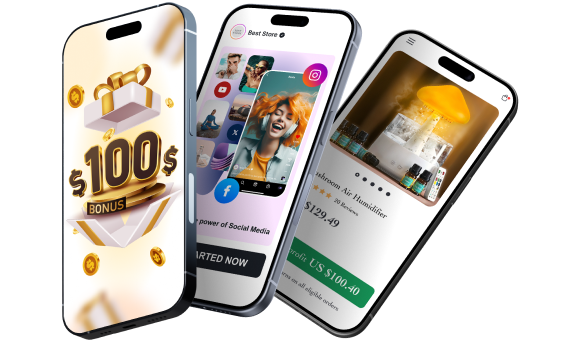
When you claim your free store, you also get a $100 welcome gift to put toward growing your business. Use it to upgrade your store, boost your marketing, or unlock new tools. It is a real dollar value, handed to you on day one, with no catch.
Instant delivery – no warehouse, no shipping
Every product in your store is digital. When a customer buys, delivery is instant and automatic. No warehouse, no packing, no logistics. You keep 50–70% of every sale with zero fulfillment overhead.
Built-in advertising – one click to launch your first campaign
One-click ads let you launch campaigns with a $10–$50 daily budget – no marketing expertise required. Most customers who activate ads receive orders the same day. No agency, no guesswork, no prior experience needed.
Beginner-friendly – no coding, no learning curve
An intuitive dashboard walks you through every step. Adding products, running campaigns, and growing your store require no technical knowledge. As your business grows, the platform scales with you – adding features without adding complexity.
Everything in one place – store, products, and ads
Sellvia combines your storefront, product catalog, and advertising system in a single platform. No third-party tools, no subscriptions to stack, no integrations to manage. Everything you need to earn online is already there when you log in.
No inventory · No shipping · Built for you
Your Maryland online business starts here – for free
Get a fully built store with 1,000 digital products, a $100 welcome gift, and everything you need to start earning – no experience required, no upfront cost.
Store setup usually costs $299+
Free
14-day free trial · $39/month after · Cancel anytime · $40 ad coupon included
✓ Store built for you · ✓ No inventory · ✓ Instant digital delivery