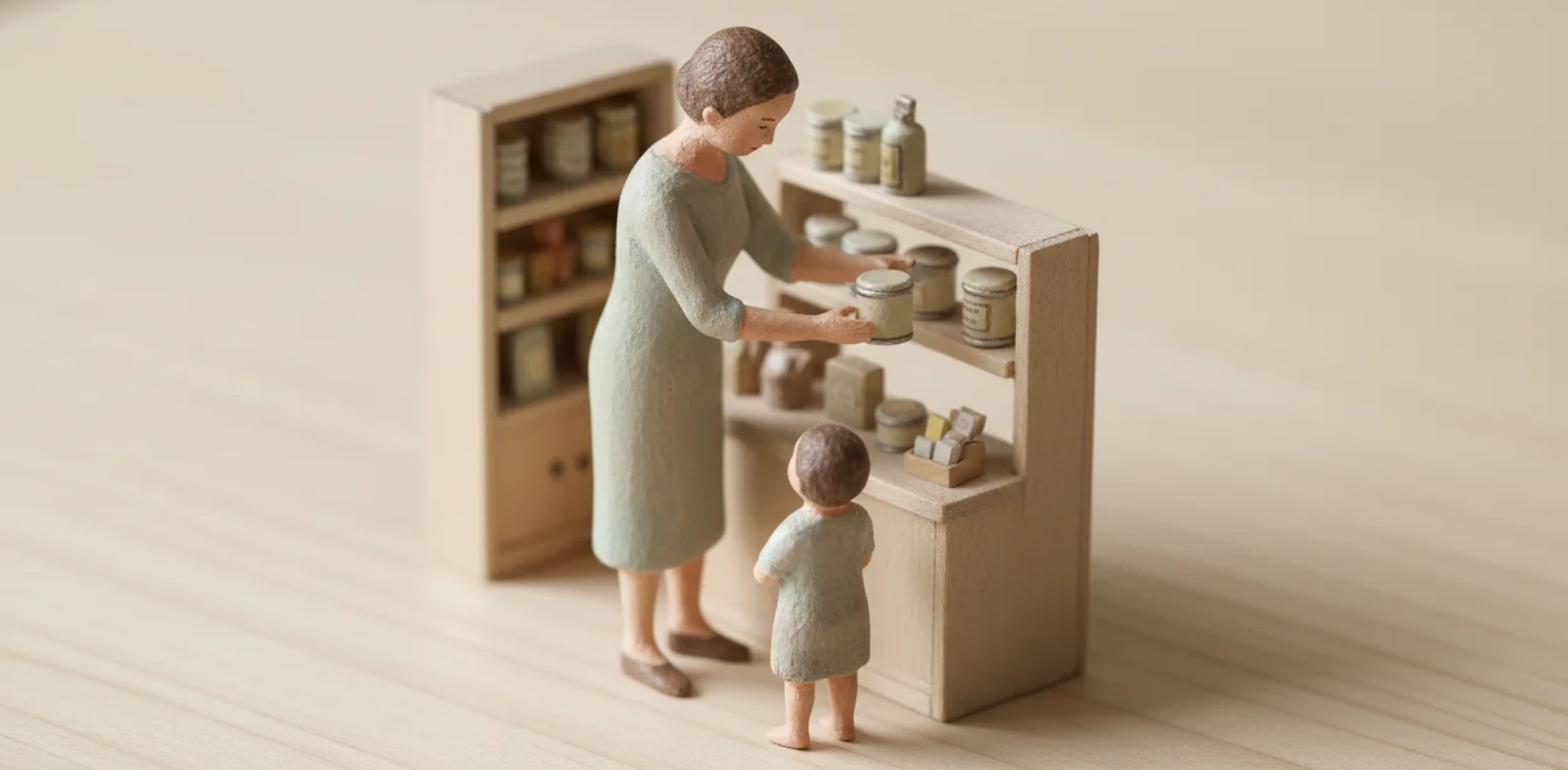
Anneke Vos had given her daughter Sorcha a piggy bank for her sixth birthday, on the sensible assumption that this is where saving begins.
A year on Sorcha was seven, had been getting three dollars a week for most of it, and the pig contained one dollar and a button. Each coin disappeared within a day or two, usually on something neither could recall by the weekend.
The pig was never the difficulty. Dropping coins into a container you cannot see into is not saving towards anything, and a seven-year-old told to save for its own sake is just being asked to hand money over.
Saving with no goal is only giving money up
Adults manage it because we can picture what the money is for, even when that is nine months off and rather dull. A seven-year-old cannot picture a general future, and it is unfair to expect it. What they can picture, in remarkable detail, is one particular object.
Anneke had done it all the conventional way. Pocket money on Saturday, a piggy bank, and regular reminders that saving matters. None of that gave the saved portion a purpose, and none of it divided the money before it reached Sorcha’s hand. Dividing the money before it is spent took about fifteen minutes.
The fifteen minutes that gave saving a picture
What went in was Sorcha rather than saving in general: her age, what she gets and when, what she keeps asking for, and how long Anneke was prepared for a first goal to run.

What came back · in about fifteen minutes
save, spend and give, filled in that order the moment the money arrives. The spending jar is the point: a child who may spend some of it will tolerate saving the rest.
a specific thing at a specific price, written on the jar, so progress is something she can see rather than something she is told about.
the goal divided by what she actually gets, which turned out to be eleven weeks. A number a seven-year-old can hold, and a line she can tick.
two real things, one question about which she will still want next week, and no lecture attached to either. This is where it is learned or not learned at all.
The goal was a set of markers she had been asking about since spring. Eleven weeks turned into nine, because a grandmother chipped in and Sorcha moved part of her spending jar over unprompted, which was not something Anneke had asked for or expected.
The first-savings ladder, rung by rung
Rung 1 · Split it before it is spent – the division happens the moment the money lands, not at the end of the week out of whatever survived. Saving last is why adults do not save either.
Rung 2 · Name one thing, and price it – not a category and not a habit. One object, one price, written where they can see it. A goal they cannot picture is not a goal to a child.
Rung 3 · Make it visible – a clear jar beats an opaque one for exactly the reason a progress bar beats a spreadsheet. The filling is most of the motivation, and it costs nothing to arrange.
Rung 4 · Keep the first goal short – weeks, not months. The first one exists to be reached. A first goal that collapses in week six teaches that saving does not work, which is the opposite of the lesson.
For Anneke the decisive rung was the third. Jar and pig held identical coins; only one of them showed Sorcha that anything was happening at all.
Why telling a child saving matters changes nothing
Because it argues about a future they cannot see, and the person making the argument is not the one surrendering coins. Children agree readily and entirely, and then Saturday arrives and the agreement carries no weight whatsoever.
A jar with a price on the front is not an argument. It is an object on a shelf that is either fuller than last week or it is not, and a child can check that alone, with nothing explained to them.
- Dividing the money the moment it arrives
- One named goal with a price written on the jar
- A see-through jar rather than a sealed one
- A first goal measured in weeks
- Practising wants and needs in an actual shop
- A single piggy bank with nothing attached to it
- Telling them saving is important and leaving it there
- Saving whatever is left at the end of the week
- A first goal months away
- Topping the jar up quietly when progress is slow
The order is the entire discipline: split first, name the goal, make it visible, keep the first one short. Most households begin with the pig and never reach the rest of it.

What it costs next to the alternatives
Anneke could have gone on buying piggy banks, which costs little and had produced one dollar and a button over a year. Here is how the usual approaches compare with splitting the money and naming a goal.
| Approach | Cost | What it does about the saving |
|---|---|---|
| Buy a piggy bank and hope | $10 once | Holds coins, shows nothing, motivates nobody |
| Remind them that saving is important | Free | They agree, and then Saturday happens |
| A kids banking app | $5/mo | Tracks the money, supplies none of the conversation |
| Child’s First Money Guide | $7 | The split, a priced goal and the words for the shop |
“Is seven not a bit young for any of this?” It sounds young and it is the easy age, which is the point. A seven-year-old accepts that money runs out without treating it as an injustice, and a fifteen-year-old does not. Two things are worth saying plainly, though. None of this substitutes for money simply being tight in a household, and a child should not be carrying that; and if the goal is never reached the lesson inverts, so the first one has to be small enough to win. This is general educational guidance for families rather than financial advice, and outcomes vary with your child.
Two more who replaced the pig with a jar

“She had been saving since Christmas and could not have told you what for. Writing the price on the jar turned it into something she checked every single week.”
Dervla M. · mother of a 6-year-old, Missoula MT

“We had the conversation at home about forty times and it never survived the shop. Doing it with two actual things on the shelf worked on the second attempt.”
Cathal B. · father of two, Dayton OH
If an older child at home is well past jars and nearer a card, the Teen Budgeting & Savings Coach picks it up from there. Results vary; this is general guidance for families rather than financial advice.
Five short answers, and the jars are on the shelf that same weekend: a split made before anything is spent, one goal with its price on the front, the weeks it takes at the pocket money they really get, and the words for the moment in the shop where it is all settled.
*Individual results may vary.