Over 5 million new business applications are filed in the US every year – and a growing share of them are online ventures. The barrier to entry has never been lower. You no longer need a commercial lease, a storage unit, or a team of employees to run a real business. All you need is the right idea and a clear path forward.
So what are the best ideas for online business right now? The honest answer is: it depends on your skills, your budget, and how much time you can realistically commit. But there are several proven models that work across all experience levels – and this guide walks you through all of them.
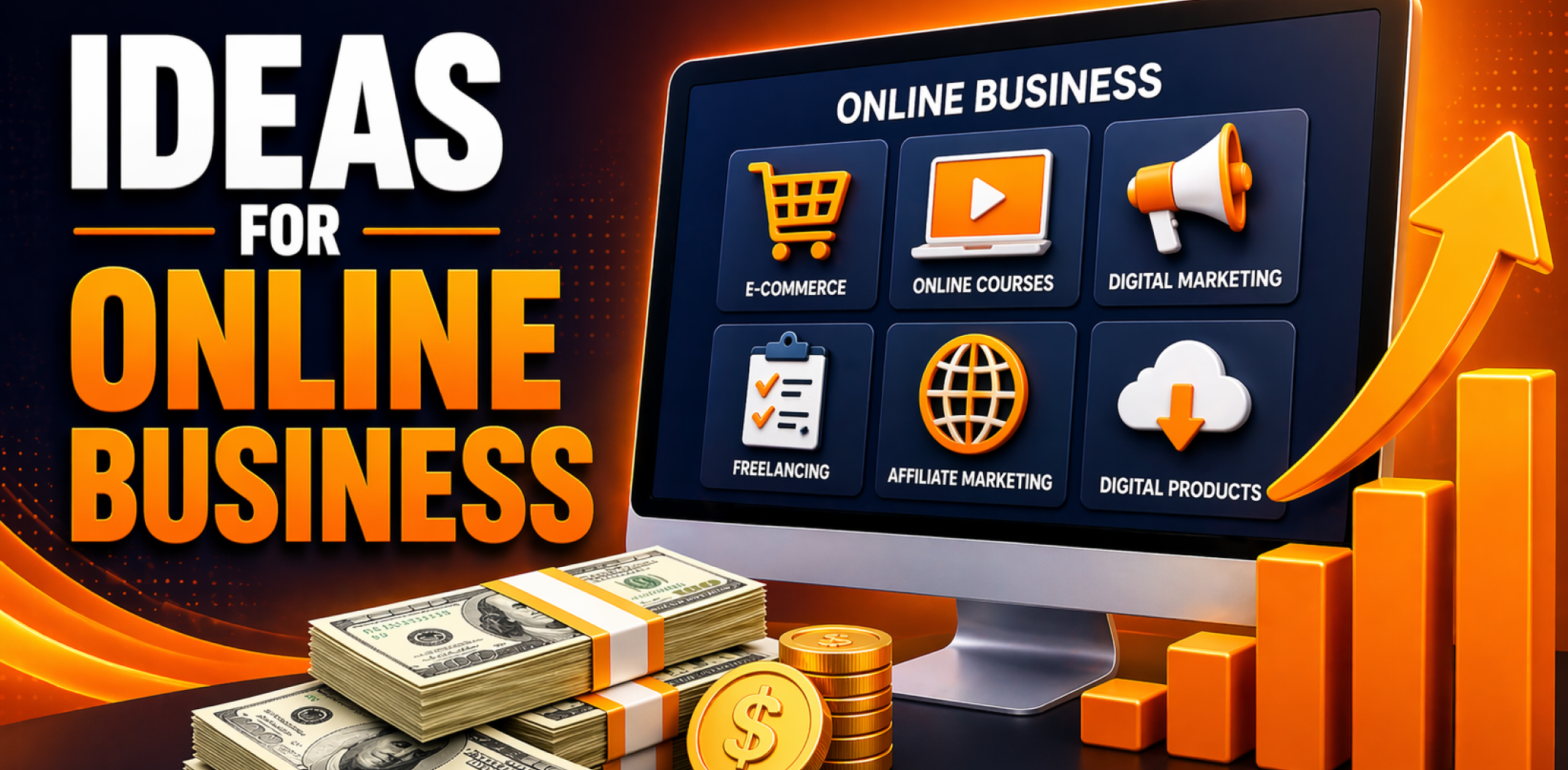
Quick answer: The best ideas for online business in 2026 include selling digital products, freelancing, content creation, online coaching, and affiliate marketing. Each model has a different effort-to-reward ratio, and the right one depends on your goals and starting point.
Whether you are looking for a full-time income replacement or a reliable side hustle, the models below have all produced real results for real people. None of them require insider knowledge or a large upfront investment – just a willingness to put in consistent work over time.
The online business landscape has changed significantly in just the last few years. AI tools have made content creation, customer support, and product research dramatically faster. The creator economy alone is estimated to be worth between $250 billion and $480 billion. In short, the market is large, growing, and genuinely accessible to new entrants.
What makes 2026 particularly interesting is the convergence of three factors: lower platform costs, better automation tools, and a wider global customer base. A solo entrepreneur today can run an online store, publish content, and manage client relationships – all without a team. That was not realistic a decade ago.
What does starting an online business actually mean in 2026?
An online business is any commercial activity that generates revenue primarily through the internet – whether that means selling digital products through an online store, delivering services remotely, monetizing an audience through content, or coaching clients toward a specific outcome.
The most beginner-friendly models today are built around digital products. These are items like guides, courses, checklists, and tools that are delivered instantly after purchase – no logistics, no inventory, no packaging required. You sell once, deliver automatically, and keep the majority of every sale as your profit.
That shift is important. For most of the last decade, “online business” implied physical goods, complex supply chains, and thin margins. In 2026, the fastest-growing category is digital – and the infrastructure to sell it has never been more accessible or more affordable.
How much can you realistically earn from an online business?
This is the question everyone asks – and it deserves an honest answer. Earnings vary enormously depending on the model you choose, the time you invest, and how quickly you learn from what is not working. The table below gives you a realistic breakdown of the most popular online business models.
These figures represent realistic ranges for people actively working their business model – not effortless income on autopilot. Most beginners see their first meaningful results within 60–90 days of consistent effort. Full-time income replacement typically takes 6–18 months depending on the model and the hours invested.
One note on ceiling figures: The upper ranges above reflect experienced operators with optimized systems in place. As a beginner, aim to validate your model and hit $500–$1,000/month first – then scale from there.
The most important thing to understand is that no online business produces results without effort. The models that work fastest are usually the ones that play to your existing strengths – skills you already have, topics you already understand, audiences you can already reach.
That said, there is one exception worth highlighting. Platforms like Sellvia are built specifically to reduce the setup barrier. They give you a ready-made store, products to sell, and a built-in way to get your first orders – so you can start earning while you are still learning the bigger picture.
The best ideas for online business broken down by category
Here is a practical breakdown of the most viable online business ideas in 2026 – organized by category so you can quickly find what fits your situation.
Digital product businesses
Selling digital products is one of the highest-margin business ideas available online. You sell something once and deliver it an unlimited number of times with no extra cost per sale. There is no physical logistics involved – just instant delivery to the buyer and profit straight to you.
Selling guides, courses, and tools
Digital products – ebooks, guides, checklists, templates, online courses, and practical tools – have become the dominant category for beginner-friendly online businesses. The reason is simple: you keep most of the sale price, there is no production cost per order, and delivery is automatic.
Popular platforms include Gumroad, Etsy, and dedicated ecommerce stores. In 2026, the most in-demand digital products are practical and outcome-focused – how-to guides, productivity templates, and niche tools that solve a specific problem quickly.
Why this works in 2026: The shift toward remote work and AI-assisted productivity has created massive demand for downloadable resources people can use immediately.
Earning potential: $300–$6,000+/month depending on niche, audience size, and product pricing.
Online courses and education
If you have expertise worth teaching, packaging it into an online course is one of the most scalable business ideas available. The global e-learning market is on track to surpass $500 billion by 2035, driven by demand for practical skills in AI, marketing, design, and tech.
Platforms like Teachable, Thinkific, and Kajabi handle the technical side – hosting, payments, student management – so you can focus on creating and selling. The most successful course creators pick a tight, specific outcome and build their entire course around delivering it.
Earning potential: $500–$8,000+/month depending on course price, audience size, and how consistently you promote.
Service-based online businesses
Service businesses are typically the fastest path to your first $1,000 online, since you can start with existing skills and find clients without a large audience or ad budget. They trade time for money, which is a reasonable trade when you are just getting started.
Freelancing
Freelancing covers a wide range of skills: copywriting, graphic design, web development, video editing, SEO, social media management, bookkeeping, and more. If you are good at something a business needs done, you can almost certainly offer it as a freelance service.
Getting started typically means building a simple portfolio, setting up a profile on platforms like Upwork, Fiverr, or Toptal, and doing outreach. The first few projects are often at lower rates while you collect reviews – but rates rise quickly once you have a track record.
Earning potential: $1,500–$6,000/month once established, with experienced specialists regularly hitting $8,000+ per month.
Online coaching and consulting
If you have deep knowledge in a specific domain – fitness, nutrition, business strategy, career development, language learning, or anything else with a clear outcome – online coaching is one of the highest-earning service models available.
Coaches typically charge per session or sell packaged programs. A beginner fitness coach might charge $50–$100 per session; an experienced business consultant can command $300–$1,000 per hour. The key differentiator is your ability to produce measurable results for clients.
Platforms like Calendly, Zoom, and Kajabi make it straightforward to manage bookings, sessions, and payments without technical complexity.
Earning potential: $1,500–$10,000/month depending on niche, pricing, and client volume.
Virtual assistant services
Virtual assistants (VAs) support businesses remotely with tasks like inbox management, scheduling, data entry, customer support, research, and social media posting. It is one of the most accessible online business ideas for beginners since it requires no specialized qualifications.
Many VAs start on platforms like Belay, Time Etc, or Upwork and move to private clients once they have established a reputation. Specializing in a niche – like real estate VAs or ecommerce VAs – typically unlocks higher hourly rates.
Earning potential: $800–$3,500/month for generalist VAs, with niche specialists earning $4,000–$6,000/month.
Content and audience-based businesses
Content businesses take longer to build but can produce some of the most durable income streams online. Once your audience is established, revenue can come from multiple sources simultaneously – sponsorships, affiliate commissions, course sales, and more.
Blogging and SEO content sites
Building a niche blog or content site involves publishing useful, well-optimized articles that rank on Google and attract organic traffic over time. Revenue typically comes from display ads, affiliate links, or selling your own products to the audience you build.
This is a long-term play – most sites take 12–18 months to generate meaningful traffic. But well-established content sites can earn $2,000–$10,000+ per month with relatively little ongoing maintenance once ranked.
Important note: In 2026, Google’s AI-driven search features have changed how organic traffic is distributed. Niche authority sites with original research and real expertise tend to outperform generic content.
YouTube channel
YouTube remains one of the strongest platforms for building a content business. Revenue comes from AdSense (typically $2–$10 per 1,000 views), sponsorships, affiliate links in descriptions, and digital products. Channels in finance, business, technology, and education tend to command the highest ad rates.
The challenge is the upfront effort – building an audience to monetization level (1,000 subscribers and 4,000 watch hours) typically takes 6–12 months of consistent publishing. After that, the compounding effect of a growing back catalog makes the work increasingly rewarding.
Earning potential: $200–$5,000+/month once the channel is monetized and growing steadily.
Affiliate marketing
Affiliate marketing means earning a commission by promoting other companies’ products or services. When someone clicks your unique link and makes a purchase, you get paid – typically between 5% and 50% depending on the product category. Software and digital products tend to pay the highest commissions.
The model works best when combined with an existing audience – a blog, YouTube channel, email list, or social media following. Building that audience takes time, but once in place, affiliate income can become a reliable supplement or primary income stream.
Earning potential: $100–$4,000+/month with an established audience and the right product partnerships.
Tech and knowledge-based businesses
For those with technical or AI-adjacent skills, 2026 is an exceptional time to launch a knowledge-based online business. Demand for AI fluency, automation, and digital skills is outpacing supply in nearly every sector.
AI consulting and automation services
Generative AI is transforming how companies operate, but most teams lack the expertise to use it effectively. Consultants who can teach employees to write better prompts, automate workflows, or integrate AI tools into existing systems are in growing demand.
This requires no formal certification to start – demonstrable results and case studies are more persuasive than any credential. Positioning yourself as an expert in a specific vertical (marketing, legal, HR, ecommerce) makes pitching significantly easier.
Why this works in 2026: More than 50% of US small businesses are already using AI, and adoption is accelerating – creating a continuous inflow of businesses that need guidance.
What to watch out for: avoiding online business pitfalls
Not every online business idea is as legitimate as it sounds – and some platforms actively mislead beginners about the effort and investment required. Here is what to watch for before you commit your time or money.
Red flags to avoid
Be cautious of any opportunity that promises daily earnings with no effort, asks for a large upfront fee to unlock your account, or operates in a grey area around regulation. Pyramid-structured referral programs, fake review schemes, and black-hat SEO tactics may produce short-term results but carry long-term legal and reputational risk.
Key principle: Legitimate online businesses require real work to build – any model that promises otherwise is almost always overstating the reality.
What to do instead
Stick to models with documented success stories, verifiable reviews on platforms like Reddit or Trustpilot, and transparent terms of service. Research your chosen platform thoroughly before investing time or money. Look for communities of real users discussing real results – not just marketing pages from the company itself.
When in doubt, start with the simplest version of your idea – a basic store, a single freelance service, one piece of content – and validate before scaling. This approach protects your time and capital while giving you real data to work with.
Important: Income figures quoted in marketing materials typically reflect top performers, not averages. Always look for median or typical earnings data before setting your expectations.
How to choose the right online business idea for you
The best ideas for online business are not the most popular ones – they are the ones that match your available time, existing skills, and long-term goals. Here is a practical breakdown by reader profile.
Complete beginner
If you have never run an online business before and are not sure where your skills fit, start with either freelancing or a digital product store. Freelancing gets you earning fastest because you are selling skills you already have. A ready-made digital store is the better choice if you want to build an asset rather than trade time for money – and platforms like Sellvia make the technical setup straightforward even with zero prior experience.
Budget: you can start both for very little upfront. Time to first earnings: 2–8 weeks for freelancing, and as little as the same day with a Sellvia store and the built-in ad system activated.
Intermediate / part-time
If you already have some online income or digital experience, the next step is building a scalable asset. This means transitioning from pure service work into a model that does not require your direct time for every dollar earned – a content site, a digital product store, or a combination of both.
Aim to spend 10–15 hours per week on your business for 3–6 months before expecting consistent income. The compound effect is real – small, consistent improvements in traffic, product selection, and customer experience add up significantly over time.
Advanced / full-time goal
If your goal is to replace a full-time salary within 12–18 months, you need a model with genuine scaling potential. Digital product stores – especially with built-in advertising and a large ready-made catalog – can reach $5,000–$10,000/month with sustained effort. Online courses and coaching can also reach those figures, but they typically require a larger existing audience to launch effectively.
Focus on one model, master it, and resist the temptation to diversify too early. The entrepreneurs who consistently hit high-income levels do so by going deep on one channel before expanding.
Pro Tip: Whatever model you choose, document your process from day one. The systems you build become your most valuable asset as you scale.
Why Sellvia is a game-changer for your online store 🚀
Sellvia isn’t just another ecommerce tool. We are a trusted name in the industry, recognized by Forbes and even ranked in Inc.’s list of the 5,000 fastest-growing companies in the U.S. So if you’re serious about starting as a solopreneur, this is a smart place to begin.
Starting an online business can feel overwhelming, but that’s exactly where Sellvia steps in. It takes care of the tricky parts, so you can focus on making sales and growing your brand. Let’s break down what makes it such a great choice.
Get a ready-to-go store hassle-free 🎯
Want to start selling but don’t know where to begin? No worries! Just share your ideas, and Sellvia’s team will build a free ecommerce website that’s fully set up and ready to take orders from day one. No coding, no stress – just a store that works right out of the box.
A $100 welcome gift to grow your business faster 🎁
Starting a business takes momentum – and Sellvia gives you a head start. When you claim your free store today, you also get a $100 welcome gift to put toward growing your business. Use it to upgrade your store, boost your marketing, or unlock new tools. It is a real dollar value, handed to you on day one, with no catch and no hoops to jump through.
A massive catalog of digital products to sell 🏆
One of the biggest struggles in starting an online business is figuring out what to sell. Sellvia solves that completely. Your store comes pre-loaded with digital products – guides, courses, checklists, and tools – all created by Sellvia. You keep 50–70% of every sale. No inventory. No shipping. No logistics headaches.
Everything in one easy-to-use platform 🔥
Managing an online store shouldn’t be complicated. With Sellvia, you can handle orders, add new products, and even chat with customers – all from a simple and user-friendly platform. No need to mess with confusing tools or deal with unnecessary tech stuff. It’s all smooth sailing.
No upfront costs, just start selling 💰
A big reason people hesitate to start an online business is the cost. But here’s the good news: With Sellvia, you don’t need to invest in stock, storage, or supplies. You can run your store with no upfront costs, keeping things low-risk while still making money.
Support that’s always got your back 🤝
Running a business comes with questions, but you’re never alone. Sellvia’s dedicated support team is available 24/7 to help with anything you need. Whether it’s a small question or a big challenge, they’ve got you covered.
Among all the ideas for online business available in 2026, a digital product store with Sellvia stands out as the most complete and beginner-ready option. Get your free store today and start your online business on solid ground.