Every year, a wave of new products quietly reshapes what people spend money on online. But 2026 is different. The pace of innovation – driven by AI integration, a booming wellness culture, and a consumer base that discovers products through 30-second videos rather than Google searches – has compressed the product trend cycle dramatically. What used to take 18 months to go from niche to mainstream now happens in weeks.
So if you are building or growing an online store, the question is not whether innovative products sell. They absolutely do. The question is which ones to focus on – and how to position them so that your store captures buyers at exactly the right moment.
Quick answer: The most innovative products to sell online in 2026 span five core categories – smart home tech, AI-powered wearables, wellness gadgets, eco-friendly everyday items, and next-gen kitchen tools. Each combines consistent search demand, strong social media virality, and the kind of practical “wow factor” that converts browsers into buyers. Keep reading for a full breakdown with earning ranges and real product examples.
The global ecommerce market is on track to exceed $8 trillion by the end of 2026. A significant driver behind that growth is product innovation – consumers are not just shopping for basics anymore. They want items that solve a problem in a clever new way, look good on camera, and feel like a discovery. That combination is exactly what an online store built around innovative products is made to deliver.
What are innovative products?
An innovative product is not just something new – it is something that does an old job better, unlocks a new behavior, or combines existing ideas in a way that feels genuinely fresh. In ecommerce terms, innovative products tend to share a few key traits: they demonstrate well on video, they solve a recognizable everyday pain point, and they are difficult to find at a local store.
The most important filter when evaluating innovative product ideas for an online store is not how futuristic the product looks on paper – it is whether someone watching a 15-second clip of it in action would immediately think “I need that.” That instinctive reaction is what drives impulse purchases, and impulse purchases are the engine of online store revenue.
In 2026, innovation in ecommerce products falls into two broad types. The first is technology-driven innovation – products where AI, sensors, or wireless connectivity adds a layer of intelligence to something familiar (a water bottle, a ring, a lamp). The second is design-led innovation – products where clever engineering or materials make something more convenient, more sustainable, or simply more visually compelling. Both types sell exceptionally well when paired with the right marketing approach.
How much can you realistically earn selling innovative products online?
Earnings from an online store built around innovative products vary widely depending on your niche, traffic, and how well you time your product selections. The table below gives a realistic overview based on current market data across the main categories covered in this article.
These figures reflect stores with consistent traffic and at least one well-optimized product page per category. Most beginners reach the lower end of these ranges within the first 60–90 days of launching, assuming active marketing efforts. The upper ranges are realistic for established stores running paid social campaigns alongside organic SEO content.
One note on these figures: monthly earnings from a single product category rarely stay flat. Innovative products are by definition trend-sensitive – a category that earns well one month might cool the next as competition catches up. The most consistent stores combine two or three categories and rotate product selections every 8–12 weeks to stay ahead of saturation.
That is where a platform with built-in advertising becomes a real advantage. Instead of spending weeks setting up ad campaigns from scratch, you can activate traffic on day one and start testing products immediately – which is exactly how Sellvia is designed to work.
Innovative product ideas by category: the top picks for 2026
Below is a category-by-category breakdown of the most promising innovative products to sell online in 2026. Each section covers what the product is, why it works right now, and a realistic earning range to help you evaluate where to focus first.
Smart home and everyday tech gadgets
Smart home products are no longer a luxury niche. The global smart home market is projected to reach 251 billion dollars in 2026, growing at 18.3% annually. Consumers in this space are not necessarily looking for the most advanced device on the market – they want something that makes a visible, immediate difference to their daily routine without requiring a setup manual.
Magnetic wireless charging stations (multi-device)
A single charging pad that handles a smartphone, earbuds, and a smartwatch simultaneously has become one of the most searched-for desk accessories of 2026. The appeal is simple: charging cables are universally despised, and a clean, cord-free desk setup photographs extremely well – which drives consistent organic reach on TikTok and Instagram. Look for models that support 15W fast charging and include a small LED indicator. Aluminum or matte finishes tend to convert better than glossy plastic in product photography.
Earning potential: 25–55 dollars profit per unit, with monthly revenue of 1,200–3,000 dollars for a focused store.
Smart LED projector night lights
This category has exploded thanks to home aesthetic content on social media. Galaxy projectors, star-ceiling lights, and app-controlled ambient projectors are everywhere in bedroom setup videos and “cozy home” content. The best-performing products in this niche include rotating projection effects, Bluetooth speaker integration, and app or voice control. Retail prices of 35–80 dollars with supplier costs of 10–20 dollars make this one of the cleanest margin opportunities in the smart home space.
Earning potential: 20–55 dollars profit per unit, depending on model complexity.
Motion-sensor compact security cameras
Battery-powered outdoor security cameras with magnetic mounts and 2K resolution have seen consistent search growth over the past three years. They require no installation, appeal to renters and homeowners alike, and have a highly shareable product demonstration format. Choose models with local SD storage to avoid subscription dependency, which is a common buyer objection in this category.
Earning potential: 30–70 dollars profit per unit, with strong repeat purchase potential from accessories.
AI-powered wearables and health trackers
Wearable technology is undergoing a genuine transformation in 2026. The category has moved well beyond basic step counting into devices that analyze sleep quality, detect stress levels, monitor blood oxygen, and even provide AI-generated wellness suggestions based on weekly data trends. Consumer interest in preventive health has never been higher, and the wearables market is expected to reach 186 billion dollars globally by 2030.
Smart fitness rings
Slim, screenless health tracking rings are one of the standout innovative product ideas of 2026. They monitor heart rate, sleep stages, body temperature, and activity levels continuously – all from a device that looks like a piece of jewelry. Numerous options now offer strong core features at accessible price points. Look for rings with at least 7-day battery life, an accompanying iOS/Android app, and IPX8 water resistance. The clean wearable aesthetic performs extremely well in lifestyle content targeting fitness enthusiasts and health-conscious buyers aged 25–45.
Earning potential: 35–90 dollars profit per unit, with margin potential up to 55%.
Hydrogen water bottles
This one sits at the intersection of tech and wellness – and that combination is exactly what the current market rewards. Hydrogen water bottles use electrolysis to infuse water with molecular hydrogen, a process that has attracted a loyal following among biohackers, endurance athletes, and longevity-focused consumers. Search interest for this product surged at the end of 2023 and has remained consistently strong through 2026. A key selling point is the visible electrolysis process – watching the bubbles form inside the bottle makes for genuinely compelling product video content.
Earning potential: 40–85 dollars profit per unit, typically retailing at 80–180 dollars.
Cold therapy migraine relief caps
Wearable cold therapy devices for migraine relief represent one of the most striking innovative product examples in the wellness space. These stretchy gel caps cover the entire head, providing 360-degree cooling therapy for migraines, sinus tension, and stress headaches. Search data shows five years of consistent upward trend for migraine relief solutions, with especially strong performance among women aged 30–55. The drug-free positioning and immediate visual demonstration make this product ideal for Facebook and TikTok advertising.
Earning potential: 25–60 dollars profit per unit, with repeat purchase potential from gel insert refills.
Innovative kitchen tools and gadgets
Kitchen products have always been a reliable ecommerce category, but innovation has dramatically elevated the ceiling for what sells in 2026. The combination of home cooking culture, satisfying video content formats, and a consumer base that treats their kitchen as a design space has created huge demand for tools that are both visually impressive and genuinely useful.
360-degree rotating spice organizers
Organization content is one of the most consistently viral formats on TikTok and Instagram – and this product was made for it. A lazy Susan-style rotating spice rack with modular inserts and a clear top tier turns a chaotic kitchen cabinet into an aesthetically satisfying system. The before-and-after demonstration format requires no paid promotion to generate organic reach. Look for models that fit both standard-size and small spice jars and include a non-slip base.
Earning potential: 18–45 dollars profit per unit, with strong upsell potential to matching pantry organizers.
Dual-function oil spray bottles
This is a deceptively simple product with unusually strong conversion rates. A glass or stainless steel bottle that functions as both a precise oil mister and a measured pour bottle appeals to home cooks trying to reduce oil consumption, meal preppers, and anyone interested in a cleaner cooking setup. The product photographs cleanly, ships easily, and has an extremely wide target audience. Supplier prices typically range from 4–8 dollars, with retail prices of 18–35 dollars, putting this in the highest margin tier for kitchen gadgets.
Earning potential: 12–25 dollars profit per unit, with high volume potential.
Glass teapots with built-in separation technology
Borosilicate glass teapots with a filter chamber and a single-touch separation mechanism have become a consistent performer across both tea enthusiast communities and home aesthetic content creators. The ability to brew tea and stop the infusion at the perfect moment turns an everyday ritual into a satisfying demonstration. Elegant packaging and a premium unboxing experience make this a strong gift-category product too.
Earning potential: 22–50 dollars profit per unit, with gifting season demand spikes.
Eco-friendly innovative products
Sustainability is no longer a niche selling point – it is a baseline expectation for a growing share of online buyers. Research shows that consumer perception of eco-friendly products has fully shifted: buyers no longer see them as compromises but as the more desirable option. For online store owners, this means eco-friendly products now compete on features and design, not just environmental credentials.
Reusable silicone food storage bags
Leakproof, freezer-safe, microwave-safe silicone bags have replaced single-use zip-lock bags in a significant share of environmentally-conscious households. The buy-once, use-forever positioning makes these an easy value proposition to communicate, and the visual comparison to plastic waste is inherently shareable. A set of three sizes typically retails for 18–35 dollars, with supplier costs of 5–10 dollars. This product also has strong bundling potential alongside beeswax wraps and reusable produce bags for a complete eco kitchen set.
Earning potential: 12–22 dollars profit per set, with reliable year-round demand.
Eco-friendly products made from recycled materials
Products made from recycled plastic, renewable materials like bamboo and cork, or other sustainable sources have moved from niche ethical purchasing into mainstream consumer awareness. Sustainability in product design is growing fast, and this is one area where innovative materials meet strong design sensibility. This category requires careful supplier vetting for quality consistency, but the margin potential and brand differentiation opportunity are significant. Target eco-conscious buyers aged 20–40 with lifestyle photography that emphasizes both design and material story.
Earning potential: 25–65 dollars profit per unit depending on product type and material positioning.
Portable mini air purifiers
Compact, USB-powered air purifiers designed for desks, car interiors, and travel bags have seen consistent demand growth since 2020, with a clear acceleration in 2026 driven by increased urban air quality awareness. The most effective product in this sub-niche is the personal wearable air purifier – a small device worn around the neck that creates a clean air microzone. Unusual enough to stop scrolling, practical enough to justify the purchase, and photogenic enough to work on any social platform.
Earning potential: 18–40 dollars profit per unit, with strong gifting potential.
Wellness and recovery gadgets
The global health and wellness market is projected to reach 11 trillion dollars by 2034, and a significant portion of that growth is coming from at-home devices that used to require a professional appointment or a gym membership. Recovery tools, sleep tech, and posture correction devices are among the highest-margin innovative product categories for online stores in 2026 because they target a motivated buyer who is already searching for a solution.
Percussion massage guns (compact models)
Full-size massage guns are now a relatively saturated category, but the compact, travel-sized segment is still growing strongly. Mini massage guns that fit in a gym bag, offer adjustable speed settings, and come with three or four attachment heads hit an ideal price point of 35–75 dollars retail – accessible enough for impulse purchasing, premium enough for healthy margins. Target active buyers, desk workers dealing with neck and shoulder tension, and fitness communities on Instagram and TikTok.
Earning potential: 20–45 dollars profit per unit, consistent year-round demand.
Smart sleep masks with built-in sound therapy
A contoured blackout sleep mask with Bluetooth audio built into the padding has emerged as one of the most compelling innovative product examples in the sleep technology space. It eliminates the discomfort of sleeping with earbuds while delivering sleep soundscapes, guided meditations, or white noise directly – all without disturbing a partner. This product performs exceptionally well with sleep-focused content creators and resonates strongly with the growing sleep optimization audience that spans productivity communities, wellness influencers, and parents of young children.
Earning potential: 30–70 dollars profit per unit, with repeat purchase potential from replacement padding covers.
Posture correction wearables
Wearable posture correctors that use gentle vibration feedback to remind the wearer to straighten their back have become a staple of the work-from-home wellness space. Unlike rigid back braces, these lightweight devices stick directly to the upper back or are worn as a slim harness, and they connect to an app that tracks daily posture trends. The home office audience – still enormous in 2026 – makes this one of the most targeted and cost-effective products to market via LinkedIn content, productivity YouTube channels, and desk setup communities.
Earning potential: 25–55 dollars profit per unit, with a high conversion rate from problem-aware buyers.
With a platform like Sellvia, you do not need to source suppliers, manage logistics, or figure out advertising from scratch. Your store comes pre-loaded with digital products to sell, and the built-in ad system handles the marketing – so you can focus on learning what resonates with your audience.
How to spot the next innovative product before everyone else
Knowing which products are hot right now is useful. Knowing how to find them before they become saturated is what actually builds a long-term online business. Here are the most reliable methods experienced sellers use in 2026.
Mine TikTok before Google Trends catches up
TikTok is where product trends are born. By the time a product shows a clear spike on Google Trends, the early window has often already closed. Use TikTok’s search bar to explore product-related hashtags like #tiktokmademebuyit, #gadgetsoftiktok, and niche-specific tags in your target category. Sort by most recent rather than most liked to find products gaining traction before they peak. Videos with 500,000–2 million views but fewer than 500 comments are often in the sweet spot – visible enough to validate demand, early enough to enter without heavy competition.
Watch order counts and review velocity
Product listings show total order counts alongside their review timestamps. A product with 3,000 orders but most reviews from the past 60 days is growing fast – that recency pattern is more informative than the absolute order total. Pay close attention to listings where a supplier with modest overall order history has one breakout product performing unusually well. That asymmetry often signals an emerging winner.
Use Reddit and niche communities for validation
Before committing to a product, spend 20 minutes on Reddit. Subreddits like r/shutupandtakemymoney, r/BuyItForLife, and category-specific communities covering home automation, fitness, and sustainability are full of authentic buyer conversations. If people are organically asking “where can I buy X” or sharing unsolicited recommendations for a product, that is genuine demand signal – far more reliable than any product research tool. Reddit also surfaces the real complaints buyers have about existing versions of a product, which is invaluable for writing product descriptions that address real objections.
Track patent filings and Kickstarter campaigns
The most forward-looking innovative product ideas show up on crowdfunding platforms 12–24 months before they reach mass-market suppliers. Browsing Kickstarter and Indiegogo by most funded in categories like gadgets, home, and wellness gives you a window into what product innovations have already been validated by real buyers willing to pay before the product even exists. Many of these concepts reach mass-market manufacturing within a year and become available through wholesale suppliers shortly after.
Legal and ethical considerations when selling innovative products
Selling innovative products online comes with a few specific responsibilities that standard online retail does not always require.
Key principle: If a product makes health or wellness claims, your marketing must stay within what the product can actually deliver. Overstating results – particularly for medical-adjacent devices like EMS tools, therapy caps, or posture correctors – can expose your store to ad disapproval, payment processor scrutiny, and consumer complaints that damage your review profile long-term.
For technology products, always verify that the items you sell carry appropriate safety certifications (CE, FCC, RoHS) for your target market. A supplier who cannot or will not provide certification documentation is a supplier worth replacing, regardless of how attractive their pricing looks.
For eco-friendly products, be specific rather than vague. Claims like “eco-friendly” or “sustainable” without substantiation are increasingly attracting regulatory attention in the US and EU. Instead, describe what the product is made from and what it replaces – concrete, factual product storytelling is both more credible and more compelling to environmentally motivated buyers.
Important: Never source or sell products that closely imitate branded designs or IP-protected features. Generic alternatives to popular product categories are entirely legitimate – products that copy the specific design language of trademarked products are not.
Which innovative product approach is right for you?
Not every innovative product category suits every seller, and your starting point matters when choosing where to focus first.
Complete beginner
If you are brand new to online selling, start with one category that you genuinely find interesting and that has a clear, demonstrable use case. Kitchen gadgets and eco-friendly everyday items are ideal entry points – low supplier risk, clear value propositions, and audiences that respond well to straightforward product content. Begin with three to five tightly related products rather than a broad catalog.
Intermediate / part-time seller
If you have some experience and are looking to add a higher-margin category to your store, wellness and recovery gadgets are the strongest choice in 2026. The audience is already primed to buy, the search volume is growing consistently, and the average order value is high enough to make paid traffic profitable at reasonable conversion rates. Aim for a 60–90 day testing window with at least three product variants before drawing conclusions about a category’s potential.
Advanced / full-time goal
For sellers building toward full-time income, the most sustainable approach in 2026 is a multi-category store anchored by one strong evergreen niche – smart home or wellness – and supplemented by a rotating selection of trend-driven innovative product ideas sourced from social media and wholesale platforms monthly. This combination gives you predictable baseline revenue alongside regular spikes from viral products. Stores following this model consistently report monthly revenues of 3,500–8,000 dollars within 6–12 months of launch with consistent marketing effort.
Whatever your starting point, the single most important move is choosing a platform that removes the technical and logistical barriers between you and your first sale. In 2026, that is what separates sellers who launch from sellers who stall.
Why Sellvia is a game-changer for your online store 🚀
Sellvia isn’t just another ecommerce tool. We are a trusted name in the industry, recognized by Forbes and even ranked in Inc.’s list of the 5,000 fastest-growing companies in the U.S. So if you’re serious about starting as a solopreneur, this is a smart place to begin.
Starting an online business can feel overwhelming, but that’s exactly where Sellvia steps in. It takes care of the tricky parts, so you can focus on making sales and growing your brand. Let’s break down what makes it such a great choice.
Get a ready-to-go store hassle-free 🎯
Want to start selling but don’t know where to begin? No worries! Just share your ideas, and Sellvia’s team will build a free ecommerce website that’s fully set up and ready to take orders from day one. No coding, no stress – just a store that works right out of the box.
A $100 welcome gift to grow your business faster 🎁
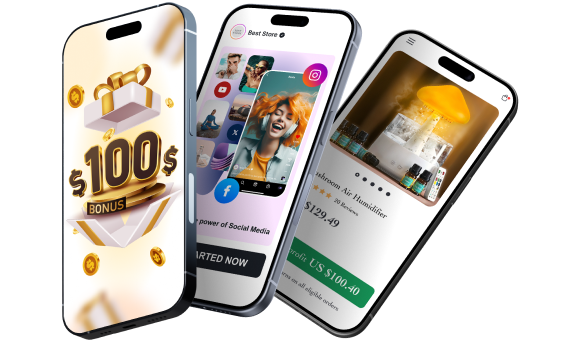
Starting a business takes momentum – and Sellvia gives you a head start. When you claim your free store today, you also get a $100 welcome gift to put toward growing your business. Use it to upgrade your store, boost your marketing, or unlock new tools. It is a real dollar value, handed to you on day one, with no catch and no hoops to jump through.
A massive catalog of digital products to sell 🏆
One of the biggest struggles in starting an online business is figuring out what to sell. Sellvia solves that completely. Your store comes pre-loaded with digital products – guides, courses, checklists, and tools – all created by Sellvia. You keep 50–70% of every sale. No inventory. No shipping. No logistics headaches.
Everything in one easy-to-use platform 🔥
Managing an online store shouldn’t be complicated. With Sellvia, you can handle orders, add new products, and even chat with customers – all from a simple and user-friendly platform. No need to mess with confusing tools or deal with unnecessary tech stuff. It’s all smooth sailing.
No upfront costs, just start selling 💰
A big reason people hesitate to start an online business is the cost. But here’s the good news: With Sellvia, you don’t need to invest in stock, storage, or shipping supplies. You can run your store with no upfront costs, keeping things low-risk while still making money.
Support that’s always got your back 🤝
Running a business comes with questions, but you’re never alone. Sellvia’s dedicated support team is available 24/7 to help with anything you need. Whether it’s a small question or a big challenge, they’ve got you covered.
The innovative products market in 2026 is moving fast – and the sellers who launch now will have a real head start on the competition. Get your free Sellvia store today and start selling the products people actually want to buy.