Most people who want to start a business ask the same question: where is the money actually worth the effort? There are hundreds of options out there, but not all of them are equal when it comes to profit margins, startup costs, and real income potential. If you are living paycheck to paycheck, working a job that barely covers your bills, or just ready to finally be your own boss – this guide is for you.
Quick Answer: The most profitable businesses in 2026 combine low overhead with scalable demand. Online stores selling digital products, service-based businesses, and content-driven income streams consistently lead the list – and the right choice depends on your time, budget, and goals.
Whether you have zero experience or just want to compare your options before committing, this breakdown covers the businesses most worth your attention – and what each one realistically pays.
Before diving in, it helps to know that the business landscape has shifted dramatically. The most profitable businesses today do not require a storefront, a warehouse, or even a college degree. They require a reliable internet connection and a willingness to learn. That is a very low bar – and it is one most people reading this can clear.
What makes a business truly profitable?
A profitable business is one where your revenue consistently exceeds your costs – ideally by a wide margin. But profitability is not just about how much money comes in. It is about how little you need to spend to generate it. That ratio is what separates a business worth building from one that keeps you busy without paying you well.
In 2026, the most profitable businesses share a few common traits. They have low startup costs. They scale without requiring you to hire a team right away. And they serve demand that already exists rather than trying to create it from scratch.
Online business models dominate this list for exactly those reasons – the infrastructure is already built, the customers are already shopping, and you can get started without renting office space or putting money into stock you hope will sell.
How much can you realistically earn?
Before comparing specific business models, it helps to set honest expectations. The table below shows how the most common options stack up by effort level and monthly earning potential. These figures reflect real-world outcomes for part-time operators within their first 6–12 months – not best-case guarantees.
These ranges reflect part-time operators in their first year. The higher figures take 60–90 days of consistent effort to reach – they are realistic but not guaranteed, and results depend heavily on how much time and attention you put in.
One note on these figures: Most beginners land in the lower half of each range during months one through three. That is completely normal. The goal in the first 90 days is to learn what works for your niche and audience – income grows from there.
The good news is that several of the most profitable businesses on this list can be started for free or near-free. You do not need thousands of dollars to begin. You need a solid platform, a clear starting point, and consistent action.
The most profitable businesses for beginners in 2026
Here is a detailed look at the business models that consistently deliver strong profit margins without requiring a large upfront investment or years of specialized experience. Each section covers what makes the model work, realistic earning expectations, and how to get started.
Online stores selling digital products
Selling digital products through your own online store is one of the most profitable businesses available right now – especially for people who are just starting out. Digital products include guides, courses, checklists, and online tools. There is no stock to buy, no packaging to deal with, and nothing to ship. When someone purchases, the product is delivered to them instantly.
Why digital product stores work so well in 2026
The profit potential here is exceptional. Because there are no physical production or delivery costs, you keep a much larger share of every sale. Platforms like Sellvia take this model even further – your store comes pre-loaded with digital products created for you, so you do not have to spend weeks writing or building anything from scratch. You simply open your store, activate ads, and start selling.
With over 1,500,000 stores launched and more than $1.5 billion earned by store owners, Sellvia has built a proven track record that skeptics cannot easily dismiss. It has also been recognized by Forbes, ranked in Inc.’s list of the 5,000 fastest-growing companies, and earned a Gold Award for Best IT Product from the Hermes Creative Awards.
Earning potential: $500–$10,000+ per month within 60–90 days of consistent effort, keeping 50–70% of every sale.
How to get started selling digital products
With Sellvia, the setup is done for you. You get a fully built online store stocked with ready-made digital products – guides, courses, checklists, and tools – all created by Sellvia. You do not write anything. You do not record anything. You just launch and sell. The built-in advertising system means you do not need to figure out Google Ads or Facebook targeting on your own. You set a daily budget between $10 and $50, and Sellvia handles the rest. Many store owners see their first orders on the same day they activate ads.
Freelance services
Freelancing is technically one of the most profitable businesses in terms of hourly return. If you have a marketable skill – copywriting, web design, video editing, bookkeeping, social media management – you can start earning within days of putting yourself out there. Your main cost is your time, which means profit margins are very high.
Which freelance services pay the most in 2026
The highest-paying freelance categories right now include paid advertising management ($50–$150 per hour), UX and product design ($60–$120 per hour), technical writing and SEO content ($40–$100 per hour), and software development ($75–$200 per hour). Even entry-level freelancers with basic skills can earn $20–$40 per hour on platforms like Upwork or Fiverr within their first 30–60 days.
Earning potential: $1,000–$8,000 per month depending on skill level, hours worked, and how quickly you build a client base.
The main limitation of freelancing
Here is what most people do not mention: freelancing does not scale easily. You can only work so many hours in a day, which means your income has a hard ceiling. Many freelancers eventually combine their service income with a separate revenue stream – like an online store – to break through that ceiling and build something that does not stop earning when they do.
Affiliate marketing
Affiliate marketing involves promoting other companies products and earning a commission on every sale you refer. You do not create a product, hold any stock, or deal with customer service. Your job is purely to drive recommendations and traffic to the right offer.
Realistic affiliate marketing income for beginners
Most beginners earn between $200 and $800 per month in their first year. This grows significantly once you have an established content platform – a blog, YouTube channel, or email list – that sends consistent traffic to your affiliate links. High-ticket niches like software, finance, and business tools pay the most per conversion, often $50–$200 per sale.
Earning potential: $200–$4,000 per month, with the higher end requiring 6–12 months of content building before things gain real traction.
How affiliate marketing compares to running your own store
Affiliate marketing wins on simplicity – no store, no products, no customer service. But running your own online store typically wins on total income potential because you control your pricing, your catalog, and your brand. For beginners who want faster results, a ready-built store with products already loaded usually delivers income sooner – without waiting months for content to rank or an audience to grow.
Print on demand
Print on demand lets you sell custom-designed products – t-shirts, mugs, phone cases, posters – without holding any stock. When a customer orders, the platform prints and ships the item directly. You design it; they handle everything else.
Profit margins in print on demand
Print on demand margins are lower than most other models on this list, typically 15–30%, because printing costs eat into your revenue. A t-shirt that sells for $28 might yield $7–$9 in profit. Volume is key – you need a strong social media presence or a loyal niche audience to generate enough orders to make meaningful income.
Earning potential: $100–$3,000 per month, with most beginners earning $200–$600 during their first 90 days.
Content creation and blogging
Building a content platform – a blog, a YouTube channel, or a newsletter – is a longer game, but it is one of the most profitable businesses over time. Once you have an audience, you can monetize through advertising, affiliate links, sponsored content, digital product sales, and more. The challenge is that results take time: most content creators spend 6–12 months building before they see consistent income.
Why content businesses have strong long-term potential
Content compounds. An article you write today can keep sending traffic and earning money for years. A YouTube video you post this month can generate views and ad revenue indefinitely. The upfront work is high and the early income is low – but for people who stick with it, this model builds serious long-term value.
Earning potential: $200–$5,000 per month, with the upper end typically taking 12–18 months to reach consistently.
Legal and ethical considerations
Starting any business comes with responsibilities that first-timers sometimes overlook. Getting these right from the beginning saves you from costly problems later – and it costs nothing extra to do it properly from the start.
Key principle: Build your business on legitimate practices from day one. It protects everything you work to create.
Register your business properly in your state. For most online businesses, a sole proprietorship or LLC is sufficient to get started. Keep your business and personal finances separate from the moment you make your first sale – a dedicated business bank account makes tax time significantly simpler and keeps your records clean.
When it comes to marketing, never fabricate reviews, misrepresent products, or use misleading claims about earnings. Consumer protection laws in the US carry real penalties for deceptive advertising. Advertising platforms also actively suspend accounts that violate their policies, which can shut down a paid traffic channel overnight and undo months of work.
Important note: If you are running an online store, make sure your product descriptions are accurate and your support response times are realistic. Transparency builds trust, and trust builds repeat customers – which is where the real long-term profit comes from.
Which business is more profitable for you? A guide by reader profile
The most profitable business is not the same for everyone. Your starting point – time, money, skills, and goals – determines which model gives you the best return. Here is a straightforward breakdown by reader type.
Complete beginner with a limited budget
If you are starting from zero with less than $500 to invest, a ready-built online store selling digital products is your best entry point. You get a fully built store, products already loaded, a built-in advertising system, and a support team available 24/7.
The startup cost is minimal, the learning curve is manageable, and you can be generating sales within days rather than months. This is exactly what Sellvia was designed for – people who need something real, not another course about how to start.
Side hustler with 10–15 hours per week
If you already have a day job and want to build something on the side, an online store works extremely well. Your store handles order delivery automatically – digital products are delivered instantly when someone buys – so you are not tied to it around the clock.
You can use your spare hours to run ads, check performance, and grow your reach. Many people in this position combine their store income with content creation over time, building two income streams without quitting their job first.
Full-time income goal within 12 months
If your aim is to replace a full-time paycheck – typically $3,000–$5,000 per month – within a year, you need a model with real scale potential. Online stores selling digital products are one of the strongest candidates. Income is not capped by your hours, it compounds as your marketing improves, and with a built-in advertising system doing the heavy lifting, you are not starting from scratch on traffic either.
Freelancing can get you to full-time income faster in raw dollar terms, but it keeps you trading time for money rather than building an asset. If financial freedom is the real goal – not just a bigger paycheck – then a scalable online store is the clearest path to getting there.
Retiree or fixed-income earner
If you are living on Social Security, a pension, or disability payments and want to supplement your income without physical strain, an online store is one of the most realistic options available. There is no heavy lifting, no commute, and no schedule someone else controls. You work from home, at your own pace, and the products are delivered digitally – so there is nothing to pack or ship. Many Sellvia store owners started exactly here and built steady supplemental income within their first few months.
Why Sellvia is a game-changer for your online store 🚀
Sellvia isn’t just another ecommerce tool. We are a trusted name in the industry, recognized by Forbes and even ranked in Inc.’s list of the 5,000 fastest-growing companies in the U.S. So if you’re serious about starting as a solopreneur, this is a smart place to begin.
Starting an online business can feel overwhelming, but that’s exactly where Sellvia steps in. It takes care of the tricky parts, so you can focus on making sales and growing your brand. Let’s break down what makes it such a great choice.
Get a ready-to-go store hassle-free 🎯
Want to start selling but don’t know where to begin? No worries! Just share your ideas, and Sellvia’s team will build a free ecommerce website that’s fully set up and ready to take orders from day one. No coding, no stress – just a store that works right out of the box.
A $100 welcome gift to grow your business faster 🎁
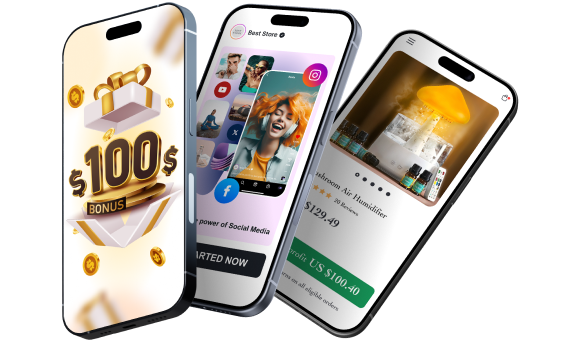
Starting a business takes momentum – and Sellvia gives you a head start. When you claim your free store today, you also get a $100 welcome gift to put toward growing your business. Use it to upgrade your store, boost your marketing, or unlock new tools. It is a real dollar value, handed to you on day one, with no catch and no hoops to jump through.
A massive catalog of digital products to sell 🏆
One of the biggest struggles in starting an online business is figuring out what to sell. Sellvia solves that completely. Your store comes pre-loaded with digital products – guides, courses, checklists, and tools – all created by Sellvia. You keep 50–70% of every sale. No inventory. No shipping. No logistics headaches.
Everything in one easy-to-use platform 🔥
Managing an online store shouldn’t be complicated. With Sellvia, you can handle orders, add new products, and even chat with customers – all from a simple and user-friendly platform. No need to mess with confusing tools or deal with unnecessary tech stuff. It’s all smooth sailing.
No upfront costs, just start selling 💰
A big reason people hesitate to start an online business is the cost. But here’s the good news: With Sellvia, you don’t need to invest in stock, storage, or shipping supplies. You can run your store with no upfront costs, keeping things low-risk while still making money.
Support that’s always got your back 🤝
Running a business comes with questions, but you’re never alone. Sellvia’s dedicated support team is available 24/7 to help with anything you need. Whether it’s a small question or a big challenge, they’ve got you covered.
Of all the most profitable businesses available in 2026, an online store with ready-made digital products stands out for its combination of low startup cost, high margins, and built-in support. Claim your free Sellvia store today and start building income on your own terms.
What are the most profitable businesses to start with no experience?
Which business is more profitable – an online store or affiliate marketing?
Both models can be profitable, but they work differently. Running your own online store gives you full control over pricing and your product catalog, with monthly income potential ranging from 500 to 10000 dollars or more for full-time operators. Affiliate marketing is simpler to start since there is no store or order management involved, but income growth is slower and heavily dependent on building an audience first. Most beginners who want faster results choose an online store, while those with an existing content platform often add affiliate marketing as a secondary income stream.
How long does it take to start making money with an online business?
Most online businesses generate their first sales within 30 to 90 days if the store is set up correctly and consistent effort is applied to driving traffic. Reaching a steady income of 500 to 1000 dollars per month typically takes 60 to 90 days for store-based models and 3 to 6 months for content-based models like affiliate marketing or blogging. Ready-built store solutions significantly reduce the setup time and help beginners focus on marketing rather than technical setup.
What is the most profitable online business for beginners in 2026?
In 2026, online stores selling digital products remain one of the most profitable options for beginners due to their low overhead and scalable structure. Global online consumer spending continues to grow year over year, and demand for digital guides, courses, and tools has never been higher. Platforms like Sellvia allow beginners to launch a fully functional store without any coding knowledge, with products already loaded and a built-in advertising system ready to activate. Beginners who commit to consistent marketing typically see meaningful income growth within their first 3 months.
How much can a beginner realistically earn from an online store?
A beginner running an online store part-time can realistically earn between 300 and 1500 dollars per month within the first 90 days, depending on niche, pricing, and how consistently they run ads or drive traffic. Full-time operators who actively test products and use paid advertising often reach 3000 to 10000 dollars per month within 6 to 12 months. These figures are realistic but not guaranteed – results depend on the effort invested and the quality of the store and marketing.