The internet has genuinely leveled the playing field. A parent at a kitchen table and a recent graduate in a studio apartment can build the exact same type of income-generating business – and thousands do every year. But “online business ideas” is one of those phrases that sounds exciting in theory and overwhelming in practice. There are hundreds of models, dozens of platforms, and no shortage of conflicting advice on which one is the best.
This guide cuts through all of it. You will find the most realistic, tested, and beginner-friendly online business ideas for 2026 – compared by effort level, startup cost, and earning potential. Whether you are looking for online business ideas from home, online business ideas with no money, or the most profitable online business ideas that scale over time, the answer is here.
Quick answer: The best online business ideas for beginners in 2026 include freelance services, virtual assistant work, online courses, and selling digital products – all of which can be started from home with little or no upfront investment and realistically generate $300–$2,000/month within the first 60–90 days.
The global ecommerce market is projected to surpass $7 trillion by 2026, and digital tools have made it easier than ever to offer services, sell products, and build an audience without leaving your home. You do not need a business degree, a large budget, or years of experience. What you need is the right idea matched to your skills, your lifestyle, and the time you can realistically commit each week.
Every online business idea on this list has verifiable communities of real people earning from it – on Reddit, Trustpilot, and independent income reports. The strongest models in 2026 are the ones where demand is clear, tools are accessible, and the path from zero to income is the most direct. Understanding where each model fits your situation is the first step – and that is exactly what this guide is built to help you figure out.
What are online business ideas?
An online business idea is any income-generating activity that can be set up and operated primarily through the internet. This could be a service you offer, a product you sell, content you create, or a platform you build. The defining feature is that location is not a barrier – you can work from anywhere with a reliable connection and a laptop or even just a smartphone.
In 2026, online businesses fall into three broad categories: service-based (you trade time and skills for money), knowledge-based (you monetize what you know), and digital product businesses (you create or curate digital goods that sell repeatedly). Each has a different risk profile, startup cost, and income ceiling – and understanding the difference is what separates people who find the right model quickly from those who bounce between ideas without results.
Important note: No online business generates income overnight. Most legitimate models take 60–90 days of consistent effort before producing meaningful results – and that timeline is still faster than almost any offline alternative.
The variety of online business ideas available today means there is almost always a model that fits your current situation – whether you have 2 hours a week or 40, a zero budget or a few hundred dollars to invest, an existing skill set or just a willingness to learn. The key is not to find the best idea in the world. The key is to find the best idea for you, right now, and start.
The most common mistake beginners make is spending weeks researching ideas and never acting on any of them. The faster you commit to one model and give it consistent effort for 90 days, the faster you will know whether it fits – and the faster your first real income will arrive.
How much can you realistically earn from an online business?
This is the question most guides dance around. The honest answer: it depends heavily on the model, your niche, and how consistently you treat it like a real business. Here is a realistic breakdown across the most common models in 2026.
Service-based models produce income fastest – often within 2 to 4 weeks of active outreach. Digital product businesses take longer to build but have stronger income ceilings and scale far more efficiently over time.
One note on the upper figures: The higher ranges in this table reflect experienced operators working full-time, 30–40 hours per week. Beginners should realistically expect the lower end for the first 6–12 months. That is still a meaningful improvement over most side income alternatives – and it is completely achievable with consistency.
The most realistic path for most people is to start part-time – around 10–15 hours per week – generate $300–$800/month within 6 months, and reinvest those earnings to scale. That is not a glamorous headline, but it is an honest one. The businesses that produce the strongest long-term results tend to have a steeper upfront learning curve, which also means far less competition from people who give up early.
With those earning realities in mind, let us look at each model in detail – starting with the fastest paths to your first dollar online.
Best online business ideas from home in 2026
Every idea below has real people earning from it right now – verifiable across income reports, Reddit communities, and Trustpilot reviews. The ones that rise to the top in 2026 are where demand is clear, the tools are accessible, and the distance from zero to your first dollar is the shortest. Choose one, commit to 90 days of real effort, and you will be further ahead than the majority of people who spend that same time just researching.
Service-based online businesses
Service businesses are the fastest way to generate income online. You are turning a skill you already have into a freelance offer. The startup cost is usually zero – you need a profile on a platform and the ability to deliver results for your first client. Most service-based entrepreneurs see their first payment within 2 to 4 weeks of active outreach.
Freelance writing and content creation
Content remains the primary driver of online marketing in 2026. Every brand with a website needs blog posts, product descriptions, email sequences, and social media copy. Freelance writers who deliver clear, readable, well-structured work are consistently in demand across every industry – from finance and health to tech and lifestyle.
Platforms like Upwork, Fiverr, and Contena connect writers with clients at every level. Beginners typically start at $15–$30 per article, but writers with niche expertise regularly earn $50–$150 per piece. Full-time freelance writers with a solid client base commonly reach $2,000–$5,000/month within their first year of serious effort.
Earning potential: $300–$5,000/month depending on niche expertise and client volume.
Virtual assistant services
Virtual assistants (VAs) handle tasks like inbox management, scheduling, data entry, customer service, research, and social media. It is one of the most accessible online business ideas for beginners because it requires minimal technical knowledge and is highly flexible – you can start with just a few hours a week around an existing job.
General VAs charge $15–$25/hour. Specialized VAs handling bookkeeping, CRM management, or paid advertising earn $35–$60/hour. Many VAs working 20–30 hours per week earn $1,500–$3,500/month. Platforms like Belay, Time Etc, and LinkedIn are solid starting points for landing your first client.
Earning potential: $1,000–$3,500/month part-time; $3,000–$6,000/month full-time with multiple clients.
Social media management
Every small business owner knows they need to be active on social media – but most genuinely do not have time for it. If you understand how Instagram, TikTok, or LinkedIn work and can create engaging content consistently, you can step in as a social media manager and run accounts on a monthly retainer basis.
Starting rates are typically $300–$700/month per client. Experienced managers handling 3–5 accounts earn $2,000–$5,000/month. The tools you need – Canva, Buffer, Later, Meta Business Suite – are either free or very low-cost, making this one of the best online business ideas with low investment available right now.
Earning potential: $1,500–$5,000/month with 3–6 retainer clients.
Knowledge-based online businesses
If you have expertise in any field – cooking, fitness, finance, coding, marketing, or a foreign language – you can monetize it online. Knowledge-based businesses tend to have the highest income ceilings because you are selling something that cannot easily be commoditized or undercut by a cheaper competitor. Your expertise is the product.
Online tutoring and teaching
Online tutoring is one of the best online business ideas for students and recent graduates, but it works just as well for experienced professionals in any field. Platforms like Tutor.com, Wyzant, and Superprof connect tutors with learners across academic subjects, test prep, and language learning. You set your own hours and rates, and you can start taking clients within days of signing up.
Beginner tutors typically charge $20–$35/hour. Subject specialists – SAT prep, university-level mathematics, medical licensing exams – earn $60–$150/hour. Tutors working 15–20 hours per week commonly earn $1,200–$3,000/month with zero startup costs beyond their time and expertise.
Earning potential: $800–$3,500/month part-time; $4,000–$8,000/month for specialists with full schedules.
Online course creation
Creating and selling an online course is one of the most profitable online business ideas if you have deep expertise in something people actively want to learn. Platforms like Teachable, Thinkific, and Kajabi host and sell your course automatically, handling payments, access, and delivery. You build it once – and it generates income repeatedly.
Building a quality course typically takes 4–8 weeks, but the same course can sell indefinitely after launch. A well-positioned course priced at $97–$397 reaching 50 students per month generates $4,850–$19,850 in revenue. Most creators earn far less initially – $1,000–$3,000/month is a realistic early target – but the ceiling is genuinely high for those who build an engaged audience around their content.
Earning potential: $1,000–$15,000+/month for established course creators with consistent traffic and audience trust.
Coaching and consulting
Coaching is one of the most direct ways to monetize expertise at a premium rate. Business coaches, life coaches, marketing consultants, and career advisors all operate in high-demand niches. You work one-on-one or in small groups, charge a premium rate, and deliver measurable outcomes for motivated clients who are already willing to invest in improvement.
Entry-level coaches charge $75–$150/hour. Experienced consultants in high-value niches – executive leadership, growth marketing, career transitions – earn $200–$500/hour or more. A coaching practice with 10 active clients paying $500/month each generates $5,000/month, a very achievable target for someone with genuine expertise and a clearly defined offer.
Earning potential: $2,000–$10,000+/month for coaches with a defined niche and a consistent client acquisition approach.
Digital product businesses
Once a digital product is created, it can sell indefinitely with no production cost, no physical logistics, and no ceiling tied to the hours you work. These models require more upfront effort than service businesses, but they scale more efficiently – and every sale you make builds on the last.
Selling digital downloads
Digital products – Notion templates, Excel spreadsheets, Photoshop presets, resume templates, ebooks, printables – sell on platforms like Etsy, Gumroad, and Payhip. You create the product once and sell it indefinitely with no ongoing production cost. This is one of the best online business ideas with no money since the only real investment is your time and creativity.
A well-designed Notion template priced at $9–$29 selling 100 copies per month generates $900–$2,900 with no ongoing cost. Creators with multiple products and an active social media presence regularly earn $1,000–$5,000/month. The key to success is volume and visibility – more products across more platforms compounds quickly over time.
Earning potential: $500–$5,000/month for prolific creators with strong SEO presence and an engaged audience.
Affiliate marketing
Affiliate marketing means promoting other companies’ products and earning a commission on every sale you refer. You do not create a product, handle customer service, or manage any logistics. Your job is to drive the right traffic to the right offer through content, email, or social media – and collect a percentage of every sale that results.
Amazon Associates pays 1–10% commission. Software companies, online course platforms, and financial products typically pay 20–50% recurring commissions. Affiliate marketers with established content – a blog, YouTube channel, or email list – earn anywhere from $500 to $20,000+/month depending on traffic volume and niche. It remains one of the best online business ideas from home because the overhead is close to zero.
Earning potential: $200–$10,000+/month depending on audience size, content consistency, and niche commission rates.
Blogging and content monetization
Blogging is still a legitimate online business idea in 2026, but the landscape is more competitive and the timeline to income is longer than it was five years ago. A blog attracting consistent organic traffic can monetize through display advertising (Mediavine, AdThrive), affiliate links, sponsored posts, and digital product sales layered together.
Most bloggers do not see meaningful income until month 9–18 of consistent publishing. Those who break through – with quality content targeting underserved niches – commonly earn $1,000–$5,000/month from display ads alone at 50,000–100,000 monthly pageviews. Blogging works best as a long-term asset built alongside a faster-income model, not as a standalone starting point for someone who needs results quickly.
Earning potential: $500–$8,000/month for established blogs with strong domain authority and consistent organic traffic.
How to start an online business with no money in 2026
Starting an online business does not require a budget – it requires resourcefulness. These five principles apply whether you are launching a service business, a content platform, or a digital product store from scratch in 2026.
Start with skills you already have
The fastest path to your first dollar online is monetizing something you already know how to do. If you write well, start freelancing today. If you are highly organized, offer VA services. If you know Excel inside out, create and sell spreadsheet templates. Skipping the learning curve means skipping the income delay that stops most beginners before they ever see results.
Use free tools and platforms first
In 2026, free alternatives exist for almost every paid business tool. Canva for design, Google Workspace for productivity, Mailchimp for email marketing, WordPress.com for blogging, Fiverr for service listings – all are free at the entry level. Do not spend money on software subscriptions before you have your first paying client or customer. Your first investment should come from the business itself, not your savings.
Validate before you invest
Before building anything significant, confirm that people are actually willing to pay for it. Post your service offer on Reddit or LinkedIn. List a digital product on Gumroad before you finish the full version. Run a soft pre-sale to gauge real interest. Validation costs nothing and prevents you from spending weeks building something nobody buys.
Build an audience from day one
Whatever online business model you choose, an audience is your most valuable long-term asset. Start posting on one platform – TikTok, Instagram, a niche subreddit, or LinkedIn – from the very beginning. Every follower is a potential customer, referral, or future client. An engaged audience of 1,000 people can generate consistent income through multiple channels simultaneously.
Reinvest your first earnings
Your first $300–$500 in online income is the most strategically important money you will earn. Reinvest it into the business – a better tool, a focused course that shortens your learning curve, or your first small advertising test. Compounding your early wins instead of cashing everything out immediately accelerates growth significantly and separates the businesses that scale from the ones that stall.
Legal and ethical considerations for online businesses
Running an online business means operating as a real business – and that comes with real responsibilities. Getting these foundations right from the start protects you, builds trust with your audience, and prevents issues that can derail a business years into its growth.
Key principle: Transparency with your audience is not just an ethical choice – it is a legal requirement in most countries and a long-term competitive advantage over less honest competitors.
Register your business. In the US, a sole proprietorship is the simplest legal structure, but an LLC provides personal liability protection for a modest filing fee ($50–$500 depending on your state). In the UK, registering as a sole trader with HMRC is free and takes under 10 minutes online. Either way, operating as a registered entity signals legitimacy to clients and customers.
Disclose affiliate relationships. The FTC requires US-based content creators to clearly label affiliate links and sponsored content. This is not optional – undisclosed affiliate promotion is deceptive advertising under federal law. Most audiences also respond better to honest disclosure than to unexplained recommendations, so transparency genuinely helps your results.
Avoid grey-area tactics. Fake reviews, misleading income claims, and scraping copyrighted content may appear to produce short-term gains, but they carry real legal and reputational risk. Building a business on a deceptive foundation is not a shortcut – it is a liability that compounds over time and is impossible to unwind once it catches up with you.
Important: When selling to customers in the EU, GDPR compliance is mandatory regardless of where your business is physically registered or headquartered.
How to choose the right online business idea for you
There is no universally best online business idea. The right model depends on your skills, your available time, your financial goals, and how much short-term uncertainty you are comfortable with. Here is how to think about it based on where you are right now.
Complete beginners
If you are starting from zero – no audience, no established skills, limited time – go with freelance services or virtual assistant work. These models generate income fastest because you can land your first client within a week with the right outreach. Choose one model and commit to it for at least 90 days before reassessing. Spreading attention across three ideas at once is the single most common reason beginners fail to see results from any of them.
Intermediate / part-time entrepreneurs
If you already have some online experience – a modest social media following, solid writing skills, or real industry expertise – layering in affiliate marketing or digital product sales alongside your existing work makes sense. These models take longer to build but have strong income ceilings and do not require you to trade every hour for money. They work best as additions to an existing income stream rather than immediate replacements for one.
Advanced / full-time goal
If your goal is to replace a full-time income within 12–18 months, the models with the highest scalability are online courses, coaching, and platforms like Sellvia that give you a ready-built store with digital products pre-loaded and a built-in advertising system to start generating orders from day one. Each can produce $5,000–$20,000/month with the right systems in place. The common thread: treat the business as a real operation with consistent daily effort, a clearly defined audience, and a willingness to invest in tools and advertising as you grow.
The online business landscape in 2026 rewards focused specialists over generalists. Serve a specific audience better than anyone else in your space, build for the long term, and the compounding effect of a well-run online business becomes one of the most powerful financial tools available to the average person.
Why Sellvia is a game-changer for your online store 🚀
Sellvia isn’t just another ecommerce tool. We are a trusted name in the industry, recognized by Forbes and even ranked in Inc.’s list of the 5,000 fastest-growing companies in the U.S. So if you’re serious about starting as a solopreneur, this is a smart place to begin.
Starting an online business can feel overwhelming, but that’s exactly where Sellvia steps in. It takes care of the tricky parts, so you can focus on making sales and growing your brand. Let’s break down what makes it such a great choice.
Get a ready-to-go store hassle-free 🎯
Want to start selling but don’t know where to begin? No worries! Just share your ideas, and Sellvia’s team will build a free ecommerce website that’s fully set up and ready to take orders from day one. No coding, no stress – just a store that works right out of the box.
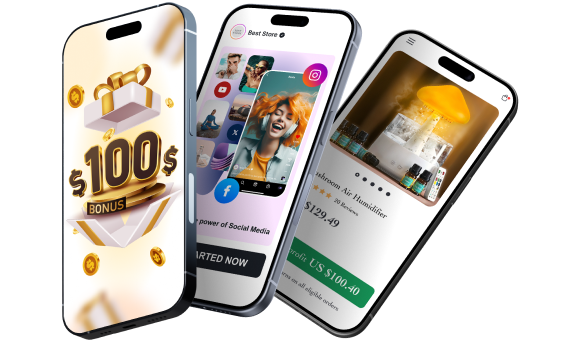
A $100 welcome gift to grow your business faster 🎁
Starting a business takes momentum – and Sellvia gives you a head start. When you claim your free store today, you also get a $100 welcome gift to put toward growing your business. Use it to upgrade your store, boost your marketing, or unlock new tools. It is a real dollar value, handed to you on day one, with no catch and no hoops to jump through.
A massive catalog of digital products to sell 🏆
One of the biggest struggles in starting an online business is figuring out what to sell. Sellvia solves that completely. Your store comes pre-loaded with digital products – guides, courses, checklists, and tools – all created by Sellvia. You keep 50–70% of every sale. No inventory. No shipping. No logistics headaches.
Everything in one easy-to-use platform 🔥
Managing an online store shouldn’t be complicated. With Sellvia, you can handle orders, add new products, and even chat with customers – all from a simple and user-friendly platform. No need to mess with confusing tools or deal with unnecessary tech stuff. It’s all smooth sailing.
No upfront costs, just start selling 💰
A big reason people hesitate to start an online business is the cost. But here’s the good news: With Sellvia, you don’t need to invest in stock, storage, or shipping supplies. You can run your store with no upfront costs, keeping things low-risk while still making money.
Support that’s always got your back 🤝
Running a business comes with questions, but you’re never alone. Sellvia’s dedicated support team is available 24/7 to help with anything you need. Whether it’s a small question or a big challenge, they’ve got you covered.
Of all the online business ideas in this guide, Sellvia is the only one that hands you a ready-built store, digital products to sell, and a built-in ad system – all from day one. Claim your free store today and start building the online business you have been planning.