Most people searching for a way to make money online eventually land on the same question: “How do I build something that actually feels like mine?” Private label dropshipping is one of the most common answers you will find – and for good reason.
The idea is appealing. Instead of competing with dozens of other stores selling the same generic product, you put your own name on it. Your brand. Your packaging. Your store. Suddenly you have something that feels real, commands better prices, and could build a loyal customer base over time.
But here is the honest truth: private label dropshipping is not the easiest path for someone starting from scratch. It requires time, supplier negotiation, branding work, and upfront costs before you see your first sale. If you are looking for a faster route to income – especially with no experience and no big budget – there are better starting points available in 2026.
Quick Answer: Private label dropshipping means sourcing generic products from a supplier, applying your own branding, and selling them through your online store without holding inventory. It offers better margins than standard selling but takes more setup time – typically 4 to 6 weeks before your first sale, and 3 to 6 months before consistent income.
What is private label dropshipping?
Private label dropshipping combines two separate business models. On one side, you have selling without holding stock – your supplier stores the product and ships it directly to your customer when a sale is made. On the other side, you have branding – instead of selling the manufacturer’s generic product as-is, you apply your own logo, packaging, and brand identity to it.
Put those two things together and you get a business where you control the brand experience and the customer relationship, while your supplier handles all the physical logistics. You are not running a warehouse. You are not shipping boxes. You are building a brand and making sales.
The key thing that separates private label from standard selling is ownership. With a standard generic store, your product looks identical to what dozens of competitors are selling. Anyone can undercut your price.
With private label, your branding makes the product feel different – even if the underlying item is similar – and that distinction gives you real pricing power and the potential for customer loyalty.
Why this works in 2026: Shoppers have become more brand-conscious, even at lower price points. A well-presented branded store with consistent visuals and a clear value proposition converts significantly better than a storefront full of unbranded generic goods.
How much can you realistically earn with private label dropshipping?
Private label dropshipping tends to offer better margins than selling generic products, but the earning potential depends heavily on how much effort you put into branding, marketing, and product selection. Here is a realistic breakdown of what different levels of commitment typically produce:
These are realistic ranges based on common outcomes – not guarantees. The basic tier is the most achievable starting point for most people. The higher figures require consistent paid advertising, strong SEO, and a well-developed product line built over many months.
One note on the top figures: $300–$800/day represents what serious, full-time operators can achieve after a year of dedicated work. Most people starting part-time will sit closer to $20–$80/day for the first few months. That is still a meaningful side income – and it can grow as your brand builds recognition and repeat buyers.
The timeline also matters. Unlike some online income methods where you can see results in the first week, private label dropshipping involves a branding phase – designing assets, communicating with suppliers, and setting up your store before you can even accept orders.
Budget 4 to 6 weeks before your first sale, and 3 to 6 months before you have a clear read on whether a product line is actually working.
How private label dropshipping works: A step-by-step overview
The mechanics of private label dropshipping are straightforward once you break them down. Here is what the process looks like from idea to first sale – and what you need at each stage.
Finding and vetting suppliers
Your supplier is the foundation of everything. You need a manufacturer or wholesaler who is willing to brand products with your logo and ship individual orders directly to your customers. This is sometimes called white label or OEM fulfillment, and the availability of it has grown a lot in recent years.
Sourcing through supplier marketplaces
Supplier marketplaces remain one of the most accessible starting points for beginners exploring private label dropshipping. Many sellers on these platforms offer branding services for relatively low minimum order quantities. Look for listings that mention “custom logo,” “OEM accepted,” or “private label” – these are signals that the supplier is open to branding arrangements.
Before committing to a supplier, always order a sample. Check the product quality, the packaging options, and how long shipping actually takes to your target market. Suppliers with strong, documented review histories are always the safer choice. A few dollars on a sample can save you weeks of problems later.
Earning potential: $20–$60/day for a focused niche store with a small catalog of branded products at this entry tier.
Using structured private label platforms
Beyond general marketplaces, dedicated platforms like Printful offer structured private label programs where the branding process is more formalized. Printful, for example, handles print-on-demand products – meaning you can create custom-branded apparel, accessories, and home goods with zero minimum order quantity.
These platforms often have a higher per-unit cost, but the logistics are more reliable and the supplier vetting is done for you.
Reaching out to manufacturers directly
For more advanced setups, sourcing directly from manufacturers through platforms like Alibaba gives you better pricing and more control over product customization. The minimum order quantities are typically higher, and the back-and-forth communication takes longer – but the margins can be significantly better once you have scale.
This approach makes the most sense after you have already validated a product at a smaller scale and you are ready to commit to a specific line.
Important: Always use escrow-style payment protection when working with new manufacturers. Never wire money directly to an unverified contact – use the platform’s built-in trade protection tools whenever available.
Building your brand identity
Your brand does not need to be elaborate, but it does need to be consistent. At minimum, you need a store name, a logo, a color palette, and a clear reason why your store exists for a specific type of customer. Free tools like Canva handle logo design well for beginners. If you have a budget of $30 to $100, platforms like Fiverr can deliver solid brand assets quickly.
Choosing the right niche is the most important branding decision you will make. Aim for something specific enough to feel curated but broad enough to support a full product catalog. “Home goods” is too broad. “Organization tools for small apartment living” is a workable niche.
The more clearly defined your audience, the easier every other part of the business becomes – from writing product descriptions to running ads to building a repeat customer base.
Setting up your online store
Your online store is your brand’s home. The platform you choose affects your SEO, your payment options, your ability to automate order processing, and your overall credibility with customers.
Platform selection
For SEO-driven traffic – which tends to be the most sustainable long-term source for private label stores – platforms built on WordPress give you full control over your content, page structure, and metadata. Shopify is faster to set up but limits some technical SEO flexibility.
Both are viable; the right choice depends on how comfortable you are with technology and how much you plan to invest in content marketing.
Product pages and descriptions
Generic supplier descriptions will hurt your conversion rate and your search rankings. Rewrite every product description in your own voice, using language your target customer actually searches for. Highlight the brand story – customers are choosing your product, not a commodity item. Include use-case scenarios, practical details, and genuine customer-focused language throughout.
Marketing your private label store
Private label dropshipping has a built-in marketing advantage: you own a brand, which means you can build an actual audience around it.
The most effective marketing channels for new stores in 2026 are organic social media (especially short-form video on platforms like TikTok and Instagram for visual products), SEO-driven blog content, and targeted paid advertising once you have a validated product.
Start with one channel and do it well before adding others. Many successful private label store owners spend their first three months exclusively on organic content – documenting the brand story, showing the product in use, and building an email list. Paid ads work best to scale something that is already converting. Validate organically first, then invest in ads.
Earning potential: Stores combining SEO content with a focused paid ads strategy can reach $100–$300/day in net income within 6 to 9 months of consistent effort.
Private label dropshipping vs standard online selling: Key differences
Understanding where private label dropshipping sits relative to other ways of selling online helps you decide whether it is the right model for where you are right now.
Standard selling is faster to launch but harder to differentiate over time. Private label takes more upfront effort but builds something with real long-term value – a brand that is harder for competitors to copy and a customer base that comes back because they trust your store specifically.
Legal and ethical considerations for private label dropshipping
Private label dropshipping is a completely legitimate business model, but there are a few important boundaries you need to understand before you launch.
What to avoid absolutely
Do not brand products with logos, names, or visual designs that resemble established trademarks. Even if the underlying product is generic, packaging that looks like a known brand creates serious legal exposure – and it is not worth the risk.
This includes obvious cases like copying well-known brand colors or wordmarks, but also subtler cases like using terms that are trademarked within specific product categories.
Avoid making claims about your products that you cannot back up with evidence – particularly in health, wellness, or supplement categories where regulatory agencies like the FDA impose strict rules on what you can say in advertising and on packaging.
Important note: If you plan to sell into the EU or UK markets, you also need to comply with packaging and labeling regulations that go beyond what most generic suppliers provide by default. Build that compliance step into your branding process from the start, not as an afterthought.
What to do instead
Run a basic trademark search before you register your brand name. The US Patent and Trademark Office has a free public search tool at USPTO.gov, and EUIPO offers a similar tool for European trademarks. When writing product claims, stick to what you can genuinely support or what your supplier can document.
Work with suppliers who can provide safety certifications for your product category – especially if you are selling anything that comes into contact with skin, food, or children.
Key principle: A private label business built on a genuine brand and honest product claims is far more sustainable than one built on shortcuts that create legal or reputation risk down the line.
Which approach is right for you in 2026?
Private label dropshipping is not a one-size-fits-all model. The right entry point depends on where you are starting from and how much time and budget you can genuinely commit right now.
Complete beginner
If you are new to running an online business entirely, adding the complexity of private label branding on top of learning how ecommerce works is a lot to take on at once. A better starting point is a ready-made store with products already loaded – one that lets you learn how to drive traffic, handle customer questions, and understand your numbers before you layer in custom branding.
Think of this phase as practical education with the real upside of actual income. Once you understand how an online store works, transitioning to private label is a natural next step.
Intermediate / part-time
If you already have some experience with online selling and want to differentiate your store, private label is a logical upgrade. Start with your best-performing products and approach suppliers about branding options. Logo placement on packaging is the easiest and cheapest entry point – and you can expand from there as your income grows.
Most people at this stage who add private labeling to an existing store see income of $80 to $150/day within 4 to 6 months of making the switch.
Advanced / full-time goal
If your goal is a full-time income from an online store – $300/day or more – you need to treat it like a real business from day one. That means a defined niche, a brand identity you have genuinely invested in, a content strategy that builds organic traffic over time, and a paid ads budget you test and refine systematically.
The most consistent earners at this level typically run 2 to 3 focused stores in specific niches rather than one broad general store. Focus beats breadth at scale.
The online selling space continues to grow every year. Consumer comfort with buying online is higher than ever, and the tools available to independent store owners – from built-in advertising systems to automated order processing – make it easier than at any point in the past to compete and win.
The window to build something real is open right now.
A faster path to your own online store in 2026
Private label dropshipping can work. But for most people – especially those starting with no experience, limited budget, or limited time – there is a faster and lower-risk way to build an online income with a real branded store.
Sellvia offers exactly that. Instead of spending weeks sourcing suppliers, designing branding, negotiating minimums, and setting up a store from scratch, you get a fully built store with digital products already loaded and a built-in advertising system that can start generating orders on day one.
Digital products – guides, courses, checklists, online tools – have one major advantage over physical private label products: there is no inventory, no packaging, no logistics, and no minimum order quantity. When a sale is made, the product is delivered instantly. You keep 50 to 70% of every sale. And your store is ready from the moment you activate it.
That is a different model than private label dropshipping – and in many ways, it is a simpler one to start with.
Why Sellvia is a game-changer for your online store 🚀
Sellvia isn’t just another ecommerce tool. We are a trusted name in the industry, recognized by Forbes and even ranked in Inc.’s list of the 5,000 fastest-growing companies in the U.S. So if you’re serious about starting as a solopreneur, this is a smart place to begin.
Starting an online business can feel overwhelming, but that’s exactly where Sellvia steps in. It takes care of the tricky parts, so you can focus on making sales and growing your brand. Let’s break down what makes it such a great choice.
Get a ready-to-go store hassle-free 🎯
Want to start selling but don’t know where to begin? No worries! Just share your ideas, and Sellvia’s team will build a free ecommerce website that’s fully set up and ready to take orders from day one. No coding, no stress – just a store that works right out of the box.
A $100 welcome gift to grow your business faster 🎁
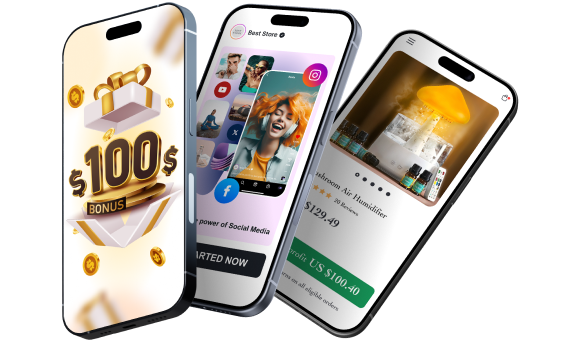
Starting a business takes momentum – and Sellvia gives you a head start. When you claim your free store today, you also get a $100 welcome gift to put toward growing your business. Use it to upgrade your store, boost your marketing, or unlock new tools. It is a real dollar value, handed to you on day one, with no catch and no hoops to jump through.
A massive catalog of digital products to sell 🏆
One of the biggest struggles in starting an online business is figuring out what to sell. Sellvia solves that completely. Your store comes pre-loaded with digital products – guides, courses, checklists, and tools – all created by Sellvia. You keep 50–70% of every sale. No inventory. No shipping. No logistics headaches.
Everything in one easy-to-use platform 🔥
Managing an online store shouldn’t be complicated. With Sellvia, you can handle orders, add new products, and even chat with customers – all from a simple and user-friendly platform. No need to mess with confusing tools or deal with unnecessary tech stuff. It’s all smooth sailing.
No upfront costs, just start selling 💰
A big reason people hesitate to start an online business is the cost. But here’s the good news: With Sellvia, you don’t need to invest in stock, storage, or shipping supplies. You can run your store with no upfront costs, keeping things low-risk while still making money.
Support that’s always got your back 🤝
Running a business comes with questions, but you’re never alone. Sellvia’s dedicated support team is available 24/7 to help with anything you need. Whether it’s a small question or a big challenge, they’ve got you covered.
If private label dropshipping felt like too many moving parts, Sellvia gives you the brand, the products, and the tools – already in place. Get your free store today and start building an income on your own terms.
What is private label dropshipping?
How much does it cost to start private label dropshipping?
Starting costs vary depending on how much branding work you invest in upfront. At the most basic level, you need a domain name which costs around 10 to 15 dollars per year, a store platform, and a small budget for product samples which typically runs 30 to 100 dollars. Logo design can be done for free with tools like Canva or outsourced on Fiverr for 20 to 50 dollars. Most beginners start private label dropshipping for under 200 dollars total before any paid advertising. That said, a platform like Sellvia lets you launch a fully built store with digital products already loaded at no upfront cost, which is a faster and lower-risk starting point for many people.
Is private label dropshipping profitable in 2026?
Private label dropshipping is profitable in 2026 for those who commit to strong branding, niche selection, and consistent marketing. Beginner stores using basic logo branding typically earn 20 to 60 dollars per day within the first 60 to 90 days. Stores with stronger branding, SEO content, and a focused niche can reach 100 to 300 dollars per day within 6 to 9 months. The model tends to generate better income per sale than selling generic products because branded items command higher prices and face less direct price competition.
What products work best for private label dropshipping?
The best products for private label dropshipping are widely available as generics but gain real perceived value from branding. Popular categories include beauty and skincare products, pet accessories, fitness gear, kitchen tools, and eco-friendly home goods. Products with a retail price between 25 and 80 dollars tend to offer the best balance of income potential, return rate, and customer lifetime value. Avoid heavily regulated categories like supplements or electronics until you are fully confident about compliance requirements in your target market.
How is private label dropshipping different from white label dropshipping?
The two terms are often used interchangeably, but there is a meaningful distinction. White label means you are selling a product that multiple retailers can brand and sell without any changes to the product itself. Private label typically implies a closer relationship with the manufacturer and sometimes involves product modifications or exclusive formulations. In practice, most beginners start with white label arrangements where they apply their logo to a stock product, and move toward true private label as their order volume and supplier relationships develop over time.