Retail digital transformation is no longer a buzzword saved for big corporate boardrooms. In 2026, it is the single biggest shift happening across global commerce – and it is creating real income opportunities for everyday people who know where to look.
Whether you have been running a small business for years or you are exploring ways to earn online for the very first time, understanding this shift is your first step toward building something that actually works.
Quick Answer: Retail digital transformation is the process of integrating digital technology into every part of how products and services are sold – from payments and marketing to customer experience and delivery. For everyday entrepreneurs, it opens the door to low-cost, scalable online selling models that require no inventory, no warehouse, and no technical background to start.
This guide breaks down what retail digital transformation actually means in plain terms, how much you can realistically earn by riding this wave, and which methods are worth your time in 2026.
What is retail digital transformation?
Retail digital transformation is the process of replacing or upgrading traditional retail operations with digital tools, platforms, and systems. It covers everything from moving a physical store online, to automating how orders are handled, to using data to understand what customers want before they even search for it.
The idea at the center of it all is simple: businesses and individuals that embrace digital tools sell more, spend less, and grow faster than those who do not.
In 2026, this transformation is accelerating. Global ecommerce sales are on track to exceed $8 trillion this year, with a growing share coming from independent sellers running online stores – not traditional storefronts.
The barriers to entry have dropped dramatically. You no longer need a physical location, a large team, or significant upfront capital to participate in retail. What you need is the right digital setup and a clear plan.
For everyday people, the most accessible way into this transformation is through an online store selling digital products. Guides, courses, checklists, and tools – all delivered instantly, with no inventory headaches, no shipping delays, and margins of 50–70% on every sale.
Why this works in 2026: Consumer behavior has permanently shifted toward buying online across almost every product category. People who are not part of this shift are being left behind – and those who join it early have the most to gain.
How much can you realistically earn?
Here is where honest framing matters. The income potential from riding the retail digital transformation trend is real – but it is not automatic, and it is not instant. What you earn depends on the method you choose, the effort you put in, and how quickly you learn from your results.
Below is a clear breakdown of the most common approaches people are using to earn from this shift right now.
Online stores selling digital products consistently offer the best balance of startup cost versus earning potential. Consulting pays well but requires an existing skill set and a client base. Content and affiliate work is the slowest to build but the most scalable once established.
One note on these figures: Numbers like “$200/day” reflect what experienced sellers with active, optimized stores achieve after 60–90 days of real effort. Most beginners start at $30–$80/day within their first two to three months, with consistent daily focus on their store, their products, and their marketing. Results vary, and none of this happens automatically.
The good news is that the digital transformation of retail has lowered the floor for getting started more than ever before. You do not need a business degree or a marketing background to launch. Platforms like Sellvia give you a fully built store from day one – loaded with digital products, a built-in ad system, and a support team available around the clock.
Key ways to profit from retail digital transformation
There are several practical paths entrepreneurs are using right now to earn from the retail digital transformation trend. Some require more upfront work than others, but all of them are accessible without advanced technical skills. Here is an honest look at each one – what it involves, what you can expect to earn, and how to get started.
Building and running an online store with digital products
Selling digital products online is one of the clearest and most beginner-friendly entry points into the retail digital transformation movement. Instead of managing physical stock, you run an online store that sells guides, courses, checklists, and tools – all created for you and delivered to customers instantly the moment they buy.
There is no inventory. No shipping. No warehouse. Every sale is clean, fast, and profitable – with margins of 50–70% on each transaction.
How to get started
The fastest starting point in 2026 is a ready-to-go store with digital products already loaded in. Sellvia builds that store for you – fully configured, with a catalog of products ranging from financial guides to parenting checklists to online tools. You do not create the products. You sell them, keep the majority of each sale, and Sellvia handles the instant digital delivery.
Your 14-day free trial includes a $40 ad coupon so you can activate the built-in advertising system and start reaching real buyers without spending your own money first. Many store owners see their first orders on the same day they turn ads on.
How long before you see results
Realistic timelines vary, but most store owners see their first profitable weeks within 60–90 days of launching, assuming they stay consistent. The first month is usually about learning – which products generate the most interest, which ad creatives resonate with buyers, and which messages connect with your audience. Month two and three is where things compound if you have been applying those lessons.
Earning potential: $30–$200/day after 60–90 days of active effort, with consistent store owners reaching $200+/day in established niches.
Content and affiliate marketing in the ecommerce space
Affiliate marketing in the retail and ecommerce space means promoting other companies’ products or platforms and earning a commission on each sale you refer. It is one of the more accessible methods for beginners with no upfront budget – but it is also the slowest to build meaningful daily income.
How to start
The most effective approach in 2026 is building content around buying-intent keywords – review articles, comparison posts, best-of lists – and placing affiliate links naturally throughout. YouTube and long-form written content still dominate for affiliate income in ecommerce niches.
Most affiliate marketers take 6–12 months to reach consistent daily earnings, which is why this works best as a complementary income stream rather than a standalone strategy for beginners who need results faster.
Earning potential: $10–$80/day for established content creators. Beginners should expect 6+ months before consistent daily income.
Online reselling and retail arbitrage
Retail arbitrage – finding discounted products from physical or online retailers and reselling them at a markup – is one of the oldest ecommerce approaches around. Digital transformation has made it more efficient: scanning apps let you check resale margins in seconds, and repricing tools help you manage listings across platforms.
What makes it work
The advantage is low startup cost and fast cash flow potential. You can start with $200–$500 in sourcing budget and see returns within days. The disadvantage is that it does not scale cleanly – you are still handling physical products, spending time sourcing, packing, and shipping, and your income is tied directly to your hours.
Most people who start with arbitrage eventually move toward a more automated model as they grow.
Earning potential: $30–$100/day with consistent sourcing effort, scaling to $150+/day for sellers running multiple marketplace accounts.
Ecommerce consulting and digital retail services
If you already have experience in marketing, web design, or retail operations, there is significant demand from small businesses trying to navigate their own digital transformation journey. Consulting, store setup, social media management, and ad account management are all in high demand as traditional retailers work to build an online presence.
How to find clients
LinkedIn, local business networks, and direct outreach to brick-and-mortar businesses in your area are the most reliable starting channels. Retail owners who know they need to go digital but do not know where to start are your ideal client. Charging a flat fee for store setup ($500–$2,000) plus a monthly retainer for ongoing support ($500–$1,500/month) is a sustainable model many consultants use.
Earning potential: $100–$500/day once you have two or three ongoing retainer clients. The ceiling is skill-limited rather than market-limited.
Social commerce and brand building online
Social commerce – selling directly through social media platforms like TikTok Shop, Instagram, and Facebook – is one of the fastest-growing retail channels of 2026. Creators and entrepreneurs who build an engaged following in a niche can monetize that audience through product sales, brand partnerships, and their own online stores.
How to get started
The most important thing here is choosing one platform and one niche and going deep before going wide. TikTok and Instagram Reels offer the fastest organic reach right now for product-focused content. The challenge for most beginners is that building an audience takes time – typically 3–6 months before you see meaningful daily traffic from organic content alone.
Pairing social content with a Sellvia store gives you a direct way to convert that audience into buyers, with digital products that deliver instantly and require no fulfillment effort on your end.
Earning potential: $20–$150/day once you have built a consistent content presence and linked it to a product store.
Legal and ethical considerations in digital retail
Getting into online selling as part of the retail digital transformation opportunity is completely legitimate – but there are pitfalls that can damage your reputation, get your accounts shut down, or expose you to real financial risk. Knowing what to avoid is just as important as knowing what to do.
What to avoid absolutely
Fake reviews are one of the fastest ways to destroy a new online business. Platforms like Google, Trustpilot, and Amazon actively detect manipulated reviews, and accounts caught doing this face permanent bans with no recourse.
Misleading customers about what they are buying – overstating the value of a digital product, hiding fees, or making income guarantees you cannot back up – violates consumer protection laws and leads to chargebacks, refund demands, and loss of payment processing access.
Grey-area tactics like fake urgency timers, misleading countdown offers, or manufactured scarcity might generate a short-term spike but build zero trust. A business built on those foundations does not last.
Key principle: If your marketing relies on hiding information from the customer, it is not a sustainable business model – it is a liability.
What to do instead
Build credibility from day one by being clear about what customers are buying, what they will receive, and when. For digital products, this means accurate descriptions, realistic outcomes, and clear terms around refunds. These are not just ethical practices – they directly reduce chargebacks and improve your long-term conversion rate.
For tax and legal compliance, register your business appropriately for your country, keep records of every transaction, and understand your obligations around sales tax. Modern accounting tools make this straightforward, and the protection it gives you is well worth the minimal effort.
How to choose the right method for your situation
Retail digital transformation creates opportunity at every skill level, but not every method suits every person. Here is a straightforward breakdown by reader profile to help you identify your clearest starting point.
Complete beginner
If you are starting from zero – no existing audience, no ecommerce experience, and a limited budget – a ready-to-go online store selling digital products is your cleanest entry point. It removes the technical setup barrier entirely and gives you a functional, product-filled store immediately. Your only job in the first 30 days is to learn the basics: activate the built-in ads, watch what connects with buyers, and refine from there. Expect to invest more time than money in the early months.
Intermediate / part-time
If you have some familiarity with online marketing or have run a side hustle before, you are in the best position to combine methods. An online product store as your primary income channel, supplemented by social content in the same niche, creates two revenue streams that reinforce each other. Your content builds trust and drives traffic – your store converts that traffic into orders.
Aim for $50–$100/day within 60 days with consistent part-time focus of two to three hours daily.
Advanced / full-time goal
If your goal is replacing a full-time income – typically $150–$300/day – the fastest path is a scaled online store operation with multiple products that are proven to sell, an email list, and retargeting ads running consistently.
At this level, the business starts requiring real systems: a customer support process, a product testing approach, and a content strategy that compounds over time. Most people reach this level after 90–180 days of dedicated, data-driven effort.
Existing retailer going digital
If you run a physical retail business and are looking to extend online, the priority is not building a complex ecommerce infrastructure from scratch. The priority is getting visible online as quickly as possible and learning from real buyer data. A pre-built online store lets you test the digital channel without disrupting your existing operations.
Many retailers find that their online store outpaces their physical location within 12 months of launching – largely because a digital store has no geographic ceiling and no overhead tied to a physical space.
Why this works in 2026: Shoppers now default to searching online before visiting a physical store – even for categories that were traditionally in-store purchases. Retailers without a digital presence are effectively invisible to a growing share of their potential customers.
Why Sellvia is a game-changer for your online store 🚀
Sellvia isn’t just another ecommerce tool. We are a trusted name in the industry, recognized by Forbes and even ranked in Inc.’s list of the 5,000 fastest-growing companies in the U.S. So if you’re serious about starting as a solopreneur, this is a smart place to begin.
Starting an online business can feel overwhelming, but that’s exactly where Sellvia steps in. It takes care of the tricky parts, so you can focus on making sales and growing your brand. Let’s break down what makes it such a great choice.
Get a ready-to-go store hassle-free 🎯
Want to start selling but don’t know where to begin? No worries! Just share your ideas, and Sellvia’s team will build a free ecommerce website that’s fully set up and ready to take orders from day one. No coding, no stress – just a store that works right out of the box.
A $100 welcome gift to grow your business faster 🎁
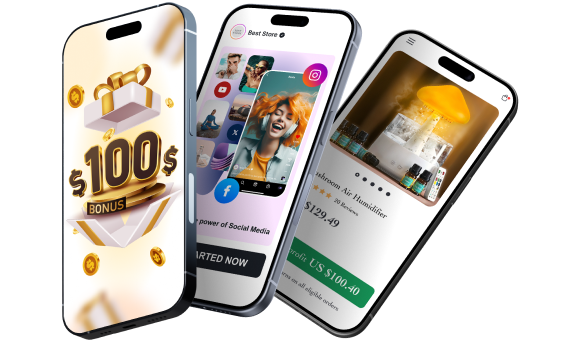
Starting a business takes momentum – and Sellvia gives you a head start. When you claim your free store today, you also get a $100 welcome gift to put toward growing your business. Use it to upgrade your store, boost your marketing, or unlock new tools. It is a real dollar value, handed to you on day one, with no catch and no hoops to jump through.
A massive catalog of digital products to sell 🏆
One of the biggest struggles in starting an online business is figuring out what to sell. Sellvia solves that completely. Your store comes pre-loaded with digital products – guides, courses, checklists, and tools – all created by Sellvia. You keep 50–70% of every sale. No inventory. No shipping. No logistics headaches.
Everything in one easy-to-use platform 🔥
Managing an online store shouldn’t be complicated. With Sellvia, you can handle orders, add new products, and even chat with customers – all from a simple and user-friendly platform. No need to mess with confusing tools or deal with unnecessary tech stuff. It’s all smooth sailing.
No upfront costs, just start selling 💰
A big reason people hesitate to start an online business is the cost. But here’s the good news: With Sellvia, you don’t need to invest in stock, storage, or shipping supplies. You can run your store with no upfront costs, keeping things low-risk while still making money.
Support that’s always got your back 🤝
Running a business comes with questions, but you’re never alone. Sellvia’s dedicated support team is available 24/7 to help with anything you need. Whether it’s a small question or a big challenge, they’ve got you covered.
Retail digital transformation is happening whether you join it or watch from the sidelines – and Sellvia gives you the fastest, most complete way to participate as an independent online seller. Claim your free store today and start building your digital retail business.
What is retail digital transformation and why does it matter in 2026?
How can I profit from retail digital transformation without technical skills?
You do not need coding experience or a marketing background to profit from this shift. Platforms like Sellvia provide a fully built online store, a catalog of digital products to sell, and a built-in advertising system that handles targeting and optimization for you. Your role is to activate ads, watch what connects with buyers, and refine your approach based on real results. Most store owners start with 2 to 3 hours of daily effort and no prior ecommerce experience.
How long does it take to start earning from an online store?
Most store owners see their first profitable weeks within 60 to 90 days of launching, assuming consistent daily effort on marketing and product selection. The first 30 days are typically a learning phase where you identify which products generate real buyer interest. By months 2 and 3, sellers who have applied those lessons consistently begin to see compounding results. Starting with a fully built turnkey store cuts setup time significantly and allows you to focus on growth from day one.
What is a realistic income from selling digital products online?
Most beginners earn between 30 and 80 dollars per day within the first 90 days with consistent part-time effort. Sellers who dedicate full-time focus and activate the built-in advertising system can reach 100 to 200 dollars per day within the same period. Digital products carry margins of 50 to 70 percent on every sale, and because delivery is instant, there are no fulfillment costs eating into your profit. These figures reflect active effort and results may vary based on how consistently you engage with your store and marketing.
Is an online digital product store a legitimate way to earn income?
Yes, selling digital products through an online store is a legitimate and growing business model. Sellvia is recognized by Forbes and ranked on the Inc. 5000 list of the fastest-growing companies in the United States. Over 1.5 million stores have been launched through the platform, and store owners have collectively earned more than 1.5 billion dollars. The model works because digital products have zero inventory cost, instant delivery, and strong demand across niches like personal finance, parenting, fitness, and self-development.