You found a deal on eBay and paused. A quiet voice in your head asked: is eBay legit? That moment of doubt is completely normal. With so many scam stories circulating online, it is smart to ask questions before handing over your card details.
This guide walks you through everything: how eBay keeps your money and data safe, which scams to watch for, how it compares to other platforms, and what to do if something goes wrong. By the end, you will be able to shop confidently – or decide if there is a better path for you.
Quick Answer: eBay is a legitimate and widely trusted online marketplace. It has strong buyer protections, encrypted payments, and a Money Back Guarantee – but staying safe means using official checkout and checking sellers carefully.
Millions of people shop on eBay every month without a single issue. The platform has been around since 1995 and has processed billions of transactions. That kind of track record does not happen by accident. Still, understanding how eBay protects you – and where the limits are – is what separates confident shoppers from frustrated ones.
What is eBay and why do people use it?
eBay is an online marketplace where individuals and businesses buy and sell almost anything – electronics, collectibles, clothing, car parts, vintage items, and more. Unlike Amazon, which sells many products directly, eBay is primarily a platform connecting independent buyers and sellers. That is part of what makes it so varied – and part of why people wonder whether it is safe.
People use eBay because of the sheer variety. You can find rare items that simply do not exist anywhere else. You can also pick up everyday products at lower prices, especially refurbished or second-hand goods. For sellers, it offers access to a massive audience without needing to build their own store from scratch.
The question is eBay legit does not really have a complicated answer. The platform itself is real and regulated. What varies is the experience depending on which seller you deal with – and that is exactly what the rest of this guide covers.
How much can you realistically earn selling on eBay?
If you are not just shopping but thinking about selling on eBay, here is a realistic look at what different sellers actually make. This is not guaranteed income – results depend heavily on what you sell, how much time you put in, and how well you manage listings.
These figures reflect what experienced eBay sellers report after 60–90 days of consistent effort. Beginners typically start at the lower end while they learn what sells and how to price competitively.
One note on these figures: eBay charges seller fees on every transaction – usually around 13% of the sale price – which cuts into your take-home. Factor that in when calculating whether a listing is worth your time.
Understanding eBay safety measures
Is eBay safe? The honest answer is: yes, for the most part – as long as you understand how the protections work and where they apply. eBay has invested heavily in safety systems over the decades, and most buyers never have a problem. Here is what is actually in place.
eBay’s Money Back Guarantee
This is eBay’s most important promise to buyers. If your item does not arrive, or it shows up looking nothing like the description, you are usually covered for a full refund. The policy applies to most categories – electronics, clothing, collectibles, and more.
The catch is you must follow the process correctly. Pay through eBay’s checkout system and file a claim within the time window if something goes wrong. If you send money directly through a bank transfer or pay outside the platform, you lose this protection entirely. The guarantee works – but only inside eBay’s rules.
Important: Never pay a seller outside of eBay’s checkout system, no matter what reason they give. The moment you leave the platform, your Money Back Guarantee disappears.
Secure transactions and data encryption
Every time you enter payment details on eBay, your information is encrypted. That means your data is scrambled in transit so it cannot be read by anyone intercepting it. eBay processes payments through its own managed system, which means your card number never goes directly to a seller – another layer of protection most people do not realize exists.
This is not new for eBay. The platform has been updating its security systems for nearly three decades, which is part of why it remains trusted by hundreds of millions of users worldwide.
Privacy and account protection
eBay limits what sellers and buyers can see about each other. Your full address and phone number are only shared once a transaction is confirmed. The platform also monitors for unusual account activity – like logins from a new country or device – and sends alerts when something looks off.
Two-factor authentication is available and worth turning on. It adds a second step to your login, making your account much harder for someone else to access even if they have your password. eBay also provides official guidance on recognizing phishing attempts and keeping your account secure directly on its website.
Seller protections
It is not only buyers who can get hurt. Sellers face risks too – like a buyer claiming an item never arrived when it did, or filing a false chargeback. eBay has policies in place to protect sellers against these situations, including the ability to provide tracking proof and appeal unfair decisions.
These protections matter because the platform only works if both sides trust it. Without good sellers, buyers would have far fewer options. Without fair treatment for sellers, the best ones would leave.
Common eBay scams and how to avoid them
Even with all of eBay’s protections in place, scams still happen. That is true of any large marketplace. The good news is that most scams follow recognizable patterns – and once you know what to look for, they become much easier to spot and avoid.
Phishing scams
A scammer sends you an email or message that looks like it came from eBay. It says there is a problem with your account and you need to click a link immediately. The link goes to a fake site designed to steal your login or card details.
The rule is simple: never click links in suspicious emails. If you get a message about your eBay account, go directly to eBay’s website by typing it into your browser and log in from there. Real eBay alerts also show up inside your account dashboard – so you never need to rely on outside messages.
Fake listings
A scammer posts a deal that looks too good to be true – a brand-new iPhone at half price, for example. You pay, and the seller disappears. Sometimes they ship an empty box just to generate a tracking number and delay your claim.
Before buying, check the seller’s rating and read recent feedback. Look for sellers with a consistent history of completed sales and real photos of the actual product. If the price is dramatically below market value, treat it as a warning sign rather than a lucky find.
Overpayment scams
This one targets sellers. A buyer sends more than the listed price and then asks you to refund the difference. Later, their payment gets reversed – leaving you out of pocket for both the item and the money you returned.
The fix is straightforward: never send money back outside eBay’s official system. If there is a payment issue, let eBay handle it through their dispute process.
Brushing scams
You receive random packages you never ordered. The scammer ships cheap items to real addresses to generate fake sales and inflate their own review ratings. You do not lose money directly, but it floods the platform with dishonest sellers and distorts the ratings system everyone relies on.
If this happens to you, report it to eBay. You are not in trouble – you are actually helping clean up the marketplace.
Practical tips to stay safe on eBay
These habits will protect you in the vast majority of situations:
- Always pay through eBay’s official checkout – never direct transfer
- Check seller feedback scores and read recent reviews before buying
- Read product descriptions carefully and compare them to the photos
- Turn on two-factor authentication for your account
- Report anything suspicious – eBay can only act on what gets flagged
Comparing eBay with other online marketplaces
Is eBay legit compared to other platforms? To answer that fairly, it helps to look at how it stacks up against the alternatives most people use.
eBay vs Amazon
Amazon sells products both directly and through third-party sellers. That often means more standardized customer service – but it also means less variety. eBay is almost entirely a third-party marketplace, which is where its massive range of unique and rare items comes from.
Both platforms have strong buyer protection. Amazon uses its A-to-z Guarantee while eBay uses its Money Back Guarantee. The process differs slightly: eBay generally asks buyers to try resolving issues with the seller first, which can actually be faster for straightforward cases.
eBay vs Etsy
Etsy focuses on handmade, vintage, and custom items. If that is what you are after, Etsy has a clear edge in that niche. But for electronics, collectibles, refurbished goods, or just about anything else, eBay’s catalog is far broader.
In terms of buyer protection, both platforms have policies in place. For higher-ticket purchases – electronics, jewelry, rare items – eBay’s volume and decades of dispute experience give it a slightly stronger framework for handling claims.
eBay vs local marketplaces
Facebook Marketplace, Craigslist, and similar local platforms can feel convenient, but they carry significantly more risk. There is usually no formal payment protection, and disputes are handled between individuals – or not at all. eBay keeps transactions inside its system and monitors for fraudulent behavior. That structure makes it far safer for most buyers.
Why eBay stands out: Compared to local platforms, eBay is dramatically safer. Compared to Amazon, it offers more variety and similar protection. If you follow best practices, is eBay safe to use? Yes – more so than most alternatives.
Best practices for safe eBay transactions
Knowing the risks is only half the equation. The other half is building habits that protect you every time you buy or sell. These are the practices that experienced eBay users follow consistently.
Verify the seller before you buy
Look at the seller’s feedback score and read actual reviews – not just the star rating. Are there repeated complaints about slow shipping or items not matching descriptions? A seller with hundreds of consistent positive reviews is a very different risk from someone who just created an account last week with one or two sales.
Also check whether the seller responds to buyer questions. Good communication is one of the clearest signs of a trustworthy seller. If someone ignores your question before the sale, they are unlikely to help you after it.
Use secure payment methods only
Always pay through eBay’s managed checkout. This protects your financial details and gives you access to the Money Back Guarantee if something goes wrong. Avoid any seller who asks for payment via wire transfer, gift cards, or a separate app. That is one of the clearest signs of a scam.
Read listings thoroughly
Take two minutes to read the full listing before buying. Check the item’s condition, what is included, and whether the photos look like real product images or copied stock photos. If anything in the description does not match the photos, ask the seller directly before paying.
Report suspicious activity
If a listing feels off – price too low, description vague, seller account brand new – report it. eBay has a reporting system for suspicious listings and phishing attempts. Using it helps protect you and everyone else on the platform.
How to choose the right approach for you
Whether you are shopping on eBay, thinking about selling there, or exploring other ways to earn online, the right path depends on where you are starting from.
Complete beginner
If you are new to buying online, stick to eBay sellers with strong ratings and established history. Use eBay’s managed checkout every time, and do not rush – read listings carefully before you commit. The platform is safe when used correctly, and most first-time buyers have smooth experiences.
Part-time seller
If you want to earn extra income, eBay can work as a side hustle – especially if you have items to resell or a niche you know well. Expect 60–90 days before things feel consistent. Factor in eBay’s seller fees (around 13%) when pricing your items, and track your sales so you can see what is actually moving.
Full-time income goal
If your goal is meaningful monthly income – not just occasional sales – eBay alone is a tough road. You are competing with thousands of other sellers, paying fees on every transaction, and spending real time sourcing, listing, and shipping. Many people in this position find that building their own online store gives them more control, better margins, and a platform that works for them – not against them.
The online income space is growing fast in 2026. More people are building their own stores and selling digital products than ever before. If that interests you, the section below is worth a read.
Why Sellvia is a game-changer for your online store 🚀
Sellvia isn’t just another ecommerce tool. We are a trusted name in the industry, recognized by Forbes and even ranked in Inc.’s list of the 5,000 fastest-growing companies in the U.S. So if you’re serious about starting as a solopreneur, this is a smart place to begin.
Starting an online business can feel overwhelming, but that’s exactly where Sellvia steps in. It takes care of the tricky parts, so you can focus on making sales and growing your brand. Let’s break down what makes it such a great choice.
Get a ready-to-go store hassle-free 🎯
Want to start selling but don’t know where to begin? No worries! Just share your ideas, and Sellvia’s team will build a free ecommerce website that’s fully set up and ready to take orders from day one. No coding, no stress – just a store that works right out of the box.
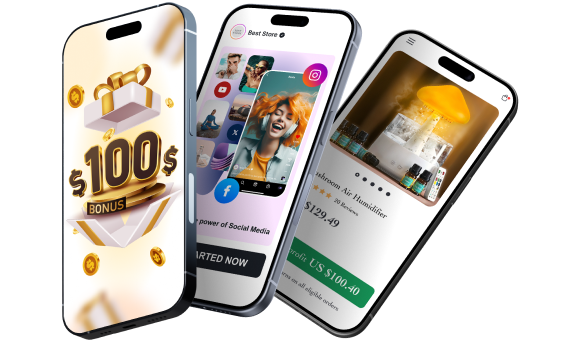
A $100 welcome gift to grow your business faster 🎁
Starting a business takes momentum – and Sellvia gives you a head start. When you claim your free store today, you also get a $100 welcome gift to put toward growing your business. Use it to upgrade your store, boost your marketing, or unlock new tools. It is a real dollar value, handed to you on day one, with no catch and no hoops to jump through.
A massive catalog of digital products to sell 🏆
One of the biggest struggles in starting an online business is figuring out what to sell. Sellvia solves that completely. Your store comes pre-loaded with digital products – guides, courses, checklists, and tools – all created by Sellvia. You keep 50–70% of every sale. No inventory. No shipping. No logistics headaches.
Everything in one easy-to-use platform 🔥
Managing an online store shouldn’t be complicated. With Sellvia, you can handle orders, add new products, and even chat with customers – all from a simple and user-friendly platform. No need to mess with confusing tools or deal with unnecessary tech stuff. It’s all smooth sailing.
No upfront costs, just start selling 💰
A big reason people hesitate to start an online business is the cost. But here’s the good news: With Sellvia, you don’t need to invest in stock, storage, or shipping supplies. You can run your store with no upfront costs, keeping things low-risk while still making money.
Support that’s always got your back 🤝
Running a business comes with questions, but you’re never alone. Sellvia’s dedicated support team is available 24/7 to help with anything you need. Whether it’s a small question or a big challenge, they’ve got you covered.
If you came here asking is eBay legit, you already know the value of doing your research before you act. Put that same smart thinking to work and claim your free Sellvia store today.
Is eBay legit and safe to use in 2026?
How do you know if an eBay seller is legit?
The most reliable way to check a seller is to look at their feedback score and read recent reviews from actual buyers. Sellers with hundreds of consistent positive ratings over many months are generally trustworthy. Be cautious with brand-new accounts that have very few completed sales, especially if the listing price seems far below market value. Sending the seller a question before buying is also a useful test of reliability.
Does eBay refund you if you get scammed?
Yes, eBay has a Money Back Guarantee that covers most purchases. If your item does not arrive or does not match the listing description, you can file a claim and typically receive a full refund. The key requirement is that you paid through eBays official checkout system. Payments made outside the platform, such as wire transfers or gift cards, are not covered by this protection.
Is eBay safe compared to Amazon and other platforms?
eBay is generally safer than local platforms like Facebook Marketplace or Craigslist because all transactions stay inside the platform and are monitored for fraud. Compared to Amazon, eBay offers similar buyer protection through its Money Back Guarantee, though the claim process is slightly different. Amazon tends to have more standardized service, while eBay offers far greater variety, especially for rare or second-hand items. Following best practices on either platform reduces risk significantly.
What is the 600 dollar rule on eBay?
The 600 dollar rule refers to a United States tax requirement. If you earn 600 dollars or more from selling on eBay in a calendar year, eBay is required to send you a 1099-K form to report those earnings to the IRS. This rule applies to casual and regular sellers alike, so it is worth keeping records of your sales throughout the year to make tax filing easier.