DJ Coleman spent two years and two months teaching himself design in the small hours after work – a stack of Udemy courses, a couple of Skillshare trials, an ocean of YouTube – and pocketed nothing. He knew his way around Photoshop cold, and still could not work out how to monetize a self-taught skill. The ability was long since there; a way to sell it was not.
He is 29, working nights loading packages at a Memphis UPS hub, engaged to Tasha with a wedding a little over a year away. Talent and grit were never the issue – he was pointed the wrong way, stacking more skill instead of shaping an offer. Every “monetize your talent” article nudged him to keep improving; none told him what to sell or who would buy it.
The shift came at 1:14 in the morning when Tasha found him mid-tutorial and said, softly, “Babe, you’ve been watching these for two years.” A week on he had a fixed offer, a specific buyer and a plan – and nine weeks after that, the skill paid for the first time. Here is the sequence.
The backwards way most people try to monetize a skill
Self-taught people tend to keep studying when the moment calls for selling. They convince themselves one more course will finally unlock the money, so they buff a skill that is already sharp and never build the thing that actually pays: a defined offer aimed at a defined buyer. DJ had the skill years back. What he lacked was a package, a price and a person to sell it to.
Read together, those figures name the trap: for most people the ability is not the wall – the offer is. One more tutorial changes nothing. Wrap the skill you already have around a buyer who already needs it, and the first sale finally arrives.
DJ was not lacking talent – he was lacking direction. With no package, no buyer and no pitch, two years of Photoshop skill stayed trapped behind a laptop at one in the morning, paying nothing at all.
Like many self-taught creators, DJ had the ability and the hours to spare. The missing piece was the monetization map – the offer, the buyer and the first pitch that turn a skill into steady income.
What DJ tried for two years – and why none of it paid
Before the plan that produced a first sale, he followed the standard advice to the letter:
Yet more courses – Udemy, Skillshare, a river of YouTube
Two years of lessons made him sharper at a skill that was already sharp enough. It felt like progress and produced not one paying client.
Waiting to “finish the portfolio”
He kept polishing pieces for a client who did not exist, always one edit from feeling ready. A portfolio with no offer and no buyer is simply more unpaid practice.
A generic gig listing left to sit
“I’ll design anything” put him in a price fight with a thousand strangers. With no niche and no direct pitch, the inbound never came and the skill read as generic.
Every route assumed the answer was more skill or more patience. None touched the questions that mattered: what precise package do I sell, which buyer actually needs it, and what do I say to reach them?
After two years I could do nearly anything in Photoshop. What I still could not do was name who’d pay me, or even what to call the thing I was selling. The skill was never the hold-up – the offer was.
The three income paths the Roadmap ranked for DJ
Twelve minutes of questions – what he owned, what he knew, how many hours he could spare – produced three ranked paths, each with an honest 90-day range in place of a promise:
Tasha read the three out loud, and at path one she stopped: she’d been telling me for a year what these clinics need. She more or less dictated the first bundle – the forms, the welcome sheet, the HIPAA card. I built them one evening and put the set out at $34.
The plan’s first move was the simplest: assemble one small bundle for the buyer he already had a line to, put it up for sale, and pitch a few clinics directly instead of hoping to be discovered.
From $0 to a first real paycheck in 9 weeks: DJ’s timeline
Day 22: parked outside the warehouse before a shift, DJ stared at an Etsy alert – a first sale, $34 – and fired a screenshot to Tasha at 2:47am. From there it stacked up, a handful of hours a week between shifts.
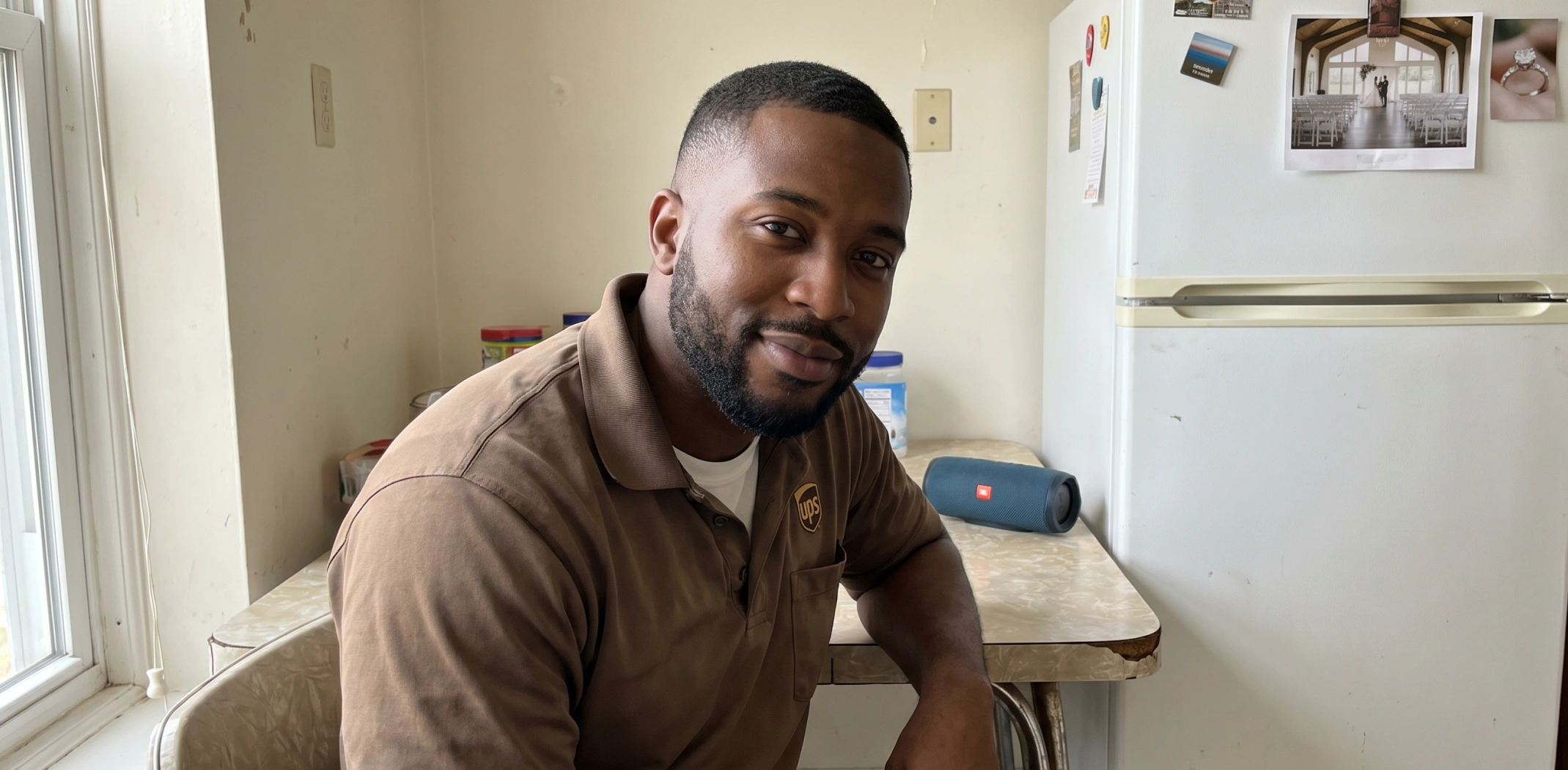
Eleven hundred and eighty dollars is not a career on its own. But it was the very first dollar the skill had earned. Most of it bought the engagement ring Tasha had quietly saved to her phone all year, and a deposit on the venue they’d been holding for “maybe.”
Why “just get better” never turns a skill into income
There is a reason so many self-taught people sit at zero for years. It is not skill – it is that polishing the craft does nothing without an offer and a buyer. You can master the software and still earn nothing, because income comes from packaging and pitching, never from one more lesson.
None of the alternatives are useless – a course hones the craft, a coach offers direction. But a self-taught creator who is already good does not need more skill. They need the offer, the buyer and the first pitch – the part nobody teaches.

What if I have no partner who knows a niche like DJ did?
You do not need one – the audit surfaces the buyer for you. Tasha shortened DJ’s hunt, but the tool’s whole job is to pull a specific buyer profile out of your own skills, contacts and past work. Almost everyone has a “you should do this for X” buried in their background; the audit exists to find it and turn it into a package.
What other self-taught creators did with the same Roadmap

“Years of self-taught video editing and nothing to show for it. The tool had me sell fixed-price short-form edits to real-estate agents specifically. Three clients in under a month – narrowing to one niche was the whole trick.”
Andre M. · video editor, Atlanta GA

“I’d learned Canva on my own and handed out free flyers for years. It reshaped that into a template pack aimed at daycares. Now it brings in a few hundred a month – from something I’d written off as a hobby.”
Keisha D. · template designer, Newark NJ
Alongside the ranked paths, Skill-to-Income Roadmap hands over the buyer-matching grid, a productized-offer template, cold-pitch scripts, the 90-day launch plan, and pricing guidance so you do not undersell. One purchase, and you can re-run it for any skill you want to monetize.
How to monetize a self-taught skill: the 5-step playbook
Quit studying once you can do the work
If the skill already delivers, another course is just avoidance. The move now is to sell, not to learn.
Wrap it into a single fixed-price product
A named set at a set price – a template bundle, a defined edit – is easy to buy and easy to pitch, unlike open-ended hourly work.
Aim at one buyer, never “everyone”
Clinics. Agents. Daycares. The right tool pulls out the buyer your skill and history already fit.
Make a few samples, then pitch directly
Not a website – two or three real samples on eight to ten personal emails in week one. A direct pitch beats waiting to be found.
Keep the paycheck until the income proves out
Grow it in your off-hours, the way DJ did between night shifts, and let it earn its place before it replaces anything.
DJ learned no new skill. He packaged the one he had, pointed it at a single buyer, shipped a couple of samples and pitched – in that order. The sequence is open to anyone who has taught themselves something and never seen a dollar for it.
That is the whole point of a skill-to-income roadmap: stop studying a skill that is already good enough, wrap it for a buyer who needs it, and send the first pitch.
Turn your self-taught skill into income – the same Roadmap DJ used to turn two years of Photoshop into a first paycheck in nine weeks.
*Individual results may vary. Educational career guidance, not personalized financial advice.