You have probably heard the word “dropshipping” thrown around a lot. And honestly, it is not hard to see why it catches people’s attention. The idea of running an online business without dealing with inventory sounds like exactly the kind of freedom most people are looking for. No warehouse. No bulk orders. No upfront stock. Just list products, make sales, and keep the profit.
But how does the dropshipping model actually work in 2026 – and can you realistically make money with it? The short answer is yes. But only if you understand what you are getting into, which variation of the model fits your situation, and what a smarter, faster alternative might look like.
Quick Answer: The dropshipping model is an online business model where you sell products without holding inventory. When a customer orders, a supplier ships the product directly to them. Your profit is the difference between your price and the supplier’s cost – typically 20–40% on physical goods, or 50–70% with digital products.
What is the dropshipping model?
At its core, the dropshipping model is a way to sell products online without buying stock upfront. Instead of filling a warehouse with inventory, you partner with suppliers who handle storage and fulfillment on your behalf. Your job is to run the storefront – choosing products, setting prices, driving traffic, and handling customer communication.
Here is how the basic flow works: a customer visits your online store and places an order. That order gets forwarded to a supplier (often automatically through software). The supplier picks, packs, and ships the item directly to your customer. You keep the margin between what the customer paid and what the supplier charged you. The customer never sees the supplier at all.
This is why the model appeals so strongly to people starting out. The traditional barrier – stocking thousands of dollars of inventory before making a single sale – disappears. You can test products, change direction quickly, and build a real business without the financial exposure that traditional retail carries.
That said, it is not a business you switch on and walk away from. A successful online store takes real effort in product research, supplier management, customer service, and marketing. The model removes inventory risk, not business risk. Understanding the difference is what separates people who build something lasting from those who quit after 30 days.
How much can you realistically earn with an online business?
Earnings vary a lot depending on the model you choose, the niche you enter, how you drive traffic, and how much time you put in. The figures below are based on real community data from seller forums and Reddit threads – not best-case marketing claims.
These ranges reflect stores that have had 60–90 days to build traction with active marketing. A brand-new store in its first month will typically earn less, and that is completely normal.
One note on the higher figures: The $8,000–$15,000/month ceilings above are real, but they represent stores run by experienced operators putting in full-time effort, often with ad budgets of $500–$2,000/month or more. For most beginners, a realistic first-year target is $500–$2,500/month with consistent effort – still a meaningful income, and a solid foundation to grow from.
If you want to reach income faster and with less complexity, digital product stores offer a compelling shortcut. Instead of waiting on physical suppliers, customers receive their purchase instantly. You keep 50–70% of every sale. There is no inventory to manage and no fulfillment to worry about. More on that in a moment.
The main variations of the dropshipping model explained
Not all online businesses are built the same way. The dropshipping model splits into several distinct approaches, each with its own margin profile, supplier relationships, and skill requirements. Understanding these helps you choose the variation that fits where you actually are – not just the one that sounds most appealing on paper.
Standard supplier-based model
This is the most widely recognized version of the dropshipping model. You list products from a third-party supplier on your own online store. When an order comes in, the supplier ships directly to your customer under your store name.
How to get started
You need three things: a storefront, a supplier connection, and a way to drive traffic. The technical setup is largely automated by modern tools, which handle product imports, order forwarding, and inventory syncing. The harder part – the one most beginners underestimate – is getting consistent traffic without burning through your budget in the first two weeks.
What margins look like
Standard supplier-based models typically deliver margins of 20–40% depending on the product category. A $30 item might cost you $10–$15 from the supplier, leaving $15–$20 gross profit per sale. After advertising costs, net margins often land at 10–20% – which is why volume and smart product selection matter so much.
Pros and cons
The biggest advantage is speed – you can have a live store selling real products within days. The main challenge is competition: because the barrier to entry is low, many sellers end up listing the exact same products. Differentiation through branding, stronger product pages, and better customer service is what separates profitable stores from abandoned ones.
Earning potential: $300–$2,000/month within 60–90 days with consistent product testing and a defined traffic strategy.
Branded niche store
A branded niche store takes the same fulfillment model but wraps it in a focused identity. Instead of selling across dozens of categories, you build a store around one specific audience – pet owners, home gym enthusiasts, sustainable living advocates – and create a brand that speaks directly to them.
Why niche stores outperform general stores
Niche stores earn higher customer trust, benefit from more targeted advertising, and build repeat purchase rates that general stores rarely achieve. A store selling everything to everyone competes with Amazon. A store selling gear to trail runners competes with far fewer people – and wins more of their loyalty.
How to find your niche
Look for categories with passionate communities, repeat purchase potential, and products that photograph well. Google Trends, bestseller lists, and Reddit communities are all useful starting points. Avoid categories dominated by major established brands where building trust quickly is nearly impossible.
Earning potential: $1,000–$8,000/month for established branded stores with a loyal audience and email list, typically after 3–6 months of consistent operation.
Print-on-demand
Print-on-demand is a variation where products are created only when a customer orders them. You upload custom designs – on t-shirts, mugs, phone cases – to a fulfillment platform, and they produce and ship each item individually.
Who this model suits
Print-on-demand works well for designers, content creators with existing audiences, or anyone who wants to sell branded merchandise without buying stock. Margins are lower than standard supplier models (typically 15–30%), but a single viral design can drive a flood of orders if you have the right audience.
The realistic limitation
Without an existing following or a strong content strategy, print-on-demand stores struggle to get visibility. The model works best when people already want to wear your brand – an Instagram following, a YouTube channel, a community you have built over time.
Earning potential: $200–$1,500/month for creators with an active audience; considerably lower without one.
High-ticket products
High-ticket selling means focusing on products priced at $200–$2,000 or more – furniture, fitness equipment, outdoor gear, specialist tools – where a single sale can return $100–$500 in profit. The economics are fundamentally different here.
Why high-ticket changes the math
When your average order value is $400, you need far fewer sales to hit meaningful revenue. Ten sales a month at $400 with a 25% margin earns $1,000. Ten sales at $30 earns $75. The math is stark – but so is the difficulty. High-ticket buyers are more cautious, do more research before purchasing, and expect excellent pre-sale support.
What you need to succeed here
Strong product pages, detailed FAQs, visible return policies, and ideally some form of live chat support. Trust signals matter disproportionately when someone is about to spend $600 at a store they have never heard of. Building that trust from scratch takes time and usually a significant ad budget to accelerate.
Earning potential: $2,000–$15,000/month for focused operators in the right categories, typically after 90–120 days of building supplier relationships and traffic.
How to start an online business: A practical step-by-step overview
Knowing which model appeals to you is one thing. Getting a store live and making your first sale is another. Here is the sequence that works for most people starting out in 2026.
Step 1: Choose your niche and validate demand
Before building anything, spend time on research. Confirm the product category has stable or growing interest. Look at competitor stores and note what they do well – product page structure, pricing, review count. If you can find 3–5 competitors making visible sales, that is enough validation to move forward.
Step 2: Set up your store
You need a platform that handles product listings, checkout, payments, and order management. A turnkey solution removes the technical friction entirely – ideal if you want to focus on marketing rather than spending your first month fighting with website builders. A pre-built, product-loaded store lets you start learning what works immediately instead of getting stuck on setup.
Step 3: Load your products
Start with 20–50 products, not 500. A focused range is easier to market, easier to manage, and easier to test. With digital products, this step is already done for you – your catalog is loaded and ready from day one. No photography, no supplier negotiations, no sizing issues.
Step 4: Drive traffic
This is where most online businesses succeed or fail. Your main options are paid advertising (Facebook, TikTok, Google), organic social content, SEO-driven articles, or influencer partnerships.
Most successful stores use one paid channel and one organic channel to reduce dependency on a single traffic source. Sellvia’s built-in ad system handles the paid side for you – targeting, creatives, and optimization are all managed, so you can get orders flowing from day one.
Step 5: Review, test, and scale
Your first 30 days are a data collection exercise. Which products get clicks but no purchases? Which ads get engagement but no conversions? Use this data to cut what is not working and put more energy behind what is. Scaling is not about adding more products – it is about putting more focus behind the handful that already earn.
Pro Tip: Set a 30-day review date from your launch day and commit to making three specific changes based on what the data tells you before adding any new products.
Legal and ethical considerations for your online store
Running an online business is fully legal, but how you run your store determines whether it stays that way. A handful of practices trip up new sellers – some from not knowing better, others from cutting corners. Here is what to avoid and what to do instead.
What to avoid absolutely
Fake or purchased reviews: Buying reviews is a violation of platform terms and, in several jurisdictions, constitutes misleading advertising under consumer protection law. It can get your store de-listed and your payment account terminated.
Misleading income claims: If you are promoting your store to others, you cannot advertise specific earnings as guaranteed. Results vary, and misrepresenting what people will earn is both dishonest and legally risky.
Grey-area products: Selling items that use another brand’s logo or trademarked design without authorization is copyright infringement. This applies even if the product is widely available from suppliers. The fact that someone sells it does not make it legal for you to retail it.
Key principle: If you would not be comfortable explaining your store’s practices to a customer in writing, those practices need to change before you launch.
What to do instead
Build reviews honestly by following up with customers after purchase and making the process simple. Set realistic expectations upfront and communicate clearly throughout the buying experience.
Source from verified suppliers or platforms – or better yet, sell products you know have been quality-checked and are ready to deliver. With digital products specifically, there are no quality complaints, no damaged items in transit, and no chargebacks for late delivery.
Which model is right for you?
The best business model is the one you will actually work consistently. Here is a breakdown by profile to help you match your situation to the right starting point.
Complete beginner
Start simple. Choose a niche you understand or are genuinely curious about, and focus on learning one traffic channel before adding another. A turnkey solution removes the technical setup barrier and lets you spend your first 30 days on marketing – not theme customization.
For pure beginners, a digital product store removes supplier headaches entirely and lets you earn 50–70% on every sale with no inventory to manage. Realistic target: $300–$800/month by month 3.
Intermediate / part-time operator
If you have some online business experience already, move toward a branded niche approach. Invest in building an email list from day one, start a simple content channel to reduce paid traffic dependency, and focus on making your store feel trustworthy before scaling ad spend. Realistic target: $1,500–$4,000/month by month 6 with consistent effort.
Advanced / full-time goal
If you are aiming to replace a full-time income within 12 months, a deeply branded niche store or a digital product business with a strong ad strategy offers the most viable path. Budget at least $500–$1,000 for initial advertising, treat your first 90 days as a paid learning period, and reinvest early profits into what converts. Realistic target: $5,000–$15,000/month by month 12 with full-time commitment and smart reinvestment.
Regardless of which path you choose, the fundamentals are the same: understand your customer, show up consistently, and treat every piece of feedback as useful data. The stores that last are the ones that iterate rather than abandon.
Why Sellvia is a game-changer for your online store 🚀
Sellvia isn’t just another ecommerce tool. We are a trusted name in the industry, recognized by Forbes and even ranked in Inc.’s list of the 5,000 fastest-growing companies in the U.S. So if you’re serious about starting as a solopreneur, this is a smart place to begin.
Starting an online business can feel overwhelming, but that’s exactly where Sellvia steps in. It takes care of the tricky parts, so you can focus on making sales and growing your brand. Let’s break down what makes it such a great choice.
Get a ready-to-go store hassle-free 🎯
Want to start selling but don’t know where to begin? No worries! Just share your ideas, and Sellvia’s team will build a free ecommerce website that’s fully set up and ready to take orders from day one. No coding, no stress – just a store that works right out of the box.
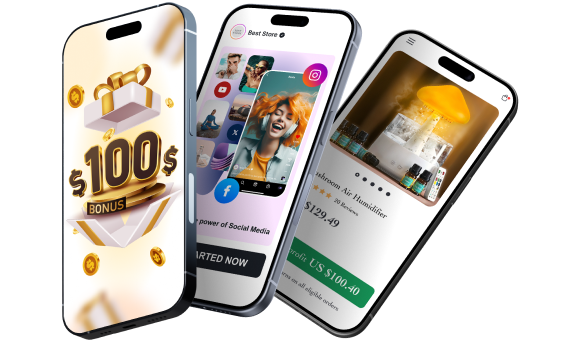
A $100 welcome gift to grow your business faster 🎁
Starting a business takes momentum – and Sellvia gives you a head start. When you claim your free store today, you also get a $100 welcome gift to put toward growing your business. Use it to upgrade your store, boost your marketing, or unlock new tools. It is a real dollar value, handed to you on day one, with no catch and no hoops to jump through.
A massive catalog of digital products to sell 🏆
One of the biggest struggles in starting an online business is figuring out what to sell. Sellvia solves that completely. Your store comes pre-loaded with digital products – guides, courses, checklists, and tools – all created by Sellvia. You keep 50–70% of every sale. No inventory. No shipping. No logistics headaches.
Everything in one easy-to-use platform 🔥
Managing an online store shouldn’t be complicated. With Sellvia, you can handle orders, add new products, and even chat with customers – all from a simple and user-friendly platform. No need to mess with confusing tools or deal with unnecessary tech stuff. It’s all smooth sailing.
No upfront costs, just start selling 💰
A big reason people hesitate to start an online business is the cost. But here’s the good news: With Sellvia, you don’t need to invest in stock, storage, or shipping supplies. You can run your store with no upfront costs, keeping things low-risk while still making money.
Support that’s always got your back 🤝
Running a business comes with questions, but you’re never alone. Sellvia’s dedicated support team is available 24/7 to help with anything you need. Whether it’s a small question or a big challenge, they’ve got you covered.
The dropshipping model shows you what is possible – Sellvia gives you the fastest, simplest way to actually do it. Claim your free store today and start earning with digital products.
What is the dropshipping model and how does it work?
Is the dropshipping model still profitable in 2026?
The dropshipping model remains a real path to income in 2026 for sellers who focus on a defined niche and invest in consistent marketing. General stores selling low-margin physical products face heavy competition, but branded niche stores and digital product businesses continue to generate strong returns. Most people starting out earn between 300 and 2000 dollars per month within their first 90 days with consistent effort. Results vary based on niche selection, ad spend, and the time invested in testing and optimizing.
What are the main types of online business models?
The main variations include standard supplier-based stores that ship physical products from third-party suppliers, branded niche stores focused on a specific audience, print-on-demand stores that produce items only when ordered, high-ticket stores selling products priced above 200 dollars, and digital product stores where customers receive guides, courses, or tools instantly after purchase. Each model has a different margin profile, startup cost, and required skill level. Digital product stores offer the highest margins and the simplest fulfillment because no physical goods are involved.
How much does it cost to start an online store?
Starting an online store can cost as little as zero dollars if you use a free turnkey store solution. Most beginners budget between 200 and 1000 dollars for their first few months to cover advertising and any optional platform fees. Paid advertising is typically where the majority of early spending goes. Keeping initial test budgets small and scaling only what converts is the smartest approach for anyone new to the space.
How long does it take to make money with an online business?
Most new online stores see their first sales within 2 to 4 weeks of launching with active marketing in place. Reaching a consistent monthly income of 500 to 1500 dollars typically takes 60 to 90 days of testing and traffic optimization. Full-time income levels of 3000 dollars or more per month generally require 6 to 12 months of sustained effort and reinvestment of early profits into what is working.