You started an online store. You’ve got products. You’ve got a website. But sales are not coming in the way you hoped. Sound familiar? Here’s what most new store owners miss: the money is in the follow-up. And the most powerful follow-up tool available to any online business owner — beginner or experienced — is email marketing.
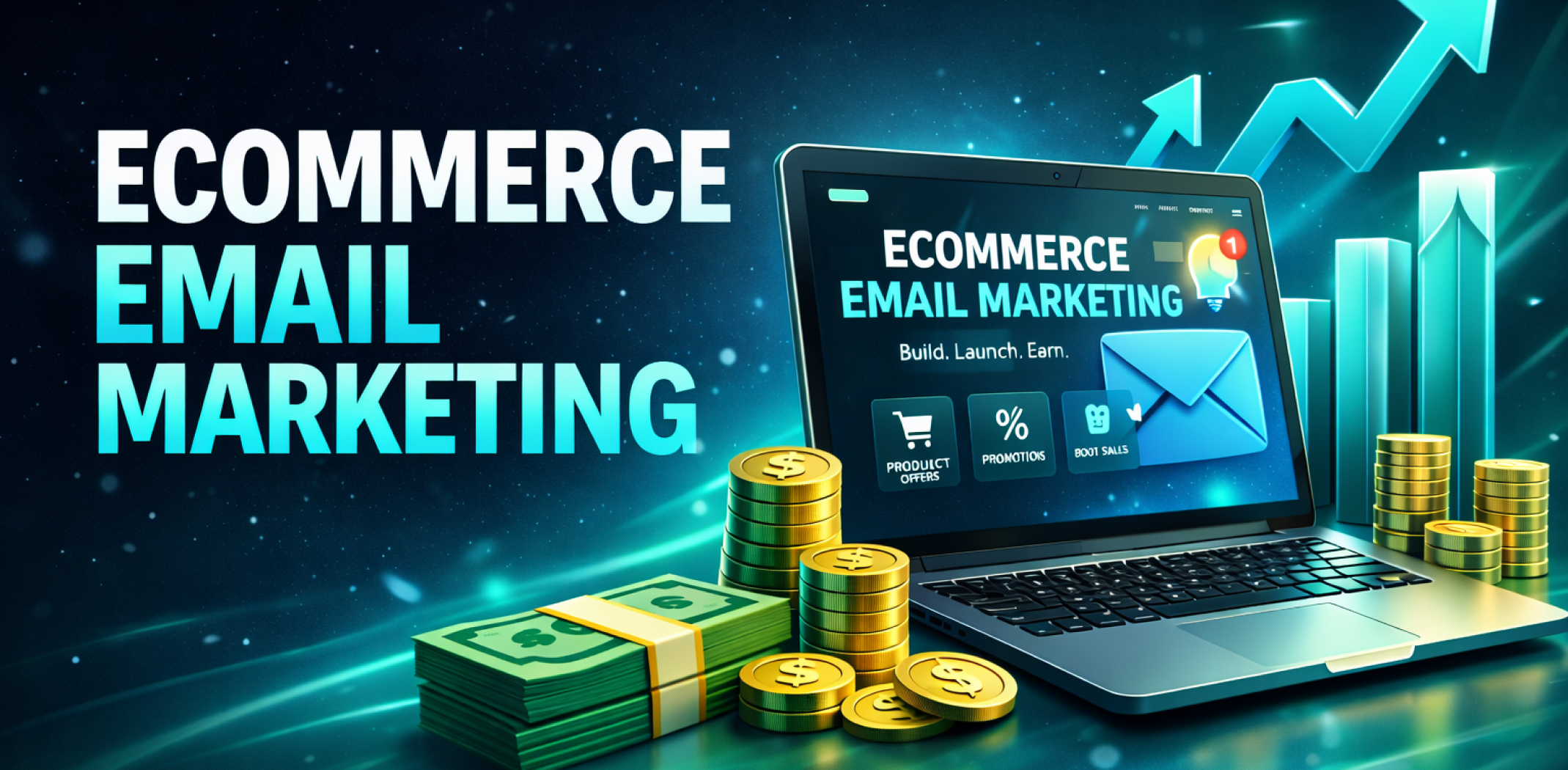
Ecommerce email marketing is the practice of sending targeted messages to your customers and subscribers to build relationships, drive repeat purchases, and grow your income over time. It’s not complicated. You don’t need a marketing degree. And when set up correctly, it runs almost entirely on autopilot.
Quick Answer: Ecommerce email marketing means sending the right message to the right person at the right time — from a welcome email when someone first subscribes, to a reminder when they leave something behind. Done right, it returns an average of $36 for every $1 spent, making it one of the highest-ROI tools available to any online store owner.
What is ecommerce email marketing?
Ecommerce email marketing is a digital marketing channel where you communicate directly with your audience through email. Unlike social media — where you are at the mercy of algorithms and ad budgets — your email list is something you own. No platform can take it away from you.
When used well, email marketing serves several purposes at once. It helps you welcome new subscribers, recover abandoned carts, re-engage customers who have gone quiet, and reward loyal buyers. Every one of those touchpoints is a chance to make a sale or strengthen a relationship.
There are three main categories of ecommerce emails:
- Transactional emails — triggered by a specific action, like a purchase confirmation or a delivery update. These have high open rates because people expect them.
- Promotional emails — sent to announce sales, new products, or special offers. These drive spikes in revenue when timed well.
- Lifecycle emails — automated sequences that go out based on where a customer is in their journey with your store. Welcome series, winback campaigns, and post-purchase flows all fall into this category.
Each type plays a different role. The most successful store owners use all three together, letting automation handle the heavy lifting so they can focus on growing their business.
How much can you realistically earn with email marketing?
Email marketing is widely cited as the highest-ROI channel in digital marketing. But what does that actually mean for a real store owner just getting started? The honest answer depends on your list size, your product type, and how well your emails are set up. Here is a realistic breakdown.
These ranges reflect realistic outcomes for beginner-to-intermediate store owners with a growing email list of 500–5,000 subscribers. Earnings grow as your list grows. Most store owners see meaningful results within 60–90 days of setting up their core email flows.
One note on these figures: The ranges above assume you are sending to an engaged list with products your audience actually wants. Full-time income from email alone typically takes 6–12 months of consistent list building. Think of it as a long-term asset — the bigger and more engaged your list, the more it earns you month after month.
The core types of ecommerce email marketing
Understanding which emails to send — and when — is the foundation of a successful email strategy. Below are the most important types every online store owner should know about. You do not need all of them on day one. But the sooner you set them up, the sooner they start working for you.
Automated flows (the ones that earn while you sleep)
Automated email flows are sequences triggered by specific actions a visitor or customer takes on your store. You build them once, and they run on their own from that point on. According to Omnisend data, automated emails drove 37% of all email-generated sales in 2024 despite making up just 2% of total email volume. That efficiency is hard to match with any other marketing tactic.
Welcome series
A welcome series is the first set of emails someone receives after subscribing to your list. It is your best chance to make a strong first impression, introduce your store, and encourage a first purchase. Welcome emails have an average open rate of over 83% — far higher than any other email type. That means almost everyone who subscribes will read what you say first. Use that attention wisely.
A solid welcome series runs 3–5 emails over 7–10 days. The first email delivers whatever you promised in exchange for the signup (a discount, a guide, a coupon). The second shares your story and builds trust. The third highlights your best-selling products. By the fifth email, many subscribers will have already made their first purchase.
Abandoned cart emails
Around 70% of online shoppers add items to their cart and leave without buying. That is not a lost sale — it is an opportunity. Abandoned cart emails are automated reminders that go out to shoppers who left before completing their purchase, and they are among the highest-converting emails you can send.
The average open rate for abandoned cart emails sits around 50.5%, and the average conversion rate is 3.33% — with top-performing stores reaching 7.69%. A three-email sequence (sent at 1 hour, 24 hours, and 72 hours after abandonment) consistently outperforms a single reminder, generating several times more recovered revenue.
Important note: Do not offer a discount in your first abandoned cart email. That trains shoppers to abandon on purpose. Save any incentive for the third and final email in your sequence.
Post-purchase emails
A sale is not the end of the customer relationship — it is the beginning. Post-purchase emails have a 217% higher open rate than standard campaign emails, because customers are actively looking for confirmation and updates after they buy. Use this window to thank your customer, cross-sell related products, ask for a review, or offer a loyalty incentive for their next order.
For digital products — like the guides, courses, and tools available through your Sellvia store — a post-purchase email can also help the customer get started immediately and feel confident about their decision. That kind of care builds the loyalty that keeps customers coming back.
Winback campaigns
Every email list has customers who have gone quiet. They signed up, maybe bought once, and then stopped engaging. A winback campaign is a short automated sequence designed to re-engage those lapsed customers before you remove them from your list. A well-crafted winback email can recover customers who have not opened an email in 90 or 180 days — often with nothing more than a sincere message and a small incentive.
Earning potential: $20–$150/month for a list of 1,000–3,000 subscribers, depending on how well your winback sequence is written and what incentive you offer.
Promotional campaigns (the ones you send on purpose)
Unlike automated flows, promotional campaigns are emails you plan and send manually — or schedule in advance. They are perfect for announcing a new product, running a limited-time sale, or sharing a curated offer with your list.
Newsletters
A regular newsletter keeps your brand front of mind with subscribers who are not quite ready to buy yet. It does not have to be long or complicated. A short roundup of your newest digital products, a helpful tip related to your store’s niche, or a personal note about what’s coming next — all of these work. Consistency matters more than perfection. Even one email per week keeps your list warm and engaged.
Promotional or sale emails
When you have a sale, a seasonal offer, or a newly added product, a promotional email is the fastest way to get revenue flowing. These emails work best when they are simple, focused on one offer, and have a clear deadline. Subject lines that hint at urgency — without being misleading — consistently outperform vague promotional language. Keep the design clean, the copy short, and the call to action obvious.
Back-in-stock and new arrival emails
For digital products, these translate to new guide releases, updated courses, or fresh tools added to your store’s catalog. Back-in-stock alert emails achieve an average open rate of 65.32% and a 22.45% average conversion rate — some of the strongest numbers in all of email marketing. Letting your subscribers know when something new or highly requested is available gives them a reason to come back and buy.
Transactional emails (the ones that build trust)
Every time someone makes a purchase from your store, they expect to receive a confirmation email. Order confirmations, digital delivery receipts, and account-related messages all fall under this category. These emails have exceptionally high open rates — often above 70% — because customers actively look for them. Treat every transactional email as an opportunity to reinforce your brand and, where appropriate, to suggest a next step.
For stores selling digital products, the delivery email is especially important. This is where the customer receives access to what they bought — a guide, a checklist, a course. Make it clear, warm, and easy to act on. A customer who has a great experience downloading and using their first digital product is far more likely to buy again.
How to build your email list from scratch
No email list means no email marketing. The good news is that building a list does not require a big budget or advanced technical skills. Here are the most effective methods for getting started.
Use a pop-up with a compelling offer
A well-designed pop-up on your store homepage or product pages is the single fastest way to grow an email list. The key is offering something genuinely valuable in exchange for the visitor’s email address — a discount code, a free guide, or an exclusive deal on their first order. A pop-up that appears after 10–15 seconds on site, or after the visitor has scrolled halfway down the page, tends to perform better than one that fires immediately.
Why this works in 2026: With digital products, your lead magnet can be a free downloadable resource — something directly related to what you sell. That creates immediate value for the subscriber and positions your store as a trusted source from day one.
Add a sign-up form to your website footer
A footer sign-up form is a low-pressure, always-visible option for visitors who are not ready to engage with a pop-up. Place it near your contact information and keep it simple — just a name field, an email field, and a short line explaining what subscribers get. This method works quietly in the background and can add a steady stream of new subscribers over time without any additional effort on your part.
Offer an incentive at checkout
When someone makes a purchase from your store, they are already in a buying mindset. Adding a checkbox at checkout to opt into your email list — paired with an offer like early access to new products or a loyalty discount on their next order — is one of the easiest ways to add high-quality subscribers. These are people who have already spent money with you, which makes them among the most likely to open and click future emails.
Promote your list on social media
If you have followers on Instagram, Facebook, TikTok, or any other platform, let them know about your email list and what they will get by signing up. Social media followers are borrowed — the platform owns the relationship. Your email list is yours. Driving your social audience to subscribe is one of the smartest moves you can make for the long-term stability of your income.
Legal and ethical considerations in email marketing
Email marketing is powerful — but it comes with rules. Ignoring those rules can get your emails blocked, your account suspended, or your store in legal trouble. Here is what every store owner needs to know.
Key principle: Only email people who have explicitly agreed to receive messages from you. Purchased lists, scraped addresses, and unsolicited cold emails are not just ineffective — they are illegal in most countries under laws like the CAN-SPAM Act (US) and GDPR (Europe).
- Always include an unsubscribe link — in every single email, without exception. This is not optional. It is required by law in the United States and most other markets.
- Be honest in your subject lines — misleading subject lines that trick people into opening an email are a violation of CAN-SPAM and damage your sender reputation over time.
- Honor unsubscribe requests promptly — once someone clicks unsubscribe, they must be removed from your list within 10 business days under US law, though most email platforms process removals immediately.
- Use a recognizable sender name — subscribers are more likely to open emails from a name they recognize. Using a vague or misleading sender name increases spam complaints.
Following these rules is not just about staying out of trouble — it is about building a list of people who actually want to hear from you. An engaged list of 500 subscribers will consistently outperform a spammy list of 5,000.
Tips for writing emails that people actually open
You can have the best products and the most engaged list in the world, but if your emails do not get opened, none of it matters. Here are the factors that make the biggest difference.
Write subject lines that earn the click
Your subject line is the first — and sometimes only — thing a subscriber sees. In a crowded inbox, it needs to stand out. The best subject lines are specific, honest, and relevant to the reader’s situation. Avoid generic phrases like “Big sale inside!” and lean toward something that speaks directly to what the reader cares about: “Your guide is ready to download” or “We just added 3 new tools to your store.”
Personalization helps significantly. Emails with personalized subject lines are 26% more likely to be opened. Even something as simple as including the subscriber’s first name can make a meaningful difference to open rates.
Keep the email body short and focused
Most people read emails on their phones, in between other tasks. That means you have about 8 seconds to communicate your message and get the click. Keep paragraphs short. Use one clear call to action. Make sure the most important information appears at the top, before any scrolling is required.
For promotional emails, a single offer — one product, one discount, one message — almost always outperforms a long email with multiple options. The more choices you give someone, the harder it is for them to decide. Keep it simple.
Send at the right time
Timing matters more than most new store owners realize. For welcome emails, send the first one immediately after someone subscribes — they are most engaged in that moment. For abandoned cart emails, the first reminder should go out within 60 minutes of the abandonment. For newsletters and promotional emails, Tuesday through Thursday mornings typically see the highest open rates for ecommerce audiences, though testing your own list will always give you better data than industry averages.
Test, adjust, and improve
The best email marketers are the ones who test consistently. A/B testing — sending two versions of the same email with one variable changed, like the subject line or the call to action — is the fastest way to learn what works for your specific audience. Most email platforms make this easy to set up. Over time, small improvements compound into significantly better results.
Choosing the right approach for your situation
Email marketing looks different depending on where you are in your business journey. Here is a practical breakdown by experience level.
Complete beginner
If you are just starting out, focus on two things: getting your first subscribers and setting up a welcome series. Do not try to do everything at once. A simple pop-up on your store homepage with a small discount or free resource will start building your list immediately. A 3-email welcome sequence can be written and set up in a single afternoon. Those two things alone will put you ahead of most new store owners.
Intermediate — a few months in
Once you have a list of at least 100–200 subscribers and your welcome series is running, add an abandoned cart flow. This is typically the highest-earning automated sequence for any online store, and it requires almost no ongoing effort once it is built. At this stage, also start sending a simple newsletter once or twice a month to keep your list warm and engaged between automated touchpoints.
Advanced — growing toward full-time income
At this stage, you have the core flows running and a consistent sending cadence. Now is the time to add a post-purchase sequence and a winback campaign, segment your list based on purchase history and behavior, and begin testing subject lines and send times systematically. Stores that deploy all four core flows — welcome, abandoned cart, browse abandonment, and post-purchase — see up to 320% more revenue per email than stores relying on newsletters alone, according to Omnisend data.
Why Sellvia is a game-changer for your online store 🚀
Sellvia isn’t just another ecommerce tool. We are a trusted name in the industry, recognized by Forbes and even ranked in Inc.’s list of the 5,000 fastest-growing companies in the U.S. So if you’re serious about starting as a solopreneur, this is a smart place to begin.
Starting an online business can feel overwhelming, but that’s exactly where Sellvia steps in. It takes care of the tricky parts, so you can focus on making sales and growing your brand. Let’s break down what makes it such a great choice.
Get a ready-to-go store hassle-free 🎯
Want to start selling but don’t know where to begin? No worries! Just share your ideas, and Sellvia’s team will build a free ecommerce website that’s fully set up and ready to take orders from day one. No coding, no stress – just a store that works right out of the box.
A $100 welcome gift to grow your business faster 🎁
Starting a business takes momentum – and Sellvia gives you a head start. When you claim your free store today, you also get a $100 welcome gift to put toward growing your business. Use it to upgrade your store, boost your marketing, or unlock new tools. It is a real dollar value, handed to you on day one, with no catch and no hoops to jump through.
A massive catalog of digital products to sell 🏆
One of the biggest struggles in starting an online business is figuring out what to sell. Sellvia solves that completely. Your store comes pre-loaded with digital products – guides, courses, checklists, and tools – all created by Sellvia. You keep 50–70% of every sale. No inventory. No shipping. No logistics headaches.
Everything in one easy-to-use platform 🔥
Managing an online store shouldn’t be complicated. With Sellvia, you can handle orders, add new products, and even chat with customers – all from a simple and user-friendly platform. No need to mess with confusing tools or deal with unnecessary tech stuff. It’s all smooth sailing.
No upfront costs, just start selling 💰
A big reason people hesitate to start an online business is the cost. But here’s the good news: With Sellvia, you don’t need to invest in stock, storage, or shipping supplies. You can run your store with no upfront costs, keeping things low-risk while still making money.
Support that’s always got your back 🤝
Running a business comes with questions, but you’re never alone. Sellvia’s dedicated support team is available 24/7 to help with anything you need. Whether it’s a small question or a big challenge, they’ve got you covered.
Email marketing is one of the most powerful tools for growing an online store — and with Sellvia, you have the store, the products, and the support to make it work. Claim your free store today and start building the income you have been working toward.