If you have ever placed an online order and wondered what happens between clicking “buy” and the package landing at your door – that whole process is called fulfillment for ecommerce. And if you are running an online store, or thinking about starting one, how you handle fulfillment will either build your reputation or quietly sink it.
The good news is that in 2026, you have more options than ever. From packing boxes yourself in your living room to running a fully automated store that delivers products the instant someone pays – the range is huge. The challenge is figuring out which model fits where you are right now. This guide breaks it all down honestly.
Quick Answer: Fulfillment for ecommerce is the process of getting an order from your store to your customer – covering storage, packing, shipping, and delivery. The model you choose affects your startup cost, your time, and your profit. For beginners, selling digital products is the simplest path because there is nothing to store, pack, or ship.
Before we get into the different models, it helps to understand why this topic matters so much right now. Customer expectations have shifted. Two-day delivery is the new normal in many markets, and anything slower needs a good explanation or you will be buried in support tickets. Getting your ecommerce fulfillment strategy right is not a back-office detail – it directly drives whether customers come back and whether you make money.
What is fulfillment for ecommerce?
Ecommerce fulfillment is the complete chain that gets a product from a seller to a customer. It covers everything that happens after someone hits “buy” – storing inventory, processing the order, picking and packing the right items, generating a shipping label, handing it to a carrier, and managing any returns that come back.
That sounds straightforward, but at any real volume it involves serious coordination across storage, logistics, carrier relationships, and customer communication. A delay or mistake at any point in that chain becomes a complaint in your inbox.
In 2026, the main fulfillment options available to online sellers are: self-fulfillment (you handle everything yourself), third-party logistics or 3PL (a fulfillment center stores and ships for you), selling digital products (instant delivery, nothing to pack or ship), and hybrid models that mix two or more approaches.
Each has real trade-offs, and none is universally the best choice – the right one depends on your product type, your budget, and where you are in your business journey.
How much does poor fulfillment actually cost you?
Before comparing models, it is worth understanding the real stakes. A bad delivery experience is one of the top reasons customers never return to an online store. A late shipment, a missing item, or damaged packaging does not just cost you one sale – it costs you that customer’s future purchases too. For a healthy online store, that can be worth $80 to $300 or more over time.
Self-fulfillment gives you control but caps your time badly. Third-party logistics unlocks scale but adds fixed costs that hurt margins on lower-priced items. Digital products remove the physical burden entirely – no packing, no shipping, no logistics – which is why they are the most accessible starting point for most new sellers in 2026.
One note on startup costs: The figures above represent the entry point, not the full picture. As you grow, 3PL pricing per unit typically improves, but the time and complexity cost of physical fulfillment keeps rising. Digital products stay simple no matter how much you sell.
Whatever model you choose, the goal is the same: get the right product to the right customer, on time, at a cost that still leaves you a healthy profit. Everything else is mechanics.
The main ecommerce fulfillment models explained
Let us walk through each model honestly – what it actually involves, who it suits, and what the real trade-offs look like.
Self-fulfillment
How it works
With self-fulfillment, you buy stock upfront, store it at home or in a rented space, and handle every order yourself – printing labels, packing boxes, and dropping shipments with a carrier. It feels controllable, which is why many beginners start here.
The reality is that self-fulfillment works reasonably well up to around 20 to 30 orders per day. Beyond that, the time cost becomes unsustainable unless you hire help. You are also carrying the full risk of unsold stock and whatever storage cost comes with it.
Earning potential: Margins can reach 30 to 50% on physical products, but only if your volume is consistent and your product selection is tight. Slow-moving stock quietly erodes those margins through storage and opportunity cost.
Who it suits
Self-fulfillment is a reasonable choice if you are selling handmade, custom, or highly perishable products where hands-on control is genuinely necessary. It also works as a temporary starting phase while you test demand before committing to a bigger strategy.
What to watch out for
The biggest risk is scaling without a plan. Many sellers get comfortable packing 10 orders a day and then suddenly face 50 – and the whole model collapses into missed shipments and exhausted evenings. Build your exit strategy early.
Third-party logistics (3PL) and fulfillment centers
How it works
A 3PL is a company that warehouses your stock and handles the entire ecommerce order fulfillment process on your behalf. You send your inventory to their fulfillment center, connect your store to their system, and orders are automatically picked, packed, and shipped when a customer buys.
Well-known options include ShipBob, ShipMonk, and Fulfillment by Amazon (FBA). Pricing typically covers receiving fees when your stock arrives, monthly storage fees, and per-order pick-and-pack charges. Expect to pay roughly $3 to $8 per order fulfilled depending on product size and the provider.
Why this works in 2026: Major 3PLs have fulfillment centers spread across the US, which means your customers can receive orders within one to two days without you paying for Amazon-level logistics yourself.
When 3PL makes sense
Third-party fulfillment services start making financial sense when you are consistently processing 100 or more orders per month and your product margins can absorb the per-unit fees. Below that volume, the fixed costs usually outweigh the time savings.
The real trade-offs
You are handing over physical control of your product. If a 3PL makes a packing error or ships to the wrong address, your customer complains to you – not to them. Vet your provider carefully and check reviews on Trustpilot or Reddit’s r/fulfillment communities before committing.
Selling digital products
How it works
Digital product fulfillment is the simplest model available in 2026 – and the one most people overlook. When a customer buys a digital product from your store, the delivery happens instantly and automatically. There is no packing, no carrier, no tracking number to chase, and no returns headache. The product is delivered the moment payment clears.
With Sellvia, your store comes pre-loaded with digital products – guides, courses, checklists, and tools – all created by Sellvia. You keep 50 to 70% of every sale. You never touch a single piece of inventory.
Earning potential: $30 to $80 per day is a realistic target within 60 to 90 days of consistent effort, once your ads are running and your store is dialed in. Results vary based on how much time you put in and which products you promote.
Why beginners choose it
No upfront stock investment. No storage. No tape and boxes. No “where is my order” emails at midnight. Selling digital products removes every physical and financial barrier to starting an online business – which is exactly why it is the fastest-growing model for new sellers right now. The only thing you need to focus on is turning on your ads and making sales.
The main advantage over other models
With physical fulfillment, every order you receive creates a task. With digital products, every order creates income – and nothing else. That shift in how your time is used is enormous, especially if you are working a day job and building this on the side.
Hybrid fulfillment
What it means in practice
Many experienced online sellers eventually land on a hybrid model – they use one fulfillment method for certain products while running another model alongside it. For example, a seller might use a 3PL for their bestselling physical items while also running a digital products store for passive income on the side.
Hybrid fulfillment is not a beginner strategy. It adds complexity to your operations and your customer service processes. But for a store doing consistent volume across multiple product types, it can unlock the best of each approach. Start simple. Add complexity only when your first model is working.
Key factors in the ecommerce order fulfillment process
Regardless of which fulfillment model you choose, the same core factors determine whether your customers are satisfied or frustrated. Here is what matters across all of them.
Delivery speed and setting expectations
US customers generally expect three to five business days as a baseline. Anything slower needs proactive communication, or you will face a wave of support requests. If you are selling digital products, delivery speed is not a concern at all – the product arrives the moment the payment goes through, which is the best possible customer experience.
For physical product stores, setting accurate delivery windows in your product descriptions and order confirmation emails prevents the majority of complaints before they start.
Managing stock and supply
If you are holding any physical inventory – even a small amount – stock management is non-negotiable. Selling a product you do not actually have in stock is one of the fastest ways to damage your store’s reputation. Tools like Inventory Planner or the built-in inventory systems in Shopify and WooCommerce give you real-time visibility and low-stock alerts.
With digital products, this is simply not an issue. A digital guide or course never goes out of stock. You can sell the same product to a thousand customers in a single day and fulfill every order instantly without lifting a finger.
Returns and refunds
Returns are an unavoidable part of selling physical products, and how you handle them defines your brand as much as the original delivery. A clear, fair returns policy – stated upfront on your product pages – reduces the emotional friction significantly.
With digital products, returns are far simpler to manage. Many digital product sellers offer a satisfaction guarantee or credit rather than a traditional return process, since there is no physical item to send back. Sellvia’s support team is available 24/7 if you ever need help handling a customer issue.
Important note: Always have a clear refund policy displayed on your store before you launch – this is a legal requirement in most markets, not just a nice-to-have.
Tracking and customer communication
Customers who can see their order moving are far less likely to submit a support ticket. For physical product stores, automated tracking emails sent at dispatch, in transit, and on delivery can reduce inbound support volume significantly.
For digital product stores, this is handled automatically. The customer receives their product instantly, with a delivery confirmation. There is no tracking number to chase and no carrier delay to explain. It is the cleanest possible customer experience in ecommerce fulfillment.
Legal and ethical considerations in ecommerce fulfillment
Fulfillment is not just an operational topic – there are real legal and ethical responsibilities tied to how you store, represent, and deliver products to customers.
What to avoid absolutely
Do not misrepresent delivery times. Listing “ships in one to three days” when you know your supplier takes 14 days is a deceptive trade practice in most markets and will attract chargebacks, payment disputes, and potential platform bans.
Do not sell products you cannot actually fulfill. If your supplier runs out of stock and you have no backup, the customer still expects their order. Unfulfilled orders are one of the fastest ways to get banned from payment processors and advertising platforms.
Key principle: Represent your fulfillment process honestly and your customers will forgive occasional delays – misrepresent it and they will not forgive you even when delivery is on time.
What to do instead
Always display realistic delivery estimates based on your actual fulfillment method. Use order confirmation emails that set clear expectations. If a delay happens, contact affected customers before they ask. This transparency turns a potential complaint into a neutral or even positive experience more often than you would expect.
When selecting fulfillment partners or supplier integrations, check their track record on community platforms like Reddit’s r/ecommerce before committing. Verified positive history matters more than a polished sales page. If you are using digital products through Sellvia, this due diligence is already done for you – Sellvia has helped over 1,500,000 stores launch and has been recognized by Forbes, Inc. 5000, and Entrepreneur.
How to choose the right fulfillment model for your store
The honest answer is that the best fulfillment strategy depends on where you are right now – not where you want to be in three years. Here is a practical breakdown by reader profile.
Complete beginner
If you have never made an online sale and are starting from scratch, selling digital products is the right model. It eliminates stock risk, keeps your startup cost near zero, and lets you test what works without financial exposure. With Sellvia, your store comes fully built with digital products already loaded – you do not need to create anything. Just turn on the built-in ad system and start getting orders.
The ecommerce order fulfillment process with digital products is essentially invisible to you once everything is set up – which means you can put your full attention on the parts that actually drive income.
Intermediate / part-time seller
If you are already generating some online income – say $1,000 to $5,000 per month – and running into fulfillment friction like slow shipping complaints or stock issues, this is the right time to evaluate your model. You might consider adding a digital products store alongside your existing business as a lower-friction income stream.
At this stage, audit what is actually costing you the most time. If fulfillment is eating hours you could spend on marketing or product research, shifting toward digital products or a higher-quality 3PL is worth the transition.
Advanced / full-time ecommerce operator
At scale – $15,000 or more per month in revenue – your fulfillment strategy should be driven by data. You should know your cost per order fulfilled, your return rate by product, and your average delivery time by region. A 3PL with multiple fulfillment center locations becomes genuinely valuable at this point because it reduces both delivery time and shipping cost simultaneously.
Many advanced operators also run a digital products store in parallel for the same reason experienced investors diversify – different income streams protect against single-point failures. Sellvia’s 50 to 70% margins on digital products make it an attractive complement to a physical product business at any volume.
Whatever your level, the direction of ecommerce fulfillment is clear: automation, speed, and transparency are the new baseline. Digital products sit at the top of that trend because delivery is instant, automatic, and requires nothing from you once the sale is made.
Why Sellvia is a game-changer for your online store 🚀
Sellvia isn’t just another ecommerce tool. We are a trusted name in the industry, recognized by Forbes and even ranked in Inc.’s list of the 5,000 fastest-growing companies in the U.S. So if you’re serious about starting as a solopreneur, this is a smart place to begin.
Starting an online business can feel overwhelming, but that’s exactly where Sellvia steps in. It takes care of the tricky parts, so you can focus on making sales and growing your brand. Let’s break down what makes it such a great choice.
Get a ready-to-go store hassle-free 🎯
Want to start selling but don’t know where to begin? No worries! Just share your ideas, and Sellvia’s team will build a free ecommerce website that’s fully set up and ready to take orders from day one. No coding, no stress – just a store that works right out of the box.
A $100 welcome gift to grow your business faster 🎁
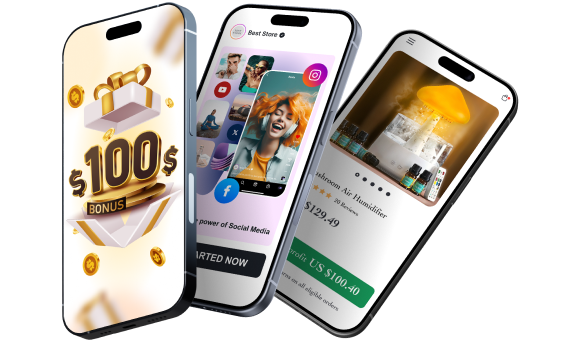
Starting a business takes momentum – and Sellvia gives you a head start. When you claim your free store today, you also get a $100 welcome gift to put toward growing your business. Use it to upgrade your store, boost your marketing, or unlock new tools. It is a real dollar value, handed to you on day one, with no catch and no hoops to jump through.
A massive catalog of digital products to sell 🏆
One of the biggest struggles in starting an online business is figuring out what to sell. Sellvia solves that completely. Your store comes pre-loaded with digital products – guides, courses, checklists, and tools – all created by Sellvia. You keep 50–70% of every sale. No inventory. No shipping. No logistics headaches.
Everything in one easy-to-use platform 🔥
Managing an online store shouldn’t be complicated. With Sellvia, you can handle orders, add new products, and even chat with customers – all from a simple and user-friendly platform. No need to mess with confusing tools or deal with unnecessary tech stuff. It’s all smooth sailing.
No upfront costs, just start selling 💰
A big reason people hesitate to start an online business is the cost. But here’s the good news: With Sellvia, you don’t need to invest in stock, storage, or shipping supplies. You can run your store with no upfront costs, keeping things low-risk while still making money.
Support that’s always got your back 🤝
Running a business comes with questions, but you’re never alone. Sellvia’s dedicated support team is available 24/7 to help with anything you need. Whether it’s a small question or a big challenge, they’ve got you covered.
Fulfillment for ecommerce does not have to mean boxes, carriers, and logistics headaches. Claim your free Sellvia store today and start selling digital products with instant delivery built in from day one.