Affiliate marketing is one of the most talked-about ways to earn money online – and if you have been searching for how it actually works, you are in the right place. The idea is straightforward: you promote someone else’s product, people buy through your link, and you earn a commission. No product to create, no customer service, no upfront inventory cost.
Quick answer: Affiliate marketing works by giving you – the affiliate – a unique tracking link to share. When someone clicks that link and makes a qualifying purchase, the merchant’s system records the sale and credits your account with a commission. The process runs automatically through an affiliate program or network that handles tracking and payouts.
Below, you will find a clear breakdown of every moving part: how tracking works, where to find programs, how to drive traffic, and what realistic earnings look like for someone starting from zero in 2026.
What is affiliate marketing and how does it work?
Affiliate marketing is a performance-based earning model where you earn a commission for driving a specific action – most commonly a sale – for another business. It sits inside a three-way relationship: the merchant (the company selling the product), the affiliate (you), and the customer (the person who buys). A fourth player – an affiliate network or platform – often sits in the middle to handle tracking, payments, and program management.
Here is how the process flows from start to finish. You sign up for an affiliate program and receive a unique referral link tied to your account. You place that link in content you create – a blog post, a YouTube video, a social media post, an email newsletter. A visitor clicks the link. Their browser stores a tracking cookie, which tells the merchant’s system that this visitor came from you.
If they complete a purchase within the cookie window – commonly 24 hours to 90 days depending on the program – the sale is attributed to you and a commission is added to your dashboard. Once your balance crosses the payment threshold, the network sends the money to your account.
The mechanic sounds simple because it is. The hard part is building an audience or a traffic source that actually clicks and converts – and that takes time, consistency, and the right content strategy.
Why this works in 2026: Global affiliate marketing spend is projected to surpass $15 billion this year, and merchants increasingly rely on affiliates for cost-efficient, performance-only acquisition. The ecosystem is more accessible than ever, with hundreds of networks and thousands of programs open to beginners.
How much can you realistically earn with affiliate marketing?
This is where most beginner guides either over-promise or dodge the question entirely. The honest answer is: it depends heavily on your traffic volume, your niche, and the commission rates you negotiate. Here is a realistic breakdown by method and experience level.
Most beginners operating a blog or a small social account realistically earn $30–$80/month in their first 6 months. Crossing $500/month consistently typically takes 12–18 months of focused effort.
One note on ceiling figures: The affiliates earning $10,000+ per month are outliers running large content operations, high-traffic comparison sites, or heavily optimized paid funnels. Those results are real but they require full-time effort, reinvestment, and usually a team. For most part-time affiliates, $200–$800/month after 12 months of consistent work is a more grounded benchmark.
If those timelines feel long, you are not alone. Many people searching for how does affiliate marketing work are really asking: is there a faster way to earn income online? That is a fair question – and there is an answer worth knowing about before you commit to a 12-month content grind. More on that shortly.
The key players in affiliate marketing explained
Before you pick a program or write a single piece of content, it helps to understand exactly who you are dealing with and what role each party plays in the ecosystem.
Merchants and product owners
The merchant is the company or individual who owns the product or service being promoted. They set the commission rate, define what counts as a qualifying conversion, decide the cookie duration, and control when and how affiliates get paid. Merchants range from solo creators selling a $27 ebook to Fortune 500 companies with formal partner programs. What they all share is a need for traffic and conversions they do not have to pay for upfront – which is exactly what a good affiliate provides.
Important note: Always read the merchant’s program terms before promoting. Some restrict which traffic sources you can use – for example, prohibiting paid search on branded keywords – which can get your account suspended if you miss it.
Affiliate networks vs. direct programs
You can join affiliate programs in two ways: through a dedicated affiliate network, or directly through a merchant’s own in-house program.
Affiliate networks act as intermediaries that host multiple merchants in one dashboard. You apply once, get approved, and can promote hundreds of brands from a single account. Well-known networks include ShareASale, CJ Affiliate, Impact, Rakuten Advertising, and PartnerStack. Networks handle all the tracking infrastructure and consolidated payouts, which makes them beginner-friendly.
Direct programs are run entirely by the merchant. Amazon Associates is the most famous example – you apply directly on Amazon’s site and promote products across their catalogue. Other examples include Shopify’s affiliate program and various software brands. Direct programs sometimes offer higher commissions because there is no network fee, but you manage each relationship separately.
The affiliate (you) and your role
As the affiliate, your job is to connect the right audience with the right product at the right moment. You do this through content – articles, videos, newsletters, posts – that earns trust and provides genuine value before asking anyone to click a link. The more relevant and helpful your content, the higher your conversion rate will be. Affiliates who treat their audience as a resource to extract money from burn out fast. Affiliates who treat their audience as people to help tend to build sustainable income over time.
Step-by-step: how to start affiliate marketing from scratch
Here is the full beginner process broken into clear stages. Each one builds on the last.
Step 1 – Choose your niche
Your niche is the topic area you will build content around. The most important thing here is the intersection of three factors: something you can write or talk about consistently, an audience that spends money, and affiliate programs with decent commission rates. Popular beginner-friendly niches in 2026 include personal finance, health and wellness, software tools, home improvement, and outdoor gear.
Avoid going too broad (“fitness”) or too narrow (“kettlebells for left-handed people over 50”). A good niche has enough search volume to attract traffic but is specific enough that you can become a trusted voice. Tools like Google Trends or even Reddit can show you what people in a niche are actively searching for.
Step 2 – Find affiliate programs that fit your niche
Once you have a niche, search for programs that match it. The fastest way is to type “[your niche] + affiliate program” into Google. You can also browse networks like ShareASale or Impact and filter by category. Look at three things before applying: commission rate (higher is not always better – a 3% rate on a $500 product beats a 30% rate on a $5 product), cookie duration (longer gives your audience more time to convert), and payment terms (monthly PayPal, bank transfer, or check – and what the minimum threshold is).
For absolute beginners, Amazon Associates is a common starting point because the product catalogue covers almost any niche. The downside is low commission rates (1–5% on most categories) and a 24-hour cookie. As your traffic grows, shifting to higher-ticket programs in the same niche usually makes more sense financially.
Step 3 – Build a platform to publish content
You need somewhere to publish content and place your links. The three most reliable platforms for affiliate marketing beginners are:
- A blog or website – The most durable long-term asset. SEO-driven articles rank on Google and bring in traffic for months or years. WordPress with a hosting plan (around $3–$10/month) is the standard setup.
- A YouTube channel – Video works especially well for product reviews, tutorials, and comparisons. The channel is free to start; the main cost is your time and any recording equipment.
- An email newsletter – A list of engaged subscribers converts better than almost any other channel because the audience opted in specifically to hear from you. Tools like Beehiiv or ConvertKit let you start free.
Social media platforms (TikTok, Instagram, Pinterest) can complement these, but they should not be your only channel. Algorithms change, accounts get suspended, and you do not own the audience. A blog or email list gives you more control.
Step 4 – Create content that earns clicks
Content is the engine of affiliate marketing. The formats that convert best for affiliate links are product reviews, comparison articles (“X vs Y”), best-of roundups (“best tools for [niche]”), and tutorial posts that solve a specific problem and naturally recommend a product as the solution.
The key is intent matching. Someone searching “best running shoes for flat feet” is very close to buying – that is high-intent, commercial content. Someone searching “how to run faster” is in research mode and much less likely to buy anything today. Both have value, but affiliate links belong in content that serves purchase-ready readers.
Important: The FTC requires affiliates to disclose their relationship with merchants. A short, clear statement at the top of your content – something like “This post contains affiliate links. If you click and buy, I may earn a commission at no extra cost to you” – satisfies this requirement and builds trust with readers.
Step 5 – Drive traffic to your content
Traffic is the variable that determines everything else. Without visitors, your links earn nothing. The main traffic channels for affiliate marketers are:
- Organic search (SEO) – Writing content optimized for keywords your target audience types into Google. Free traffic, but it takes 3–9 months to start ranking for competitive terms.
- Social media – Sharing content on TikTok, Instagram, Pinterest, or Twitter to drive clicks to your site. Faster to start but more algorithm-dependent.
- Email marketing – Sending newsletters to a list you have built, with affiliate links embedded in relevant recommendations. High conversion rate because the audience already trusts you.
- Paid ads – Running Google or Facebook ads to send traffic directly to affiliate offers. Faster results but requires ad spend – and if your commission per conversion is lower than your cost per click, you lose money.
Most beginners start with SEO or social because both are free. SEO builds the most durable long-term traffic, so if you can commit to publishing consistently for 6–12 months, it tends to produce the best return over time.
Step 6 – Track performance and optimize
Once your content is live and getting clicks, the next step is understanding what is working. Most affiliate dashboards show you clicks, conversions, and earnings per link. Use this data to identify which articles or videos are generating the most revenue, which products convert best, and where traffic is dropping off.
The most common optimization levers are: moving affiliate links higher in the content (links buried at the bottom get fewer clicks), testing different call-to-action phrasing around your links, improving your page load speed (slow sites hurt conversion), and updating older content with fresher product recommendations. Small consistent tweaks compound over time.
Affiliate marketing types: which model suits you?
Not all affiliate marketing works the same way. There are a few distinct models, and understanding them helps you pick the right approach for your situation.
Pay-per-sale (PPS)
The most common model. You earn a commission when a referred visitor completes a purchase. Commission rates range from 1% (Amazon on some categories) to 50%+ on digital products and software tools. This model rewards affiliates who send genuinely purchase-ready traffic. It is straightforward – you drive a sale, you get paid.
Pay-per-lead (PPL)
You earn a commission when a referred visitor completes an action short of a purchase – typically signing up for a free trial, filling in a form, or downloading a lead magnet. Commission per action is lower than a full sale, but the conversion rate is higher because the barrier for the visitor is lower. Insurance, finance, and software companies often use this model. It is a good starting point if you are in a niche where people research heavily before buying.
Pay-per-click (PPC affiliate)
You earn a small amount every time someone clicks your affiliate link, regardless of whether they buy. This model is rare because it is easy to abuse, but it does appear in some display advertising contexts. Earnings per click are very small – fractions of a cent to a few cents – so it only scales at high traffic volumes. Most beginners will not encounter this model much in practice.
Recurring commissions
One of the most powerful models for long-term income. When you refer a customer to a product with a monthly plan (software, membership sites, tools), you earn a commission every month they stay subscribed – not just on the first payment. Software affiliate programs frequently offer recurring rates of 20–40%. A single referred customer who stays for 12 months might pay you 12 commissions instead of one. Building a portfolio of recurring-commission referrals creates genuinely compounding income over time.
Earning potential: $200–$2,000/month is achievable for affiliates with a focused content strategy around high-ticket software products and a readership of 5,000–15,000 monthly visitors after 18–24 months.
Legal and ethical rules every affiliate must follow
Affiliate marketing has a shady reputation in some corners of the internet – and that reputation exists for a reason. There is a meaningful difference between affiliate marketing done right and the grey-area tactics that get accounts suspended and erode audience trust.
What to avoid absolutely
Fake reviews: Writing or publishing reviews for products you have never used, or manufacturing positive sentiment to boost conversions, violates FTC guidelines and breaks trust with your audience. Platforms like Reddit catch fake review patterns quickly, and your site’s reputation suffers in search if enough people flag it.
Cookie stuffing: A black-hat technique where an affiliate loads tracking cookies onto a visitor’s browser without a genuine click – essentially claiming commission credit for sales they had nothing to do with. This is fraud. Affiliate networks suspend accounts permanently for it and may pursue legal action.
Misleading income claims: Posting screenshots of affiliate dashboards showing extreme daily earnings to convince people to buy a course or join a program is deceptive and violates advertising standards in most countries. If you talk about earnings, disclose the context honestly and use realistic figures.
Non-disclosure: Failing to tell your audience that you earn a commission if they click your links is a legal violation under FTC regulations in the US and equivalent rules in the EU, UK, and Australia. Disclosure is not optional – it is required by law.
What to do instead
Key principle: Only recommend products you have genuine knowledge of, disclose your affiliate relationships clearly, and let the quality of your content do the selling.
Sustainable affiliate income is built on trust, and trust is built through honest, useful content over time. Affiliates who take the long-term approach – writing thorough, accurate reviews, updating content when products change, and acknowledging product weaknesses alongside strengths – consistently outperform those chasing quick wins. Google’s algorithm updates in recent years have specifically targeted thin, manipulative affiliate content and rewarded genuinely helpful product guidance.
How to choose the right approach for your situation
Affiliate marketing is not one-size-fits-all. The right starting point depends on where you are right now – your time, your existing skills, and how quickly you need results.
Complete beginner
If you have no existing audience, no website, and no technical background, start with a single platform and a single niche. A blog on WordPress with 2–3 articles per week, focused on a specific sub-niche with clear buyer intent, is the most reliable path for a beginner. Join Amazon Associates or one large network (ShareASale or Impact) first. Do not spread across multiple platforms in the first 3 months – depth beats breadth at the start.
Intermediate / part-time affiliate
If you already have some content published and a trickle of traffic, the focus shifts to optimization and higher-value programs. Audit your existing content for conversion rate, swap lower-commission programs for higher-ticket or recurring-commission alternatives, and start building an email list to own your audience. At this stage, $100–$400/month is achievable, and doubling that within 6 months is realistic with consistent effort.
Advanced / full-time goal
For someone targeting affiliate marketing as a primary income source, the game is about diversification and systems. Multiple content channels, multiple affiliate programs across a few related niches, and ideally some recurring-commission products that provide baseline monthly income regardless of content output. At this level, treating affiliate marketing as a business – with a content calendar, analytics review, and quarterly strategy updates – is what separates those earning $2,000/month from those stuck at $200.
Important note: The most resilient online income models do not rely on a single revenue source. Many successful affiliates eventually add their own products or an online store to their income stack – so that a single algorithm change or program closure does not wipe out everything.
If you are at any of these stages and wondering whether there is a faster way to build reliable online income, that is a fair question. Understanding how does affiliate marketing work is valuable – but owning your own store means you keep the full profit margin on every sale, not just a commission. That is the core difference worth knowing about.
Why Sellvia is a game-changer for your online store 🚀
Sellvia isn’t just another ecommerce tool. We are a trusted name in the industry, recognized by Forbes and even ranked in Inc.’s list of the 5,000 fastest-growing companies in the U.S. So if you’re serious about starting as a solopreneur, this is a smart place to begin.
Starting an online business can feel overwhelming, but that’s exactly where Sellvia steps in. It takes care of the tricky parts, so you can focus on making sales and growing your brand. Let’s break down what makes it such a great choice.
Get a ready-to-go store hassle-free 🎯
Want to start selling but don’t know where to begin? No worries! Just share your ideas, and Sellvia’s team will build a free ecommerce website that’s fully set up and ready to take orders from day one. No coding, no stress – just a store that works right out of the box.
A $100 welcome gift to grow your business faster 🎁
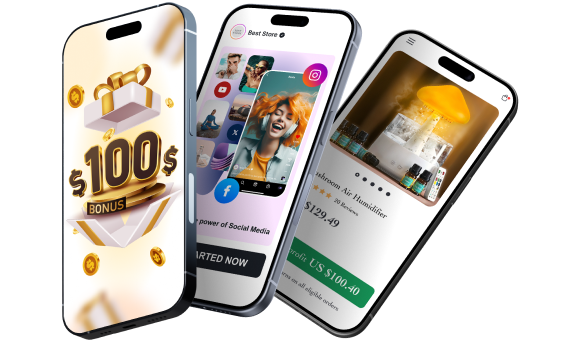
Starting a business takes momentum – and Sellvia gives you a head start. When you claim your free store today, you also get a $100 welcome gift to put toward growing your business. Use it to upgrade your store, boost your marketing, or unlock new tools. It is a real dollar value, handed to you on day one, with no catch and no hoops to jump through.
A massive catalog of digital products to sell 🏆
One of the biggest struggles in starting an online business is figuring out what to sell. Sellvia solves that completely. Your store comes pre-loaded with digital products – guides, courses, checklists, and tools – all created by Sellvia. You keep 50–70% of every sale. No inventory. No shipping. No logistics headaches.
Everything in one easy-to-use platform 🔥
Managing an online store shouldn’t be complicated. With Sellvia, you can handle orders, add new products, and even chat with customers – all from a simple and user-friendly platform. No need to mess with confusing tools or deal with unnecessary tech stuff. It’s all smooth sailing.
No upfront costs, just start selling 💰
A big reason people hesitate to start an online business is the cost. But here’s the good news: With Sellvia, you don’t need to invest in stock, storage, or shipping supplies. You can run your store with no upfront costs, keeping things low-risk while still making money.
Support that’s always got your back 🤝
Running a business comes with questions, but you’re never alone. Sellvia’s dedicated support team is available 24/7 to help with anything you need. Whether it’s a small question or a big challenge, they’ve got you covered.
If you have been researching how does affiliate marketing work, you already have the mindset for online business – Sellvia just removes the wait. Claim your free store and start earning from digital products today.