So you want to know how to become a dropshipper. The good news is that starting an online business in 2026 has never been more accessible. No warehouse. No experience required. No massive upfront investment. But accessible does not mean effortless – and that gap is why most beginners stall before they ever make a sale.
This guide walks you through the entire process from scratch. What the model actually is, how much you can realistically earn, and the exact steps to go from zero to a running online store. Whether you are completely new or you have tried before without traction, you will find a clear roadmap here.
Quick Answer: To become a dropshipper, you choose a niche, set up an online store, list products, and market them to buyers. You never touch physical inventory – products are delivered to customers automatically. With the right platform, you can launch for as little as $0 and start getting sales within your first week.
The model has been around for over a decade, but 2026 is one of the best years yet to enter it. Automation tools are more powerful, supplier networks are larger, and the infrastructure for beginners has improved dramatically. If you have been sitting on the idea, the tools are ready – the only question is whether you are willing to act.
What does it mean to become a dropshipper?
At its core, learning how to become a dropshipper means building an online store where you sell products you do not manufacture or hold yourself. When a customer places an order, the product is delivered to them automatically – you collect the profit in between. It is a retail model built around margin, not logistics.
What separates people who succeed from people who quit comes down to three things: picking the right products, getting traffic to their store, and staying consistent long enough for the model to work. None of those steps require a business degree or technical background. They just require following the right process.
In 2026, the most beginner-friendly version of this model involves selling digital products – guides, courses, checklists, and online tools. There is no physical inventory to manage, no shipping delays to apologize for, and no logistics headaches. When a sale is made, the product is delivered instantly. That removes the biggest friction points that cause new sellers to burn out.
Global ecommerce is on track to surpass $6.3 trillion in sales this year. Mobile shopping continues to grow. More people are buying from stores they discover through social media and search than ever before. The market is there. The question is how to position yourself to capture a piece of it.
How much can you realistically earn?
This is the first question most beginners ask, and it deserves a direct answer. Earnings vary based on your niche, how much time you invest, and how long your store has been running. Here is an honest breakdown by stage.
These figures reflect what store owners take home after costs. The beginner range assumes organic traffic or a small ad budget. The established range reflects a store with proven products and consistent marketing in place.
One note on the ceiling figures: The $8,000+ range is real but takes time to reach. Most sellers who hit that level spent 9–18 months testing products, refining their marketing, and scaling what worked. Treat the first 60–90 days as your learning investment – not your payday window.
Day-to-day, a store in its early phase might earn $10–$30 on a good day. A store with a proven product and active ads can reach $80–$200/day within six months. The sellers earning $500+/day are running a real business operation at that point, not just a side hustle. Sellvia store owners have collectively earned over $1.5 billion – which tells you the opportunity is real, even if it takes consistent effort to get there.
How to become a dropshipper: The full step-by-step process
Every step below builds on the last. Skipping any of them is the most common reason new stores underperform in the first three months.
Step 1: Choose your niche
The biggest mistake beginners make is going too broad. A store that sells everything gives customers no reason to trust it. A store focused on one clear niche – say, personal finance tools for young families, or fitness guides for people over 40 – builds trust faster, markets more efficiently, and converts better.
How to pick your niche
Start with your own interests, then validate them with real data. Use Google Trends to check whether demand in your niche is growing or shrinking. Browse online communities – Reddit, Facebook groups, niche forums – and look for recurring problems people are actively trying to solve. If someone is paying for a solution to that problem, there is a market.
Good beginner niches in 2026 include personal finance, health and wellness, home productivity, parenting, and career growth. These have consistent demand, passionate audiences, and a strong appetite for digital guides, tools, and courses – exactly what Sellvia’s catalog is built around.
Step 2: Set up your online store
You have options here, and the right one depends on how fast you want to move. Building a store from scratch on a platform like Shopify or WooCommerce gives you full control – but it takes weeks when you are new and unfamiliar with the tools.
A ready-made store, like the ones Sellvia provides for free, gets you live in days. The store is already designed, already loaded with digital products to sell, and already connected to a built-in advertising system. For most beginners, that speed advantage is enormous. The faster you get a real store in front of real customers, the faster you learn what actually works.
What your store needs from day one
Whatever path you choose, make sure your store has a clear About page, a visible contact method, and an honest returns or refund policy. These three elements alone dramatically improve conversion rates because they signal trust to first-time visitors. A store that looks professional and answers the unspoken question “is this legit?” converts far better than a polished store with nothing behind it.
Step 3: Load your store with products worth selling
Product selection is an ongoing activity, not a one-time setup. Your first batch of products will not all be winners – that is normal. The goal in the early months is to identify which products your audience responds to and focus your energy there.
What makes a product worth listing
When evaluating any product, run it through a simple checklist. Does it solve a real, specific problem? Does it have a profit margin that makes the sale worthwhile? Is there a clear audience for it? Does it deliver value in a way the customer can immediately understand? For digital products – guides, courses, checklists, tools – the best ones answer a question the buyer is already asking.
With Sellvia, this step is already handled for you. Your store comes pre-loaded with digital products created by Sellvia’s team – tested, formatted, and ready to sell. You keep 50–70% of every sale. There is no inventory to buy, no files to create, and no logistics to manage. The product arrives in the customer’s inbox the moment they pay.
Why digital products outperform physical ones for beginners
Physical product businesses require managing supplier relationships, shipping windows, return logistics, and customer complaints about delivery. Digital products eliminate all of that. When a customer buys, the product is delivered instantly.
There are no tracking numbers, no customs delays, no “where is my order” emails. That simplicity makes digital products the clearest path for anyone learning how to become a dropshipper for the first time.
Step 4: Write listings that make people want to buy
One of the most common beginner mistakes is copying a generic product description without thinking about what the buyer actually wants to know. Strong listings are not spec sheets – they are answers to the reader’s underlying question: “Will this help me?”
What a strong product listing includes
Start with a benefit-led headline that speaks to the outcome, not just the feature. Follow with a short paragraph explaining what the product solves or improves in plain language. Use a short list of key points to make the value scannable. Add at least one image that represents the product clearly.
And end with a simple, direct call to action. That structure works for digital products just as well as physical ones – maybe better, because you can focus entirely on outcomes with no logistics to explain.
Important note: Write at the reading level of your customer, not your own. If your audience is busy parents or people managing debt, they do not have time for long paragraphs of dense copy. Short sentences, clear benefits, and plain language outperform every time.
Step 5: Drive traffic to your store
A well-built store with no visitors earns nothing. Traffic is where most of the real learning curve lives for new sellers, and it is the single most important skill to develop in your first year.
Organic traffic (free, slower to build)
SEO-optimized content, social media posting, and community participation are all zero-cost ways to bring visitors to your store. TikTok and Instagram Reels have become powerful free channels for product discovery – short videos that show a product solving a real problem regularly reach thousands of people with no ad budget at all.
Posting 3–5 times per week in a focused niche is a strategy many full-time sellers credit as their primary traffic source.
Paid traffic (faster, requires budget)
Facebook and Instagram ads remain the most popular paid channel for online stores. They offer precise audience targeting and scale well once you find a product that converts. TikTok ads are increasingly effective for products aimed at younger buyers. Google ads work well when customers are already searching for what you sell.
Start small – $10 to $20 per day per product – and give each test at least 3–5 days before deciding to scale or stop. That approach lets you test multiple products without draining your budget before a winner emerges.
Sellvia removes much of this barrier with a built-in advertising system. For $10–$50/day, the platform handles targeting, creative, and optimization on your behalf. No marketing expertise required. Most Sellvia store owners who activate ads receive their first orders the same day. You also get a $40 ad coupon included free during your trial – which means your first week of traffic costs you nothing out of pocket.
Legal and ethical considerations for new online sellers
Running an online business is legitimate – but it comes with real responsibilities. Getting these right from day one protects your store, your reputation, and your income.
What to avoid
Never make income claims you cannot back up. Promising buyers that a guide will earn them a specific dollar amount within a specific timeframe sets expectations you cannot guarantee – and disappointed customers become refund requests and bad reviews. Be specific and honest: “this guide covers X strategy, results depend on effort and circumstances.”
Avoid grey-area tactics like fake scarcity timers, misleading before-and-after claims, or manufactured urgency. These may boost short-term clicks but destroy long-term trust – and they put you at risk of payment processor restrictions or platform bans.
Key principle: Treat your customers the way you would want to be treated as an online buyer – honest information, clear expectations, and a fair resolution process when something goes wrong.
What to do instead
Be transparent about what each product is and what it contains. Use a clear, simple refund policy that does not try to discourage legitimate returns. Register your business properly – an LLC in most US states costs under $100 and protects your personal finances. Keep records of your revenue and expenses from your first sale. Starting with good habits is far easier than fixing bad ones later.
How to choose your approach based on where you are starting from
Every seller starts from a different place. Here is how to match your situation to the right first moves.
Complete beginner
If you have never run an online store before, your goal is to launch fast rather than launch perfectly. Use a ready-made store so you are not spending weeks on setup. Pick one niche, get your store live, and focus entirely on getting your first 100 visitors before worrying about optimization. The biggest lessons come from running a live store – not from planning one in a notebook.
Intermediate – part-time seller
If you have some experience but have not seen strong results yet, the issue is almost always product selection or traffic. Revisit your niche with stricter criteria – look for topics where people are actively searching for answers and willing to pay for them.
Invest more time in your content or ad strategy, and track results consistently instead of guessing. One product that resonates with the right audience can change your trajectory completely.
Advanced – full-time income goal
If you are aiming to replace a salary within 12 months, treat this as a business from day one. That means a registered entity, proper accounting, an email list from your very first sale, and a realistic ad budget during the growth phase. Reaching $3,000–$5,000 per month in profit within a year is possible with full-time effort – but it requires the same discipline you would bring to any serious endeavor.
Whatever your starting point, the single biggest predictor of success is how quickly you test and iterate. The sellers who succeed are not the ones with the best store design. They are the ones who put their store in front of real customers quickly, learn what works, and keep going.
Why Sellvia is a game-changer for your online store 🚀
Sellvia isn’t just another ecommerce tool. We are a trusted name in the industry, recognized by Forbes and even ranked in Inc.’s list of the 5,000 fastest-growing companies in the U.S. So if you’re serious about starting as a solopreneur, this is a smart place to begin.
Starting an online business can feel overwhelming, but that’s exactly where Sellvia steps in. It takes care of the tricky parts, so you can focus on making sales and growing your brand. Let’s break down what makes it such a great choice.
Get a ready-to-go store hassle-free 🎯
Want to start selling but don’t know where to begin? No worries! Just share your ideas, and Sellvia’s team will build a free ecommerce website that’s fully set up and ready to take orders from day one. No coding, no stress – just a store that works right out of the box.
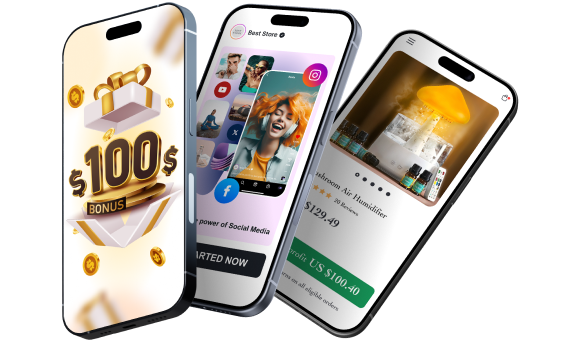
A $100 welcome gift to grow your business faster 🎁
Starting a business takes momentum – and Sellvia gives you a head start. When you claim your free store today, you also get a $100 welcome gift to put toward growing your business. Use it to upgrade your store, boost your marketing, or unlock new tools. It is a real dollar value, handed to you on day one, with no catch and no hoops to jump through.
A massive catalog of digital products to sell 🏆
One of the biggest struggles in starting an online business is figuring out what to sell. Sellvia solves that completely. Your store comes pre-loaded with digital products – guides, courses, checklists, and tools – all created by Sellvia. You keep 50–70% of every sale. No inventory. No shipping. No logistics headaches.
Everything in one easy-to-use platform 🔥
Managing an online store shouldn’t be complicated. With Sellvia, you can handle orders, add new products, and even chat with customers – all from a simple and user-friendly platform. No need to mess with confusing tools or deal with unnecessary tech stuff. It’s all smooth sailing.
No upfront costs, just start selling 💰
A big reason people hesitate to start an online business is the cost. But here’s the good news: With Sellvia, you don’t need to invest in stock, storage, or shipping supplies. You can run your store with no upfront costs, keeping things low-risk while still making money.
Support that’s always got your back 🤝
Running a business comes with questions, but you’re never alone. Sellvia’s dedicated support team is available 24/7 to help with anything you need. Whether it’s a small question or a big challenge, they’ve got you covered.
If you have been researching how to become a dropshipper, the most important move you can make today is launching a real store with real products behind it. Get your free Sellvia store and start building your online income today.
How do I become a dropshipper with no experience?
How much does it cost to become a dropshipper?
Your actual out-of-pocket cost depends on the platform you choose. With Sellvia, you can start with no upfront cost during the 14-day free trial, which includes a ready-made store, digital products to sell, and a 40 dollar ad coupon. After the trial, the monthly plan is 39 dollars. The only charge during the trial is a small order processing fee if you actually receive sales, which is a good problem to have.
How long does it take to make your first sale as a dropshipper?
Most beginners who activate the built-in advertising system on their Sellvia store receive their first order within the first 24 to 48 hours. Organic traffic takes longer – typically 2 to 6 weeks before you see consistent visitors from social media or search. Either way, having a live store with real products is the non-negotiable first step. The sellers who wait the longest before launching are almost always the ones who take the longest to get their first sale.
What type of products should a beginner sell online?
For beginners, digital products – guides, courses, checklists, and tools – are the most beginner-friendly category to start with. There is no inventory to manage, no shipping to coordinate, and no customer complaints about delivery times. When a sale is made, the product is delivered instantly to the buyer. Sellvia stores come pre-loaded with digital products across several niches, which means you do not have to research or create anything yourself before you can start selling.
Is it still worth learning how to become a dropshipper in 2026?
The opportunity in 2026 is as strong as it has ever been for new sellers. Global ecommerce continues to grow, more consumers than ever are comfortable buying from independent online stores, and the tools available to beginners have improved dramatically. The sellers who will struggle are the ones who treat this as a lottery ticket. The sellers who succeed are the ones who treat it as a real business, test consistently, and stay patient through the first 60 to 90 days.