


If you’re trying to figure out how to buy an online business with no experience, here’s the first thing to know: you don’t need a business degree, a tech background, or years of experience to own a successful online store. In fact, thousands of people have bought their first business with zero background and figured it out from there.
Maybe you’re reading this after the kids are asleep, wondering if there’s a way out of the paycheck-to-paycheck cycle. Or perhaps you’ve seen ads for buying an online business and thought, “That sounds great – but I wouldn’t even know where to start.”
This guide is for you. Together we’ll walk through every step from “I’m curious” to “I own a business,” in plain language, with no jargon and no shortcuts.

To buy an online business with no experience, you need less than you think
First of all, most people overestimate what’s required. So here’s the honest version.
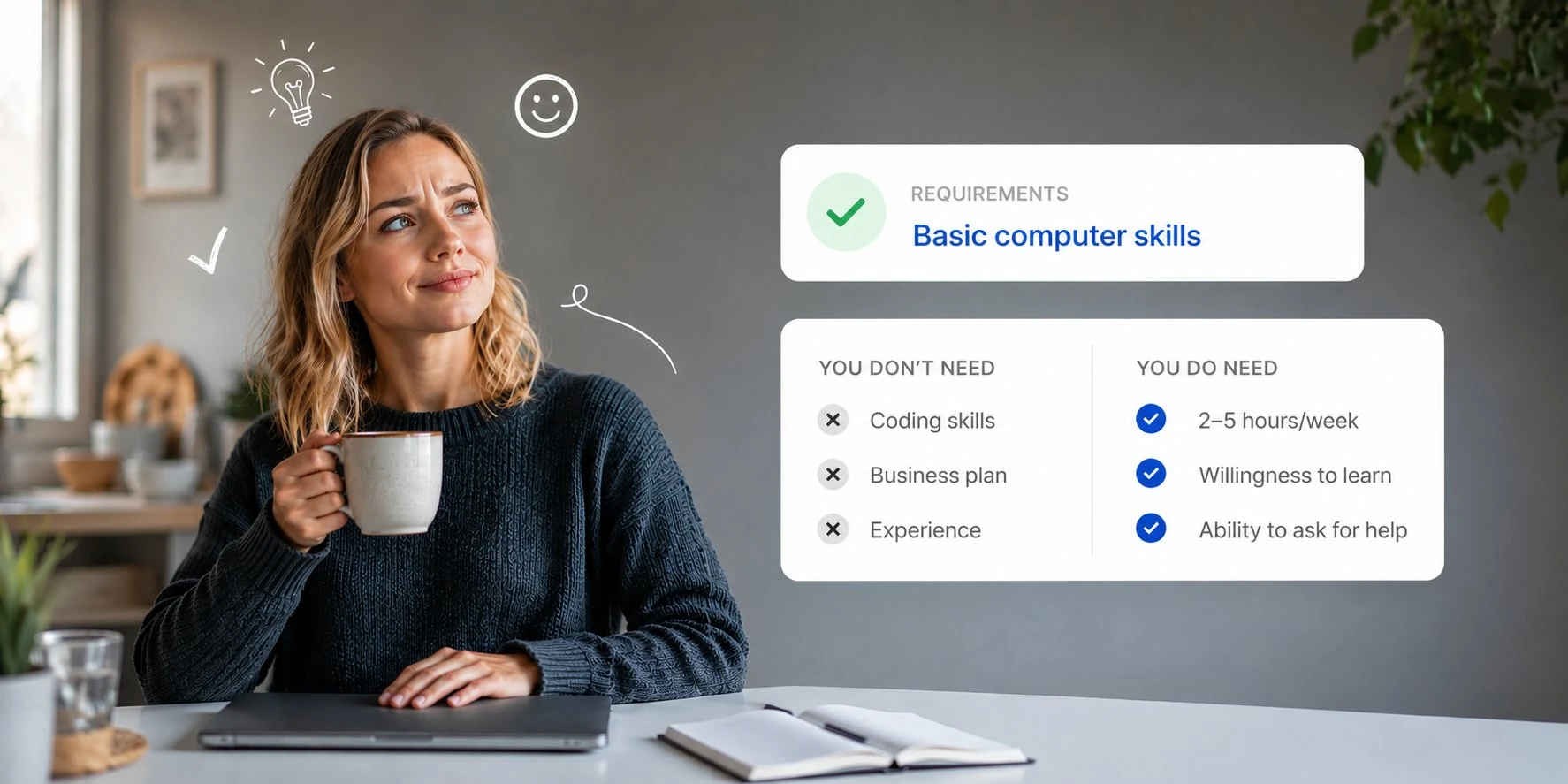 What you DON’T need: coding skills. Design skills. Product-sourcing experience. Marketing certifications. Accounting knowledge. A business plan. A big social media following. Any previous business ownership.
On the other hand, what you DO need: basic computer skills (if you can use email and shop online, you’re fine). Willingness to learn. Two to five hours a week. Enough money for the purchase (starting from $2,500, or a monthly payment plan). And the ability to ask for help when you’re stuck.
That’s the list. The personal growth manager who comes with every Sellvia Market store – a real person, not a chatbot – exists precisely for people starting from zero. In other words, you’re not expected to know everything. You’re just expected to show up and be willing to learn.
Step 1: Figure out your budget
Before you browse, know what you can actually spend. The math has three parts.
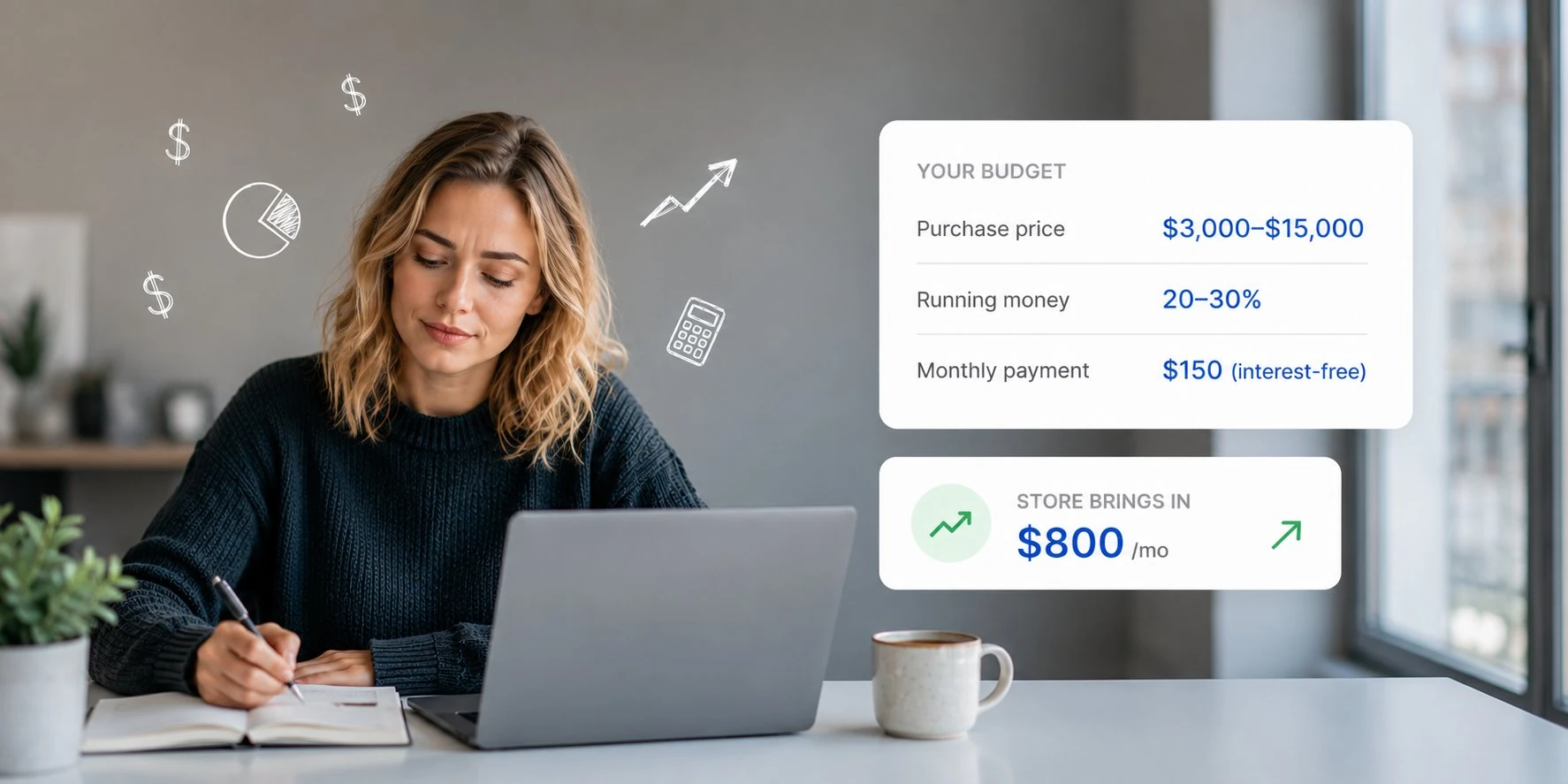
First, the purchase price – the listing price you see. On Sellvia Market, stores run from $2,500 to $120,000+. Most first-time buyers spend between $3,000 and $15,000.
Second, the running money. After you buy, you’ll need some money to run the business: ads (Sellvia Ads come included, but you may want to add more), tools, and a small cushion for surprises. A reasonable rule of thumb: 20 to 30 percent of the purchase price set aside for your first three months.
Third, monthly payments. You don’t need the full price upfront. Sellvia Market offers interest-free monthly payments, up to 48 months. The total is the same as the full price – just spread out. So you can start earning from the store while you’re still paying for it.

For example: if a store brings in $800 a month and your monthly payment is $150, the store covers its own cost and gives you something extra every month.
Step 2: Browse, and understand what you’re looking at
Next, open a Sellvia Market listing and you’ll see a few numbers. Here’s what each one means.
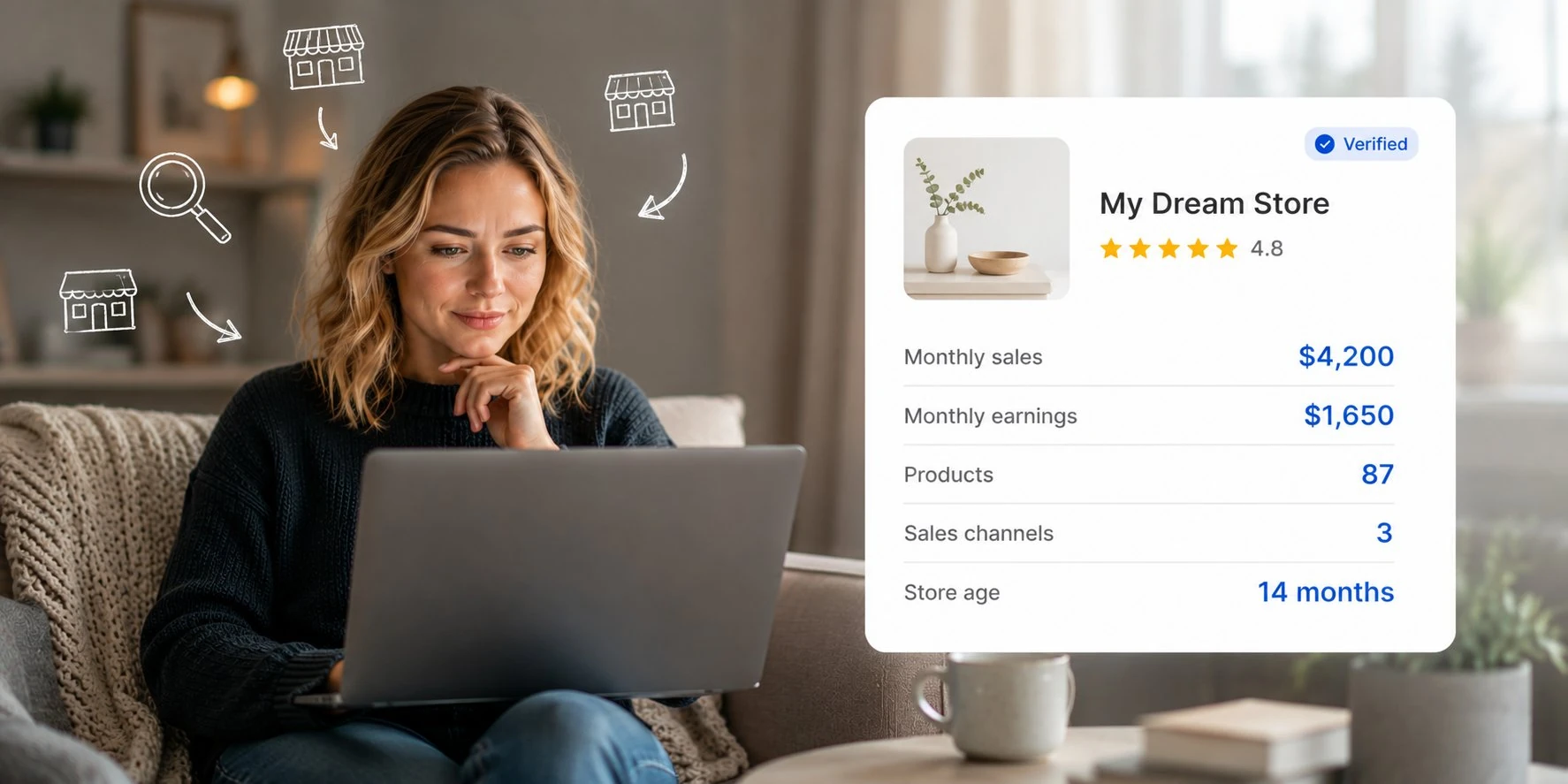
- Monthly sales. The total money the store brings in each month – the top number before any costs.
- Monthly earnings. What the owner actually keeps after products, shipping, ads, and tools. This is the number that matters for you. Generally, store owners on Sellvia Market keep 50 to 70 percent of each sale.
- Products. How many items the store sells. Usually, more products means more ways for customers to find you.
- Sales channels. Where the store sells – its own website, Amazon, Walmart, and so on. Importantly, a store selling through more than one channel isn’t depending on a single source.
- Store age. How long the store has been running. As a rule, an older store with steady numbers is more reliable than a brand-new one that had one big month.
Crucially, these numbers aren’t typed in by the seller. Instead, Sellvia pulls them directly from the store’s dashboard. So you’re seeing the same data the Sellvia Market team sees.
Step 3: Pick a store
When you’ve never done this before, picking a store can feel huge. So here’s how to make it manageable.
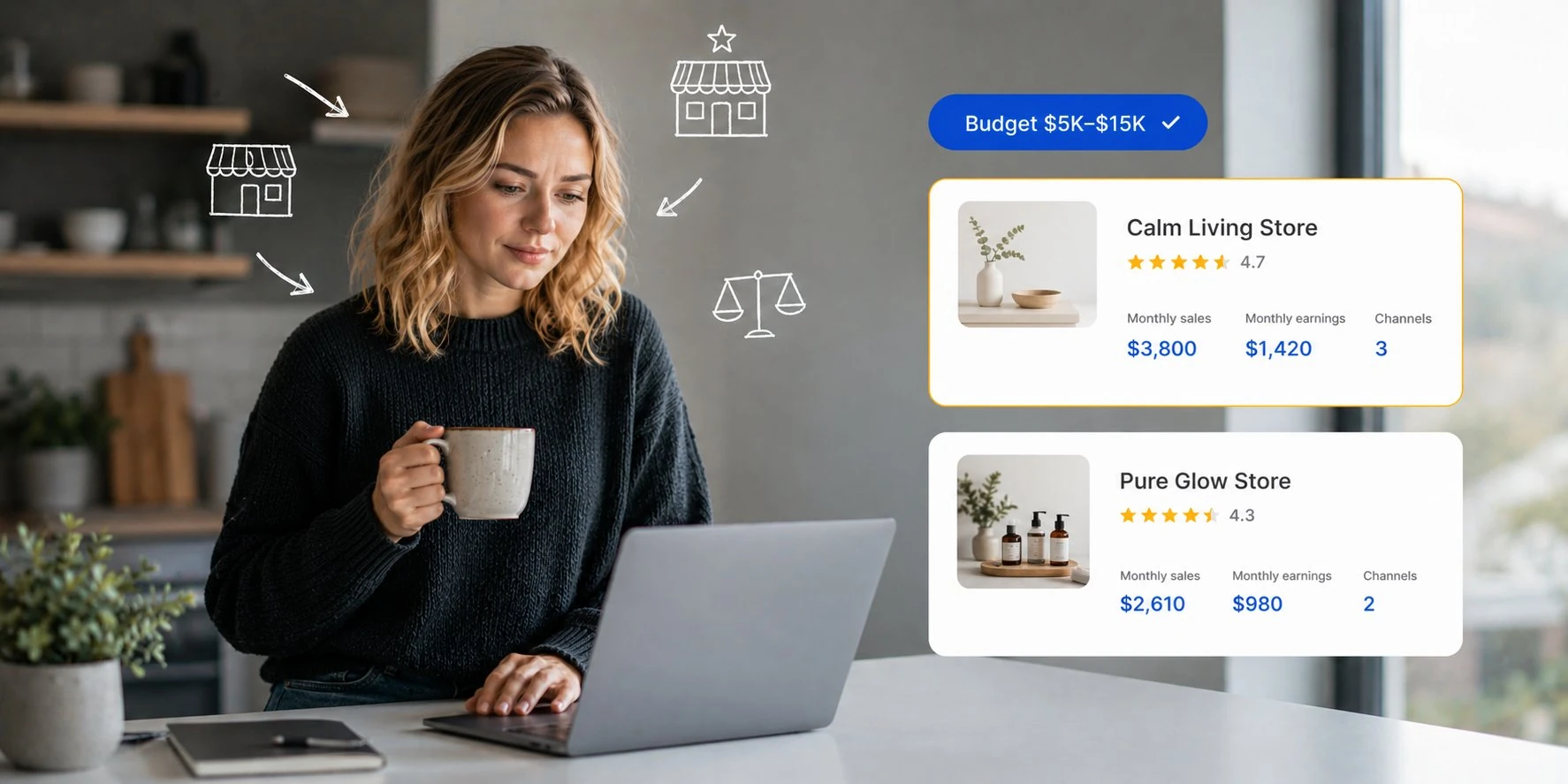
First, start with your budget. Filter by price. Don’t fall in love with a $50,000 store if you have $5,000 – there are plenty of good options in your range.
Second, look at earnings, not just sales. A store that brings in $10,000 a month but keeps $500 is less interesting than one that brings in $3,000 and keeps $1,200. After all, earnings is what actually goes into your account.
Next, pick a category you find at least a little interesting. You don’t need to be passionate about car accessories to run a car-accessories store, but it helps if you don’t dislike them.
Also, check the number of sales channels. A store that sells on its own website AND Amazon AND Walmart is more stable than one relying on a single source.
Finally, don’t overthink it. Your first store is a learning experience. The goal isn’t the perfect business – it’s finding a solid one, buying it, and learning by doing.
Step 4: Buy it and get started
Now, here’s what actually happens once you click buy.
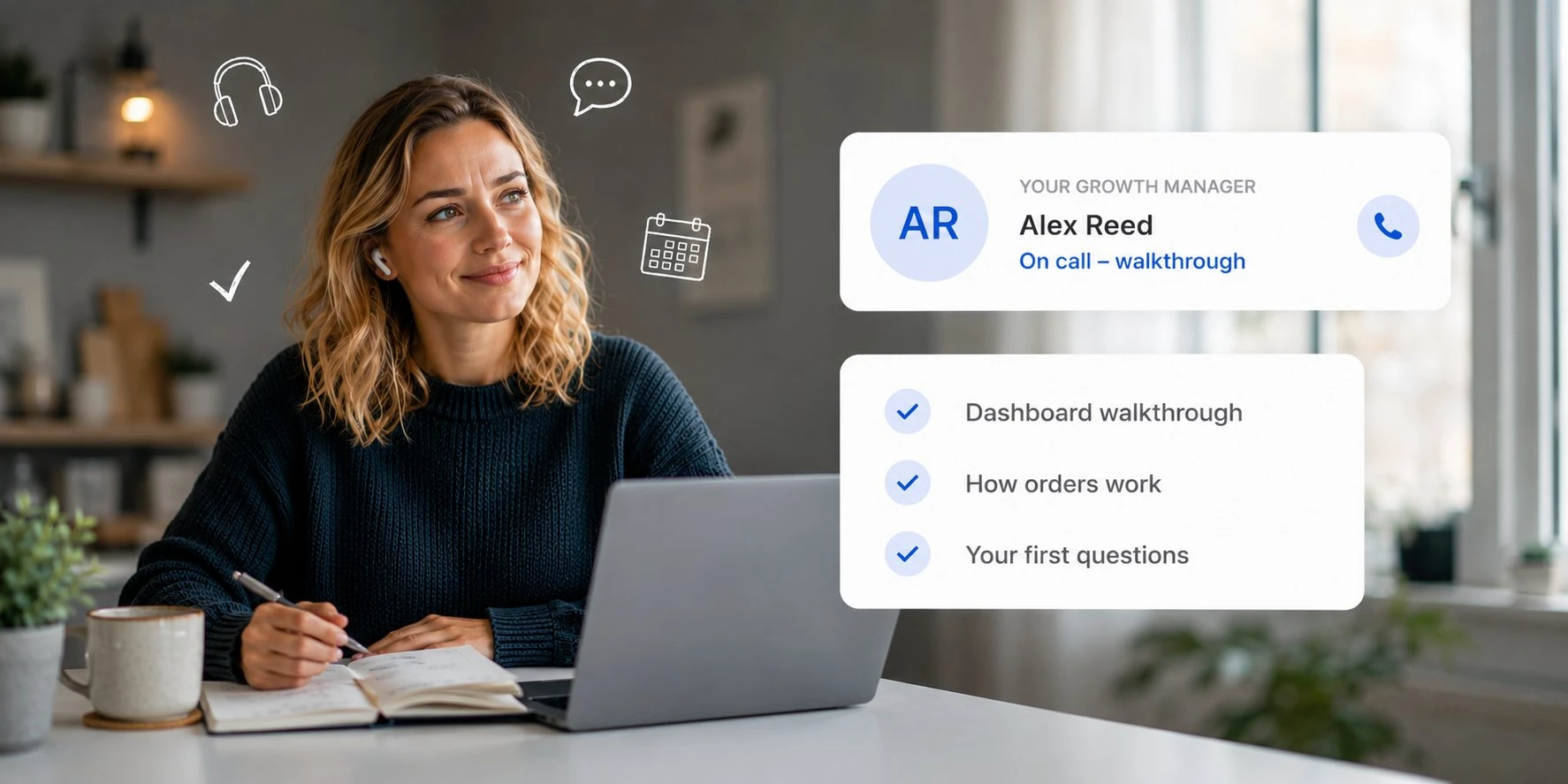
First, you complete the purchase (full payment or set up your monthly plan). Access to the store opens the same day. Then, within 24 hours, your growth manager reaches out to set up your first walkthrough.
On that first call, they’ll show you the dashboard, explain how orders work, and answer every question you have – no matter how basic it feels. Don’t skip this call. Honestly, it’s the fastest way to feel like you actually know what you’re doing.
Your first week is about getting oriented, not making changes. Look around, see how things flow, watch a few orders come in. By the end of month one, most new owners feel comfortable with the basics and start to think about small improvements – and your growth manager helps you decide what to try first.
What if it doesn’t work out?
This is the question every first-time buyer has – even the ones who don’t say it out loud. So here’s the honest answer.
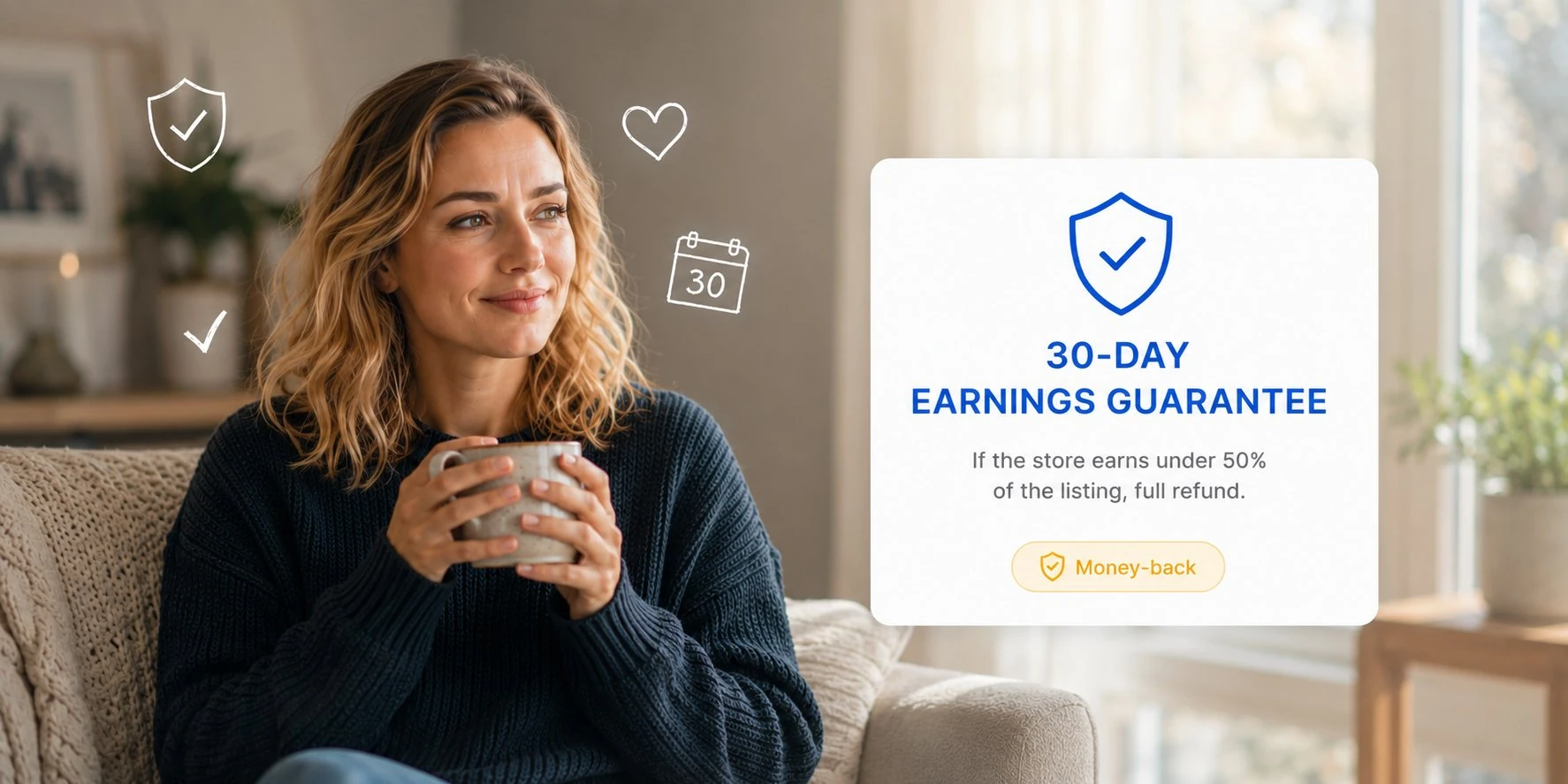
Sellvia Market has a 30-day earnings guarantee. If the store earns less than half of what the listing showed in your first 30 days – with Sellvia Ads running during that time – you can return it for a full refund. In other words, that’s a money-back guarantee, not just a credit toward another store.
Beyond the guarantee, your growth manager is watching how your store is doing from day one. So if something looks off, they’ll flag it and help you fix it before it becomes a real problem. Ultimately, you can make the decision knowing that if the numbers you saw don’t show up in your account, you’re not stuck with it.
Real talk: what the first 90 days actually feel like
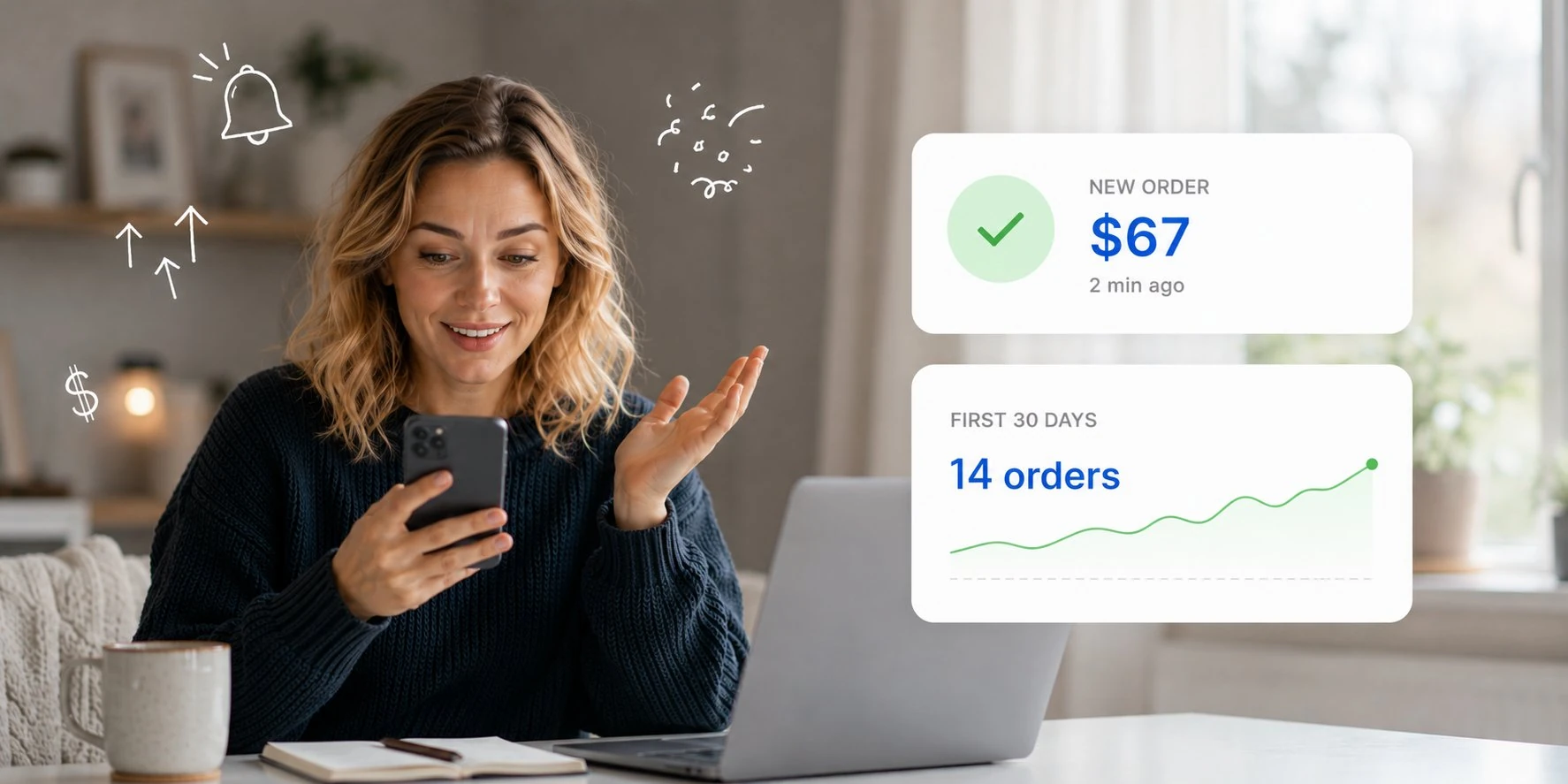
Week 1. Excitement mixed with “what did I just do.” Everything is new. You’ll check your dashboard ten times a day. That’s completely normal.
Weeks 2 to 4. The rhythm starts to make sense. Orders come in, products ship, money lands in your account. Suddenly, the mystery starts to fade. It begins to feel like something you can actually do.
Month 2. Googling “how to run an online store” stops because you’re already doing it. Your first idea for something to test shows up. Your growth manager helps you try it.
Month 3. Looking back at yourself three months ago, you realize the only thing you were missing was the decision to start.
Of course, not every store grows on the same timeline. Some take longer. But most new owners get there – and they’ll tell you the hardest part was just deciding to begin.
Who buys an online business with no experience
Parents who want to work from home and actually be there for their kids. Anyone on fixed income who needs more than Social Security. Plenty of people working two jobs who still can’t get ahead. Workers who got laid off and don’t want six months of building from scratch. And anyone who’s been burned before and needs real numbers before they’ll trust again.

For context: Sellvia has been around since 2016 and has helped over 500,000 entrepreneurs. Store owners on the platform have collectively earned more than $1.5 billion. Forbes, Inc., NBC, Fox News, and Entrepreneur have all covered the company. Naturally, none of that guarantees buying a store will work for everyone – but it means you’re not walking into the unknown.
One thing nobody tells beginners
A store isn’t just a monthly check – it’s something you own. After a year or two of running it, once it’s growing, you can list it back on Sellvia Market and sell it for a lump sum. People use those lump sums to pay off debt, cover a big expense, or just give their family some breathing room.
In short, you’re not just buying a side income. You’re buying something with resale value.
Your next step
Ready to see what’s actually available? You can browse Sellvia Market right now – every listing shows real numbers from the store’s dashboard, and you don’t have to sign up to look.
Alternatively, if you’d rather talk to a real person first, a free consultation is also there. A growth manager will go over your budget, what kinds of stores might fit, and how the monthly payment plans work. No pressure, no commitment.
You don’t need to be ready for everything. You just need to be ready to start.
If you are ready to buy your first online store, Sellvia Market was built for exactly this moment. Every listing shows verified performance data, every purchase is protected, and every buyer gets personal support from day one. Sellvia Market is featured by Forbes, Inc., NBC, Fox News, and Entrepreneur, and has helped over 500,000 entrepreneurs take that step. You do not need to be ready for everything. You just need to be ready to start.