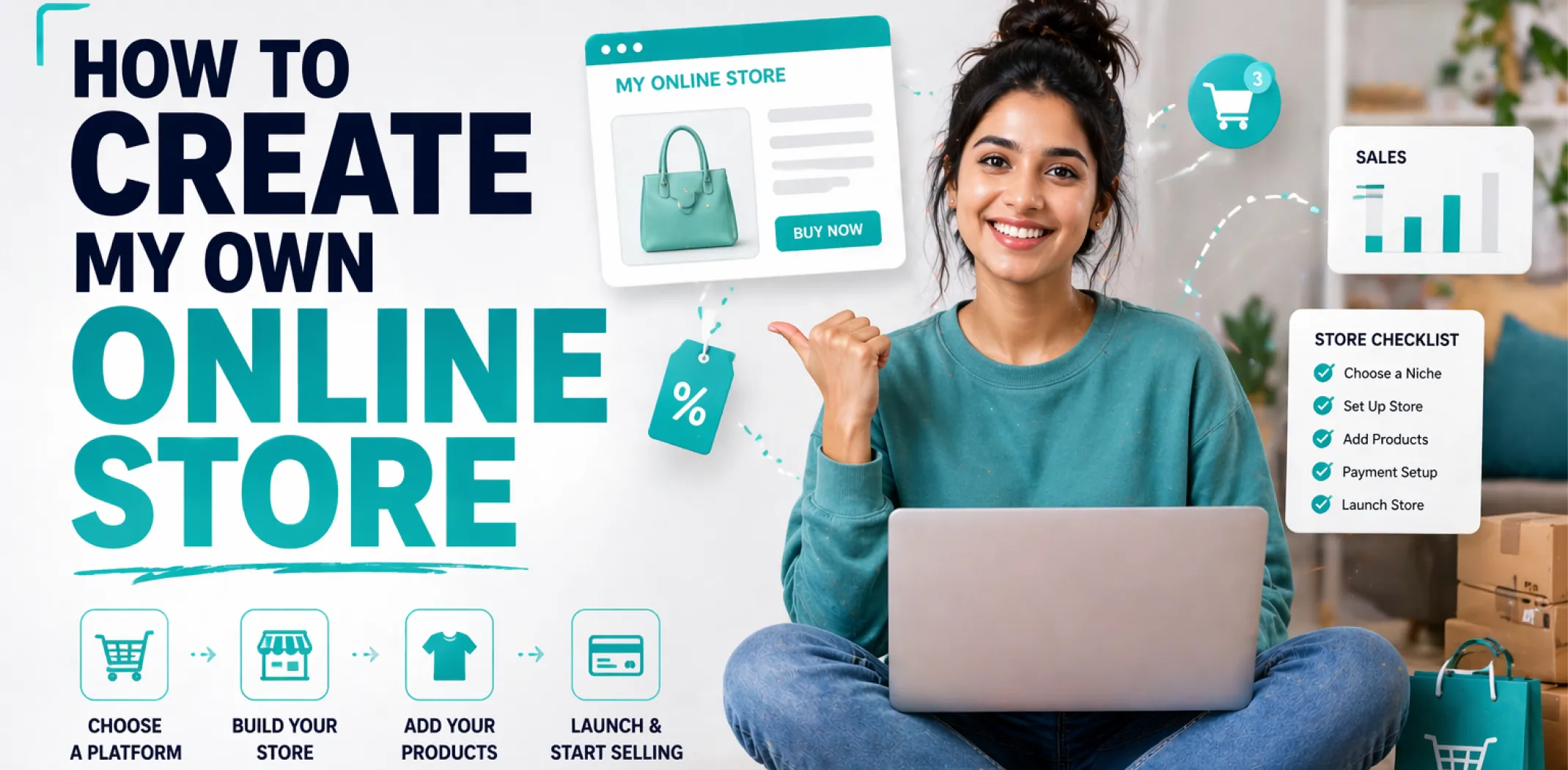
If you have been asking yourself how to create your own online store, you are in the right place – and you are not alone. Millions of people search that exact question every month, usually because they are tired of living paycheck to paycheck and want a real way out.
The good news is that starting an online business in 2026 is genuinely more accessible than it has ever been. You do not need a tech background. You do not need a big budget. You just need the right information and the willingness to start.
Quick Answer: To create your own online store, you need to choose what you will sell, pick a platform, get your store set up, and start driving traffic. With a ready-made solution, you can be live in a single day – and with the right approach, earning within 60–90 days of launch.
This guide walks you through every decision you need to make, in plain language. No ecommerce jargon, no fluff. Just a clear path from where you are now to an online business that actually works.
What is an online store and why start one in 2026?
An online store is a website where you sell products or services directly to customers – no physical location required. Someone finds your store, browses what you have, clicks buy, and receives their purchase either digitally or by mail. The entire transaction happens online, which means your store can make sales while you are asleep, at work, or spending time with your family.
The reason so many people are asking how to create their own online store right now comes down to one thing: the barrier to entry has collapsed. You no longer need to build a website from scratch, hold any stock, or have marketing experience to get started. New platforms handle the technical side for you.
New business models mean you can sell products without ever touching them. And new advertising tools mean you can reach paying customers on day one – not after months of building an audience.
Global online shopping continues to grow year after year, and an increasing share of that spending is going to independent stores rather than big marketplaces. Consumers are more comfortable than ever buying from smaller brands they discover through social media or a Google search. That is a genuine opportunity for someone starting fresh today.
Why this works in 2026: The tools available to independent store owners in 2026 – built-in advertising, ready-made product catalogs, instant digital delivery – have compressed what used to take months into something you can set up in a single afternoon.
How much can you realistically earn from your own online store?
This is the most important question to answer honestly. The gap between what gets advertised online and what most people actually experience in their first year is enormous. So here is the real picture, with realistic numbers based on consistent effort – not best-case fantasy figures.
These ranges reflect consistent, focused effort over 60–180 days. Most new store owners see their first real sales within the first two months. Hitting daily profitability typically takes 4–6 months of focused work on product selection and marketing.
One note on the ceiling figures: The $500+/day range for own-product stores reflects established businesses with loyal repeat customers – not what most people will see in year one. If you are just starting out, anchor your expectations at the lower end of each range and treat anything above that as a sign you are doing things right.
The most important thing to understand about online store income is that it compounds. The work you put into product listings, advertising, and customer relationships in month one pays off in months three, six, and twelve. People who quit after 30 days rarely see any of that payoff. People who stay consistent almost always do.
How to create your own online store: step by step
There is no single right path, but there is a smart order of decisions that saves you from expensive mistakes. Here is the sequence that works for most people starting an online store in 2026.
Choose what you will sell
Before you think about platforms or logos, you need to decide what your store will actually offer. This is the most important decision you will make, and it shapes everything that follows.
Digital products
Digital products – guides, courses, checklists, and tools – are one of the strongest options for new store owners. There is no stock to manage, no delivery to arrange, and no logistics to worry about. When someone buys a digital product from your store, it is delivered to them instantly and automatically. Your profit on each sale is 50–70%, which is significantly higher than most physical product businesses.
The catch is that you need good products to sell. The simplest way around that is to use a platform like Sellvia, which provides an entire catalog of ready-made digital products that customers genuinely want. You do not have to create anything from scratch.
Earning potential: $20–$200/day with consistent marketing and a focused niche after 60–90 days.
Handmade or own-created products
If you make something – handmade goods, specialty food items, original artwork, or crafts – selling through your own store gives you full control over pricing and your brand. Margins are strong, and customers who buy directly from a maker tend to be loyal. The tradeoff is that fulfilling orders is manual work, and production capacity limits how much you can scale.
Earning potential: $20–$500+/day depending on your product and how much you can produce. Highly variable in the early months.
Print-on-demand products
Print-on-demand lets you sell custom-designed items – t-shirts, mugs, phone cases, and posters – without holding any stock. You upload your designs, a customer orders, and the print company handles production and delivery. Margins are thinner than digital products, but startup costs are near zero and there is no inventory risk whatsoever.
Earning potential: $10–$60/day with strong design work and a targeted audience that connects with what you are making.
Pick your niche
A niche is the specific slice of the market you will serve. “Something for everyone” is not a strategy – it is a guarantee of competing directly with Amazon and Walmart, which is a fight no new store will win. The best niches have passionate buyers, repeat purchase potential, and products that are genuinely hard to find in a local store.
Some of the strongest-performing areas for independent online stores in 2026 include pet care, home organization, hobby and craft supplies, fitness gear for specific activities, eco-friendly products, and niche beauty for underserved demographics. The more specific you go, the less competition you face – and the more relevant you feel to the right buyer.
Important: Do not pick a niche purely because it looks profitable on paper. If you have zero interest in the subject, staying motivated long enough to see results becomes genuinely hard. Pick something you would actually enjoy talking about.
Choose your platform
Your platform is the software that runs your store – handling products, checkout, payments, and customer accounts. This is one of the most consequential choices you will make, because switching platforms later wastes months of work.
Shopify
Shopify is the most widely used hosted store platform, and it earns that reputation. It is reliable, beginner-friendly, and supported by a huge library of apps. Monthly costs start around $39 and rise as you add tools. If you want to build your own store from scratch and expect to grow it into something significant, Shopify is a solid choice.
WooCommerce
WooCommerce is a free plugin that turns a WordPress website into a fully functional online store. The base software costs nothing, but you pay for hosting, a theme, and any premium extensions. It gives you more flexibility than Shopify but comes with a steeper learning curve. It works best if you already know WordPress or want to avoid monthly platform fees.
Ready-made store solutions
The third option – and the most popular for people who want to get to market fast – is getting a fully pre-built store from a provider like Sellvia. Instead of setting up hosting, installing software, configuring a theme, and loading products one by one, your store arrives already built, already stocked, and already optimized to make sales.
You skip the entire technical setup phase and go straight to the part that actually matters: getting customers.
Why this works in 2026: Every week spent on technical setup is a week you are not spending on marketing and sales. For someone without a technical background, a ready-made store is not just faster – it removes a barrier that stops most people from ever starting at all.
Set up your domain and branding
Your domain name is your store’s address online. Keep it short, easy to spell, and connected to your niche. Avoid hyphens, numbers, and anything that needs explanation when said out loud. A .com extension still carries the most trust with customers in the US.
For branding, you do not need to spend thousands on design work before you launch. Free tools like Canva handle logo creation well enough for a new store. What matters more at this stage is consistency – the same colors, the same font, the same tone of voice across your store, your emails, and your social profiles. That consistency is what makes a new store feel like a real brand instead of a side project.
Add products and write good listings
Every product page needs three things: a title that matches what people actually search for, a description that speaks to the buyer’s main concern, and images that show the product clearly. With digital products, all of this is typically handled for you. With physical or print-on-demand products, the stores that stand out are the ones that go beyond generic supplier images and show the product in real-life context.
On pricing: do not just copy your competitors. Research what is already out there, then position your store with a clear reason for your price – better product detail, faster support, or a money-back guarantee. Bundles, limited-time deals, and free digital bonuses all help turn browsers into buyers.
Set up payments and start taking orders
You need at least two payment methods at checkout: card processing (Stripe handles this on most platforms) and PayPal. PayPal builds trust with first-time customers who are hesitant to enter their card details on a store they have never heard of before. Having both options at checkout reduces the chance of losing a sale at the final step.
For digital products, delivery is instant and automatic – no shipping to configure, no logistics to manage. That simplicity is one of the biggest advantages of the digital model, and it is worth factoring into your choice of what to sell.
How to drive traffic to your new online store
A store with no visitors earns nothing. Traffic is where most new store owners underinvest – they spend weeks getting their product pages perfect and then expect customers to show up automatically. They will not. You need an active traffic strategy from the moment your store is live.
Built-in advertising
The fastest way to get customers to a new store is paid advertising. But setting up ad campaigns on Google or Facebook from scratch – learning targeting, building creatives, managing spend – is a full-time skill set that most beginners do not have. Sellvia’s built-in advertising system removes that entire learning curve.
You set a daily budget between $10 and $50, activate the system, and it handles targeting, ad creative, and optimization for you. Most customers who turn it on receive their first orders the same day.
Earning potential: Results vary based on niche and budget, but customers regularly report hitting their first sale within 24 hours of activating ads for the first time.
Search engine optimization
SEO is the most cost-effective long-term traffic strategy for an online store. The goal is to get your product pages and store content ranking in Google for searches your ideal customers are already making. On-page SEO – descriptive titles, honest product copy, and good alt text on images – is the foundation.
Content – articles, guides, and answers to common questions in your niche – compounds over time and brings in consistent traffic without ongoing ad spend.
SEO takes 3–6 months to start producing meaningful results, but once it does, it becomes your lowest-cost traffic channel. That is why it is worth starting early, even when your store is brand new.
Social media and organic content
TikTok, Instagram, and Pinterest are powerful free channels for stores in visually driven niches – home decor, fitness, beauty, food, and fashion especially. Organic content can drive real sales without any ad spend, but it requires consistency. Sporadic posts get ignored. A regular content schedule, maintained over weeks and months, builds an audience that trusts you enough to buy.
Email marketing
Email is consistently the highest-return marketing channel in ecommerce. Every $1 spent on email marketing returns an average of $36–$42 in revenue according to industry benchmarks. The mechanism is simple: capture visitor emails with a discount or helpful guide, then stay in touch with product recommendations and promotions.
Automated abandoned cart emails – sent automatically when someone leaves without buying – typically recover 5–15% of those lost sales with zero ongoing effort.
Build your email list from day one. Even before you have made a single sale, every subscriber who signs up is someone who showed enough interest to give you their contact details – and that is worth protecting.
Legal and ethical considerations for your online store
The compliance side of running an online store is not the most exciting part of the process, but skipping it creates real risk – frozen payment accounts, fines, and in serious cases, forced shutdowns. Here is what you need to sort before you start taking orders.
Business registration and taxes
In most US states, selling online counts as operating a business. Depending on your situation, you may need to register as a sole proprietor or LLC before accepting payments. Even where registration is technically optional at the very start, a registered business entity protects your personal finances and makes it easier to open a business bank account.
Sales tax in the US varies by state. Most store platforms now calculate tax at checkout automatically – but you remain responsible for filing and remitting what you collect. Speak to an accountant before you cross a threshold where those obligations become significant.
What to avoid absolutely
A few practices are common in online business circles and all of them carry real consequences.
Key principle: Run a compliant business from the start. Fixing tax, registration, or legal issues after you are already generating real revenue is far more disruptive than setting things up properly before your first sale.
- Fake reviews – paying for or fabricating product reviews violates platform terms of service and is subject to increasing FTC enforcement. Build your review base honestly by following up with real customers after purchase.
- Misleading product claims – overstating what a product does, especially in health or wellness categories, creates legal exposure and destroys customer trust. Stick to what the product actually delivers.
- Unauthorized branded products – selling goods that misuse real brand names or trademarks is illegal. Only work with verified suppliers offering legitimate products.
Privacy policy and terms of service
If your store collects any customer data – and it does the moment someone visits via Google Analytics, adds something to their cart, or signs up for your email list – you need a privacy policy. GDPR applies to any EU-based customers. CCPA applies if you serve California residents. Free privacy policy generators cover the basics for new stores. As your volume grows, a legal professional can help you produce something more robust.
How to choose the right approach for your situation
After covering the full landscape – what to sell, which platform to use, how to get traffic, and what legal steps to take – the real question is: what is actually right for you? The answer depends almost entirely on where you are starting from.
Complete beginner
If you have never run an online business before, the most important thing is to get live quickly so you can learn from real data. You cannot know what works until your store is actually operating and real people are visiting it. Choose a ready-made store solution that removes the technical setup entirely.
Focus your first 90 days on turning on your ads, learning what your first customers respond to, and staying consistent. Do not judge your store’s potential based on the first two weeks.
Best starting point: A Sellvia ready-made store with the built-in advertising system activated. Budget $10–$20/day on ads while you find your footing.
Intermediate / part-time
If you have some experience with online marketing or have tried running a store before without hitting your stride, you are probably ready to invest more seriously in a focused niche. Dedicate real time to email marketing and SEO – both of these compound over months and provide the kind of steady, predictable traffic that paid ads alone can never guarantee.
Set a specific revenue target, say $1,500 per month in net profit, and work backward to understand exactly what volume of sales you need to hit it.
Advanced / full-time goal
If ecommerce is your goal for primary income, treat it like a proper business from day one. Register the entity, track your numbers weekly, and reinvest profits into your best-performing products and traffic channels rather than cashing out too early.
Think about layering multiple traffic channels – paid ads for immediate volume, SEO for long-term stability, email for repeat revenue – so that your income does not depend entirely on any single source.
Online business is one of the few genuine paths to building a flexible, scalable income in 2026. The tools have never been more accessible. The market has never been larger. The barrier to entry has never been lower. That window does not stay open forever – and the people who act now are the ones who will look back in two years and be glad they did.
Why Sellvia is a game-changer for your online store 🚀
Sellvia isn’t just another ecommerce tool. We are a trusted name in the industry, recognized by Forbes and even ranked in Inc.’s list of the 5,000 fastest-growing companies in the U.S. So if you’re serious about starting as a solopreneur, this is a smart place to begin.
Starting an online business can feel overwhelming, but that’s exactly where Sellvia steps in. It takes care of the tricky parts, so you can focus on making sales and growing your brand. Let’s break down what makes it such a great choice.
Get a ready-to-go store hassle-free 🎯
Want to start selling but don’t know where to begin? No worries! Just share your ideas, and Sellvia’s team will build a free ecommerce website that’s fully set up and ready to take orders from day one. No coding, no stress – just a store that works right out of the box.
A $100 welcome gift to grow your business faster 🎁
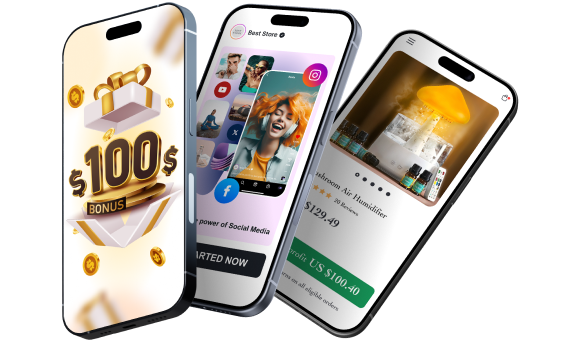
Starting a business takes momentum – and Sellvia gives you a head start. When you claim your free store today, you also get a $100 welcome gift to put toward growing your business. Use it to upgrade your store, boost your marketing, or unlock new tools. It is a real dollar value, handed to you on day one, with no catch and no hoops to jump through.
A massive catalog of digital products to sell 🏆
One of the biggest struggles in starting an online business is figuring out what to sell. Sellvia solves that completely. Your store comes pre-loaded with digital products – guides, courses, checklists, and tools – all created by Sellvia. You keep 50–70% of every sale. No inventory. No shipping. No logistics headaches.
Everything in one easy-to-use platform 🔥
Managing an online store shouldn’t be complicated. With Sellvia, you can handle orders, add new products, and even chat with customers – all from a simple and user-friendly platform. No need to mess with confusing tools or deal with unnecessary tech stuff. It’s all smooth sailing.
No upfront costs, just start selling 💰
A big reason people hesitate to start an online business is the cost. But here’s the good news: With Sellvia, you don’t need to invest in stock, storage, or shipping supplies. You can run your store with no upfront costs, keeping things low-risk while still making money.
Support that’s always got your back 🤝
Running a business comes with questions, but you’re never alone. Sellvia’s dedicated support team is available 24/7 to help with anything you need. Whether it’s a small question or a big challenge, they’ve got you covered.
Creating your own online store is one of the most powerful decisions you can make for your financial future in 2026 – and Sellvia gives you the fastest, most complete way to do it. Claim your free store with a $100 discount and start building something real today.
How do I create my own online store for free?
What is the best platform to create an online store in 2026?
The best platform depends on your experience level and what you want to sell. Shopify is the most beginner-friendly hosted option with plans starting at around 39 dollars per month. WooCommerce is free to install but requires separate hosting, a theme, and technical configuration. For someone who wants to start selling digital products with no technical background, a ready-made store from Sellvia is the most practical option in 2026 – it arrives pre-built, pre-stocked, and ready to take orders the same day.
How long does it take to build an online store?
A basic online store can be set up in 1 to 3 days using a hosted platform like Shopify. Building from scratch on WooCommerce typically takes 1 to 3 weeks, including domain setup, theme customization, and product loading. A fully custom-coded store can take several months. The fastest route is a ready-made store solution, which compresses the entire setup phase into a single afternoon so you can focus on marketing and getting your first customers.
Can I create an online store without any technical skills?
Yes, you can absolutely create an online store with no coding or technical background. Platforms like Shopify and Sellvia are specifically designed for non-technical users and guide you through every step. Sellvia stores are delivered already built and optimized, so there is no technical work required on your part at all. The skills that matter most for a successful online store are not technical – they are consistency, customer communication, and a willingness to learn from early results. Anyone who applies those consistently can build a profitable store regardless of their tech background.
How much money do I need to start my own online store?
The minimum realistic starting cost for a digital products store is close to zero if you use a free ready-made solution like Sellvia. A self-built Shopify store costs at least 39 dollars per month for the platform, plus around 10 to 15 dollars per year for a domain. You should also set aside 200 to 400 dollars for initial advertising to drive your first traffic and test what your customers respond to. Overall, a realistic launch budget is 300 to 600 dollars, though it is possible to start for less if you rely on organic traffic in the early months and use a free store solution to avoid platform fees.