
Every month, millions of people search for ways to earn money from home. Blogging is one of the most popular answers – and for good reason. Some bloggers earn a few hundred dollars a month. Others replace their entire income and work entirely on their own schedule. But most people who start a blog never make a single dollar. The difference almost always comes down to strategy, not luck.
Quick Answer: Yes, you can make money blogging. The most reliable methods in 2026 include affiliate marketing, display ads, sponsored posts, selling digital products, consulting, and memberships. Most bloggers start seeing meaningful income between 6 and 18 months after launching, typically earning $500–$5,000 per month once they build consistent traffic and the right monetization mix.
This guide covers every method that works for blogging for money right now – how much each pays, what it takes to get started, and what to realistically expect at each stage of the journey.
Blogging is not a quick fix. But it is one of the few online income models that compounds over time – where a post you write today can still bring in traffic and revenue years from now. That long-term leverage is what makes learning how to make money blogging worth taking seriously in 2026.
What is blogging for money?
Blogging for money means building a content-driven website and earning income from the audience your content attracts. You publish articles, guides, reviews, or tutorials on a specific topic. Search engines and social platforms bring readers to that content. Those readers become the foundation that ad networks, affiliate programs, product sales, and brand partnerships all depend on.
In 2026, quality matters more than ever. AI tools have flooded the internet with thin, generic posts – which actually makes blogs built on genuine expertise and real perspective more valuable, not less. Readers are getting sharper at recognizing filler. The bloggers earning the most are not just publishing content for the sake of it – they are helping their audience solve real problems in a way that builds trust over time.
You do not need to be a professional writer or have technical skills to start. Platforms like WordPress and Wix make setup straightforward without coding knowledge. What you do need is a clear niche, a consistent publishing schedule, and a plan for turning your audience into actual income.
The biggest mistake beginners make is waiting too long to monetize. You do not need 10,000 monthly readers to earn your first dollar. The right monetization method matched to your current traffic level can start generating income much sooner than most people expect.
Understanding what blogging for money actually pays – by method and by stage – will help you set realistic expectations and make smarter decisions about where to invest your time first.
How much can you realistically earn from blogging?
Blog income ranges widely – from a few dollars a month for brand-new sites to six figures annually for established blogs in high-value niches. Your earnings depend on three things above all else: how much traffic you generate, the niche you operate in, and which monetization methods you use. Here is a realistic breakdown:
One note on these figures: The ranges above reflect established bloggers with consistent, meaningful traffic. Most beginners earn little to nothing in their first 3–6 months. The upper end – $10,000+ per month – represents 2–3 years of sustained effort with multiple income streams working simultaneously. Plan for 12–18 months before expecting consistent monthly income from blogging alone.
The smartest move is to match your monetization method to your current traffic level. Affiliate marketing and display ads work at smaller scale. Digital products and consulting can outperform ads at modest audience sizes if your niche has strong buyer intent. Start with the method that fits where you are now – and layer in more as your blog grows.
With a clear picture of the income landscape, here is exactly how each method works in practice.
Best ways to make money blogging in 2026
There is no single best way to make money from a blog. The right method depends on your niche, your audience size, and how much time you can invest. Below are the six most effective methods working right now – with practical steps for getting started with each.
Affiliate marketing
Affiliate marketing is the most popular way bloggers earn income online. You promote products or services in your content and earn a commission when a reader clicks your unique link and makes a purchase. There is no inventory, no customer service, and no product creation required – just a share of each sale made through your recommendation.
Start by joining affiliate programs that align with your niche. Amazon Associates is the most accessible entry point. ShareASale, Impact, and CJ Affiliate give you access to thousands of brands across nearly every category. Many software companies also run their own in-house programs that pay 20–40% recurring commissions – far higher than most physical product platforms.
How to make affiliate marketing work
The key to consistent affiliate conversions is writing content with genuine purchase intent. Detailed product reviews, comparison articles (“X vs Y”), and “best of” roundup posts consistently outperform generic mentions because readers are actively looking to make a decision. Your recommendation carries real weight when it is clear you have actually used or researched the product. Always disclose affiliate relationships clearly – it builds reader trust rather than undermining it.
Earning potential: $500–$5,000/month once you have consistent traffic and content targeting buying-intent keywords.
Display advertising
Display ads are the simplest monetization method – you place ads on your blog and earn money based on impressions and clicks. Google AdSense is the easiest starting point for new bloggers. Mediavine and Raptive (formerly AdThrive) pay significantly higher RPMs but require a minimum of 50,000 monthly sessions to qualify.
How to grow display ad income
Display ad revenue is almost entirely a traffic volume game. The more sessions your blog generates, the more you earn. Focus on content formats that drive high page views – listicles, how-to guides, and resource roundups tend to perform best. Test ad placements carefully: sidebar units, in-content ads, and sticky footer placements all convert well without disrupting the reading experience. Many successful bloggers treat display ads as a secondary income stream rather than the primary one, because the traffic threshold for meaningful revenue is high.
Earning potential: $200–$2,000/month at 25,000–100,000 monthly page views. Best used alongside other income streams rather than as a standalone method.
Sponsored posts
Sponsored posts mean a brand pays you to create content featuring their product or service. This method scales with your audience and niche authority. A focused, engaged audience of 10,000 readers in a specific niche can often command higher rates than a broad blog with 100,000 casual visitors – because advertisers pay for reach to the right people, not just any people.
How to land sponsored post deals
You can reach out to brands directly with a clear media kit showing your niche, audience demographics, and monthly traffic. Influencer platforms like AspireIQ, IZEA, and Cooperatize also connect bloggers to brands actively looking for content partnerships. Always disclose sponsored content clearly at the top of the post – it is an FTC legal requirement, and readers who know you are transparent about partnerships tend to trust your organic recommendations more, not less. The most effective sponsored posts feel like natural editorial content, not paid placements.
Earning potential: $50–$5,000 per post depending on niche, traffic, and audience engagement. Finance, health, and lifestyle niches command the highest rates.
Selling digital products
Selling your own digital products – guides, courses, templates, checklists, workbooks – is one of the highest-margin ways to earn from a blog. You create the product once and sell it an unlimited number of times, keeping the full revenue from each sale. There is no physical inventory, no shipping, and no logistics to manage. The product delivers instantly the moment payment clears.
What digital products sell best from a blog
The best digital products answer a specific question your audience already has and is willing to pay to solve. A personal finance blog is a natural fit for a debt payoff planner or budgeting spreadsheet. A fitness blog works well with training program PDFs or meal prep guides. Start simple – a well-organized guide or checklist priced between $9 and $29 – and expand to full courses or product bundles once you have validated that real buyers exist in your audience. Tools like Gumroad, Teachable, and SendOwl make setup fast.
Earning potential: $1,000–$10,000/month at scale, especially once you add email sequences and evergreen promotions that drive consistent daily sales.
Consulting and freelance services
Your blog is a public portfolio of your expertise. Whether you cover personal finance, marketing, parenting, fitness, or any other niche – that expertise has real market value. Offering consulting, coaching, or freelance services through your blog is one of the fastest paths to income because you do not need large traffic to start. You just need the right audience reading your content and a clear, specific offer.
How to start consulting through your blog
Add a services or “work with me” page that explains exactly what you offer, what clients can expect, and how they can get in touch. Write two or three in-depth posts that demonstrate your knowledge in action – these serve as case studies even before you have formal client results. For your first clients, try direct outreach to small businesses or professionals in your niche, or pitch guest posts on larger publications that link back to your services page. A handful of well-paid clients can generate more income per month than years of display ad revenue at modest traffic levels.
Earning potential: $2,000–$15,000/month for experienced consultants or coaches with specific niche expertise.
Memberships and subscriptions
A paid membership turns your most loyal readers into recurring monthly subscribers. In exchange for a flat monthly fee – typically $5–$30/month – they get access to exclusive content: premium tutorials, a private community, monthly Q&A sessions, early access to guides, or other perks that go beyond what your free content offers. From your side, the appeal is predictable recurring income that grows as your subscriber base grows.
How to start a blog membership
WordPress plugins like MemberPress make it straightforward to create a gated members area on an existing blog without technical expertise. Substack is a solid alternative if you want to start with a newsletter-first model before building out a full membership site. The key to membership success is publishing enough valuable free content that potential subscribers can clearly see what they are paying for before committing. Start with one membership tier and one clear benefit – a private community or a monthly resource drop – and expand based on what your members actually ask for.
Earning potential: $500–$5,000/month with steady, compounding growth as your subscriber base builds over time.
All six of these methods are legitimate and actively working in 2026. The challenge is that each one takes time to build – and for most people starting from scratch, 6–12 months before consistent earnings is the realistic expectation, not the exception.
Knowing the methods is only half the picture. The habits and decisions behind successful blogs matter just as much as the monetization strategy itself.
Tips to make blogging for money work in 2026
Most bloggers who fail do not fail because their niche was wrong or their writing was bad. They fail because they stop before results arrive. These five habits consistently separate blogs that grow from those that stall.
Publish for depth, not just frequency
In 2026, thin content is invisible. One comprehensive guide that covers a topic completely – with real examples, honest analysis, and actionable steps – will outrank and out-earn ten shallow posts chasing keywords. Google’s Helpful Content system actively rewards depth and penalizes mass-produced filler. Before publishing, ask yourself: is this genuinely the best resource available on this topic? If the answer is no, keep working on it.
Build your email list from day one
Your email list is the one audience you actually own. Social media algorithms change. Search rankings shift overnight. But email subscribers are direct – and people who opted in to your list are three to five times more likely to buy from you than a cold reader arriving from Google. Use a lead magnet (a free checklist, short guide, or mini-course) to grow your list starting from your very first post. Even a list of 500 highly targeted subscribers can generate real monthly income.
Learn the basics of SEO
You do not need to become an SEO expert, but you do need to understand keyword research, on-page optimization, and internal linking. Free tools like Google Search Console and Ubersuggest help you find topics people are actively searching for. Writing toward real search demand – rather than hoping readers stumble onto your content – is the single biggest accelerator for blog traffic growth. A single well-ranked post on a buying-intent keyword can bring in more monthly income than dozens of posts with no search strategy.
Diversify your income streams over time
The bloggers who earn the most are rarely depending on just one monetization method. Start with whatever fits your current traffic level, and add a second stream once the first is generating consistent results. A blog that combines affiliate income, a simple digital product, and a growing email list of buyers is far more resilient – and more profitable – than one relying entirely on display ads. Build one stream at a time rather than trying to set up everything at once.
Treat it like a business, not a hobby
Set a publishing schedule and hold to it. Track which posts drive the most traffic and the most income each month. Do more of what works. Review your analytics quarterly and adjust your strategy based on real data rather than gut instinct. Most bloggers who achieve consistent income are not necessarily better writers – they are more systematic. Consistency over 12–24 months beats sporadic bursts of effort every single time.
With the right habits in place, let us look at how to stay on the right side of the rules – because a few simple mistakes can cost you reader trust that takes years to rebuild.
Legal and ethical considerations for bloggers
Making money from a blog comes with responsibilities that many beginners overlook – and that can create real problems if ignored. Here is what you need to know to operate both ethically and legally from the start.
Key principle: Transparency is not just a legal obligation – it is what keeps readers trusting you long enough to actually buy from you.
The FTC (Federal Trade Commission) requires bloggers in the United States to clearly disclose any material connection to a product or brand. This applies to affiliate links, sponsored posts, gifted products, and any other form of compensation. A clear disclaimer at the top of the post or a visible disclosure label near each affiliate link is sufficient to stay compliant. Failing to disclose is a violation that can result in financial penalties – but more importantly, readers who feel misled stop coming back.
For sponsored content, always be upfront about the partnership in the first few lines of your post. Something as simple as “This post is sponsored by [Brand]” is clear and sufficient. Many bloggers fear that disclosures will hurt conversions. The research consistently shows the opposite: readers who trust you buy from you more, not less. Transparency is a competitive advantage, not a liability.
Important: Avoid fake reviews, inflated income claims, and promoting products you have not personally verified. These tactics may deliver short-term clicks but destroy the reader trust that all long-term blog income depends on. The bloggers earning consistently over years are the ones who build genuine authority through honest, useful content – not manufactured credibility.
Operating with integrity costs nothing. Ignoring it can cost everything you have built. With the ethical foundation clear, here is how to identify which monetization method fits where you are right now.
Which blogging method is right for you?
Not every monetization method fits every stage of blogging. Here is a breakdown matched to where you are right now – so you can start with what works rather than what sounds impressive.
Complete beginner
If your blog is brand new or you have fewer than 5,000 monthly readers, start with affiliate marketing. It has the lowest barrier to entry and can generate income even at small traffic levels if your content targets buying-intent keywords. Add a simple digital product – a guide or checklist – as soon as you have validated that your audience is willing to pay for solutions. Skip display ads for now: the traffic required for meaningful ad revenue is too high to justify the time investment at this stage. Focus on traffic and one core monetization method first.
Building momentum
If you are 6–18 months in and seeing consistent traffic between 5,000 and 50,000 monthly sessions, diversify. Combine affiliate marketing with either a digital product or a sponsored post strategy. Apply to better ad networks like Mediavine once you pass 50,000 sessions. If you have not started an email list yet, prioritize it immediately – this is the infrastructure that your monetization will scale on over the next few years.
Full-time income goal
If your goal is to fully replace a salary with blog income, plan for 24–36 months of consistent effort and at least three income streams running simultaneously. The most reliable path to full-time blogging income combines digital product sales (high margin, scales without you), a strong affiliate strategy (recurring commissions with no ongoing work), and either consulting or a membership program for predictable monthly income. Bloggers earning $5,000–$15,000 per month consistently have all three in place and an email list of at least several thousand active subscribers.
Whichever stage you are at, the core principle is the same: start monetizing now rather than waiting for some arbitrary traffic milestone. The habits you build early determine your income ceiling long-term.
And if you want a real income stream while your blog is still finding its audience – there is a smarter option available right now, ready to launch today.
Why Sellvia is a game-changer for your online store 🚀
Sellvia isn’t just another ecommerce tool. We are a trusted name in the industry, recognized by Forbes and even ranked in Inc.’s list of the 5,000 fastest-growing companies in the U.S. So if you’re serious about starting as a solopreneur, this is a smart place to begin.
Starting an online business can feel overwhelming, but that’s exactly where Sellvia steps in. It takes care of the tricky parts, so you can focus on making sales and growing your brand. Let’s break down what makes it such a great choice.
Get a ready-to-go store hassle-free 🎯
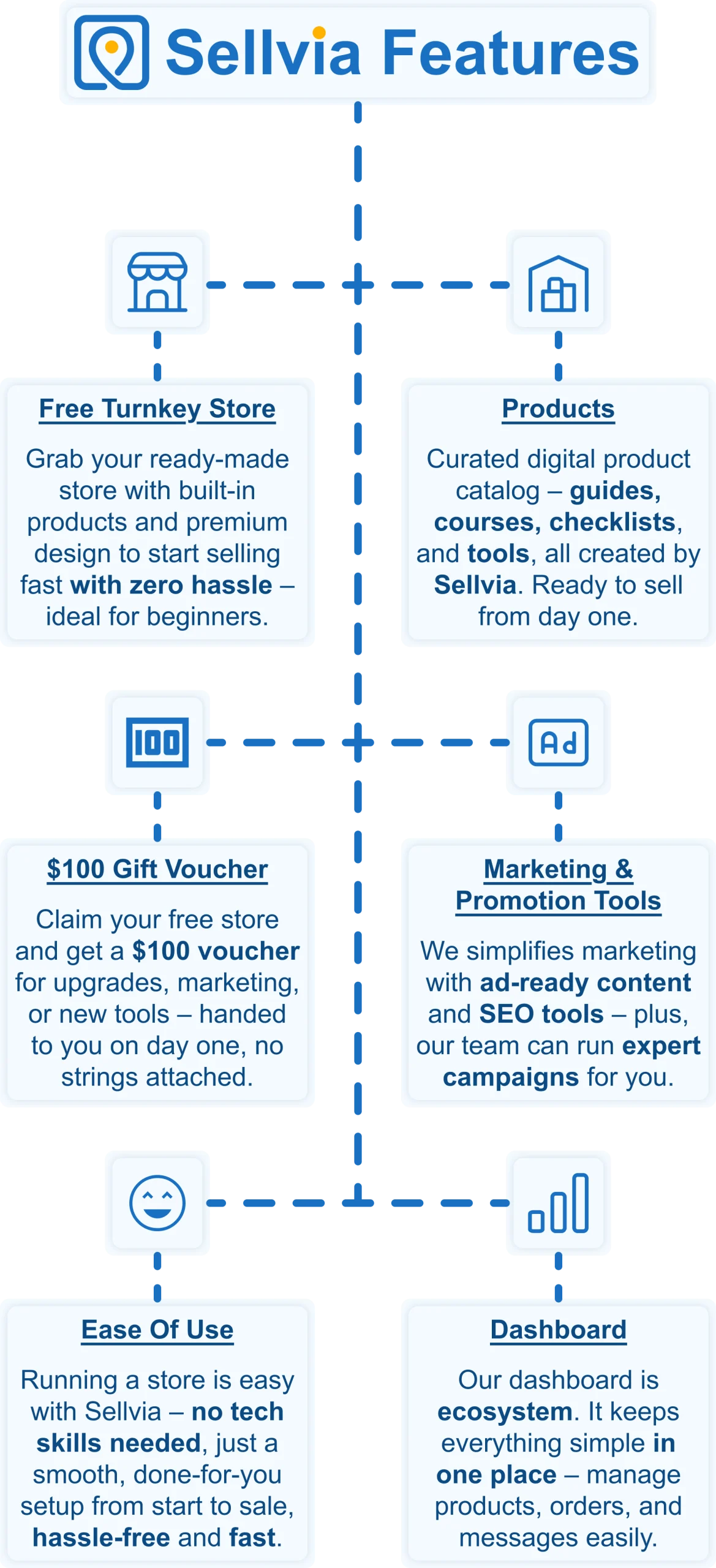
Want to start selling but don’t know where to begin? No worries! Just share your ideas, and Sellvia’s team will build a free ecommerce website that’s fully set up and ready to take orders from day one. No coding, no stress – just a store that works right out of the box.
A $100 gift voucher to grow your business faster 🎁
Starting a business takes momentum – and Sellvia gives you a head start. When you claim your free store today, you also get a $100 gift voucher to put toward growing your business. Use it to upgrade your store, boost your marketing, or unlock new tools. It is a real dollar value, handed to you on day one, with no catch and no hoops to jump through.
A massive catalog of digital products to sell 🏆
One of the biggest struggles in starting an online business is figuring out what to sell. Sellvia solves that completely. Your store comes pre-loaded with digital products – guides, courses, checklists, and tools – all created by Sellvia. You keep 50–70% of every sale. No inventory. No shipping. No logistics headaches.
Everything in one easy-to-use platform 🔥
Managing an online store shouldn’t be complicated. With Sellvia, you can handle orders, add new products, and even chat with customers – all from a simple and user-friendly platform. No need to mess with confusing tools or deal with unnecessary tech stuff. It’s all smooth sailing.
No upfront costs, just start selling 💰
A big reason people hesitate to start an online business is the cost. But here’s the good news: With Sellvia, you don’t need to invest in stock, storage, or shipping supplies. You can run your store with no upfront costs, keeping things low-risk while still making money.
Support that’s always got your back 🤝
Running a business comes with questions, but you’re never alone. Sellvia’s dedicated support team is available 24/7 to help with anything you need. Whether it’s a small question or a big challenge, they’ve got you covered.
Blogging is a powerful way to build an audience – and Sellvia gives you a store that starts earning while that audience grows. Claim your free store today and add a proven income stream that works alongside your blog.