More people are earning income online than ever before – and digital assets are at the center of that shift. Whether you are selling a guide you created, investing in crypto, or building a content-based business, the opportunities are real and growing. If you have been wondering how to make money from digital assets, this guide breaks it all down – no jargon, no hype, just an honest look at what works.
Quick Answer: Making money from digital assets means earning income through things that exist online – digital products, content, crypto, websites, and more. The most beginner-friendly option in 2026 is selling digital products through a ready-made online store, where you can keep 50–70% of every sale with no inventory or logistics involved.
We will walk through every major method, who it works best for, and what you can realistically expect to earn – starting from zero.
A digital asset is simply something of value that exists in a digital format. That definition covers a surprisingly wide range of things – from courses people buy to learn new skills, to domain names businesses pay thousands for, to the crypto in someone’s wallet. All of them can generate income when approached the right way.
What are digital assets?
Digital assets are anything that has monetary value and exists online. Unlike physical products, they do not need a factory, a storage room, or a delivery truck. They are created or acquired digitally – and they can be sold, traded, or monetized entirely online.
The main categories of digital assets include:
- Digital products – Guides, e-books, courses, checklists, templates, and tools. Created once, sold repeatedly.
- Cryptocurrencies – Bitcoin, Ethereum, and other digital currencies that can be traded or held as long-term investments.
- NFTs (non-fungible tokens) – Unique digital items like artwork, collectibles, and virtual goods verified on a blockchain.
- Digital real estate – Domain names, websites, and blogs that hold or grow in value over time.
- Digital content – Videos, podcasts, newsletters, and social media channels monetized through ads, sponsorships, or subscriptions.
What these all have in common is that they can generate income without the overhead of a traditional business. No building to rent, no employees to manage, no physical product to store.
Why this works in 2026: The global digital economy is accelerating. More consumers are buying online, streaming content, and purchasing digital products than ever before – which means more buyers for everything in the list above.
The key is knowing which type of digital asset fits your situation – your budget, your time, and your goals. That is exactly what the next section covers.
How much can you realistically earn from digital assets?
Honest answer: it depends on the method, your effort, and your timeline. Some approaches generate income within days. Others take months to build momentum. Here is a realistic comparison.
Those ranges represent what real people doing each method full-time or near-full-time have reported over 60–90 days of consistent work. Part-time results will be more modest – and that is completely normal. The goal is sustainable progress, not an overnight windfall.
One note on ceiling figures: The upper range of each method reflects what top performers achieve after months of effort and refinement. Most people starting out will land in the lower half of these ranges – which is still meaningful income if built consistently over time.
The method you choose matters less than the commitment you bring to it. That said, some methods are significantly easier to start with than others – especially if you are new to earning online.
Ways to make money from digital assets in 2026
Here is a detailed breakdown of the most accessible and proven methods – what each one involves, what it realistically earns, and who it suits best.
Selling digital products
This is one of the most reliable ways to make money from digital assets – and one of the most beginner-friendly. Digital products are things like guides, e-books, online courses, checklists, and downloadable tools. You create or source them once, and they can be sold to an unlimited number of buyers. No restocking, no physical handling required.
Online guides and courses
People pay consistently for knowledge that saves them time or helps them solve a specific problem. A focused guide on home budgeting, job interview prep, or starting a side business can start earning within weeks of launch. Platforms like Gumroad, Teachable, and Sellvia make it easy to list and sell without any technical background.
The key is niche specificity. A guide titled “Budgeting for single parents on fixed incomes” will outperform a generic “personal finance guide” almost every time. The more clearly your product addresses a real, felt problem, the more it sells.
Earning potential: $200–$1,500/month with a focused niche and consistent promotion.
Templates and design assets
Designers, writers, and planners can turn their skills into scalable income by creating reusable digital assets – resume templates, social media graphics, budget spreadsheets, Notion dashboards, and more. Marketplaces like Creative Market and Etsy have active buyers searching for these every day.
The advantage is scale. Once a template is listed, it can sell hundreds of times without additional work. The challenge is visibility – standing out in a crowded marketplace requires sharp visuals, clear descriptions, and a few strong early reviews to build credibility.
Earning potential: $100–$800/month depending on platform and niche.
Software tools and small applications
If you have development skills – or can partner with someone who does – software products can generate significant recurring income. Browser extensions, productivity tools, and niche applications can be sold as one-time purchases or monthly plans. The startup cost in time is higher than other digital product types, but the earning ceiling is also much higher.
Apps that solve a specific, recurring frustration – rather than a trendy but vague problem – tend to retain customers and generate predictable revenue month after month.
Earning potential: $1,000–$5,000+/month for a well-positioned tool with a loyal user base.
Making money from digital content
Content is one of the oldest forms of digital income – and it is still one of the most scalable. If you can build an audience around a topic, that audience can generate income through ads, affiliate partnerships, sponsorships, and subscriptions.
Blogging and email newsletters
A well-maintained blog or newsletter earns through display advertising, affiliate commissions, and paid partnerships. Writers who go deep on a specific topic – budgeting for retirees, raising kids on a tight income, home improvement on a renter’s budget – build loyal audiences that are easier to monetize than broad, general ones.
The realistic timeline: most content businesses take 6–18 months to generate meaningful revenue. That is a long runway, which is why this method works best as a long-term build rather than a primary income replacement from day one.
Earning potential: $50–$2,000/month depending on traffic, niche, and monetization mix.
YouTube and short-form video
Video content continues to dominate how people consume information online. A YouTube channel earns through ad revenue, affiliate links, and brand sponsorships. Short-form content on TikTok and Instagram Reels can drive traffic to your other digital assets or generate platform-based creator income.
The challenge with video is consistency and time. Most profitable channels take 12–24 months to build. The creators who make it are not the most talented – they are the most consistent. Show up regularly, improve over time, and the audience tends to follow.
Earning potential: $100–$3,000/month for established channels with engaged audiences.
Affiliate partnerships
Affiliate marketing means recommending products to your audience and earning a commission when they buy through your link. Programs like Amazon Associates, ShareASale, and individual brand partnerships offer commissions ranging from 3% to 30% of each sale.
This method works best as a supplement to an existing content business rather than a standalone income stream. Without traffic, affiliate links earn nothing. If you already have a blog, newsletter, or social audience, affiliate partnerships are one of the easiest ways to add a revenue layer without creating more products.
Earning potential: $50–$1,500/month depending on audience size and product category.
Crypto investing and staking
Cryptocurrency is probably the most talked-about type of digital asset. Bitcoin, Ethereum, and thousands of alternative coins can be bought, held, traded, or used to earn rewards through staking. The opportunities are real – but so is the risk.
Buying and holding is the most straightforward approach. You purchase a coin and hold it with the expectation that its value will increase over time. This requires patience and a genuine willingness to see the value drop significantly before it rises. Crypto markets are volatile in ways most people underestimate until they are in the middle of it.
Day trading and swing trading offer faster potential gains but require deep market knowledge and disciplined risk management. Most first-time traders lose money before they find consistency. This is not a beginner’s starting point.
Staking is a lower-activity option. You hold certain cryptocurrencies in a supported wallet, which helps validate the network, and you earn rewards in return. Popular staking coins include Ethereum, Cardano, and Solana, with typical annual returns ranging from 4% to 12%.
Important: Only invest what you can afford to lose entirely. Crypto markets have no guarantee of recovery, and many people have lost significant money during downturns.
NFTs and digital collectibles
NFTs – non-fungible tokens – are unique digital items stored on a blockchain. They can represent artwork, music, collectibles, or virtual goods in games. At their peak in 2021 and 2022, some NFTs sold for hundreds of thousands of dollars. The market has cooled significantly since then, but a smaller, more utility-focused market has emerged in its place.
To sell NFTs, you mint your creation on a marketplace like OpenSea or Rarible, set a price, and list it publicly. You can also configure royalties so you earn a percentage of every future resale. Marketing and community-building are as important as the quality of the asset itself – NFTs without an audience behind them rarely find buyers.
Why this works in 2026: Use cases for NFTs have expanded into gaming, event ticketing, and membership access. Creators who build genuine utility into their tokens – not just aesthetics – are finding more consistent demand than those relying on hype alone.
Earning potential: Highly variable. A single successful launch can earn thousands. Most creators with no existing audience earn little or nothing from NFTs without significant marketing effort first.
Digital real estate
Digital real estate refers to owning online properties that hold or grow in value – domain names, websites, and content platforms. Like physical real estate, these assets can generate income through development, rental, or appreciation.
Domain flipping involves buying domain names at low cost and selling them to businesses willing to pay a premium for the right address. A domain purchased for $10 can sell for thousands if it matches what a growing company is looking for. Success here depends on anticipating demand before businesses do – which takes research and market intuition.
Website flipping is more involved. You purchase an existing website that already generates traffic and revenue, improve it, and sell it at a higher valuation. Platforms like Flippa and Empire Flippers facilitate these transactions. A site earning $500/month might command a sale price of $15,000–$20,000, which makes the economics attractive for patient buyers who choose wisely.
Earning potential: $200–$5,000 per successful domain flip, or $500–$3,000/month from a developed content site with advertising revenue.
The digital real estate market rewards patience and research above all else. A single good acquisition, managed well, can return more than months of active hustle in other areas.
Things to keep in mind before you start
Before choosing a method and diving in, there are a few practical realities that will save you time and prevent costly mistakes.
Risk is not equal across methods. Crypto and NFTs carry meaningful financial risk – your money can decline significantly in value quickly. Digital products and content businesses carry far less financial risk but require consistent time investment. Know which kind of risk you are signing up for before you start.
Taxes apply to digital income. In the United States, income from selling digital products, trading crypto, or selling NFTs is generally taxable. Crypto and NFT profits are often treated as capital gains. Talk to a tax professional if you are unsure how your income will be classified – it is much easier to understand this before you earn than after.
Security is your responsibility. Protect your accounts with strong, unique passwords and two-factor authentication. For crypto holdings, a hardware wallet offers significantly better protection than keeping assets on an exchange. Scams targeting people who earn online are common – and losses are rarely recoverable.
Key principle: Pick one method, learn it well, and build real momentum before adding another. Spreading attention across too many strategies too soon is the fastest way to make slow progress on all of them.
How to choose the right method for you
The best digital asset strategy is the one that matches your current resources – your budget, your time, and your starting skills. Here is how to think about it based on where you are right now.
If you are a complete beginner
Go with something that removes as many variables as possible. Trying to figure out product creation, website setup, payment processing, and marketing all at once is a fast track to burnout. The best starting point is a platform that handles the technical setup and gives you a ready product catalog to sell from. Sellvia fits this profile well – your store is built for you, digital products are already loaded in, and the built-in ad system helps you reach buyers without any marketing background required.
If you want to build a side income in your spare time
Content-based income – blogging, YouTube, or affiliate marketing – works well if you have a topic you know well and can produce content consistently on a few hours a week. Expect to invest 6–12 months before meaningful revenue builds. Digital products are also strong here: if you have expertise in a niche, packaging it into a guide or course can generate income while you are still working your main job.
If you want to invest and grow capital over time
Crypto and digital real estate are more suitable for people with existing capital to deploy and a genuine tolerance for risk. These are not good starting points if you are working with very limited funds. Domain and website flipping can produce strong returns, but require market knowledge and a willingness to hold assets while waiting for the right buyer.
If you want to go full-time as fast as possible
Focus on methods with the shortest distance from setup to income. Selling digital products through a ready-made store with built-in advertising is one of the fastest paths to consistent daily orders – without building an audience first. Many Sellvia store owners report getting their first orders on the same day they activate ads. From there, scaling means increasing your budget as results come in, not starting from scratch.
Whatever method you choose, the most important step is the first one. Reading about how to make money from digital assets is free. Earning from them requires making a decision and acting on it.
Why Sellvia is a game-changer for your online store 🚀
Sellvia isn’t just another ecommerce tool. We are a trusted name in the industry, recognized by Forbes and even ranked in Inc.’s list of the 5,000 fastest-growing companies in the U.S. So if you’re serious about starting as a solopreneur, this is a smart place to begin.
Starting an online business can feel overwhelming, but that’s exactly where Sellvia steps in. It takes care of the tricky parts, so you can focus on making sales and growing your brand. Let’s break down what makes it such a great choice.
Get a ready-to-go store hassle-free 🎯
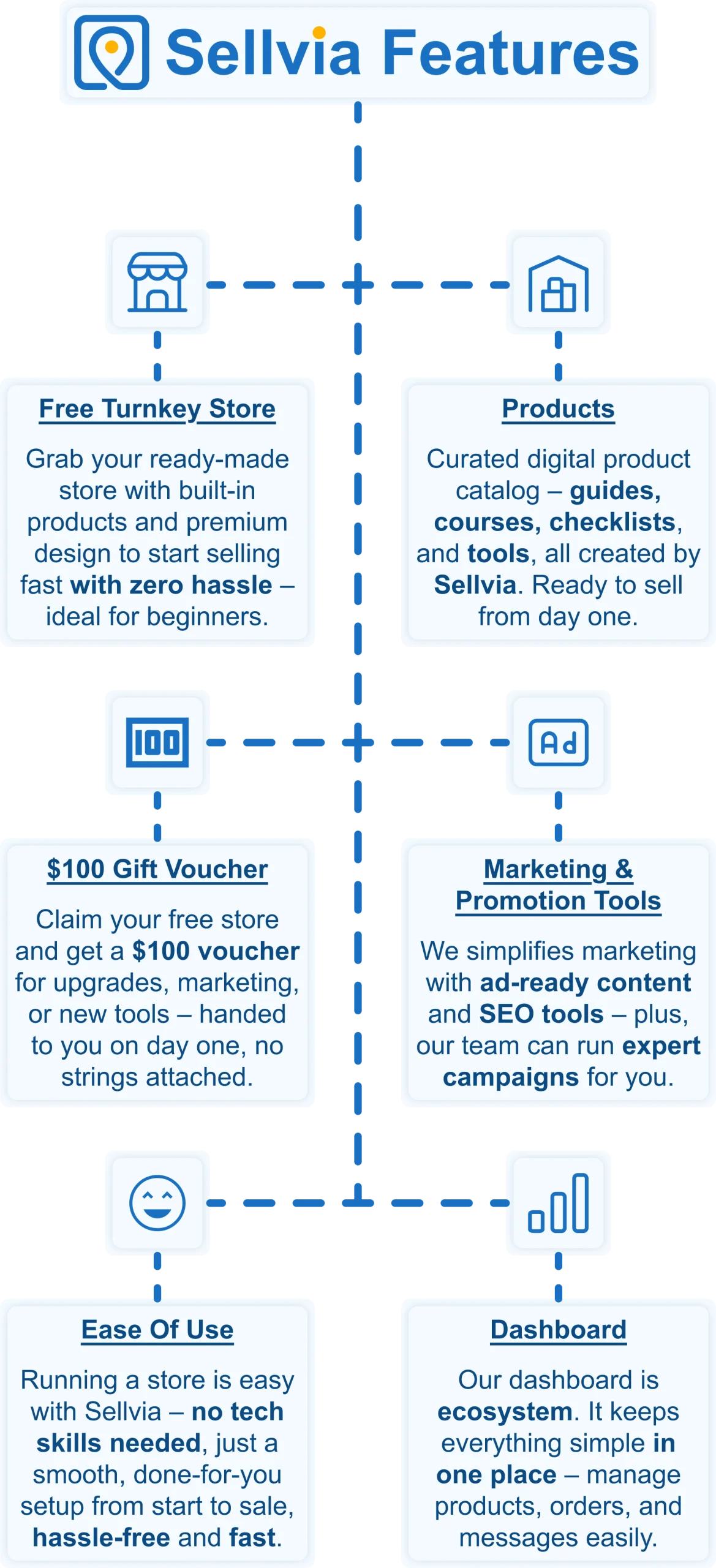
Want to start selling but don’t know where to begin? No worries! Just share your ideas, and Sellvia’s team will build a free ecommerce website that’s fully set up and ready to take orders from day one. No coding, no stress – just a store that works right out of the box.
A $100 gift voucher to grow your business faster 🎁
Starting a business takes momentum – and Sellvia gives you a head start. When you claim your free store today, you also get a $100 gift voucher to put toward growing your business. Use it to upgrade your store, boost your marketing, or unlock new tools. It is a real dollar value, handed to you on day one, with no catch and no hoops to jump through.
A massive catalog of digital products to sell 🏆
One of the biggest struggles in starting an online business is figuring out what to sell. Sellvia solves that completely. Your store comes pre-loaded with digital products – guides, courses, checklists, and tools – all created by Sellvia. You keep 50–70% of every sale. No inventory. No shipping. No logistics headaches.
Everything in one easy-to-use platform 🔥
Managing an online store shouldn’t be complicated. With Sellvia, you can handle orders, add new products, and even chat with customers – all from a simple and user-friendly platform. No need to mess with confusing tools or deal with unnecessary tech stuff. It’s all smooth sailing.
No upfront costs, just start selling 💰
A big reason people hesitate to start an online business is the cost. But here’s the good news: With Sellvia, you don’t need to invest in stock, storage, or shipping supplies. You can run your store with no upfront costs, keeping things low-risk while still making money.
Support that’s always got your back 🤝
Running a business comes with questions, but you’re never alone. Sellvia’s dedicated support team is available 24/7 to help with anything you need. Whether it’s a small question or a big challenge, they’ve got you covered.
Making money from digital assets does not have to mean mastering crypto or building an audience from scratch. Claim your free Sellvia store today and start selling digital products that people already want to buy.