You have probably heard the success stories. Someone built a Shopify store, started selling, and now works from home on their own schedule. It sounds amazing – and for some people, it is real. But before you hand over your credit card, you deserve the full picture of how Shopify works, what it actually costs, and whether there is a smarter way to get started.
Quick Answer: You can make money on Shopify by selling physical or digital products through your own online store. However, Shopify website costs, monthly fees, and the time needed to source products mean many beginners take weeks or months to get their first consistent sales. There are now faster, lower-risk alternatives worth knowing about.
This guide breaks down every realistic method, every fee, and every honest earning estimate – so you can make the right call for your situation.
What is Shopify and how does Shopify work?
Shopify is a hosted ecommerce platform that lets you build an online store and sell products – physical or digital – to customers anywhere in the world. You pick a template, upload your products, set your prices, and Shopify handles the checkout process. Think of it as renting a storefront on the internet.
Understanding how Shopify works is important before you invest any time or money. You are responsible for everything: finding products to sell, setting up your store design, writing product descriptions, running ads to bring in traffic, handling customer service, and managing returns. Shopify gives you the tools, but the heavy lifting is on you.
That is not meant to scare you. It is just the honest truth that most “make money on Shopify” articles leave out. Knowing what you are getting into helps you plan – and helps you decide whether Shopify is the right fit or whether a more done-for-you option makes more sense for where you are right now.
How much does it cost to sell on Shopify?
This is the question most guides bury in fine print. Here is the real Shopify website cost breakdown so you know exactly what you are signing up for.
The Shopify Basic plan starts at $39/month – the same price as a Sellvia subscription – but that is just the starting point. Most new store owners also spend money on a premium theme ($200–$350 one-time), apps to add features ($10–$100/month each), and advertising before they know if their product will even sell.
A beginner’s first few months can cost several hundred to over a thousand dollars depending on themes, apps, ads, and product costs.
One note on these figures: Shopify does offer a $1/month trial for the first three months for new users at times, which lowers the entry barrier – but the costs above apply once that period ends and do not include product sourcing or advertising.
That does not mean Shopify is a bad platform. It means you need to go in with your eyes open. If you have capital to invest and time to learn, Shopify can become a serious business. If you are starting with very little money and need something that works quickly, it is worth weighing your options carefully.
How to make money on Shopify: the main methods
There is more than one way to earn through Shopify. Some methods work better for people with a budget and time. Others suit beginners who need to move quickly. Here is an honest breakdown of each.
Selling physical products
This is the classic Shopify model. You source a physical product – from a manufacturer, a wholesaler, or even your own home – list it in your store, and sell it to customers who then receive it in the mail.
Branded or private-label products
You work with a manufacturer (often overseas) to create a product with your own branding on it. This gives you full control over pricing and margins, but requires upfront investment – usually $500–$2,000 minimum for an initial product run – plus the risk that the product does not sell.
Earning potential: $500–$5,000/month with consistent effort over 6–12 months and strong product selection.
Print-on-demand
You design graphics for t-shirts, mugs, phone cases, and similar items. A print-on-demand supplier like Printful connects to your Shopify store and fulfills orders for you – no stock, no upfront cost. You only pay for each item when a customer orders it. Margins are thinner (typically 20–35%), and standing out in a crowded market takes real creative effort and consistent advertising.
Earning potential: $200–$1,500/month for motivated sellers who invest in design and promotion.
Handmade and artisan goods
If you make something – candles, jewelry, art prints, skincare – Shopify is a solid home for your shop. You have full control over pricing and brand story, and customers are willing to pay premium prices for handmade items. The limitation is that your income is tied to your production capacity. There are only so many hours in a day.
Earning potential: $300–$3,000/month depending on product, pricing, and how much you can produce.
Selling digital products on Shopify
Digital products – PDF guides, online courses, templates, checklists, stock photos – are one of the smartest things to sell online. You create them once and sell them unlimited times with no shipping, no stock, and no logistics. Shopify supports digital product sales through apps like Digital Downloads or SendOwl.
Ebooks and guides
If you have knowledge in any area – budgeting, fitness, parenting, cooking, home repair – you can package it into a guide and sell it as a PDF download. Pricing typically runs from $7 to $49. The challenge is driving traffic to your store, which usually requires an advertising budget or a strong social media presence built over time.
Earning potential: $100–$2,000/month depending on your niche, your marketing, and your audience size.
Templates and tools
Canva templates, spreadsheet trackers, social media kits, and resume templates are hugely popular digital products. Designers and detail-oriented people find this path rewarding. But getting noticed among thousands of similar sellers on Etsy or through your own Shopify store requires either strong SEO skills or a paid advertising strategy.
Earning potential: $200–$1,500/month for sellers who produce a range of templates and promote consistently.
Shopify affiliate and referral income
Shopify has its own affiliate program. If you recommend Shopify to others and they sign up through your link, you earn a commission. This is a legitimate way to earn but works best if you already have an audience – a blog, a YouTube channel, an email list – of people interested in starting an online business. Starting from zero, it can take 6–18 months to build enough traffic for affiliate income to be meaningful.
Earning potential: $50–$500/month for beginners; significantly more for established content creators with large audiences.
Shopify app or theme development
If you have coding skills, you can build apps or themes for the Shopify App Store and earn recurring revenue from other store owners who subscribe to your tool. This is a high-ceiling opportunity – some apps earn tens of thousands of dollars a month – but it requires real technical expertise and months of development before launch. This path is not for someone just starting out.
Earning potential: $500–$10,000+/month for experienced developers with strong app-market research.
How much can you realistically earn on Shopify?
Here is an honest look at earning ranges across the main methods, so you can set realistic expectations before you start.
These figures represent what motivated, consistent sellers can achieve – not what happens in week one. Most beginners on Shopify take 60–90 days before seeing reliable sales, and that timeline assumes they are actively promoting their store and testing their products.
The people who reach the higher end of these ranges treat their store like a real business – putting in regular hours, adjusting based on results, and reinvesting early profits into growth.
Tips for making money on Shopify faster
Pick a niche, not a general store
One of the most common beginner mistakes is building a store that sells everything. General stores are hard to market because there is no clear audience. A store focused on, say, home organization tools for busy parents – that has a clear customer and a clear message. Niche stores convert better and cost less to advertise.
Understand your traffic source before you launch
A Shopify store with no traffic earns nothing. Before you build, decide how you will get visitors: paid ads on Facebook or TikTok, organic content on Instagram, SEO through a blog, or influencer partnerships. Each path has a different cost and timeline. Paid ads can bring traffic fast but cost money. Organic content is free but takes months to build an audience.
Test products before committing
Before you invest in inventory or a large ad budget, test your product idea with a small campaign – $50 to $100 – to see if people actually click and buy. Most experienced store owners fail multiple products before finding a winner. Build testing into your plan and your budget from the start.
Price for profit, not just for sales
Many beginners underprice their products to compete, then realize they are barely covering costs. Factor in your platform fee, transaction fees, advertising cost per sale, and your time before setting a price. If the math does not work at your target price, the product or the business model needs to change.
Treat customer service as a growth tool
Happy customers leave reviews, come back for repeat purchases, and refer their friends. In the early stages of your store, responding quickly to questions and handling issues generously – even when it costs you a little – builds the reputation that drives long-term growth. Your first 50 customers are not just revenue. They are your foundation.
What to watch out for when starting on Shopify
Not every “how to make money on Shopify” guide out there is honest. Here are some real risks worth knowing before you start.
Guru courses and coaching programs
There is a whole industry of people selling Shopify success courses for $300, $500, or $2,000. Some are genuinely helpful. Many are not worth the price. Before buying any course, look for real, verifiable student results – not just screenshots of one person’s dashboard. Free resources from Shopify’s own learning center and YouTube channels run by legitimate store owners can get you surprisingly far without spending anything.
Key principle: Free information is often just as valuable as paid courses when it comes to learning the basics of running an online store.
Unrealistic ad ROI expectations
Social media advertising for ecommerce is competitive. A brand-new store with no reviews, no social proof, and an untested product will almost always lose money on ads before it makes money. Budget for learning – not just for selling – when you first start running paid traffic.
Supplier reliability issues
If you source products from overseas suppliers, quality control and shipping delays are real risks. A single batch of defective products or a warehouse delay during the holiday season can generate a flood of refund requests and damage your store’s reputation before it even gets started. Vet suppliers carefully and always order samples before listing a product.
Shopify vs a done-for-you online store: Which is right for you?
The honest answer depends entirely on where you are starting from. Here is a simple breakdown by reader profile.
If you are a complete beginner
You have never run an online store before. You are not sure about tech. You do not have a big budget to test with. In this case, starting with a platform that builds your store for you, pre-loads products, and gives you a built-in advertising system is a much lower-risk entry point.
You learn the fundamentals of online selling – traffic, conversion, customer service – without also having to learn product sourcing, store design, and platform coding at the same time.
If you have some experience and time to invest
You understand the basics of online business. You have a product idea you believe in. You are willing to spend 3–6 months building before expecting consistent income. Shopify gives you more control and flexibility as your business grows. The higher upfront investment makes more sense when you have a clear strategy behind it.
If your goal is full-time income
Whether you use Shopify, Sellvia, or another platform, full-time income from an online store requires treating it like a full-time job – especially in the first year. Consistent daily effort, reinvesting early revenue, learning from your results, and not giving up after a slow week are what separate the people who get there from the ones who quit at month two.
The smarter starting point most people overlook
Here is the thing nobody tells you when you start researching how to make money on Shopify: the platform is just a tool. The hard part is everything else – finding products, getting traffic, building trust with strangers on the internet, and staying consistent long enough for the results to show up.
That is why a lot of people who want to start an online business end up stuck before they even launch. Not because they are not smart enough or motivated enough. But because the setup required – sourcing products, designing a store, building an ad strategy from scratch – is genuinely a lot to take on alone with no experience and no team behind you.
The question worth asking is not just “how does Shopify work” – it is “what kind of online business setup actually gives me the best shot at earning real money, given where I am starting from right now?”
Why Sellvia is a game-changer for your online store 🚀
Sellvia isn’t just another ecommerce tool. We are a trusted name in the industry, recognized by Forbes and even ranked in Inc.’s list of the 5,000 fastest-growing companies in the U.S. So if you’re serious about starting as a solopreneur, this is a smart place to begin.
Starting an online business can feel overwhelming, but that’s exactly where Sellvia steps in. It takes care of the tricky parts, so you can focus on making sales and growing your brand. Let’s break down what makes it such a great choice.
Get a ready-to-go store hassle-free 🎯
Want to start selling but don’t know where to begin? No worries! Just share your ideas, and Sellvia’s team will build a free ecommerce website that’s fully set up and ready to take orders from day one. No coding, no stress – just a store that works right out of the box.
A $100 welcome gift to grow your business faster 🎁
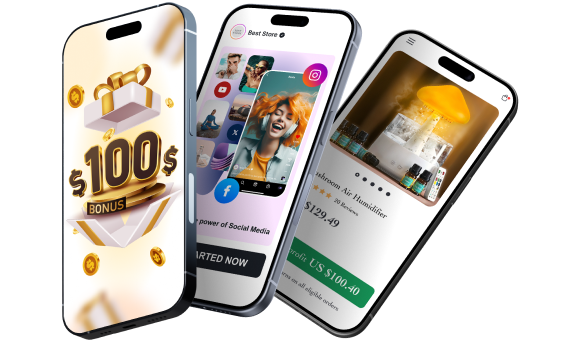
Starting a business takes momentum – and Sellvia gives you a head start. When you claim your free store today, you also get a $100 welcome gift to put toward growing your business. Use it to upgrade your store, boost your marketing, or unlock new tools. It is a real dollar value, handed to you on day one, with no catch and no hoops to jump through.
A massive catalog of digital products to sell 🏆
One of the biggest struggles in starting an online business is figuring out what to sell. Sellvia solves that completely. Your store comes pre-loaded with digital products – guides, courses, checklists, and tools – all created by Sellvia. You keep 50–70% of every sale. No inventory. No shipping. No logistics headaches.
Everything in one easy-to-use platform 🔥
Managing an online store shouldn’t be complicated. With Sellvia, you can handle orders, add new products, and even chat with customers – all from a simple and user-friendly platform. No need to mess with confusing tools or deal with unnecessary tech stuff. It’s all smooth sailing.
No upfront costs, just start selling 💰
A big reason people hesitate to start an online business is the cost. But here’s the good news: With Sellvia, you don’t need to invest in stock, storage, or shipping supplies. You can run your store with no upfront costs, keeping things low-risk while still making money.
Support that’s always got your back 🤝
Running a business comes with questions, but you’re never alone. Sellvia’s dedicated support team is available 24/7 to help with anything you need. Whether it’s a small question or a big challenge, they’ve got you covered.
If you have been researching how to make money on Shopify and wondering whether the cost and complexity are worth it, Sellvia offers a proven path with far less risk and a store that is ready from day one. Claim your free store today and see what is possible when someone else handles the hard part.
How to make money on Shopify with no money?
How much does it cost to sell on Shopify per month?
The Shopify Basic plan costs 39 dollars per month after any trial period ends. However, that figure covers only the platform itself. Most new store owners also pay for apps (10 to 100 dollars per month each), a premium theme (200 to 350 dollars one time), and advertising to bring in customers. Transaction fees of 2 percent per sale also apply if you do not use Shopify Payments. Realistically, a new Shopify seller should budget 200 to 500 dollars per month in their first few months to cover all operating costs before turning a consistent profit.
How does Shopify work for beginners?
Shopify works by giving you a hosted storefront where you list products, set prices, and accept payments online. You choose a store template, add your products with descriptions and photos, connect a payment processor, and then drive traffic to your store through ads, social media, or search. Shopify handles the checkout and payment processing side automatically. The rest – finding products, writing listings, managing customer inquiries, and marketing – is handled by you. It is a powerful platform but requires real time and effort to run well, especially in the early months.
What is the Shopify website cost to get started?
The basic Shopify website cost starts at 39 dollars per month for the entry-level plan. If you want a custom domain name, that adds roughly 14 to 20 dollars per year. A premium theme can cost 200 to 350 dollars as a one-time purchase, though free themes are available. Some store owners also pay for third-party apps to add features like email marketing, upsells, or review collection. All in, a properly set-up Shopify store costs most beginners between 60 and 150 dollars per month to run, not counting advertising or product costs.
How long does it take to make money on Shopify?
Most new Shopify store owners see their first sales within 30 to 60 days if they are actively promoting their store from day one. However, consistent daily revenue that feels meaningful – 30 to 80 dollars per day, for example – typically takes 60 to 90 days of consistent effort, smart product selection, and a working traffic strategy. Stores that rely entirely on free organic traffic can take 3 to 6 months or longer. The sellers who reach profitability fastest are those who test products quickly, learn from their ad results, and stay consistent even when early numbers are slow.