The drone industry has changed everything about how we capture the world from above. What started as a niche hobby has turned into a real way to earn a living — whether you are shooting real estate listings, inspecting rooftops, or selling aerial footage online. If you have been searching for how to make money with a drone, you are in exactly the right place.
Quick Answer: You can make money with a drone by offering commercial services like aerial photography, real estate shoots, building inspections, and agricultural surveys. Most pilots earn between $30 and $300 per hour depending on their niche and skill level. Getting started in the US requires FAA Part 107 certification, the right equipment, and a clear plan to find paying clients.
The good news is you do not need years of experience to get started. This guide covers 10 proven ways to earn income with a drone in 2026 — what each method pays, what gear you need, and who is hiring. We also cover a faster path to online income if you are not ready to invest in equipment and training just yet.
Drone pilots are in demand across dozens of industries right now. Real estate agencies, construction firms, insurance companies, and film studios all need skilled aerial work — and most of them do not have in-house pilots on staff. That gap is your opportunity. Before you cash in, though, you need to know where to focus your energy. Let us break it down.
What is making money with a drone?
Making money with a drone means using an unmanned aerial vehicle (UAV) to deliver a paid service to clients — or to create content that earns income online. Commercial drone work spans a wide range of industries, from real estate and weddings to agriculture and emergency response.
The most important thing to understand is that professional drone work is not the same as recreational flying. Once you accept any form of payment for drone services in the United States, you are operating commercially under Federal Aviation Administration rules. That means you need a Part 107 remote pilot certificate before you can legally get paid.
Drone work in 2026 is no longer just about impressive aerial shots. Clients today want usable data, polished edited content, and pilots who understand their specific industry. The pilots earning the most are specialists — not generalists who will fly anything for anyone.
Why this works in 2026: Demand for commercial drone services has grown steadily as industries like real estate, insurance, and construction integrate aerial data into standard workflows — creating a reliable, growing client base for skilled pilots.
Understanding the legal and business framework upfront will save you real time and money. The pilots who build sustainable incomes are the ones who treat this as a real business — not just a cool skill to monetize on weekends.
How much can you realistically earn with a drone?
Drone income varies a lot depending on your niche, location, skill level, and how many hours you put in. Here is an honest look at what different types of drone work actually pay:
Most new drone pilots start with real estate photography or event coverage since the equipment costs are lower and clients are plentiful. As skills and reputation grow, moving into higher-paying technical services like inspections and surveys becomes realistic.
One note on ceiling figures: The higher income ranges above reflect experienced full-time professionals with specialized equipment and established client networks. Most beginners will earn on the lower end for the first 60–90 days while building their portfolio and client base.
Building a drone business does not happen overnight. You are looking at at least 3–6 months before a consistent income stream takes shape. If you need income sooner, keep reading — there is a smarter starting point covered at the end of this guide.
Ready to explore every option? Here is a breakdown of the best drone income methods working right now — from beginner-friendly to advanced.
Best ways to make money with a drone in 2026
Whether you are just getting started or looking to expand into new income streams, these methods cover the full range — from weekend side work to full-time professional services. Each one has a real market, paying clients, and room to grow.
Photography and video services
Aerial photography and video are the most accessible ways to start earning with a drone. The barrier to entry is lower than technical services, and the client pool is huge. If you have a quality drone and some editing skills, this is where most pilots begin.
Real estate aerial photography
Real estate agents need stunning visuals to sell listings fast. A drone captures property layouts, surrounding neighborhoods, and angles that ground-level photography simply cannot deliver. Many agencies now include aerial shots as a standard part of their marketing budget — which means steady, repeat demand for good drone pilots.
To get started, reach out directly to local real estate offices and offer a sample shoot at a reduced rate. Once you have a handful of polished examples, you can charge $150 to $500 per property depending on your market. Full-time real estate drone photographers in competitive metro areas earn $50,000 to $70,000 a year.
Earning potential: $150–$500 per shoot; $30,000–$70,000 annually full-time.
Wedding and event coverage
Weddings are a lucrative market for drone pilots. Couples pay premium prices for unique aerial shots of their ceremony, venue, and reception. A well-timed drone shot at golden hour can become the most memorable image from the entire day — and word of mouth in the wedding industry spreads fast.
Start by networking with local photographers and videographers who may want to subcontract aerial coverage. You can also list services on wedding marketplaces like The Knot or WeddingWire. Packages typically range from $500 to $2,000 depending on coverage hours and deliverables. Booking just two weddings per weekend during peak season can generate serious supplemental income.
Earning potential: $500–$2,000 per event; peak season runs May through October.
Stock footage and video licensing
If you love flying but prefer to avoid client work, selling aerial footage on stock platforms is a strong option. Marketplaces like Shutterstock, Pond5, Getty Images, and Adobe Stock pay royalties every time someone licenses your clips for use in ads, websites, or productions.
The key is shooting footage people actually need — cityscapes, coastlines, weather events, construction sites, and natural landscapes all sell consistently. It takes time to build a library, but once you have 200 to 300 quality clips uploaded, you can generate $100 to $500 per month in royalties without any active client work.
Earning potential: $10–$500/month depending on library size and clip quality.
Technical and professional services
Technical drone services pay significantly more than photography work — but they also require more specialized equipment, additional certifications, and deeper industry knowledge. These are the niches where full-time drone careers really take shape.
Building and roof inspections
Roofing companies, insurance adjusters, and property managers all need regular aerial inspections of structures. A drone can document roof damage, check for wear on solar installations, and inspect cell towers or bridges — all without anyone climbing a ladder or renting a crane. That saves clients both time and money, which is why they pay well for it.
This niche is growing fast. Insurance companies spend millions on property inspections each year, and drones dramatically cut the time involved. Rates run $200 to $800 per inspection depending on complexity. Partnering with a local roofing company or insurance agency as a preferred vendor is one of the fastest ways to build a steady client pipeline.
Earning potential: $200–$800 per inspection; $60,000–$100,000 annually for full-time inspection pilots.
Agricultural mapping and crop monitoring
Farmers are under constant pressure to produce more with less — and drone technology helps them do it. Drones equipped with multispectral sensors can map entire fields, identify problem areas in crop health, and generate data that helps growers improve yields and reduce waste before problems spread.
Agricultural drone work is some of the highest-paying in the industry. A single day of crop mapping can bring in $500 to $2,000 depending on acreage and sensor type. This niche requires a more specialized drone setup — expect to invest $5,000 to $15,000 on equipment — and familiarity with agricultural data processing software like DroneDeploy or Pix4Dfields.
Earning potential: $500–$2,000 per day; strong seasonal demand from planting through harvest.
Land surveying and 3D mapping
Traditional land surveying is time-consuming and expensive. Drone surveying cuts the process down dramatically by collecting precise aerial data that can be processed into 3D maps, elevation models, and topographic reports used by engineers and developers. Construction companies, civil engineering firms, and government agencies all hire drone survey pilots on a regular basis.
This is one of the most technical and best-paid drone niches available. Contracts range from $1,000 to $5,000 or more depending on project scope. You will need a drone with RTK GPS capability, photogrammetry software, and ideally a background in GIS or civil engineering to compete for higher-value work.
Earning potential: $1,000–$5,000 per contract; strong year-round demand in construction markets.
Training and content creation
If you have built real drone skills, you can earn income by teaching others — or by building an audience around drone content. Both paths take time to develop, but they create income streams that run alongside your service work.
Teaching drone skills and selling courses
The drone market keeps growing, and new pilots constantly need guidance on everything from FAA regulations to getting their first client. You can teach through local workshops, one-on-one coaching sessions, or online video courses. Platforms like Teachable, Udemy, and Skillshare make it straightforward to sell self-paced content to a global audience without needing a studio or a big budget.
Experienced pilots charge $50 to $200 per student for hands-on coaching sessions. A well-produced online course can generate $5,000 to $20,000 in its first year with consistent promotion. Teaching also builds your credibility and often attracts new client inquiries for your other drone services at the same time.
Earning potential: $50–$200 per coaching hour; $5,000–$20,000+ per online course annually.
YouTube channel and social media content
Drone footage is some of the most watchable content on the internet, and it consistently performs well on YouTube, Instagram, and TikTok. Pilots who build consistent channels around aerial cinematography, drone reviews, and flying tutorials can monetize through ad revenue, brand sponsorships, and affiliate partnerships with equipment companies.
Growing a YouTube channel takes 12 to 18 months of consistent uploads before significant income kicks in. Once established, a mid-sized channel with 50,000 to 100,000 subscribers can earn $1,000 to $5,000 per month from ads alone — with additional income from sponsorships layered on top. It is a long game, but one with a real ceiling for pilots who commit to it.
Earning potential: $500–$5,000+/month once a channel reaches 50,000+ subscribers.
Legal and ethical considerations for drone pilots
Before you take your first paid flight, there are rules you need to know. Operating commercially without the right certification is not just risky — it is illegal in the United States.
Important: Any drone pilot accepting payment for their services in the US must hold an FAA Part 107 Remote Pilot Certificate. The exam costs $175 and covers airspace rules, weather, drone operations, and safety. Most pilots who study consistently pass within 2–4 weeks of focused preparation.
Beyond federal licensing, local rules matter too. Many cities, parks, and airports have no-fly zones or require additional permits for commercial work. Always check the FAA’s B4UFLY app and your local ordinances before accepting a job. Ignoring these rules can result in heavy fines and potentially losing your ability to work commercially.
Drone insurance is also non-negotiable for serious commercial work. Liability coverage protects you if your drone damages property or injures someone during a shoot. Commercial drone insurance typically runs $500 to $1,500 per year and is often required by clients before they will book you for any project.
Key principle: Always operate within the law, carry proper insurance, and be transparent with clients about what your drone can and cannot legally do in their area.
Here is what to avoid absolutely:
- Flying over crowds or populated areas without an FAA waiver
- Photographing private property without explicit client consent
- Flying near airports or controlled airspace without prior authorization
- Claiming certifications or technical skills you do not currently have
- Promising deliverables that depend on weather or conditions outside your control
Ethical drone pilots build long, sustainable careers. The shortcuts — flying uncertified, cutting corners on safety, or overpromising to clients — will cost you far more than the short-term income they might bring in.
How to choose your drone income path
Not every drone income method is right for every person. Where you start depends on your current situation — your budget, your timeline, and how much you are willing to invest upfront before income comes back.
Complete beginner
If you do not own a drone yet or have just started flying, focus on one entry-level niche first. Real estate photography has the lowest barrier — a $1,000 to $2,000 drone setup plus your Part 107 certification is enough to get started. Do 5 to 10 free or deeply discounted shoots to build a portfolio, then start charging. Budget 3 to 6 months before this becomes a meaningful income source.
Part-time pilot
If you already own a drone and have some flying experience, pick one or two services you can offer on weekends or evenings around your main job. Event coverage and building inspections are both well-suited to part-time schedules because they can be booked in advance. Target 2 to 4 paid projects per month to start, then scale from there.
Full-time professional
If you are aiming for a full-time drone career, invest in the higher-paying technical niches — surveys, agricultural mapping, and infrastructure inspection. These require more expensive equipment and specialized training, but the income ceiling is significantly higher. Full-time professionals typically earn $60,000 to $100,000+ annually once they have built a solid niche and client network.
The drone market continues to grow, and there is real money to be made for pilots who approach this as a genuine business. That said, it requires time, upfront investment, and patience before income becomes consistent and reliable.
If you want to start earning online without the equipment costs, licensing requirements, and client-hunting waiting period, there is one more path worth knowing about — and it is ready for you today.
Why Sellvia is a game-changer for your online store 🚀
Sellvia isn’t just another ecommerce tool. We are a trusted name in the industry, recognized by Forbes and even ranked in Inc.’s list of the 5,000 fastest-growing companies in the U.S. So if you’re serious about starting as a solopreneur, this is a smart place to begin.
Starting an online business can feel overwhelming, but that’s exactly where Sellvia steps in. It takes care of the tricky parts, so you can focus on making sales and growing your brand. Let’s break down what makes it such a great choice.
Get a ready-to-go store hassle-free 🎯
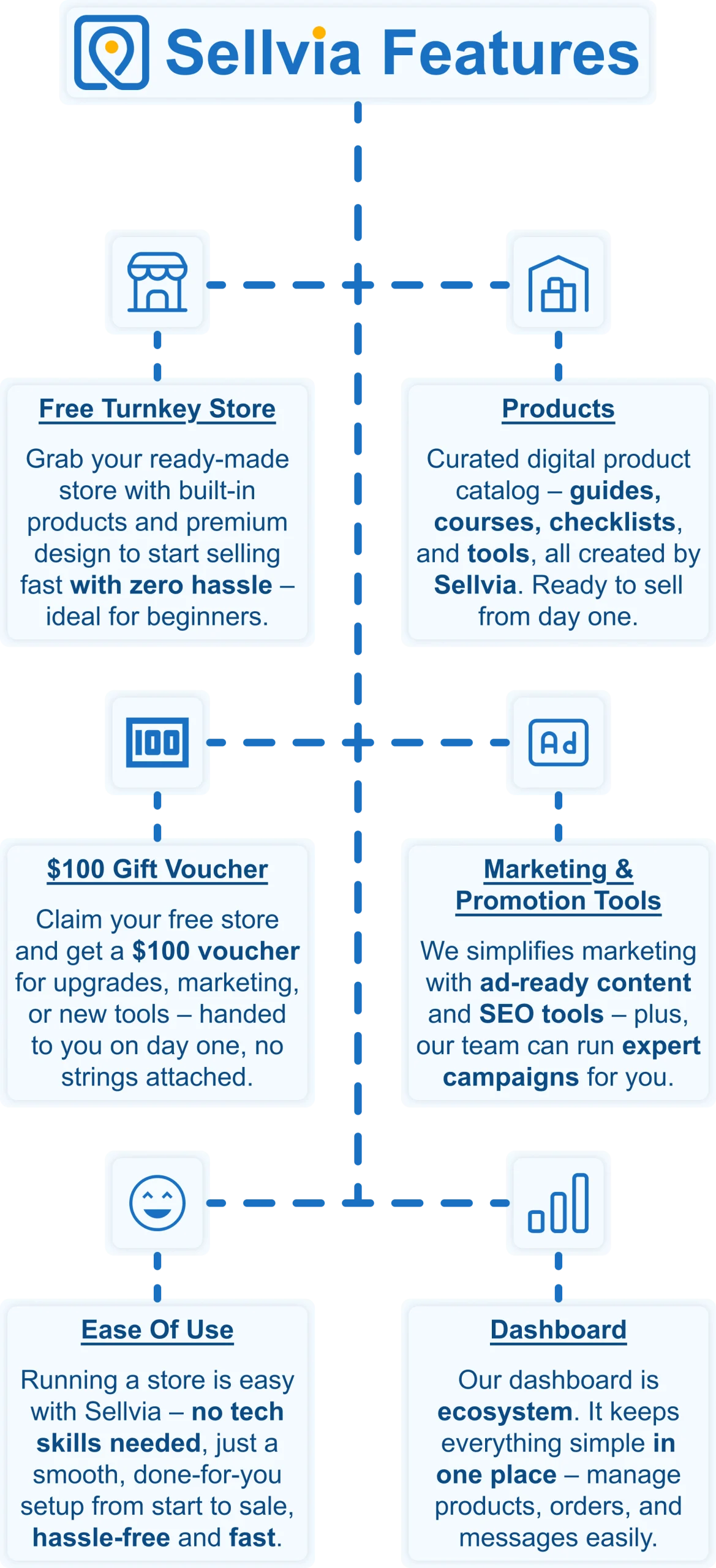
Want to start selling but don’t know where to begin? No worries! Just share your ideas, and Sellvia’s team will build a free ecommerce website that’s fully set up and ready to take orders from day one. No coding, no stress – just a store that works right out of the box.
A $100 gift voucher to grow your business faster 🎁
Starting a business takes momentum – and Sellvia gives you a head start. When you claim your free store today, you also get a $100 gift voucher to put toward growing your business. Use it to upgrade your store, boost your marketing, or unlock new tools. It is a real dollar value, handed to you on day one, with no catch and no hoops to jump through.
A massive catalog of digital products to sell 🏆
One of the biggest struggles in starting an online business is figuring out what to sell. Sellvia solves that completely. Your store comes pre-loaded with digital products – guides, courses, checklists, and tools – all created by Sellvia. You keep 50–70% of every sale. No inventory. No shipping. No logistics headaches.
Everything in one easy-to-use platform 🔥
Managing an online store shouldn’t be complicated. With Sellvia, you can handle orders, add new products, and even chat with customers – all from a simple and user-friendly platform. No need to mess with confusing tools or deal with unnecessary tech stuff. It’s all smooth sailing.
No upfront costs, just start selling 💰
A big reason people hesitate to start an online business is the cost. But here’s the good news: With Sellvia, you don’t need to invest in stock, storage, or shipping supplies. You can run your store with no upfront costs, keeping things low-risk while still making money.
Support that’s always got your back 🤝
Running a business comes with questions, but you’re never alone. Sellvia’s dedicated support team is available 24/7 to help with anything you need. Whether it’s a small question or a big challenge, they’ve got you covered.
While learning how to make money with a drone takes real investment in gear, training, and time, Sellvia lets you start earning online today with none of those barriers. Claim your free store now and get your first orders in motion.