
Bitcoin has turned everyday people into investors, side hustlers, and full-time earners. But with so many headlines and so much hype, it is hard to know where the real opportunity actually is – especially if you are starting with no experience and limited funds.
Quick Answer: You can make money with bitcoin through buying and holding, short-term trading, mining, earning interest, accepting it as payment, or affiliate marketing. Each method carries different risk levels and earning timelines – and none of them work overnight.
This guide covers every major approach, explains the honest earning potential of each, and helps you figure out which path fits your situation right now. Whether you have $50 or $5,000 to start, there is a path worth knowing about – and one option at the end of this article that skips the volatility entirely.
Before getting into the strategies, it helps to understand what you are actually dealing with. Bitcoin is a digital currency that runs on a decentralized network – no bank or government controls it. That independence is part of what makes it exciting. It is also part of what makes it risky. Prices can swing dramatically in either direction within days.
The strategies below range from simple long-term holding to high-effort technical approaches. Some require startup capital. Some require technical skill. One toward the end of this article requires neither. Read through everything before making any decisions.
What is bitcoin and why does it still matter in 2026?
Bitcoin is the world’s first and most widely recognized cryptocurrency. It was created in 2009 and has grown from a niche technical experiment into a global asset held by institutional investors, major corporations, and individual savers alike. By 2026, its role in the broader financial landscape is more established than ever – though its price remains volatile.
For everyday people, Bitcoin matters because it is one of the few investment assets anyone can access with almost no barrier to entry. You do not need a broker, a minimum balance, or a financial background. You can buy a fraction of a Bitcoin for as little as $10 on most major exchanges. That accessibility is what draws millions of new users every year.
That said, Bitcoin is not a guaranteed path to financial freedom. It is a high-volatility asset. Its value has dropped 30–70% in a matter of weeks during bear markets, then recovered over the following months or years. Every strategy in this guide assumes you understand that cycle before putting money in.
Why this works in 2026: Growing institutional adoption, clearer regulatory frameworks in the U.S., and mainstream payment integration have made Bitcoin a more stable long-term bet than it was five years ago – though meaningful risk still exists at every entry point.
With that foundation in place, here is an honest look at what each strategy actually delivers – and what it costs to get started.
How much can you realistically earn with bitcoin?
This is the question most guides skip over. The honest answer depends entirely on your method, your starting capital, and your timing in the market cycle. Here is a realistic breakdown of what each approach typically delivers.
Most beginners start with buying and holding because it requires the least knowledge and no specialized equipment. Trading and mining both carry higher earning potential but also significantly higher risk and upfront cost. If you are new to Bitcoin, starting simple is the right move.
One note on ceiling figures: The ranges above reflect normal market conditions and consistent effort. Bitcoin is unpredictable. Always treat any income figure as a range – not a promise. Results will vary based on market cycles, timing, and individual execution.
Once you understand the realistic earning ranges, choosing the right strategy becomes much easier. The next section walks through each approach in detail so you can match the method to your situation.
The difference between a strategy that works and one that drains your savings usually comes down to picking the right fit for your level of experience. Here is what each approach actually looks like in practice.
Top ways to make money with bitcoin in 2026
Each of the following strategies works differently depending on how much time, money, and experience you have. There is no single best method – only the one that fits where you are right now. Read through all of them before deciding where to start.
Buying and holding Bitcoin for long-term gains
This is the most straightforward way to make money with bitcoin. You buy Bitcoin and hold it for months or years, betting on its value increasing over time. This approach is widely known as “HODLing” – a term that started as a typo in an early Bitcoin forum and stuck because it captures the mindset perfectly: hold through the dips and do not panic-sell.
The historical track record supports it. Bitcoin has moved from under a dollar in 2009 to tens of thousands of dollars per coin over a decade. Anyone who held through multiple bear markets came out significantly ahead over a long enough timeline. That said, the dips are real – 50–70% losses in a bear market are not unusual, and they can last 12–18 months before recovery.
How to get started with buying and holding
Sign up for a reputable exchange like Coinbase, Kraken, or Gemini. Buy Bitcoin using your bank account or debit card. Then transfer it to a personal wallet for secure long-term storage – a hardware wallet like Ledger or Trezor is the safest option. Check your holdings once a month at most, and resist the urge to sell during dips based on short-term news cycles.
Earning potential: Highly variable. Over a 2–4 year holding period, historical returns have ranged from 50% to well over 500% depending on when you entered and exited.
Short-term Bitcoin trading
Trading means buying Bitcoin at a lower price and selling it when the price rises. It sounds simple, but it is genuinely difficult to do consistently. Studies suggest that the majority of new traders lose money during their first year. Professional traders use technical analysis, automated tools, and years of experience to stay profitable – and even they get it wrong regularly.
If you want to try trading, start small. Use $50–$100 to begin and consider paper trading first – tracking virtual trades without committing real money – until you can read price charts and understand basic patterns. Always set stop-loss orders to limit your downside, and never invest more than you can afford to lose entirely.
Platforms for Bitcoin trading
Binance, Kraken, and Coinbase Advanced are the most widely used platforms for active Bitcoin trading. Each offers limit orders, price charts, and technical indicators. TradingView is a separate charting tool used by many traders for deeper analysis, with a large community that shares real-time trade ideas and market commentary.
Earning potential: $0 to $500+/month for experienced traders. Most beginners break even or lose money during the first 6–12 months of learning the market.
Bitcoin mining
Mining is the process of verifying Bitcoin transactions and adding them to the public ledger known as the blockchain. Miners use specialized computers to solve complex mathematical problems, and in exchange, they earn newly created Bitcoin as a reward. It is how new Bitcoin enters circulation.
Here is the honest reality for beginners: mining Bitcoin profitably in 2026 is extremely difficult without a serious upfront investment. The competition has grown so intense that individual miners using standard consumer computers earn almost nothing. You need specialized hardware called an ASIC miner, which costs $2,000 to $10,000+ per unit, plus electricity costs that can run $100–$300 per month or more depending on where you live.
Is mining still worth it for individuals?
For most people starting out, not really. If you want to explore it, joining a mining pool – where multiple miners combine computing power and share earnings proportionally – lowers the barrier. Platforms like NiceHash allow you to rent out your existing computer hardware for small Bitcoin returns, though the earnings are modest and electricity costs often eat into them significantly.
Earning potential: $10–$50/month with consumer hardware after electricity costs. Profitable mining at scale requires $5,000+ in equipment investment and a low electricity rate.
Earning interest on your Bitcoin holdings
Some platforms allow you to earn interest on Bitcoin you already own – similar to how a savings account earns interest on cash deposits. You lend your Bitcoin to the platform, and they pay you a percentage of your holdings back over time.
This category went through a serious shakeout in 2022–2023 when several large lending platforms collapsed, most notably Celsius and BlockFi. The lesson from those failures is important: only use established, regulated platforms, keep deposited amounts conservative, and always review a platform’s licensing and insurance policies before depositing anything.
Platforms for earning Bitcoin interest
As of 2026, platforms with stronger regulatory standing include Nexo and Ledn, as well as some crypto-enabled brokerage accounts that now offer yield features. Interest rates typically range from 1% to 6% annually depending on market conditions and the platform’s structure. On a $10,000 Bitcoin holding at a 3% annual rate, you would earn roughly $300 per year – modest, but low-effort income on assets you already hold.
Earning potential: 1–6% annually on existing holdings. Best suited for people who already own Bitcoin and want to generate small returns without active trading.
Accepting Bitcoin as payment for products or services
If you already run a business, offer freelance services, or sell anything online, you can add Bitcoin as a payment method. This is not a way to generate Bitcoin from scratch – it is a way to receive Bitcoin in exchange for work you are already doing. For some niches, particularly tech, design, and content creation, clients are increasingly comfortable paying in cryptocurrency.
Payment processors like BitPay and CoinGate make it straightforward to add Bitcoin as a checkout option on a website. Some freelancers list Bitcoin on their invoices directly. If you already have a revenue stream, this option adds flexibility without requiring any new investment or skills.
Earning potential: Entirely dependent on your existing business or freelance income. The Bitcoin option does not add new income – it simply gives customers an additional way to pay you.
Affiliate marketing in the Bitcoin and crypto space
Many Bitcoin exchanges, hardware wallets, and crypto services pay commissions to affiliates who refer new customers. If you run a blog, a YouTube channel, or a social media account where you cover crypto topics, this can become a real supplemental income stream over time.
Coinbase, Binance, Ledger, and Kraken all operate affiliate programs. Commission structures vary – some pay a flat fee per signup, others pay a percentage of trading fees generated by the people you refer. The catch is that you need an existing, engaged audience for this to produce meaningful income. Without traffic, affiliate commissions remain near zero regardless of the platform you choose.
How to build affiliate income with Bitcoin content
Create honest, useful content about Bitcoin topics people are already searching for. Review wallets, explain how exchanges work, document your own investment experience. When done authentically, crypto affiliate marketing can generate $50–$500 or more per month for creators with a few thousand engaged followers. Building that audience, however, typically takes 6–18 months of consistent content publishing before meaningful affiliate income appears.
Earning potential: $50–$500+/month for content creators with an established audience. Very low for beginners without existing reach or traffic.
Every strategy above has a real path to earning with Bitcoin – but each one also has honest tradeoffs around risk, timing, and the skills required. The next section covers how to navigate those risks and stay on the right side of the law while doing it.
Legal and ethical considerations when earning with bitcoin
Before you start earning with Bitcoin through any of these methods, there are a few legal realities you need to understand in order to stay on the right side of things.
Taxes on Bitcoin earnings: In the United States, the IRS treats Bitcoin as property – not currency. That means every time you sell Bitcoin for a profit, trade it for another asset, or receive it as income, it may be a taxable event. You are responsible for tracking and reporting those gains every year. Crypto tax tools like Koinly or CoinLedger can automate much of the tracking and calculation work so nothing slips through the cracks at tax time.
Key principle: Never avoid reporting Bitcoin income. IRS enforcement around cryptocurrency has increased significantly in recent years, and undisclosed gains can trigger audits, back taxes, penalties, and in serious cases, criminal charges.
Scams are the other reality to address clearly. The crypto world attracts a disproportionate volume of fraud – fake investment platforms, Ponzi schemes, phishing attacks that look identical to legitimate exchanges, and too-good-to-be-true return promises. If anyone guarantees Bitcoin returns or asks you to send crypto first in order to receive a larger amount back, that is a scam. Every single time.
- Only use exchanges with verifiable regulatory registration in the U.S.
- Never share your wallet seed phrase with anyone under any circumstances
- Enable two-factor authentication on every exchange and wallet account
- Verify URLs carefully before entering login details – scam sites often look identical to real ones
- Do not trust unsolicited investment advice in social media DMs or email
Staying safe and compliant is not just good practice – it is what separates people who build sustainable income from those who lose it to fraud or penalties. With that in mind, here are the core principles that apply across every Bitcoin strategy above.
Tips to maximize your bitcoin earnings
Whether you choose to hold, trade, earn interest, or explore another method, these principles will save you from the most common and costly mistakes people make when getting started with Bitcoin.
Dollar-cost averaging beats trying to time the market
Instead of putting a large sum in all at once, invest a fixed amount at regular intervals – say, $50 every week or $100 every month – regardless of what the price is doing. This approach, called dollar-cost averaging, smooths out the effect of volatility over time. Research consistently shows that regular, disciplined buying outperforms attempts to predict market peaks and valleys for the vast majority of investors.
Secure your holdings before doing anything else
More Bitcoin has been lost to theft, exchange hacks, and user error than most people realize. If you hold a meaningful amount, transfer it off exchanges and into a personal hardware wallet. Write your seed phrase – the backup key for your wallet – on paper and store it somewhere physically secure. Never save it in a screenshot, a cloud document, or a text message. Losing your seed phrase means losing your Bitcoin permanently with no recourse.
Start with one method and master it before branching out
Trying to run multiple Bitcoin strategies simultaneously is a fast way to do none of them effectively. Choose one approach – most beginners do best starting with buying and holding – and learn it thoroughly before adding complexity. Six months of focused experience in one method will teach you more than six months of scattered experimentation across all of them at once.
Know your exit plan before you enter any position
Many people buy Bitcoin without ever deciding when or why they would sell. That is a problem. Set targets before you invest: at what price will you take profits? What percentage loss would make you exit your position? Having clear rules in place before you are in the middle of a volatile market moment removes emotion from the equation – and emotion is what causes most new investors to sell at the worst possible time.
Which bitcoin strategy is right for you?
Not every approach fits every person. Here is a simple breakdown based on where you are starting from.
Complete beginner
If you are new to Bitcoin and investing in general, start with buying and holding a small, comfortable amount – $50 to $100 – on a reputable exchange. Use that time to learn how wallets work, how prices move, and how tax tracking operates before increasing your involvement. Avoid trading and mining entirely until you have at least 6 months of experience watching the market without emotional reactions.
Intermediate / part-time earner
If you already own Bitcoin and want to put it to work, research interest-earning platforms carefully and use only regulated options with a clear track record. If you have an online audience around any topic, adding crypto affiliate links to your existing content is a low-barrier income addition. Keep your total Bitcoin risk capital below 10–15% of your savings at this stage.
Advanced / full-time goal
If your goal is to earn income from Bitcoin that meaningfully supplements or replaces your primary income, you will need a combination of approaches and a serious commitment to market education. Trading and affiliate marketing both have real upside at this level, but each requires a 12–18 month learning curve before producing consistent results. Build your skills on paper or small amounts before scaling up capital.
Looking for a lower-risk path to earning online
Bitcoin is not the only way to build income online. For people who want the financial freedom side without the price volatility, the capital requirements, or the tax complexity, there is a growing category of online business models that offer more predictability and lower barriers to getting started. The next section covers one of the strongest options available in 2026.
Want online income without the market risk?
Making money with bitcoin comes with real volatility, meaningful capital requirements, and a learning curve that takes most people months to work through before they see consistent results. For people who want to build income online but do not want to tie their financial future to unpredictable price swings, there is a grounded alternative worth serious consideration.
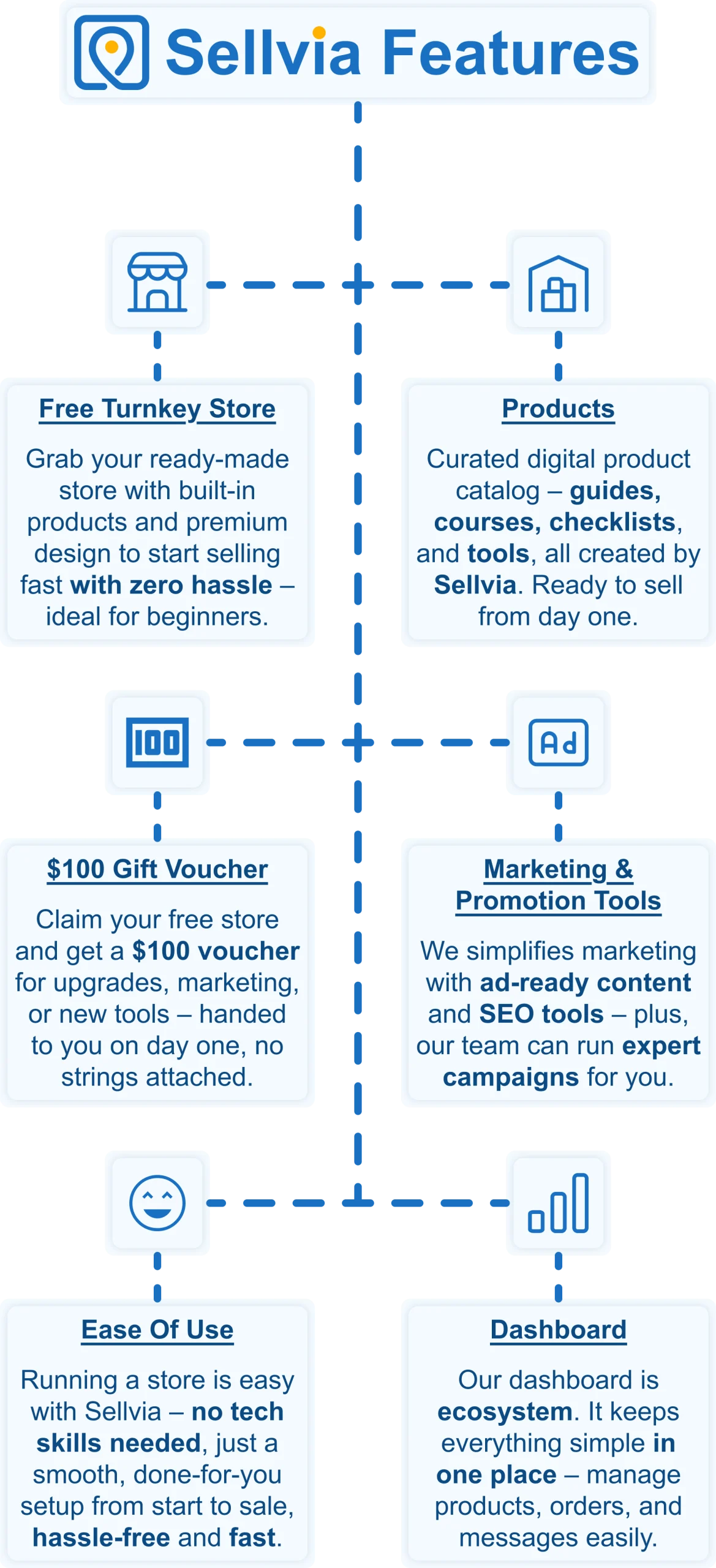
Sellvia is an online business platform that gives you a ready-built store, a catalog of digital products to sell, and a fully built-in advertising system – all in one place. You do not need tech skills, startup capital, or any prior business experience. Many people who activate the built-in ad system start seeing orders on the same day. It is a fundamentally different kind of opportunity than Bitcoin – one based on selling products to real customers rather than speculating on price movements.
Recognized by Forbes and ranked among Inc.’s fastest-growing companies in the United States, Sellvia has helped more than 1,500,000 store owners start earning online. Store owners keep 50–70% of every sale, and the platform handles the complicated parts so you can focus on growing your income. That track record matters when you are deciding where to invest your time and energy.
Why Sellvia is a game-changer for your online store 🚀
Sellvia isn’t just another ecommerce tool. We are a trusted name in the industry, recognized by Forbes and even ranked in Inc.’s list of the 5,000 fastest-growing companies in the U.S. So if you’re serious about starting as a solopreneur, this is a smart place to begin.
Starting an online business can feel overwhelming, but that’s exactly where Sellvia steps in. It takes care of the tricky parts, so you can focus on making sales and growing your brand. Let’s break down what makes it such a great choice.
Get a ready-to-go store hassle-free 🎯
Want to start selling but don’t know where to begin? No worries! Just share your ideas, and Sellvia’s team will build a free ecommerce website that’s fully set up and ready to take orders from day one. No coding, no stress – just a store that works right out of the box.
A $100 gift voucher to grow your business faster 🎁
Starting a business takes momentum – and Sellvia gives you a head start. When you claim your free store today, you also get a $100 gift voucher to put toward growing your business. Use it to upgrade your store, boost your marketing, or unlock new tools. It is a real dollar value, handed to you on day one, with no catch and no hoops to jump through.
A massive catalog of digital products to sell 🏆
One of the biggest struggles in starting an online business is figuring out what to sell. Sellvia solves that completely. Your store comes pre-loaded with digital products – guides, courses, checklists, and tools – all created by Sellvia. You keep 50–70% of every sale. No inventory. No shipping. No logistics headaches.
Everything in one easy-to-use platform 🔥
Managing an online store shouldn’t be complicated. With Sellvia, you can handle orders, add new products, and even chat with customers – all from a simple and user-friendly platform. No need to mess with confusing tools or deal with unnecessary tech stuff. It’s all smooth sailing.
No upfront costs, just start selling 💰
A big reason people hesitate to start an online business is the cost. But here’s the good news: With Sellvia, you don’t need to invest in stock, storage, or shipping supplies. You can run your store with no upfront costs, keeping things low-risk while still making money.
Support that’s always got your back 🤝
Running a business comes with questions, but you’re never alone. Sellvia’s dedicated support team is available 24/7 to help with anything you need. Whether it’s a small question or a big challenge, they’ve got you covered.
If you came here looking for how to make money with bitcoin but want a more stable and accessible path to online income, Sellvia is built exactly for that. Claim your free store today and start building income that does not depend on market swings.