Millions of people take photos every day. But only a small percentage of them know that a camera – or even a smartphone – can become a real income stream. If you have ever wondered how to make money with photography, the answer is simpler than you might think. You do not need a professional studio, expensive gear, or years of formal training to start earning.
Quick Answer: You can make money with photography by selling stock images, offering client services, teaching your skills, and building an online business around your passion. Income ranges from $100 to $5,000+ per month depending on which methods you choose and how consistently you work.
The demand for visual content is at an all-time high in 2026. Social media, online advertising, and digital education have created a near-unlimited market for great photography – and the tools to take and sell those images have never been more accessible. Whether you are a weekend hobbyist or someone who shoots every day, there is a path that fits your skills and schedule.
Building a photography income does not have to be complicated. Start with one method that matches where you are today, then layer in more as you grow. The photographers who earn the most are not always the most talented – they are the ones who diversify and stay consistent.
What is photography as a side hustle?
Photography as a side hustle means turning your camera skills into a consistent income source – whether alongside a regular job or as your primary focus. It covers a wide range of activities: licensing your images to buyers, offering your services to clients, teaching your expertise to beginners, or building a brand around your creative work.
The appeal is real. Photography is one of the few skills where the barrier to entry keeps getting lower. Modern smartphones shoot in high resolution. AI editing tools cut post-processing time in half. Stock platforms accept submissions from anyone with a decent image. And the global appetite for authentic, original visuals is still growing fast.
In 2026, photography as a side hustle is no longer reserved for professionals. Everyday people are earning hundreds – and in some cases thousands – of dollars per month by putting their existing skills to work in the right places. The difference between those who earn and those who do not is usually strategy, not talent.
How much can you realistically earn with photography?
This is the question most people want answered before they invest time and energy. The honest answer is: it depends on which methods you choose, how much time you commit, and how strategically you approach the market. Here is a realistic breakdown across the most common approaches.
These figures represent realistic ranges for people who are actively working their chosen method – not one-time uploaders or occasional shooters. Most photographers earning $1,000 or more per month are using at least two or three of these methods in combination.
One note on the ceiling figures: The top-end numbers – like $5,000+ from client services – are achievable but require consistent marketing, a strong portfolio, and active client relationship management. Beginners typically start in the $100–$500/month range and grow from there over 60–90 days of focused effort.
Ways to make money with photography in 2026
There is no single right way to monetize photography. The best method depends on your skills, your available time, and what you actually enjoy doing. Below are the most accessible and proven ways to earn from your camera – including a few that most photographers overlook.
Selling your photos online
Stock photography is one of the most popular entry points because it requires no client work and no sales skills. You upload your images, and every time someone licenses one, you earn a royalty. The key is volume – the more high-quality images you have live on a platform, the more you earn each month.
Shutterstock
Shutterstock is the largest stock photo platform in the world, with millions of active buyers searching every single day. You earn a royalty of 15–40% per download depending on your contributor tier. High-demand themes include business, lifestyle, technology, family, and travel. Focus on these categories first and you will see traction significantly faster than with niche or experimental subjects.
Earning potential: $50–$500/month once you have 200+ images uploaded and optimized with strong metadata.
Adobe Stock
Adobe Stock integrates directly with Creative Cloud, which means designers, marketers, and agencies see your images while they are already working in Photoshop or Illustrator. Contributors earn 33% per image sale. The platform favors clean, well-lit, commercially usable visuals – sharp focus, minimal clutter, and universal appeal will take you a long way here.
Earning potential: $75–$600/month with consistent uploads across high-demand commercial categories.
Getty Images and iStock
Getty and its contributor platform iStock attract premium buyers – brands, publishers, and media outlets that pay higher licensing fees per image. Acceptance standards are stricter than most other platforms, but the payout per sale is significantly better. If your photography is of commercial quality, the application process is well worth the effort.
Earning potential: $100–$800/month for approved contributors with a strong and varied catalog.
Alamy
Alamy pays contributors a 50% commission rate – one of the highest in the industry – and accepts a wider range of image styles than most platforms. If you shoot locally – community events, regional landmarks, small-town everyday life – Alamy is an especially strong fit because those subjects are underrepresented and in genuine demand from editorial buyers around the world.
Earning potential: $50–$400/month depending on catalog size and the variety of subject matter.
Offering photography services to clients
If you prefer working directly with people, service-based photography is one of the fastest ways to start earning real money. Clients pay upfront, income is immediate, and referrals can grow your business without any advertising budget at all.
Wedding and event photography
Wedding photography is one of the highest-paying niches available to photographers at any experience level. Even local photographers with moderate portfolios charge $1,500–$4,000 per event. Couples invest heavily in someone who can document one of the most important days of their lives. Corporate events, graduation parties, and milestone celebrations are also strong markets for photographers who want variety alongside the big-day pressure.
Earning potential: $500–$4,000 per event, with experienced photographers booking 2–5 events per month during peak season.
Portrait and headshot sessions
Portraits are in demand year-round. Families want annual photos. Professionals need updated headshots for LinkedIn. Expecting parents want maternity shoots. Seniors want graduation portraits. You can charge $150–$500 per session, offer tiered packages, and build a steady stream of repeat clients simply by delivering consistent results and a great client experience.
Earning potential: $300–$2,500/month depending on your local market, pricing tier, and session volume.
Product and commercial photography
Every business that sells something online needs great product photography. Restaurants, boutiques, artisan makers, and online brands are all potential clients. Commercial day rates range from $300–$800 depending on scope, and once you land a regular client, the repeat work keeps coming. This is a high-value service with virtually unlimited demand in any market, large or small.
Earning potential: $500–$3,000/month with a reliable roster of local business clients.
Real estate photography
Real estate agents need fresh listing photos for every property they represent. It is a recurring service model – once you build working relationships with two or three agents, the bookings keep coming automatically. Shoots typically take 1–2 hours, and rates run $100–$300 per property. With a consistent local client base, this niche alone can generate $1,000+ per month in an active housing market.
Earning potential: $800–$2,500/month with consistent real estate client relationships in place.
Teaching photography and selling your knowledge
If you can consistently get results with a camera, other people want to learn from you. Teaching is one of the most scalable income streams in photography because you create content once and earn from it repeatedly – no booking calendar required.
Online photography courses
Platforms like Udemy and Skillshare let you publish a course once and earn royalties for years. Beginner-level courses – how to use a DSLR, Lightroom editing basics, smartphone photography tips – consistently rank among the top-selling categories. A well-built course with strong reviews can generate $200–$1,500/month with no ongoing effort required after the initial launch.
Earning potential: $200–$1,500/month per course, growing steadily with reviews and platform visibility over time.
One-on-one coaching
Some learners want personal feedback rather than a pre-recorded course. Offer 60-minute coaching sessions via Zoom at $75–$150 each. You can find clients through Instagram, photography forums, and local community boards. Coaching works especially well if you have a specific specialty – drone photography, food styling, newborn posing – that people are actively searching for guidance on.
Earning potential: $300–$1,500/month with 5–10 regular coaching sessions per month.
Photography guides and digital downloads
Writing and selling a focused digital guide is one of the simplest ways to add a recurring income stream. A practical PDF on a specific topic – posing for portrait photographers, editing skin tones in Lightroom, landing your first three clients – can sell for $15–$50 each on Etsy or Gumroad. This is a one-time creation effort with ongoing returns, and one strong Instagram or Pinterest post can drive consistent monthly sales long after you publish.
Earning potential: $100–$800/month depending on topic, pricing, and how actively you promote it.
Building income through social media and content
Social media has opened entirely new income paths for photographers – from brand deals to preset packs to YouTube channels. This approach takes longer to scale but creates some of the most durable long-term income once it is established.
Brand partnerships and sponsorships
Brands actively seek photographers with engaged followings to promote their products – cameras, lenses, editing software, travel gear, and lifestyle items. You do not need millions of followers. Micro-influencers with 5,000–50,000 highly engaged followers routinely earn $100–$1,000 per sponsored post. The key is building a specific niche identity so brands understand exactly who your audience is and why it is worth paying to reach them.
Earning potential: $200–$3,000/month with an established, niche-focused social following.
Selling Lightroom presets and editing tools
Presets are one of the best-kept income secrets in photography. Create a pack of 10–20 Lightroom presets that reflect your signature editing style and sell them for $20–$60 per pack on Etsy, Gumroad, or your own website. With good promotion, a single preset pack can generate hundreds of dollars in recurring monthly sales with virtually no ongoing overhead. Many photographers earn more from presets than from paid shoots.
Earning potential: $150–$1,500/month with well-marketed preset collections and an active social following.
YouTube tutorials and video content
Photography tutorials perform extremely well on YouTube. Beginners constantly search for help with cameras, editing software, lighting setups, and composition basics. Once your channel reaches monetization eligibility – 1,000 subscribers and 4,000 watch hours – ad revenue kicks in. Add affiliate links for gear recommendations and occasional sponsorships, and a growing channel can realistically generate $300–$2,000/month within 12–18 months of consistent posting.
Earning potential: $300–$2,000/month after 12–18 months of consistent content output.
Tips for maximizing your photography income
Earning from photography is not just about the method you pick – it is about how you run the business side of it. These tips apply across every approach covered in this guide.
Diversify across multiple income streams
The most financially stable photographers are not dependent on a single source. They combine client work with stock sales, add a course or preset pack, and build their social presence at the same time. Each stream reinforces the others. A wedding client sees your Instagram and buys a preset pack. A course student becomes a coaching client. Stack your income sources deliberately and your monthly total grows faster than any one method could generate alone.
Invest in your highest-earning skill first
You do not need to be excellent at everything. Identify the one or two areas that generate the most income for your current level and invest your time there first. If portrait sessions are your best earner, improve your posing, lighting, and client communication. If stock photography is your focus, learn what commercial buyers actually need – not just what looks visually interesting to you. Targeted skill growth translates directly into income growth.
Build your portfolio with intention
Your portfolio is your most powerful sales tool. Curate it with discipline – only include work that represents the quality level you want to attract. If you want commercial clients, show clean product and lifestyle work. If you want wedding bookings, show your best ceremony and reception shots. Publish it on a personal website, keep it current, and refresh it every 60–90 days. A focused, up-to-date portfolio consistently outperforms a large mixed one.
Price your work honestly from the start
Underpricing is the single most common mistake new photographers make. When you charge too little, you attract the wrong clients, signal lower quality, and burn out quickly because the income does not justify the time invested. Research what photographers at your skill level are charging in your local market. Start at a fair, competitive rate and raise your prices every time you are consistently booked out.
Market yourself like a professional from day one
Great photography does not market itself. Show up consistently – post on Instagram, maintain an active Google Business profile, ask happy clients for reviews, and reach out directly to local businesses. The photographers who earn the most are not always the most technically gifted. They are the most visible and the most consistent. Treat marketing as a weekly non-negotiable and your income will grow noticeably within 60–90 days.
Legal and ethical considerations for photographers
Making money from photography comes with real professional responsibilities. Getting these wrong can damage your reputation or expose you to legal risk – neither of which is worth the shortcut.
Key principle: Always get written permission before photographing people for commercial use. A verbal agreement is not a legal document.
The most important rules every earning photographer needs to know:
- Model releases: If you are selling images of recognizable individuals – including for stock photography – you need a signed model release. Without one, your images are restricted to editorial use only and cannot be licensed for advertising or commercial campaigns.
- Property releases: Some privately owned locations, branded environments, and architecturally distinctive buildings require a property release for commercial photography. Always check before shooting on private property with the intent to sell the images.
- Copyright ownership: You own the copyright to your images the moment you take them in most jurisdictions. Register important work with the U.S. Copyright Office if you plan to enforce your rights commercially.
- Client contracts: Always use a written contract for every paid service. Include deliverables, timelines, payment terms, revision limits, and usage rights. This protects both you and your client and eliminates misunderstandings before they happen.
What to avoid absolutely: Misrepresenting stock images as your own original client work, using other photographers’ presets without a proper license, or overpromising on editing turnarounds you cannot realistically meet. Photography is a referral-driven business – one dishonest shortcut can cost you more clients than it would ever have earned you.
How to choose your path: recommendations by reader profile
Not every method works for every photographer. The right starting point depends on where you are today – your skills, your available time, and what kind of income you are aiming for.
Complete beginner
If you are just starting out and still learning the basics, begin with stock photography. The feedback is built into the system – images that sell tell you what buyers want, and images that do not sell tell you what to improve. Upload 50–100 images in your first month to Shutterstock or Adobe Stock and focus on high-demand themes like business, lifestyle, and everyday moments. Income will be modest at first, but your understanding of the market will grow quickly.
Intermediate photographer
If you have been shooting for a year or more and feel confident in your technical skills, add a service component. Portrait sessions and product photography have low startup costs and fast returns. Set up a simple portfolio website, create a free Google Business listing, and post your work on Instagram consistently. At this level, combining stock royalties with local client work is the most direct path to $500–$1,500/month within 60–90 days.
Advanced or full-time goal
If you are aiming to replace your full-time income with photography, you need to stack multiple methods simultaneously. At this level, systemizing your business matters as much as your creative work. Use contracts, automate your booking process, batch your social media content, and treat every client relationship as a long-term business asset. Photographers earning $3,000–$8,000/month are running their photography like a real business – not just practicing a skill.
Looking for a lower-effort income stream alongside photography
Photography income – even at its best – has gaps. Slow seasons, cancelled bookings, and inconsistent stock sales are all real. This is exactly why many photographers look for a parallel income source that does not depend on having the right shot at the right moment. An online store that earns independently of your photography schedule gives you that stability – and it has never been easier or more affordable to build one alongside what you are already doing.
Why Sellvia is a game-changer for your online store 🚀
Sellvia isn’t just another ecommerce tool. We are a trusted name in the industry, recognized by Forbes and even ranked in Inc.’s list of the 5,000 fastest-growing companies in the U.S. So if you’re serious about starting as a solopreneur, this is a smart place to begin.
Starting an online business can feel overwhelming, but that’s exactly where Sellvia steps in. It takes care of the tricky parts, so you can focus on making sales and growing your brand. Let’s break down what makes it such a great choice.
Get a ready-to-go store hassle-free 🎯
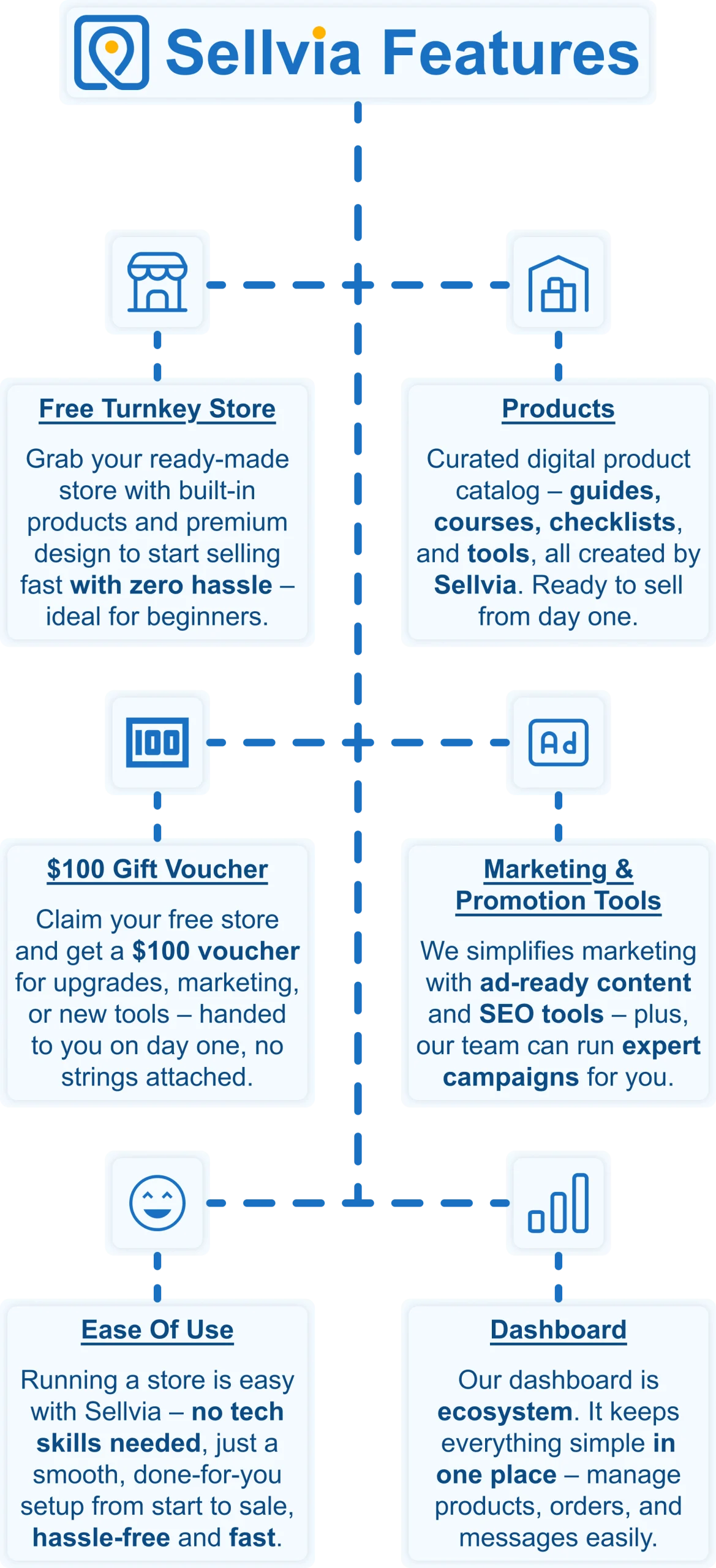
Want to start selling but don’t know where to begin? No worries! Just share your ideas, and Sellvia’s team will build a free ecommerce website that’s fully set up and ready to take orders from day one. No coding, no stress – just a store that works right out of the box.
A $100 gift voucher to grow your business faster 🎁
Starting a business takes momentum – and Sellvia gives you a head start. When you claim your free store today, you also get a $100 gift voucher to put toward growing your business. Use it to upgrade your store, boost your marketing, or unlock new tools. It is a real dollar value, handed to you on day one, with no catch and no hoops to jump through.
A massive catalog of digital products to sell 🏆
One of the biggest struggles in starting an online business is figuring out what to sell. Sellvia solves that completely. Your store comes pre-loaded with digital products – guides, courses, checklists, and tools – all created by Sellvia. You keep 50–70% of every sale. No inventory. No shipping. No logistics headaches.
Everything in one easy-to-use platform 🔥
Managing an online store shouldn’t be complicated. With Sellvia, you can handle orders, add new products, and even chat with customers – all from a simple and user-friendly platform. No need to mess with confusing tools or deal with unnecessary tech stuff. It’s all smooth sailing.
No upfront costs, just start selling 💰
A big reason people hesitate to start an online business is the cost. But here’s the good news: With Sellvia, you don’t need to invest in stock, storage, or shipping supplies. You can run your store with no upfront costs, keeping things low-risk while still making money.
Support that’s always got your back 🤝
Running a business comes with questions, but you’re never alone. Sellvia’s dedicated support team is available 24/7 to help with anything you need. Whether it’s a small question or a big challenge, they’ve got you covered.
If you love photography and want a reliable income stream that works alongside it, Sellvia makes it remarkably simple to get started. Claim your free store and a $100 gift voucher today.