More than 35% of U.S. workers now do some or all of their work remotely – and a growing number have ditched the employer entirely. If you are searching for how to make money working from home, the honest answer is: there are more legitimate paths available today than at any point in history. But not all of them are equal.
Quick answer: You can make money working from home through freelancing, remote employment, selling digital products online, content creation, or running your own online store. The method that works best depends on your skills, available time, and income goal – but most people can start earning $500–$2,000/month within 60–90 days by picking one method and sticking with it.
This guide covers the most realistic work-from-home income paths in 2026, what each one actually pays, and how to get started without quitting your day job first.
The landscape for earning money from home has changed significantly. What used to mean picking up odd freelance jobs or answering surveys now covers everything from remote employment at major companies to running a solo online store that generates $10,000/month with no office, no commute, and no boss.
What does it mean to make money working from home in 2026?
The phrase “work from home” used to carry a specific meaning – a traditional remote job, or maybe a side hustle you ran on weekends. Today, the category has expanded dramatically. It now covers everything from a fully remote position at a Fortune 500 company to running a solo online business that earns while you sleep – without ever stepping into an office.
The key distinction worth understanding is the difference between active income and semi-passive income. Active income means you trade time directly for money – freelance writing, customer support, tutoring, consulting. Semi-passive income means you build a system that keeps earning even when you are not actively working – an online store loaded with digital products, a course, or a niche blog with affiliate revenue.
Both are legitimate. Both take real work to build. The difference is in the ceiling. A skilled freelancer working from home might earn $4,000–$8,000/month if they are fully booked. An online store owner with the same amount of effort invested upfront can scale past that without proportionally scaling their time. In 2026, the best remote income ideas combine low startup cost, genuine demand, and a clear path to growth.
How much can you realistically earn working from home?
The internet is full of screenshots showing $50,000 months and overnight success stories. Those cases exist, but they represent a fraction of a percent of people who try. Here is a realistic view of what each major method actually pays for someone putting in consistent effort.
The figures above reflect realistic monthly ranges for people working these methods seriously, not casually. Entry-level results – your first 60–90 days – will typically sit at the lower end while you learn the ropes.
One note on ceiling figures: The high end of every range assumes full-time effort and at least 6 months of consistent work. Most people earn in the lower half during year one. Full-time effort means treating your work-from-home income like a real job – scheduled hours, genuine investment in learning, and a willingness to change course when something does not work.
The good news is that even modest early results – $300 to $500/month from your first 60 days – are enough to prove the model works and give you something to build on. The key is picking one method and committing to it long enough to see results.
Best ways to make money working from home in 2026
Below are the most accessible and proven earn-from-home methods available right now, broken into two groups: service-based income (you sell your time or skills) and asset-based income (you build something that keeps earning).
Service-based remote income
Freelancing
Freelancing is the fastest way to start earning money from home if you already have a marketable skill. Writers, graphic designers, video editors, web developers, virtual assistants, bookkeepers, and social media managers are all in high demand on platforms like Upwork, Fiverr, and Toptal.
The typical entry-level freelancer earns $15–$35/hour. Specialists with proven results – a copywriter who can show conversion improvements, or a developer fluent in a specific tech stack – commonly earn $60–$150/hour. Getting your first 3–5 reviews on a platform is the hardest part; after that, momentum builds naturally.
Why this works in 2026: Remote work normalization has massively expanded the client pool for freelancers. Businesses that once hired in-house now contract out roles regularly, meaning there are more opportunities than ever for skilled remote workers.
Earning potential: $1,500–$8,000/month with 2–3 solid clients and consistent delivery.
Remote employment
Landing a fully remote job is arguably the most financially stable work-from-home option for most people. Companies like Automattic, GitLab, Shopify, and thousands of startups operate 100% remotely and hire globally. Job boards like Remote.co, We Work Remotely, and LinkedIn’s remote filter make finding these roles straightforward.
The most in-demand remote roles in 2026 include software engineering, customer success management, digital marketing, data analysis, and UX design. Many pay $50,000–$120,000/year, and fully remote positions often carry higher base salaries to compensate for the lack of physical perks.
Important note: Remote employment is active income with a salary ceiling. It is a strong foundation – but it is not scalable the same way that building your own online business is.
Earning potential: $2,500–$12,000/month depending on role, experience, and industry.
Online tutoring and coaching
If you have expertise in a subject – academic, professional, or personal – tutoring and coaching are high-margin ways to earn money from home. Academic tutors on platforms like Wyzant and Tutor.com earn $20–$80/hour. Business coaches and career consultants working privately often charge $100–$300/hour.
The barrier to entry is low: you need knowledge, a webcam, and a reliable internet connection. Platforms like Teachable and Podia let you package your expertise into courses or group programs, which scales your time more effectively than one-on-one sessions alone.
Earning potential: $800–$4,000/month at 10–15 hours of client sessions per week.
Asset-based remote income
Running an online store with digital products
One of the most popular work-from-home business ideas in 2026 is running your own online store stocked with digital products – guides, courses, checklists, and tools. There is no inventory to manage, no shipping to coordinate, and no logistics headaches. When a customer orders, the product is delivered instantly and digitally.
The realistic first-year income for a focused online store owner ranges from $500–$3,000/month, scaling to $5,000–$10,000+ as you activate advertising and build your customer base. Platforms like Sellvia give beginners a ready-made store, products to sell, and a built-in advertising system – so you are not starting from a blank page.
Why this works in 2026: Global online shopping continues to grow at 8–10% per year. Consumer comfort with buying digital products has never been higher, and the tools available to solo operators have never been better.
Earning potential: $500–$10,000+/month depending on niche, ad spend, and product selection.
Blogging and affiliate marketing
A niche blog earns money through affiliate commissions, display ads, and sponsored content. The catch: it takes 9–18 months of consistent publishing before most blogs generate meaningful revenue. That said, established blogs in personal finance, health, and tech can earn $3,000–$15,000/month once they hit SEO traction.
Affiliate marketing – promoting other companies’ products in exchange for a commission – can be layered on top of a blog or run independently through YouTube, email lists, or social media. Amazon Associates, ShareASale, and individual brand programs are common starting points.
Earning potential: $200–$5,000/month after 12+ months of consistent content output.
Selling digital products independently
Digital products – templates, ebooks, online courses, Notion dashboards, website themes – are created once and sold repeatedly with zero fulfillment cost. Platforms like Gumroad, Etsy (for digital downloads), and Teachable make distribution simple.
Income depends heavily on the value of the product and the size of your audience. Selling a $29 Notion template to 50 buyers per month generates $1,450/month with almost no ongoing effort. A well-produced course priced at $197 with 20 monthly sales brings in nearly $4,000/month.
Earning potential: $300–$6,000/month depending on product pricing and traffic volume.
Print-on-demand
Print-on-demand (POD) is a model where you upload custom designs to products like t-shirts, mugs, and phone cases, and a fulfillment partner handles everything else when orders come in. Platforms like Printful, Printify, and Redbubble are popular starting points.
POD income is modest for most sellers – $200–$800/month is typical – but it carries essentially no financial risk. Margins are thinner than a digital product store, but you retain full creative control and build a branded product line over time.
Earning potential: $200–$2,000/month as a supplementary income stream.
How to choose the right work-from-home income method
With so many earn-from-home options available, the biggest mistake people make is trying three or four at once. Spreading attention across multiple methods in the early stage almost always results in earning nothing from any of them. The right approach is to choose one, commit for 90 days, and measure results honestly.
Here is a quick framework to pick your starting point based on where you are right now.
If you are a complete beginner with no existing skills or audience, an online store stocked with ready-made digital products is the most accessible entry point – because it does not require pre-existing expertise, just a willingness to learn how to market and sell online.
Tips for actually succeeding when you work from home
The home environment introduces specific challenges that office workers never face. Distractions, isolation, and the blurring of work and personal time are the top reasons people abandon remote income projects before they reach profitability. Here is what makes the difference between those who earn consistently and those who give up after 30 days.
Treat it like a business from day one
This sounds obvious, but most people treat their work-from-home income as a side project rather than a real business. The moment you set a dedicated workspace, block working hours on your calendar, and start tracking your revenue against your effort, your results change. Even a 4-hour dedicated block three evenings a week is enough to make real progress – as long as those hours are protected.
Pick one platform and master it before expanding
Whether it is Upwork, Sellvia, or YouTube, depth beats breadth in the early stage. Platforms reward consistency and activity with more visibility. Spreading yourself across five platforms in the first 90 days almost always means being invisible on all five. Get traction in one place first, then diversify once you have a proven model.
Track your numbers every week
Income, traffic, and how many visitors turn into buyers – whatever metrics apply to your method, look at them weekly. People who track their numbers are far more likely to spot what is working early enough to double down on it, rather than grinding away on something that is not converting.
Reinvest early profits
The temptation when you earn your first $500 from home is to spend it immediately. The better move is to reinvest it. For an online store, that might mean activating a small paid ad campaign. For a freelancer, it might mean a premium portfolio website or a skills course. Compounding small early wins accelerates the timeline to meaningful income significantly.
Build an email list as early as possible
Regardless of your income method, email is the most reliable channel for converting an audience into customers. Platforms change algorithms. Social media reach goes up and down. Your email list is an asset you own outright. Starting to collect emails from day one – even with a simple free lead magnet – is one of the highest-value moves any work-from-home business owner can make.
Legal and ethical considerations for earning money at home
Making money online is entirely legitimate. But there are grey areas and outright scams in this space that can cost you time, money, or your professional reputation. Here is what to avoid and what to do instead.
What to avoid
Avoid any opportunity that requires you to pay upfront to start earning. Multi-level marketing schemes often dress up as work-from-home opportunities but generate income primarily from recruiting, not from selling real products. “Get paid to take surveys” platforms exist but rarely pay more than $2–$5/hour – not a serious income strategy for anyone trying to change their financial situation.
Important: If a work-from-home offer promises $500/day with no experience and minimal effort, treat it as a red flag. Legitimate income sources always involve a learning curve and a real value exchange.
Fake reviews, black-hat SEO tactics, and misrepresenting your experience on freelance profiles are also worth avoiding – not just ethically, but practically. Platforms ban accounts that engage in these tactics, and the reputational damage can follow you across the industry.
What to do instead
Focus on methods with documented, verifiable track records. Reddit communities like r/digitalnomad, r/entrepreneur, and r/Flipping include thousands of real accounts of what is working and what is not. Trustpilot reviews for platforms like Sellvia, Upwork, and Teachable give you a realistic picture from actual users rather than marketing copy.
For tax purposes, any income you earn working from home – whether freelance, through an online store, or otherwise – is taxable in most jurisdictions. Keep records of income and expenses from the very start. A simple spreadsheet works fine in the early stage. If you are in the U.S., self-employment income above $400 is reportable to the IRS.
Key principle: Build income on platforms and methods where your reputation travels with you – not ones where a single policy change can eliminate your earnings overnight.
Final thoughts: choosing the right path to earn from home
There is no single best way to make money working from home – but there is a best method for your specific situation. Here is a quick summary by reader profile.
Complete beginner
If you are starting with no skills and no audience, your best entry point is an online store stocked with ready-made digital products. The learning curve is real but manageable, the startup cost can be close to zero with the right platform, and the scalability ceiling is high. Expect 60–90 days before meaningful income appears, and treat the first month as a learning investment rather than a waste of time.
Part-time / intermediate
If you already have a remote job or freelance income and want to build a second stream, digital products or a content site makes strong sense. You already know how to work independently – now you are building something that compounds over time. Dedicate 5–8 hours per week and measure progress quarterly rather than week to week.
Advanced / full-time goal
If you want to replace a full-time salary within 12–18 months, the fastest paths are either high-ticket freelancing (consulting, development, strategy) or a properly funded online store with a dedicated ad budget of $500–$1,000/month to scale product testing. Both are achievable, but both require treating the work seriously from day one – not as a hobby.
The broader trend is clear: remote work and online business are not going away. The platforms, tools, and infrastructure supporting work-from-home income have matured enormously in the last five years. For anyone willing to invest consistent effort, the opportunity to build meaningful income from home has never been more accessible.
Why Sellvia is a game-changer for your online store 🚀
Sellvia isn’t just another ecommerce tool. We are a trusted name in the industry, recognized by Forbes and even ranked in Inc.’s list of the 5,000 fastest-growing companies in the U.S. So if you’re serious about starting as a solopreneur, this is a smart place to begin.
Starting an online business can feel overwhelming, but that’s exactly where Sellvia steps in. It takes care of the tricky parts, so you can focus on making sales and growing your brand. Let’s break down what makes it such a great choice.
Get a ready-to-go store hassle-free 🎯
Want to start selling but don’t know where to begin? No worries! Just share your ideas, and Sellvia’s team will build a free ecommerce website that’s fully set up and ready to take orders from day one. No coding, no stress – just a store that works right out of the box.
A $100 welcome gift to grow your business faster 🎁
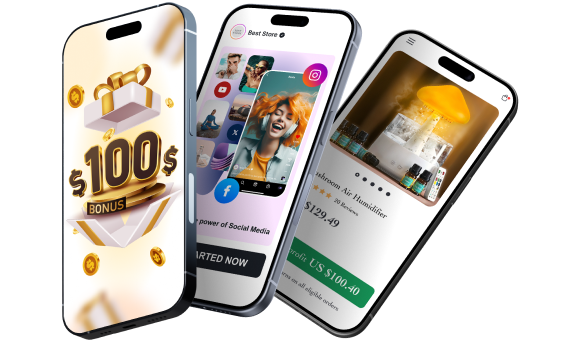
Starting a business takes momentum – and Sellvia gives you a head start. When you claim your free store today, you also get a $100 welcome gift to put toward growing your business. Use it to upgrade your store, boost your marketing, or unlock new tools. It is a real dollar value, handed to you on day one, with no catch and no hoops to jump through.
A massive catalog of digital products to sell 🏆
One of the biggest struggles in starting an online business is figuring out what to sell. Sellvia solves that completely. Your store comes pre-loaded with digital products – guides, courses, checklists, and tools – all created by Sellvia. You keep 50–70% of every sale. No inventory. No shipping. No logistics headaches.
Everything in one easy-to-use platform 🔥
Managing an online store shouldn’t be complicated. With Sellvia, you can handle orders, add new products, and even chat with customers – all from a simple and user-friendly platform. No need to mess with confusing tools or deal with unnecessary tech stuff. It’s all smooth sailing.
No upfront costs, just start selling 💰
A big reason people hesitate to start an online business is the cost. But here’s the good news: With Sellvia, you don’t need to invest in stock, storage, or shipping supplies. You can run your store with no upfront costs, keeping things low-risk while still making money.
Support that’s always got your back 🤝
Running a business comes with questions, but you’re never alone. Sellvia’s dedicated support team is available 24/7 to help with anything you need. Whether it’s a small question or a big challenge, they’ve got you covered.
Making money working from home becomes much more achievable when you have a ready-made store, digital products to sell, and a built-in ad system doing the heavy lifting for you. Start your free Sellvia store today and take the first real step toward financial freedom.