Most people who struggle to sell online do not have a product problem — they have a marketing problem. You could have the best item in your niche, priced perfectly, with a great-looking store, and still hear nothing but silence. Learning how to market a product effectively is what separates stores that quietly close after six months from ones that grow into a real, reliable source of income.
This guide covers the most practical, proven strategies for promoting products in 2026 — from organic social media and SEO to paid ads, email, and influencer outreach. Whether you are launching your first product or trying to revive a flat-performing store, you will find a clear, actionable path forward here.
Quick answer: The most effective way to market a product in 2026 combines short-form video content, targeted social ads, and SEO-optimized product pages. No single channel dominates — the sellers who win consistently use two or three channels together and track what actually converts.
What is product marketing?
Product marketing is the process of bringing a product to the right audience in a way that convinces them to buy. It is not just advertising — it covers positioning, messaging, channel selection, and timing. Done well, it answers three questions for your potential customer: what is this, why does it matter to me, and why should I trust this seller?
In 2026, product marketing spans a wider range of platforms and formats than ever before. Short-form video on TikTok and Instagram Reels can take a product from zero to hundreds of sales in days. Search engine optimization puts your store in front of buyers actively looking for what you sell. Email sequences turn one-time buyers into repeat customers. The challenge is not a lack of tools — it is knowing which tools to combine for your specific product and audience.
Understanding the difference between brand marketing and product marketing also matters. Brand marketing builds long-term recognition. Product marketing drives short-term action. For most people starting an online business with no prior experience, product marketing is where you should focus first — because it directly ties your effort to your income.
How much can you realistically earn from strong product marketing?
The honest answer depends on your product margin, your audience size, and how consistently you apply these strategies. That said, here is a realistic breakdown across the most common approaches available to independent sellers in 2026:
These ranges reflect realistic outcomes for independent sellers running lean operations. The upper figures require consistent effort, tested creatives, and a product with genuine demand. Most beginners land closer to the lower end in their first 60–90 days, then scale from there.
One note on ceiling figures: The $300/day paid ads figure assumes a profitable return on ad spend of 2x or higher — which takes testing. Do not interpret it as a guaranteed starting point. Budget $5–$20/day for your first campaigns and treat that spend as education, not expectation.
The real multiplier here is consistency. Sellers who commit to two or three channels for 90 days almost always outperform those who try every platform for two weeks and give up. Pick your primary channel based on where your target customer spends their time, commit to it, and layer in a second channel once the first shows traction.
This is especially true if you are marketing digital products. Because there is no physical inventory involved, every sale is pure margin — which means even modest traffic can produce meaningful income once your product pages are dialed in and your promotions are running.
How to market a product: the most effective strategies in 2026
The following strategies are not theoretical — they are the methods independent sellers and small store owners are actively using to drive consistent sales right now. Each one is broken down with specific steps so you can start implementing today, regardless of your experience level.
Social media marketing
Social platforms remain the fastest route to product visibility for new sellers. The key shift in 2026 is that organic reach on static posts has declined sharply — but short-form video continues to outperform almost every other format. If you are wondering how to promote a product for free, this is where you start.
TikTok and Instagram Reels
Short-form video is the single most powerful free tool for product marketing right now. A well-edited 30–60 second product demonstration — showing a real problem and how your product solves it — can reach tens of thousands of viewers without a cent in ad spend. The algorithm rewards engagement over follower count, which means new accounts can go viral just as easily as established ones.
To get started, film your product in natural light against a clean background. Open with the problem (not a logo or intro), show the solution in action within the first three seconds, and close with a clear next step. Post consistently — at least 3–5 times per week — for a minimum of four weeks before drawing conclusions about what works.
Earning potential: $20–$100/day within 60–90 days for sellers who post consistently and nail the hook format.
Pinterest works differently from TikTok and Instagram — it functions more like a visual search engine than a social feed. Users come to Pinterest with intent: they are actively looking for ideas, products, and solutions. That makes it exceptionally valuable for products in home decor, fashion, fitness, beauty, and lifestyle niches.
Create boards around the lifestyle your product fits into, not just the product itself. Use vertical images (2:3 ratio), include your primary keyword in the pin title and description, and link every pin directly to your product page. Pins have a long shelf life — a well-optimized pin can drive traffic for 12–18 months after publishing.
Earning potential: $15–$60/day for niche products with strong visual appeal, typically after 45–60 days of consistent pinning.
Facebook groups and communities
Facebook groups remain highly active even as the platform’s organic page reach has declined. Niche communities — parenting groups, hobby spaces, local buy-and-sell groups — are full of buyers who trust peer recommendations far more than ads. Genuine participation in these spaces, where you answer questions and occasionally mention your product in context, can generate consistent low-cost traffic.
Important note: Joining groups solely to post product links gets you banned fast. Lead with value — answer questions, share useful content — and let your profile do the selling.
Search engine optimization (SEO)
SEO is the slowest channel to build but the most valuable long-term. A well-optimized product page or blog post drives free, high-intent traffic every day — without ongoing ad spend. The trade-off is time: expect 3–6 months before organic rankings produce meaningful traffic.
Product page SEO
Every product page should target one specific search phrase — ideally a long-tail keyword like “waterproof hiking socks for women” rather than just “hiking socks.” Include that phrase in the page title, the first paragraph of the description, at least one image alt tag, and the URL. Write descriptions that answer buyer questions — sizing, use cases, what problem it solves — rather than just listing features. Pages that answer questions rank higher and convert better.
Blog content marketing
Publishing useful content around your product niche is one of the most underused tactics among independent sellers. A blog post titled “7 ways to organize a small kitchen” that naturally features your kitchen storage product captures readers at the research stage — before they have committed to buying anywhere. These readers convert well because they found you through genuine interest, not an ad interrupting their feed.
Aim for one high-quality post per week. Use free tools like Google Search Console or AnswerThePublic to find questions your target customers are already asking. Answer those questions thoroughly — 1,200 words minimum — and link naturally to your product where it fits.
Earning potential: $30–$150/day once a content library of 20–30 posts is established and ranking, typically 4–6 months in.
Google Shopping
Google Shopping listings appear at the very top of search results for product queries and are often the first thing buyers click. Setting up a Google Merchant Center account and connecting it to your store is free — you only pay if you choose to run Shopping ads. Even the free organic Shopping listings can drive meaningful traffic for well-optimized product feeds. Make sure your product titles, images, and prices are accurate and competitive to maximize your visibility.
Paid advertising
Paid ads are the fastest way to generate traffic — but they reward sellers who test carefully over those who spend big without a plan. The two dominant platforms for product advertising are Meta (Facebook and Instagram) and Google, each with distinct strengths depending on your product and audience.
Meta (Facebook and Instagram) ads
Meta’s ad platform remains the most flexible and powerful option for product marketing at any budget. You can target by interest, age, location, behavior, and lookalike audiences built from your existing customer data. For new products, start with a broad interest-based audience at $5–$10/day, test three to five different creative formats (static image, carousel, short video), and let the algorithm identify what resonates before scaling spend.
The most common mistake new advertisers make is turning off campaigns too early. Give each ad set at least five to seven days and 50–100 impressions before drawing conclusions. Early data is noisy — patience and systematic testing are what separate profitable campaigns from wasted budgets.
Earning potential: $50–$300/day for sellers achieving a strong return on ad spend, typically after two to four weeks of testing.
Google Search ads
Google Search ads put your product in front of users who are actively searching for it right now. Unlike social ads, where you interrupt someone’s feed, Search ads reach buyers with declared intent — they typed the query, which means they want a solution. Bid on specific long-tail keywords (3–5 words) rather than broad terms to keep costs manageable. A keyword like “best reusable water bottle for hiking” costs less per click than “water bottle” and converts far better because the buyer is closer to a purchase decision.
TikTok ads
TikTok’s ad platform has matured significantly and now offers serious targeting capabilities alongside its native content environment. Because TikTok users are accustomed to watching video, ads that feel like organic content — filmed casually, starting with a hook, showing a product in use — dramatically outperform polished commercial-style creatives. Spark Ads, which boost existing organic posts, are a particularly effective starting point because they leverage social proof from real engagement the post has already earned.
Email marketing
Email is consistently ranked among the highest-return marketing channels — research from Litmus puts average returns at around 36 dollars for every 1 dollar spent. The reason is simple: people who give you their email address are already interested. They have opted in, which means your message lands in front of a warm audience rather than a cold one.
Building your list
The most effective list-building tactic for product sellers is a discount offer at the point of first visit: “Get 10% off your first order — enter your email.” Pop-up tools like Klaviyo, Mailchimp, or Omnisend make this straightforward to set up. Aim to convert 3–5% of visitors into subscribers — that is a healthy benchmark for a new store. A list of 1,000 engaged subscribers can generate $500–$2,000 per campaign with the right offer.
Automated sequences
Once someone subscribes or makes a purchase, automation takes over. A welcome sequence (3–5 emails over seven days) introduces your store, highlights bestsellers, and nudges first-time visitors toward a purchase. An abandoned cart sequence — sent 1 hour, 24 hours, and 72 hours after abandonment — recovers 5–15% of carts that would otherwise be lost. Post-purchase sequences build loyalty and drive repeat orders. These flows run in the background indefinitely, generating income without ongoing effort on your part.
Earning potential: $10–$60/day once your list reaches 500–1,000 subscribers and your core automated flows are active.
Influencer and creator partnerships
Influencer marketing has shifted significantly. The era of paying large fees to celebrities for a single post is largely over for small sellers. What works in 2026 is micro-influencer partnerships — creators with 5,000–50,000 followers in a specific niche who have high engagement and genuine audience trust.
Finding the right creators
Look for creators whose content naturally fits your product — not just anyone with followers. A fitness accessory belongs with a creator who posts workout routines, not a lifestyle vlogger who occasionally mentions health. Use platforms like Modash or Heepsy, or a manual Instagram/TikTok search filtered by relevant hashtags. Check engagement rates (aim for 3–6% on Instagram, 5–10% on TikTok) and read comments to assess whether the audience is real and responsive.
Structuring the partnership
For your first influencer collaborations, consider a product-for-post arrangement rather than a paid fee — many micro-influencers with under 10,000 followers will create content in exchange for free product. Once you identify creators whose content drives actual clicks and sales (track with unique discount codes or UTM links), move to a commission-based affiliate model. This aligns incentives and keeps your upfront costs low while you grow.
Earning potential: $100–$500+ per campaign with the right creator and product match. Product-for-post arrangements can mean near-zero cost per campaign.
Product marketing mistakes to avoid
Knowing what not to do saves as much money as knowing what to do. These are the most common mistakes independent sellers make when trying to promote their products online — and how to course-correct before they cost you real money.
Marketing to everyone
The most expensive mistake in product marketing is targeting too broadly. “Everyone who might use a kitchen product” is not an audience — it is a budget drain. The sharper your targeting, the lower your cost per sale. Define your buyer as specifically as possible: age range, interests, income level, the specific problem they need solved. A well-targeted $10/day campaign routinely outperforms a broad $50/day campaign when the audience is right.
Ignoring the product page
You can drive thousands of visitors to a product page and convert almost none of them if the page itself is weak. Common problems include blurry images, vague descriptions, no reviews, unclear information, and no trust signals. Marketing drives traffic — your product page closes the sale. Audit your page before scaling any traffic channel. At minimum, you need high-quality photos, a detailed description that answers the top three buyer questions, and at least a handful of genuine customer reviews.
Using fake reviews or misleading claims
Fabricating reviews, inflating testimonials, or making claims your product cannot substantiate are not grey-area tactics — they are illegal in most jurisdictions under consumer protection law. The FTC in the US and equivalent bodies internationally actively pursue sellers who mislead buyers through fake social proof. Beyond the legal risk, fake reviews erode trust the moment a real customer notices the gap between the review and their experience.
Key principle: Build reviews legitimately — through post-purchase email sequences, excellent customer service, and genuinely good products. Ten real five-star reviews convert better than 200 fake ones.
Spreading across too many channels at once
Trying to be active on TikTok, Instagram, Pinterest, YouTube, Facebook, and a blog simultaneously — while also running Google and Meta ads — is a recipe for mediocrity across all of them. Each channel requires time, creative energy, and a learning curve. Start with one organic channel and one paid channel. Master those. Then expand once the first two are producing consistent results.
Not tracking results
Marketing without tracking is guessing with money. Install Google Analytics 4 on your store, set up the Meta Pixel for your ad campaigns, use UTM parameters on every link you share, and check your numbers weekly. You do not need a complex setup — you need to know which channel drives the most income per dollar spent, and double down on that.
How to choose the right marketing strategy for your product
Not every strategy suits every product or seller. Here is a practical framework for matching your situation to the right approach — whether you are starting from zero or looking to grow what you already have.
Complete beginner
If you are starting from scratch with a limited budget, organic short-form video on TikTok or Instagram Reels is your most accessible entry point. It costs nothing except time, the learning curve is manageable, and the potential reach is disproportionate to your investment. Pair it with basic product page SEO to capture any search traffic. Do not run paid ads until you have validated that your product sells organically first — this protects your budget and teaches you what messaging works before you spend on it.
Intermediate / part-time seller
If you have some existing traffic or a small customer list, email marketing is your highest-return next step. Set up a welcome sequence and an abandoned cart flow. Simultaneously, test a small Meta ad budget ($10–$20/day) using your best-performing organic content as the creative. This combination — email retention plus paid acquisition — is the foundation of a scalable product marketing system that does not require you to be online 24/7.
Advanced / full-time goal
If your goal is to replace a full-time income, you need a multi-channel system: SEO content for long-term organic traffic, Meta and Google ads for consistent paid acquisition, email automation for retention and repeat purchases, and influencer partnerships for social proof and audience expansion. Realistically, this level of output takes 6–12 months to build from scratch and requires significant time investment. The ceiling, however, is genuinely high — sellers running all four channels profitably can achieve $100–$300+/day within 9–12 months of consistent effort.
Whichever profile matches you today, the path forward is the same: start with one channel, commit to 90 days of consistent effort, measure results, and expand from there. The sellers who fall short are almost always those who switch strategies too frequently rather than staying the course long enough to see results compound.
Why Sellvia is a game-changer for your online store 🚀
Sellvia isn’t just another ecommerce tool. We are a trusted name in the industry, recognized by Forbes and even ranked in Inc.’s list of the 5,000 fastest-growing companies in the U.S. So if you’re serious about starting as a solopreneur, this is a smart place to begin.
Starting an online business can feel overwhelming, but that’s exactly where Sellvia steps in. It takes care of the tricky parts, so you can focus on making sales and growing your brand. Let’s break down what makes it such a great choice.
Get a ready-to-go store hassle-free 🎯
Want to start selling but don’t know where to begin? No worries! Just share your ideas, and Sellvia’s team will build a free ecommerce website that’s fully set up and ready to take orders from day one. No coding, no stress – just a store that works right out of the box.
A $100 welcome gift to grow your business faster 🎁
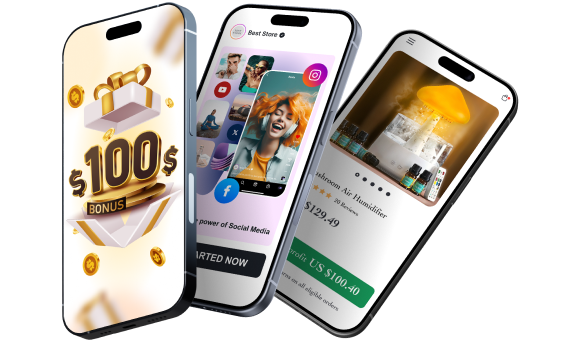
Starting a business takes momentum – and Sellvia gives you a head start. When you claim your free store today, you also get a $100 welcome gift to put toward growing your business. Use it to upgrade your store, boost your marketing, or unlock new tools. It is a real dollar value, handed to you on day one, with no catch and no hoops to jump through.
A massive catalog of digital products to sell 🏆
One of the biggest struggles in starting an online business is figuring out what to sell. Sellvia solves that completely. Your store comes pre-loaded with digital products – guides, courses, checklists, and tools – all created by Sellvia. You keep 50–70% of every sale. No inventory. No shipping. No logistics headaches.
Everything in one easy-to-use platform 🔥
Managing an online store shouldn’t be complicated. With Sellvia, you can handle orders, add new products, and even chat with customers – all from a simple and user-friendly platform. No need to mess with confusing tools or deal with unnecessary tech stuff. It’s all smooth sailing.
No upfront costs, just start selling 💰
A big reason people hesitate to start an online business is the cost. But here’s the good news: With Sellvia, you don’t need to invest in stock, storage, or shipping supplies. You can run your store with no upfront costs, keeping things low-risk while still making money.
Support that’s always got your back 🤝
Running a business comes with questions, but you’re never alone. Sellvia’s dedicated support team is available 24/7 to help with anything you need. Whether it’s a small question or a big challenge, they’ve got you covered.
Every marketing strategy in this guide works best when it sends traffic to a store that is already built, stocked, and ready to convert. Get your free Sellvia store today and start putting these product marketing strategies to work.