So you want to open an online store. You have probably seen the stories – people building real income from home, working on their own schedule, finally escaping the paycheck-to-paycheck cycle. Some of those stories are 100% real. But figuring out where to actually start? That is where most people get stuck and give up before they ever make a single dollar.
This guide is here to fix that. Whether you have never sold anything online before or you have tried and hit a wall, you will find a clear, honest, step-by-step breakdown of everything you need to open a working online store in 2026 – from picking your niche all the way to getting your first sale.
Quick Answer: To open an online store, you need to choose a niche, pick a platform, load it with products, set up payments, and drive traffic. With the right tools, the whole process can take just a few days – and you can start earning without any tech skills or upfront stock costs.
What does it mean to open an online store in 2026?
An online store is a website where customers can browse products, add them to a cart, and complete a purchase – all without ever visiting a physical location. Simple enough in theory. But the business model you choose behind that storefront shapes everything: your startup costs, your daily workload, and how quickly you can reach profitability.
For most people opening their first online store in 2026, the smartest starting point is selling digital products. Here is why: there is no inventory to buy, no warehouse to worry about, no packages to ship. When a customer places an order, the product is delivered to them instantly and digitally. You collect your profit – typically 50 to 70% per sale – and move on to the next one.
This is exactly how Sellvia works. Your store comes pre-loaded with digital products – guides, courses, checklists, and tools – all created by Sellvia and ready to sell from day one. You do not create the products. You do not manage stock. You focus on getting customers, and Sellvia handles the rest.
Why this works in 2026: Global ecommerce revenue is on track to surpass 6.8 trillion dollars by 2028. Mobile shopping, social media discovery, and instant digital delivery are all lowering the barrier for new sellers – making right now one of the best times in history to open an online store.
How much can you realistically earn from an online store?
Let us talk numbers honestly before we get into the steps. Income from an online store depends on your niche, how you drive traffic, and the effort you put in during the early months. There is no guaranteed number – but there are realistic ranges based on how most new store owners progress.
These ranges reflect stores with consistent marketing effort behind them. A store with no ad spend and no promotion strategy will sit at the low end. A store with a tested product offer and a modest daily ad budget can move through those stages significantly faster.
One note on ceiling figures: Stores reaching $10,000+ per month typically have 6 to 18 months of data behind them, a refined product offer, and either paid advertising experience or a solid content strategy. Getting there from zero takes real effort over a minimum of 60 to 90 days.
The good news is that with Sellvia, you are not starting from scratch. Your store is built for you, loaded with products, and comes with a built-in advertising system – so your job is simply to activate it and stay consistent.
Step-by-step: how to open an online store from scratch
Here is the exact sequence to follow. Each step builds on the last, so work through them in order. Getting the foundation right early saves a lot of rework and wasted money down the road.
Step 1 – Choose your niche
Your niche is the category your store focuses on. This is one of the most important decisions you will make because it affects your target audience, your marketing angle, and your long-term income potential. A good niche has real demand, manageable competition, and an audience you can reach affordably.
Some categories that consistently perform well for new store owners include personal finance, home organization, health and wellness, and self-improvement. These topics have large, motivated audiences who actively search for solutions – and digital products in these spaces sell extremely well because they deliver instant value.
A few ways to check whether your niche has legs before committing:
- Search Google Trends and check whether interest is stable or growing over the past 12 months
- Browse Reddit communities around your topic and see what questions people ask repeatedly
- Look at what digital products competitors are offering and whether customers are buying them
- Check Facebook Groups in your niche and note the pain points that come up most often
Important: Avoid niches with purely seasonal demand or heavily regulated product categories until you have some experience under your belt. Start focused, then expand.
Step 2 – Pick your ecommerce platform
Your ecommerce platform is the engine running your store. It handles product listings, the checkout process, payments, and order management. For most beginners, the platform decision is the part that feels most overwhelming – but it does not have to be.
Here is a quick breakdown of the most common options:
Sellvia
Sellvia is the simplest and most complete option for anyone opening their first online store with digital products. Your store is built for you – no setup, no coding, no tech headaches. It comes pre-loaded with digital products to sell and includes a built-in advertising system so you can start getting customers immediately. Most people who activate Sellvia ads start receiving orders on day one. If you want to open an online store without the stress of figuring out every piece yourself, Sellvia is designed exactly for that.
WooCommerce
WooCommerce is a free plugin for WordPress that gives you full control over your store. It has a learning curve, but it is highly flexible and gives you complete ownership of your site. Best for people comfortable with a DIY approach and willing to invest time in setup and customization.
Shopify
Shopify is a hosted platform with a clean interface and a large app marketplace. Monthly fees start at $39, and you will pay additional transaction fees unless you use Shopify Payments. It is beginner-friendly but can get expensive as you add third-party apps for features that other platforms handle natively.
Step 3 – Source your products
What you sell determines everything about your store – your marketing angle, your customer base, and your income potential. For new store owners selling digital products through Sellvia, this step is already handled. Your store arrives pre-loaded with guides, courses, checklists, and tools across your chosen niche. You do not write them, record them, or create them. Sellvia does all of that.
If you are building independently, here is what to look for when evaluating products:
- Strong demand – check search volume and community conversations around the topic
- Instant delivery value – digital products that solve a clear problem or teach a specific skill
- Room for a healthy profit margin – you need to be able to price the product competitively and still earn meaningfully per sale
- Evergreen appeal – products tied to timeless needs (money, health, relationships, productivity) outlast trend-driven items
Earning potential: 50 to 70% profit per sale on digital products through Sellvia, with no inventory costs and instant delivery on every order.
Step 4 – Set up your storefront
This is where your store starts to look and feel like a real business. Your storefront includes your domain name, design, homepage layout, and product pages. Every element plays a role in whether a visitor trusts your store enough to buy from it.
Domain name
Pick a name that is short, relevant to your niche, and easy to remember. Register through a provider like Namecheap or GoDaddy – expect to pay around 10 to 15 dollars per year for a .com. If you launch with Sellvia, your store domain setup is handled as part of the build process.
Design and layout
Use a clean, mobile-optimized design. Most visitors will see your store on a phone first – if it loads slowly or looks cluttered on mobile, you will lose them before they ever read your offer. Sellvia stores are built mobile-first from day one.
Product pages
Your product pages need to do one thing well: answer the question “why should I buy this?” Write in plain, clear language. Focus on the outcome the customer gets – not just the features of the product. Include a clear call to action and a simple, honest description of what they will receive.
Trust signals
New stores have a trust problem. Close the gap by including an About page with a real story behind your business, displaying security badges at checkout, and collecting reviews as early as possible. Even 5 to 10 genuine reviews can significantly improve your conversion rate.
Step 5 – Configure payments
A store that cannot take payments is just a website. Setting up your payment gateway is a critical step before you go live. PayPal and Stripe are the two most trusted options globally. PayPal is preferred by many buyers because of its buyer protection policy. Stripe gives you more control over the checkout experience. Offer both where possible.
With Sellvia, payment setup is part of the store build – you do not have to figure this out from scratch. The platform handles the technical side so you can focus on making sales rather than configuring settings.
Step 6 – Drive traffic to your store
Opening an online store is one thing. Getting people to visit it is an entirely different challenge – and it is where most new store owners underinvest their time and energy. There are two main traffic strategies: paid and organic. The most effective approach combines both.
Built-in advertising (Sellvia)
Sellvia includes a fully built-in advertising system – you do not set up Google Ads or Facebook Ads yourself. You choose a daily budget between $10 and $50, activate your ads, and the platform handles targeting, creatives, and optimization for you. Most customers who turn on the ad system start receiving orders the same day. Plus, you get a $40 ad coupon included free during your trial period.
Paid social ads
If you are building independently, Facebook and Instagram ads are the most popular starting point for new ecommerce stores. You can reach highly targeted audiences based on interests, demographics, and behaviors. Start small – $10 to $20 per day – and test multiple creatives before scaling anything. TikTok Ads is a lower-cost alternative with strong reach among younger audiences.
Organic SEO
Search engine optimization builds free, compounding traffic over time. Target long-tail search phrases relevant to your niche in your product descriptions and any blog content you publish. Results take 60 to 120 days to build, but a well-optimized store can generate consistent visitors without ongoing ad spend.
Social media and content
Create a TikTok or Instagram account around your niche and post product content regularly. Organic social is less predictable than paid ads, but a single viral post can send thousands of visitors to your store at zero cost. Problem-and-solution posts, before-and-after content, and behind-the-scenes videos tend to perform well across most niches.
Things to get right before you launch
Before you publish your store and start running any promotion, run through this checklist. Missing even one of these is a common reason new stores fail to turn their first visitors into buyers.
- Test the full checkout flow yourself – from browsing a product to completing a purchase
- Verify that your payment gateway is live and accepting real transactions
- Check that all product images load correctly on mobile devices
- Confirm your return policy and contact page are accessible from every page of your store
- Set up basic analytics before sending any traffic – you need data from day one
- Create a professional business email address – a free Gmail account signals low credibility
- Add an SSL certificate – most hosting providers include this free; it is essential for trust and search ranking
Pro Tip: Place a real test order through your store before you go live. This confirms your entire fulfillment process works correctly before a real customer experiences it.
Legal and practical considerations when opening an online store
Most first-time store owners focus entirely on products and promotion – and leave the legal and operational basics until something goes wrong. A small amount of preparation here saves significant headaches later.
Business registration
In most countries, you will need to register your business once you start generating income. In the US, an LLC gives you liability protection and is straightforward to set up through your state’s secretary of state website. Costs range from 50 to 500 dollars depending on the state. Consult a local accountant or legal advisor if you are unsure what structure fits your situation.
Tax obligations
Sales tax rules vary by country and state. In the US, online sellers may need to collect and remit sales tax in states where they exceed certain sales thresholds. Tools like TaxJar can automate this process once your store starts generating consistent sales. Start researching your obligations early – it is much easier to set this up correctly from the beginning than to fix it later.
Consumer protection compliance
Your store needs a clear privacy policy (required if you sell to EU customers under GDPR), a terms of service page, and an honest returns and refund policy. These are not just legal requirements – they are trust signals that directly affect your conversion rate. Customers are more likely to buy from stores that are upfront about how they operate.
Key principle: If your store would not hold up to scrutiny from a consumer protection body, fix it before you scale traffic. The short-term cost of compliance is far lower than the long-term cost of chargebacks, refunds, or account suspensions.
What to avoid
A few practices that seem tempting but cause serious problems down the road:
- Fake reviews – platforms and regulators are cracking down hard in 2026; authentic reviews are the only ones worth having
- Misleading product descriptions – overpromising what a digital product delivers destroys trust and triggers refund requests
- Using copyrighted images without permission – always source visuals legally or use your own
- Hiding fees or policies – transparent stores earn repeat customers; unclear ones generate disputes
How to choose your approach based on where you are right now
Not everyone opening an online store starts from the same place. Here is an honest breakdown of what makes sense based on your situation right now.
Complete beginner
If you have never run an online store before, your priority is reducing friction. The more decisions you have to make before your store is live, the more likely you are to get overwhelmed and quit before you ever make a sale. Sellvia is built exactly for this situation. You get a done-for-you store loaded with digital products and a built-in advertising system – so your first 60 days are focused on learning what works, not on building from scratch.
You have tried before but it did not work
If you have had an online store before that did not perform, the problem is almost always one of three things: wrong niche, weak product pages, or no consistent traffic strategy. Before you open a new store, be honest about which one held you back. Use your existing platform knowledge and put your energy into the area that failed before. This time, commit to a 90-day traffic experiment before drawing any conclusions about whether it is working.
Ready to go full-time
If your goal is to replace your current income with ecommerce revenue, treat your store like a business from day one. That means tracking your results consistently – how many visitors, how many sales, what your average sale value is – and reinvesting your profit into growing your ad spend. At this level, a platform like Sellvia works well as the operational foundation while you focus on audience-building and scaling what works.
Why Sellvia is a game-changer for your online store 🚀
Sellvia isn’t just another ecommerce tool. We are a trusted name in the industry, recognized by Forbes and even ranked in Inc.’s list of the 5,000 fastest-growing companies in the U.S. So if you’re serious about starting as a solopreneur, this is a smart place to begin.
Starting an online business can feel overwhelming, but that’s exactly where Sellvia steps in. It takes care of the tricky parts, so you can focus on making sales and growing your brand. Let’s break down what makes it such a great choice.
Get a ready-to-go store hassle-free 🎯
Want to start selling but don’t know where to begin? No worries! Just share your ideas, and Sellvia’s team will build a free ecommerce website that’s fully set up and ready to take orders from day one. No coding, no stress – just a store that works right out of the box.
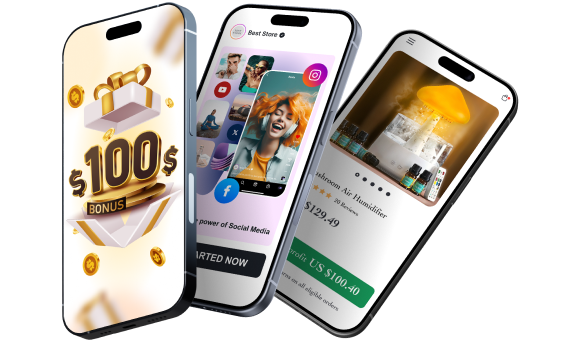
A $100 welcome gift to grow your business faster 🎁
Starting a business takes momentum – and Sellvia gives you a head start. When you claim your free store today, you also get a $100 welcome gift to put toward growing your business. Use it to upgrade your store, boost your marketing, or unlock new tools. It is a real dollar value, handed to you on day one, with no catch and no hoops to jump through.
A massive catalog of digital products to sell 🏆
One of the biggest struggles in starting an online business is figuring out what to sell. Sellvia solves that completely. Your store comes pre-loaded with digital products – guides, courses, checklists, and tools – all created by Sellvia. You keep 50–70% of every sale. No inventory. No shipping. No logistics headaches.
Everything in one easy-to-use platform 🔥
Managing an online store shouldn’t be complicated. With Sellvia, you can handle orders, add new products, and even chat with customers – all from a simple and user-friendly platform. No need to mess with confusing tools or deal with unnecessary tech stuff. It’s all smooth sailing.
No upfront costs, just start selling 💰
A big reason people hesitate to start an online business is the cost. But here’s the good news: With Sellvia, you don’t need to invest in stock, storage, or shipping supplies. You can run your store with no upfront costs, keeping things low-risk while still making money.
Support that’s always got your back 🤝
Running a business comes with questions, but you’re never alone. Sellvia’s dedicated support team is available 24/7 to help with anything you need. Whether it’s a small question or a big challenge, they’ve got you covered.
Opening an online store is the first step – Sellvia makes it the easiest one you will take. Get your free store today and start earning in 2026.