Indiana is home to nearly 7 million people, a median household income of $71,957, and a manufacturing and logistics backbone that has long defined the state’s economy. But for a growing number of Hoosiers, the next opportunity is not on the factory floor or in a warehouse – it is online. Whether you are in Indianapolis or a small town in rural Indiana, the question is the same: can you actually build a real income from home by starting an online business?
The short answer is yes – and it is more accessible than most people think. You do not need a business degree, a tech background, or a lot of money to get started. What you need is a clear plan, the right tools, and honest information about what starting a business in Indiana actually involves.
Quick Answer: You can start an online business in Indiana by choosing a low-cost model, registering your business (LLC formation costs $95 online through the Indiana Secretary of State), and using a platform that handles the heavy lifting for you. Digital product stores are one of the fastest-growing and lowest-barrier options for Indiana residents with no prior experience.
Why Indiana Is A Good Place To Start An Online Business
Indiana sits in the heart of the Midwest with a population of 6.97 million as of 2025, and the state has been growing steadily – up 2.8% since the 2020 census. That growth brings more households, more spending, and more people looking for ways to earn beyond their primary job.
The median household income in Indiana is $71,957, which is notably below the national median. That gap matters because it tells you something important about who is searching for online income opportunities in Indiana. These are working people – parents, caregivers, and people with full-time jobs – who need their money to go further. The appetite for supplemental and alternative income is real and growing.
On the connectivity side, approximately 91.2% of Indiana residents have access to wired or fixed wireless broadband at 25 Mbps or above, according to BroadbandNow. That means the overwhelming majority of Hoosiers have the infrastructure they need to run an online business from home – or from their phone. Indiana ranks 27th nationally in broadband coverage, with rural and smaller communities still facing some gaps, but the overall picture is solid.
Indiana’s ecommerce market follows national trends. Online retail currently accounts for roughly 20% of total retail sales globally, and Indiana’s $155.6 billion in total retail sales (2022 Census data) means there is significant room for online sellers of all sizes. Small businesses account for 83.8% of Indiana’s exporting firms – a sign that the state’s entrepreneurial base is active and outward-facing.
The state also has a supportive ecosystem for new business owners: the Indiana Small Business Development Center (SBDC), SCORE chapters, and the SBA Indiana district office all offer free or low-cost mentorship and guidance. Indiana’s business climate consistently ranks in the top 10 nationally for tax competitiveness, and the state does not impose an estate or inheritance tax.
Best Online Business Models For Indiana Residents
There is no single “right” online business – the best model depends on your time, skills, and goals. Here is an honest look at the most common options for Indiana residents, including what each one requires and what it realistically offers.
Digital product stores
Selling digital products – guides, courses, checklists, and tools – is one of the fastest-growing online business models. Delivery is instant and automatic, there is no physical inventory, and margins typically run 50–70% per sale. Platforms like Sellvia provide a fully built store pre-loaded with products, which removes the biggest barrier for most beginners: the setup. This model works well for Indiana residents who want a real business without building from scratch.
Why this works in 2026: Digital delivery means no shipping costs and no logistics – your store works whether you are in Indianapolis or a small town in Carroll County.
Earning potential: $30–$80/day with consistent effort over 60–90 days, depending on ad spend and niche.
Freelancing
If you have a skill – writing, graphic design, bookkeeping, video editing, web development – freelancing lets you sell it to clients online. Platforms like Upwork, Fiverr, and Toptal connect you with clients globally. The upside is that you can start earning quickly. The downside is that every dollar you earn requires your active time, which means there is a natural ceiling on how much you can scale.
Why this works in 2026: Indiana’s cost of living is lower than coastal markets, which means your rates are competitive while your expenses stay manageable.
Earning potential: $500–$3,000/month depending on skills and hours invested.
Content creation
YouTube channels, blogs, and newsletters can generate income through ads, sponsorships, and affiliate links. This model rewards patience – it typically takes 6–18 months before meaningful income kicks in. It works best for people who genuinely enjoy creating content and can commit to a consistent posting schedule. Indiana’s diverse regions – from the dunes of the north to the hills of Brown County – offer plenty of niche content angles.
Earning potential: $100–$2,000/month after 12–18 months of consistent effort.
Affiliate marketing
Affiliate marketing involves promoting other companies’ products and earning a commission on each sale. You do not need to create your own product – just content that drives traffic to affiliate links. Growth is slow at first, and income depends heavily on your ability to build an audience. It pairs well with content creation but rarely works well as a standalone starting point for beginners.
Earning potential: $200–$1,500/month after 6–12 months of consistent effort.
For Indiana residents who want to explore more options, the full range of online business ideas in Indiana covers additional models tailored to the Hoosier market. If you are specifically looking at product-based selling, you can also read more about how to start dropshipping in Indiana and how digital alternatives compare.
Online coaching and consulting
If you have professional experience – in fitness, finance, parenting, career development, or any other field – online coaching lets you turn that knowledge into income. You set your own hours and rates, and sessions can run entirely over video call. The main challenge is finding your first clients, which requires some upfront marketing effort.
Earning potential: $1,000–$5,000/month with an established client base.
Online tutoring
Indiana has a strong public school system and a large student population. Online tutoring for K–12 students, test prep, or college subjects is consistently in demand. Platforms like Tutor.com and Wyzant make it easy to get started, and you can run sessions from anywhere with a reliable internet connection.
Earning potential: $20–$60 per hour depending on subject and level.
Skip the slow start
You compared the models. One gives you a ready-to-earn store from day one.
Freelancing, content creation, and affiliate marketing all take months before you see real income. Sellvia gives Indiana residents a fully built store with products already loaded – so you start at the selling stage, not the setup stage.
How To Start An Online Business In Indiana – Step By Step
Once you have chosen your direction, the path to launching is more straightforward than most people expect. Here is what the process looks like in Indiana, from first steps to first sale.
Step 1: Choose your business model
Start with what fits your situation. If you have limited time and no specific skills to sell, a digital product store is the lowest-barrier option. If you have a marketable skill, freelancing or coaching may get you to income faster. If you are thinking long-term and have patience, content creation or affiliate marketing build real assets over time. Be honest with yourself about what you can actually commit to – the best model is the one you will stick with.
Step 2: Register your business in Indiana
You are not legally required to form an LLC before you start earning online – many Hoosiers operate as sole proprietors initially. But an LLC gives you personal liability protection and looks more professional to customers and payment processors. Indiana LLC formation costs $95 online through the INBiz portal (the Indiana Secretary of State’s online filing system) or $100 by mail. Processing typically takes 2–3 business days online. After formation, you will need to file a Business Entity Report every two years, which costs $32 online.
You can register your Indiana LLC or business entity at the Indiana Secretary of State Business Services website.
If you operate as a sole proprietor under your own name, you do not need to file any registration documents in Indiana. If you want to use a business name (a DBA), you will need to file a Certificate of Assumed Business Name with the Secretary of State, which costs $20.
Important note: Indiana does not require a general statewide business license, but your specific industry or local municipality may require one – check with your city or county clerk.
Step 3: Handle Indiana taxes from the start
Indiana has a flat state income tax rate of 2.95% for 2026. All 92 Indiana counties also levy their own local income tax on top of the state rate, ranging from approximately 0.5% to 2.9% depending on where you live. Your total effective rate will depend on your county of residence. If your online business earns more than a few hundred dollars per month, you should set aside money for estimated quarterly taxes to avoid a penalty at year end.
Indiana’s statewide sales tax rate is 7%, with no additional local sales taxes. The state has a marketplace facilitator law, which means that if you sell through a platform like Sellvia that handles transactions on your behalf, the platform is responsible for collecting and remitting Indiana sales tax – you do not need to handle it separately. If you sell directly through your own website and earn more than $100,000 in gross sales to Indiana customers per year, you will need to register with the Indiana Department of Revenue.
For full tax guidance, visit the Indiana Department of Revenue.
Step 4: Set up your online presence
If you use a platform like Sellvia, your store is already built and professionally designed when you start your free trial – you do not need to hire a developer or learn any code. If you are freelancing or coaching, you may need a simple website or a profile on a marketplace platform. Tools like Canva (free) can handle your graphics, and Google Analytics (free) lets you track your traffic from day one. Keep setup costs as low as possible while you validate your approach.
Step 5: Start marketing and making sales
The most common reason new online businesses do not grow is not the product – it is the lack of consistent promotion. Social media (Facebook, Instagram, TikTok) is free to start and works well for reaching Indiana audiences. Paid ads can accelerate results significantly when your store is ready. Sellvia’s built-in advertising system lets you launch a campaign with a $10–$50 daily budget in one click – no marketing experience required. Many customers who activate ads see their first orders on the same day.
The math is simple
Indiana wages have a ceiling. A Sellvia store does not.
Your store comes with 1,000 digital products, instant delivery, and a built-in ad system – so you keep 50–70% of every sale without any of the logistics.
Tax And Legal Basics For Indiana Online Businesses
Taxes are the part most new online business owners avoid thinking about – until they have to. Here is what you need to know to stay on the right side of Indiana law from day one.
Indiana state income tax
Indiana has a flat state income tax rate of 2.95% for 2026, continuing a planned reduction that will reach 2.90% in 2027. On top of the state rate, all 92 Indiana counties levy their own local income tax, which ranges from approximately 0.5% to 2.9%. Your combined effective rate depends on your county. Unlike many states, Indiana does not have tax brackets – the same percentage applies regardless of how much you earn.
If you are self-employed or running an online business as a sole proprietor or LLC, you are responsible for paying your own income taxes. The IRS requires quarterly estimated tax payments if you expect to owe more than $1,000 for the year. Indiana requires the same – file estimated payments using Form IT-40ES to avoid underpayment penalties.
Indiana sales tax
Indiana’s statewide sales tax rate is 7%, one of the higher rates nationally – but the state adds no local sales taxes, which simplifies compliance compared to states like Illinois or Ohio. If you sell physical goods directly from your own website to Indiana customers and exceed $100,000 in gross annual sales, you are required to register with the Indiana Department of Revenue and collect sales tax.
Indiana has a marketplace facilitator law. If you sell through a qualifying platform that collects and remits tax on your behalf, those sales do not count toward your $100,000 nexus threshold. Platforms that manage transactions for sellers – including digital product stores – handle this compliance layer for you.
Key principle: Indiana does not impose sales tax on most services or on remotely accessed software – but certain digital products with permanent-use rights may be taxable. Check with a local tax professional if your product type is unclear.
LLC vs. sole proprietorship in Indiana
A sole proprietorship requires no paperwork and no filing fees – you simply start doing business. However, there is no legal separation between you and your business, meaning personal assets could be at risk if something goes wrong. An Indiana LLC costs $95 to form online and gives you that legal separation. For most online businesses earning real income, forming an LLC is a smart and affordable step.
You can start your business registration at the Indiana Secretary of State Business Services portal. Processing is typically completed within 2–3 business days for online filings.
See your state tax breakdown at a glance
Simply enter your annual net profit, select your state, and the calculator will instantly generate a detailed tax breakdown while showing how your state’s tax burden compares to others.
Resources For Indiana Entrepreneurs
You do not have to figure this out alone. Indiana has a strong network of free and low-cost support resources for new business owners.
SBA Indiana district office
The U.S. Small Business Administration’s Indiana District Office is based in Indianapolis and offers access to SBA loan programs, contracting certifications, and referrals to local resource partners. Visit the SBA Indiana District Office for current programs and contact information.
Indiana Small Business Development Center (SBDC)
The Indiana SBDC operates through the Indiana Economic Development Corporation and offers free one-on-one consulting, training workshops, and access to the Indiana Technical Assistance Program (INTAP), which provides up to $15,000 in professional services for eligible small businesses. The SBDC has regional offices across the state. Find your local center at the Indiana SBDC website.
SCORE Indiana
SCORE provides free mentoring from experienced business owners and executives. Indiana has multiple SCORE chapters, including Indianapolis and Fort Wayne. Sessions are available in person or by video. Find a mentor at SCORE.org.
Indiana Department of Revenue
For business tax registration, sales tax compliance, and income tax guidance, the Indiana Department of Revenue is your primary resource. The INBiz portal allows you to register for sales tax, file returns, and manage your business accounts online.
Common Challenges For Indiana Online Business Owners
Starting an online business in Indiana is realistic – but it is not without obstacles. Here are the three challenges most likely to slow you down, and what to do about each one.
Rural broadband gaps
Approximately 9% of Indiana residents do not have access to adequate broadband, and rural areas are disproportionately affected. If you are in one of those areas, a high-quality cellular data plan or a mobile hotspot can serve as a workable alternative while state and federal broadband expansion programs catch up. Indiana is receiving BEAD program funding to address rural connectivity gaps in coming years.
Getting your first customer
The hardest part of any online business is not the setup – it is getting your first paying customer. Most beginners give up before they ever figure out what works. The key is starting with a platform that includes marketing tools rather than building everything from scratch. Sellvia’s one-click advertising system is specifically designed for people who have never run ads before. A $10–$20 daily budget is enough to test what resonates with your audience and refine from there.
Staying consistent in the early months
Online businesses rarely produce significant income in week one or week two. Most people who succeed do so because they treated the first 60–90 days as a learning phase rather than a test they could fail. Set small, measurable goals – your first sale, your first 10 sales, your first $500 month – and build from there. Connecting with Indiana SBDC or SCORE for accountability and guidance can make a real difference during this phase.
Final Thoughts – Which Path Is Right For You?
The right online business model depends on where you are starting from and what you are trying to build.
If you are a complete beginner with limited time and no existing skills to sell online, a digital product store – like the one Sellvia provides – is the most practical starting point. You get a fully built store, products ready to sell, and a marketing system in one package. The 14-day free trial means you can test it before spending a dollar.
If you are working part-time toward a supplemental income, freelancing or online tutoring can generate income within weeks if you have the right skills. Pair it with a longer-term build – like a content channel or affiliate site – and you have multiple income streams working simultaneously.
If you are ready to build something full-time, treat your online business like a real business from day one. Register your LLC, track your income and expenses, file quarterly taxes, and use Indiana’s free resources to stay on track. The tools and support are there – you just have to use them.
If you are not sure where to start financially, the full guide to how to start an online business in Indiana for free breaks down which costs are genuinely avoidable and which are not – and gives you a realistic 90-day timeline for what to expect.
Indiana is not a state known for shortcuts. But for people who are willing to put in consistent effort, the online economy is one of the few places where your zip code does not determine your ceiling.
Why Sellvia Is The Smartest Way To Start An Online Business In Indiana
Sellvia is a fully managed ecommerce platform that handles everything: store setup, product catalog, instant delivery, and advertising – so you focus entirely on growing your income. Here is what it includes.
Free turnkey store — built, designed, and ready to earn
Your store arrives professionally designed, pre-loaded with digital products, and fully optimized to convert. No setup fees, no coding, no design time. You start at the sales stage — not the store-building stage. Hosting, SSL, and payment gateway are all included.
$100 welcome gift — a real head start on day one
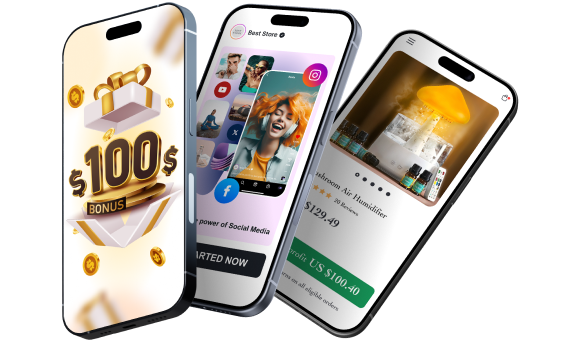
When you claim your free store, you also get a $100 welcome gift to put toward growing your business. Use it to upgrade your store, boost your marketing, or unlock new tools. It is a real dollar value, handed to you on day one, with no catch.
Instant delivery — no warehouse, no shipping
Every product in your store is digital. When a customer buys, delivery is instant and automatic. No warehouse, no packing, no logistics. You keep 50–70% of every sale with zero fulfillment overhead.
Built-in advertising — one click to launch your first campaign
One-click ads let you launch campaigns with a $10–$50 daily budget — no marketing expertise required. Most customers who activate ads receive orders the same day. No agency, no guesswork, no prior experience needed.
Beginner-friendly — no coding, no learning curve
An intuitive dashboard walks you through every step. Adding products, running campaigns, and growing your store require no technical knowledge. As your business grows, the platform scales with you — adding features without adding complexity.
Everything in one place — store, products, and ads
Sellvia combines your storefront, product catalog, and advertising system in a single platform. No third-party tools, no subscriptions to stack, no integrations to manage. Everything you need to earn online is already there when you log in.
No inventory · No shipping · Built for you
Your Indiana online business starts today – no tech skills needed
Sellvia builds your store, loads it with products, and gives you the tools to make your first sale – all with a 14-day free trial and a $100 welcome gift included.
Store setup usually costs $299+
Free
Get My Free Store + $100 welcome gift
14-day free trial · $39/month after · Cancel anytime · $40 ad coupon included
✓ Store built for you · ✓ No inventory · ✓ Instant digital delivery