So you want to start an online store — but every guide you find either drowns you in technical jargon or skips straight to “just build it and they will come.” The truth sits somewhere in the middle. Starting an online store in 2026 is more accessible than ever, but it still takes the right approach, the right tools, and a realistic picture of what to expect before you see your first sale.
Quick answer: Learning how to start an online store takes anywhere from a few hours to a few days depending on your chosen platform and business model. With the right setup — a niche, a reliable product catalog, and a storefront — you can be live and ready to sell within a week, even with zero prior experience.
This guide walks you through every stage of the process: choosing your model, picking a platform, setting up your store, sourcing products, and getting your first traffic. Whether you are building a side income or planning a full-time online business, the steps below apply directly to where you are starting from.
What is an online store and why start one in 2026?
An online store is a website where you list products and accept payments from customers anywhere in the world. Unlike a brick-and-mortar shop, it operates around the clock, requires no physical location, and can be run entirely from a laptop or even a smartphone. In 2026, global ecommerce revenue is projected to surpass $6.8 trillion, and a significant share of that growth is coming from independent sellers rather than large retailers.
The appeal is straightforward. Low startup costs, flexible hours, and the ability to sell to a global audience make online business one of the most practical income models available today. Whether you want to sell digital guides, online courses, or other digital content, there is a viable path forward — and the barrier to entry has never been lower.
The key shift in 2026 is that automation has replaced most of the manual work that used to slow new sellers down. Order processing, product delivery, and even basic marketing can run on autopilot while you focus on growth. That makes opening an online store a realistic goal for anyone, not just developers or marketing professionals.
How much can you realistically earn from an online store?
This is the first question most people ask — and the honest answer depends on your model, your effort, and how long you stick with it. Here is a realistic breakdown across the most common approaches:
These figures represent active, consistent sellers — not day-one results. Most new store owners see their first meaningful revenue within 60–90 days, and full-time income typically requires 6–12 months of sustained effort, product testing, and traffic building.
One note on the upper figures: The $10,000+ range is real but not the norm for beginners. Most new sellers earn $30–$80 per day within their first 3–6 months if they stay consistent and focus on one model rather than jumping between approaches. Start modest, validate your niche, and scale from there.
The most accessible starting point for most people — especially those with no prior business experience — is a digital products store. It removes the upfront product creation burden entirely, letting you focus on store setup and marketing from day one. Platforms like Sellvia solve this completely by providing you with a ready catalog of digital products to sell from launch.
How to start an online store: step-by-step
The process of starting an online store breaks down into six core stages. Each one builds on the last, and skipping any of them tends to create problems down the line. Here is how to move through them efficiently.
Step 1 — Choose your business model
Before you touch a platform or register a domain, decide how your store will actually operate. Your business model determines your startup costs, your profit potential, your product relationships, and how much time you spend running the day-to-day.
Digital products store
Selling digital products — guides, courses, checklists, and online tools — is one of the lowest-barrier models available in 2026. There is no inventory to manage, no packaging to organize, and no delivery delays. When a customer buys, the product is delivered instantly. Profit margins are high, typically 50–70% per sale, because there are no manufacturing or fulfillment costs eating into your revenue. The challenge is that digital product stores require strong marketing to drive discovery — but platforms like Sellvia solve this by including a built-in advertising system.
Earning potential: $500–$5,000/month with consistent marketing effort and the right product catalog.
Print-on-demand
Print-on-demand (POD) works by selling customized products — t-shirts, mugs, phone cases, wall art — where a supplier prints and fulfills on demand after each sale. You create the designs; they handle the rest. POD is a solid option if you have design skills or a specific audience in mind. Margins are thinner than digital products, but the creative control and low overhead make it a viable starting point for creative sellers.
Earning potential: $200–$2,000/month depending on design volume and niche specificity.
Handmade or private label products
If you create your own products or want to source and brand items from a manufacturer, private label gives you the highest margins and strongest brand differentiation. The downside is the upfront investment — both in capital and in time. This model suits sellers who already have a product concept and are ready to commit $500–$2,000 or more to get started.
Earning potential: $1,000–$10,000+/month for established brands with repeat customers.
Curated niche store
A curated niche store focuses on a specific audience and product category rather than selling everything to everyone. Think ergonomic home office gear for remote workers, or wellness tools for busy parents. The clarity of a niche makes ads more efficient, SEO easier to target, and your brand easier to remember. The trade-off is that you need to spend time validating the niche before committing fully.
Earning potential: $500–$4,000/month with a focused content and ads strategy.
Step 2 — Pick your niche
Your niche is the specific segment of the market you serve. A broad store selling “everything” will struggle to rank in search, build a loyal audience, or run targeted ads efficiently. A niche store — say, productivity tools for freelancers, or personal finance guides for new graduates — has a clear audience, a clear message, and a much easier path to becoming a trusted name in that space.
How to validate a niche before you commit
Use Google Trends to check whether interest in your niche is stable or growing. Browse Reddit communities like r/entrepreneur and r/personalfinance to see what problems real buyers talk about. Check bestseller lists on digital marketplaces for demand signals. If you can find a niche where there is consistent search volume, a clear buyer persona, and products with strong margin potential, you have a viable starting point.
Important note: Passion for a niche helps, but demand matters more. A niche you personally love but nobody is actively buying from will stall your store before it starts.
Step 3 — Choose your platform
The platform you build on determines your design flexibility, payment options, app ecosystem, and ongoing costs. Here are the main options most new sellers consider when figuring out how to set up an online store.
WooCommerce
WooCommerce is a free, open-source plugin for WordPress. It gives you complete ownership of your store and data, no transaction fees, and extensive customization through plugins. The learning curve is steeper than hosted platforms, and you will need to manage your own hosting, security, and updates. Best suited for sellers who want full control and do not mind a little technical setup.
Shopify
Shopify is the most popular hosted ecommerce platform globally, with plans starting at $39/month. It handles hosting, security, and updates automatically, and has a large app marketplace. The trade-off is a transaction fee on third-party payment gateways and less flexibility compared to WooCommerce. Best for sellers who want a polished, fast setup without server management.
Wix and Squarespace
Both platforms offer drag-and-drop store builders with ecommerce features built in. They are easier to use than Shopify or WooCommerce for complete beginners, but their product management tools and third-party integrations are more limited. Suitable for small catalogs and sellers who prioritize design over scalability.
Sellvia (done-for-you online store)
Sellvia provides a done-for-you store with a ready product catalog already loaded, design already optimized, and a built-in advertising system that can start driving orders from your first day. For sellers who want to skip the technical setup entirely and go straight to earning, this is the most direct path. Your store comes pre-loaded with digital products — guides, courses, checklists, and tools — and you keep 50–70% of every sale. No coding. No complicated setup. Just a store that is ready to go.
Step 4 — Set up your store
Once you have chosen your platform, the setup process follows a predictable pattern regardless of which tool you use. Here is what how to open an online store actually looks like in practice.
Domain and hosting
Register a domain name that is short, memorable, and relevant to your niche. Avoid hyphens and numbers. For hosted platforms like Shopify or Sellvia, hosting is included. For WooCommerce, you will need a separate hosting plan — budget $5–$15/month for a quality shared hosting provider like SiteGround or Hostinger for your first year.
Store design and branding
Choose a theme that matches your niche. Prioritize fast load times, mobile responsiveness, and clean navigation over visual complexity. Set up your logo, color palette, and typography early — consistency here builds trust with first-time visitors. Most platforms offer free themes that are more than adequate for a new store.
Essential pages
Every online store needs the same core pages before launch: Home, Shop, About, Contact, Privacy policy, and Return policy. Skipping legal pages is a common beginner mistake that hurts customer trust and can create compliance issues in certain markets. Most platforms provide policy templates — use them and customize where needed.
Payment setup
Connect at least two payment methods — typically PayPal and a credit or debit card processor like Stripe or the platform’s native option. Offering multiple checkout options reduces cart abandonment, especially for international buyers who may not have a PayPal account.
Step 5 — Source and list your products
Product selection is where many new store owners lose momentum. The goal is not to list as many products as possible — it is to list the right products for your niche with accurate descriptions, appealing visuals, and competitive pricing.
Finding the right products
For a digital products store, the sourcing problem is already solved if you are using a platform like Sellvia — your store comes pre-loaded with ready-to-sell digital products created by the Sellvia team. For other models, tools like Etsy and Creative Market are solid sources for digital content, while Faire and Alibaba work well for handmade and private label products.
Writing product descriptions that convert
Do not copy supplier descriptions verbatim. Rewrite every listing in your own voice, focusing on the benefit to the buyer rather than the technical specs. Answer the question: “Why does this product make my life better or easier?” For digital products, be specific about what the buyer will learn or be able to do after purchasing.
Pricing your products
For digital products, pricing depends heavily on the perceived value of the content — a practical 20-page guide on saving money can sell at $15–$40 depending on how it is packaged and positioned. Factor in your platform fees and ad spend before setting your final price. A margin calculator before you list each product saves a lot of frustration later.
Step 6 — Drive traffic to your store
A perfectly built store with zero visitors earns nothing. Traffic is the single most important variable in your store’s early growth, and there are two main routes: paid and organic.
Paid traffic
Facebook and Instagram ads remain the fastest way to get eyes on a new store. A starting budget of $10–$20/day is enough to test products and audiences. TikTok ads are increasingly effective for younger demographics and lower costs per impression. The goal in the first 30 days is not profit — it is data. You are learning which products resonate, which audiences engage, and what your average cost per sale looks like.
With Sellvia, the ad setup is handled for you. The built-in advertising system manages targeting, creatives, and optimization — so you do not need to learn Facebook Ads Manager or hire a marketing agency. Most Sellvia store owners who activate ads start receiving orders the same day.
Organic traffic (SEO)
Search engine optimization takes longer — typically 3–6 months to see meaningful results — but the traffic it generates costs nothing per click. Focus on your product page titles and descriptions, a blog covering niche-relevant topics, and basic technical SEO like fast load times, mobile-friendly design, and clean URL structure. Long-tail keywords convert better than broad terms because they match what a buyer is already looking for.
Social media and content marketing
Build presence on one or two platforms where your target audience spends time. For broader audiences, a YouTube channel or TikTok account covering niche topics can generate thousands of visits per month without paid spend. Consistency matters more than volume: two high-quality posts per week outperform daily mediocre content. Even a simple weekly tip relevant to your niche builds a following over time.
What to avoid when opening an online store
Most early failures in ecommerce come from the same handful of mistakes. Knowing them upfront saves months of wasted effort.
Picking too broad a niche
A general store can work — but only after you have validated a niche within it. Starting with “everything” means your ads lack targeting, your SEO lacks focus, and your brand has no identity. Pick one clear audience and one product category to start. You can expand once you have proof of demand.
Skipping the legal foundations
Missing a return policy, an unclear privacy statement, or no contact information on your store will cost you sales. Buyers — especially in the US — check these pages before purchasing. A store without them looks untrustworthy, regardless of how good the products are.
Relying on a single traffic source
Stores that depend entirely on paid ads are one algorithm change away from losing all their revenue. Stores that depend entirely on SEO are vulnerable to search engine updates. Build at least two traffic sources from the beginning — even if one is small — so you are never fully exposed to a single platform’s rules.
Using grey-area tactics
Fake reviews, inflated pricing that does not reflect a real discount, and misleading product claims all create short-term conversions and long-term problems — chargebacks, platform bans, and damaged reputation. Build your store on genuine product quality and honest marketing. It is slower at the start, but the customer trust and brand equity you build are worth it.
Key principle: Sustainable online business is built on trust — with your customers, your payment processors, and your ad platforms.
How to choose your approach based on where you are starting from
Not every starting point is the same. Here is how to match your situation to the right first move when figuring out how to open an online store that fits your actual life.
Complete beginner (no business experience)
Start with a done-for-you store like Sellvia. Your priority is learning — how products perform, how customers behave, how ads work — not building infrastructure. A ready-built store removes the technical setup so you can focus on the part that actually teaches you: running the business. The 14-day free trial gives you full platform access, a $40 ad coupon, and a store stocked with digital products — all before you spend a dollar.
Intermediate seller (some experience, looking to scale)
If you have run ads before, sold on a marketplace like eBay or Amazon, or have experience with websites, your priority is building a store you fully own and control. Focus on one winning product category, build your SEO content strategy from the start, and use a platform that gives you data on what is converting. Sellvia’s built-in ad system gives you a head start on the marketing side while you build out your long-term SEO foundation.
Advanced / full-time goal
If your goal is a full-time income within 12 months, you need to treat this as a real business from day one. That means a defined niche, a content and SEO plan, a paid traffic strategy with a testing budget, and a system for managing orders and customer communication. The stores that reach $3,000–$5,000/month consistently are the ones that did the foundational work early — niche research, legal setup, product validation — before scaling spend.
Whichever profile fits you, the online business opportunity in 2026 is real and growing. The platforms are more capable, the automation tools more powerful, and the global buyer base larger than at any point before. The question is not whether starting an online store is viable — it is whether you are ready to take the first step.
Why starting an online store is easier with the right platform
Every step in this guide — choosing a model, picking a niche, setting up your store, finding products, driving traffic — takes time when you are doing it alone. The right platform collapses that timeline dramatically by handling the hard parts for you. That is the real argument for choosing a done-for-you solution over a self-built store when you are starting out.
Sellvia does exactly that. It is not just a website builder — it is a complete online business in a box. Your store is built for you, your products are pre-loaded, your ad system is built in, and your support team is available 24/7. The 14-day free trial gives you everything you need to find out if this is the right fit before you commit to anything.
Why Sellvia is a game-changer for your online store 🚀
Sellvia isn’t just another ecommerce tool. We are a trusted name in the industry, recognized by Forbes and even ranked in Inc.’s list of the 5,000 fastest-growing companies in the U.S. So if you’re serious about starting as a solopreneur, this is a smart place to begin.
Starting an online business can feel overwhelming, but that’s exactly where Sellvia steps in. It takes care of the tricky parts, so you can focus on making sales and growing your brand. Let’s break down what makes it such a great choice.
Get a ready-to-go store hassle-free 🎯
Want to start selling but don’t know where to begin? No worries! Just share your ideas, and Sellvia’s team will build a free ecommerce website that’s fully set up and ready to take orders from day one. No coding, no stress – just a store that works right out of the box.
A $100 welcome gift to grow your business faster 🎁
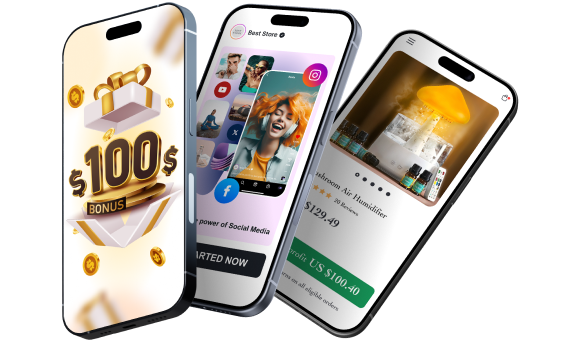
Starting a business takes momentum – and Sellvia gives you a head start. When you claim your free store today, you also get a $100 welcome gift to put toward growing your business. Use it to upgrade your store, boost your marketing, or unlock new tools. It is a real dollar value, handed to you on day one, with no catch and no hoops to jump through.
A massive catalog of digital products to sell 🏆
One of the biggest struggles in starting an online business is figuring out what to sell. Sellvia solves that completely. Your store comes pre-loaded with digital products – guides, courses, checklists, and tools – all created by Sellvia. You keep 50–70% of every sale. No inventory. No shipping. No logistics headaches.
Everything in one easy-to-use platform 🔥
Managing an online store shouldn’t be complicated. With Sellvia, you can handle orders, add new products, and even chat with customers – all from a simple and user-friendly platform. No need to mess with confusing tools or deal with unnecessary tech stuff. It’s all smooth sailing.
No upfront costs, just start selling 💰
A big reason people hesitate to start an online business is the cost. But here’s the good news: With Sellvia, you don’t need to invest in stock, storage, or shipping supplies. You can run your store with no upfront costs, keeping things low-risk while still making money.
Support that’s always got your back 🤝
Running a business comes with questions, but you’re never alone. Sellvia’s dedicated support team is available 24/7 to help with anything you need. Whether it’s a small question or a big challenge, they’ve got you covered.
If you are serious about starting an online store in 2026, Sellvia gives you everything you need — the store, the products, and the ads — all in one place. Claim your free store today and start building the online business you have been planning.