Camila’s friend showed up with a new phone; Mari said “not right now”; her nine-year-old shrugged and said “We never can.” It was that flat little surrender, not the phone, that pushed Mari to hunt down money lessons for kids – something to change what her daughter had quietly decided about money.
Mari is 34, an aide at a Title-I school in Phoenix, bringing up Camila on $32,400 a year. By the 28th checking held $214, and the card balance had not shifted in two years. She had let her daughter down in no way at all – she simply lacked a plan, and the words, for the questions Camila kept throwing at her.
Nothing here hinged on more money. A quick setup grew into a weekly routine – three small jars, one unhurried money chat, and the exact lines for the questions that used to leave Mari stuck. This is the order she followed.
Why “we cannot afford it” quietly teaches the wrong thing
“We cannot afford it” shuts the door, and it also plants an idea: that money is a wall rather than a tool. The child hears “we are trapped,” not “this is how choices work.” Mari’s love and effort were never in doubt – what was missing was language to turn a stinging moment into a usable lesson.
Here is the encouraging truth: a small income does not block this lesson – it may be the ideal setting for it. A few dollars, three jars and the right words turn “we never can” into “here is how we decide.” That is precisely what a guided plan puts in a stretched parent’s hands.
Mari was not raising a spoiled kid, and she was doing nothing wrong. She simply had no framework – no jars, no script – to convert a painful “we never can” into something Camila could actually use.
Like plenty of parents making a tight budget stretch, Mari was not after a money lecture. She wanted the right words for the questions that caught her off guard – and a way to make the answer land as real.
What Mari tried first – and why none of it stuck
Before the plan that worked, she cycled through the familiar attempts:
Falling back on “we cannot afford it”
Accurate, but it slammed a door. Camila registered a family limit, not a lesson she could act on – and it slowly taught her helplessness.
Laying out the entire budget
Piling rent, the car and the card onto a nine-year-old only left Camila worried. A child needs one clear idea, not the full adult burden of it.
Counting on the school to handle it
Schools rarely do. Money starts at home – and with no plan, “they will get to it eventually” meant nobody ever did.
Every attempt either slammed the door or piled on too much. None managed the one thing that actually teaches a child: a single small idea each week, made tangible with jars, and a steady line ready for the questions that sting.
I did not need more money to teach her about money. I needed the right sentence for “we never can” – and three jars to show her that we could choose.
The 4 things the Course built for Mari and Camila
She worked through a few quick questions – Camila’s age, the “we never can” moment, and the time on hand. Minutes later, four things, made for a busy single parent:
It did not hand me a budget to explain. It gave me one sentence for the question I dreaded, and three jars – and Camila stopped hearing “no” and started hearing “choose.”
The first week was deliberately tiny: label the jars, divide a couple of dollars. No lecture on the budget. Camila set the amounts herself, and for once money felt like something she could steer rather than something that simply happened to them.
From “we never can” to paying for her own field trip: 11 weeks
Fifteen minutes was all a week took – one idea, the jars, a single question. Small week after small week, the way Camila talked about money shifted entirely.
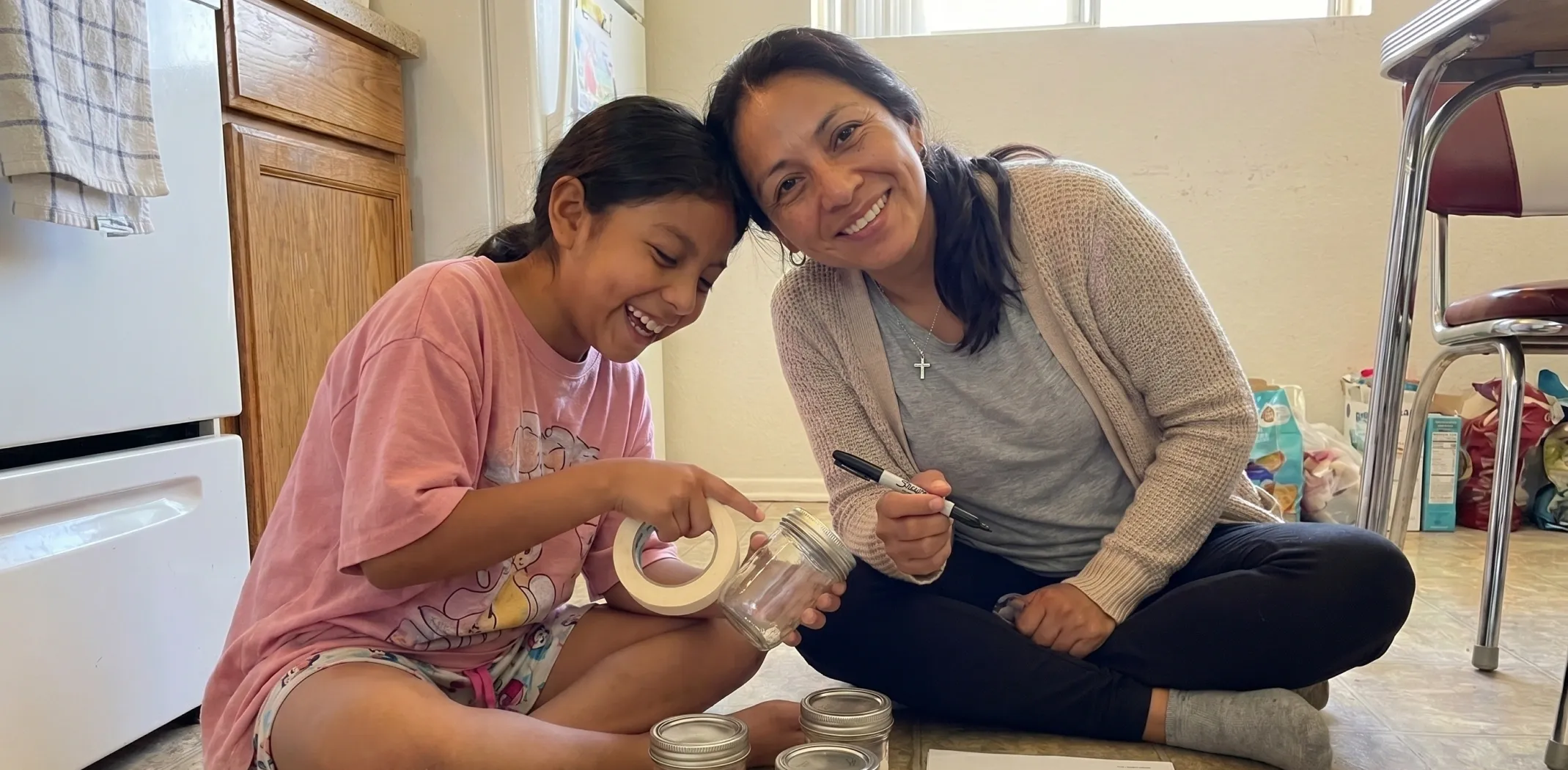
🫙 SAVE ★ the jar that rewrote the story
A target she chose on her own – the school field trip – filled by eleven weeks of coins that quietly proved “we never can” wrong.
💵 SPEND
Money that was hers to spend – small and in plain sight, so “I want it now” became something to weigh rather than a fight to have.
🎁 SHARE
A small share kept for someone else – the jar that proved even a stretched budget has room for giving.
By the eleventh week, the moment arrived: Camila handed Mari $24 in coins and offered to pay for her own school field trip. Not because money had suddenly turned easy – but because she finally believed she had a say in it.
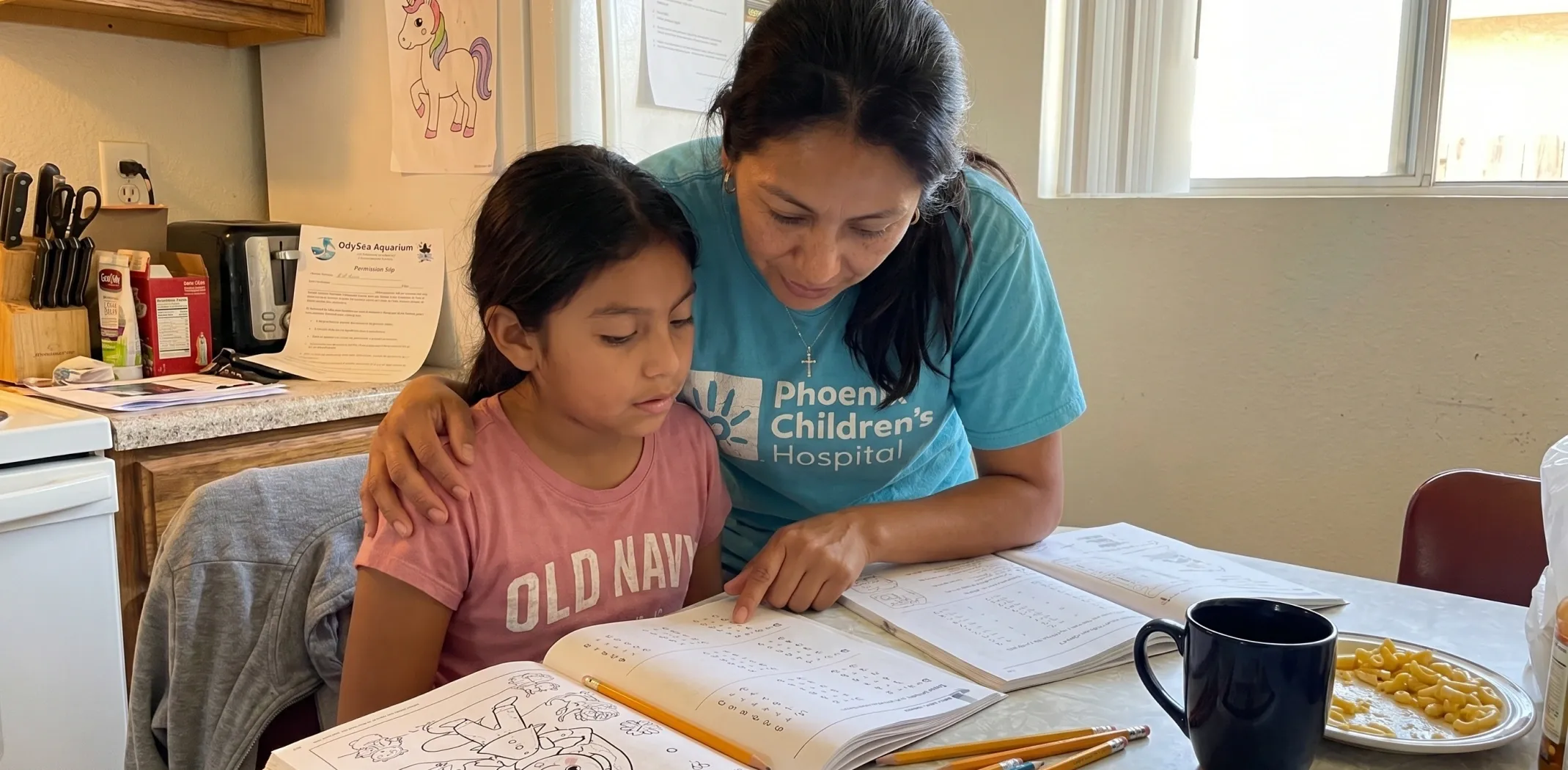
The coins were never the real story. It was Camila crossing from “we never can” to “I saved for this on my own.” That is what the weeks genuinely gave her – not a full jar, but a nine-year-old convinced she has a say.
Why “kids on a budget cannot learn about money” is a myth
People assume these lessons are for households with money to spare. The truth runs the other way – a lean budget is where trade-offs are most real, so the lessons land quickest. A kid with a few coins and three jars faces choices a comfortable child rarely does. Framed with the right words, scarcity is no handicap at all; it is the best money classroom going.
A kids money app
$5–10/mo · another screen · no script for the questions that actually come up.
A kids money book
$12–20 · you improvise · generic advice, not matched to your child.
Winging the hard answers
Free · you freeze · no words ready in the moment that matters.
Kids Financial Literacy Course
$19 · 15 min/week · a plan, the jars and the scripts, tuned to your child.
An app or a book can help, yet neither gives a stretched parent a weekly plan, the jars, and the exact sentence for the question that stings – matched to the child right in front of them. Closing that gap is the whole point.
We are on a really tight budget – is this even for us?
Especially for you. The lessons run on a few coins, not a big allowance, and a lean budget makes the choices more real, not less. Mari taught Camila on $32,400 a year – the jars and scripts need no money to spare, just a few minutes each week.
What other parents did with the same plan
Mari’s story is a common one: caring parents, big questions from little kids, no ready words – until the plan handed them a routine and a script.

“My twins are 7 and fight about money. The plan came back with two versions, because they have different personalities. I cried. Twin one stopped asking for stuff in the Target checkout line by week five.”
Jessica P. · mom of twins

“My son asked why our family does not have what his cousin’s has. I always froze on that one. The script gave me the actual sentence. It worked the very first time I used it.”
Monica R. · single mom of one, El Paso TX
Beyond the weekly plan, Kids Financial Literacy Course bundles printable jar labels, a bank of scripts for the tough questions, and age bands so the same plan grows with your child – from first coins to a first debit card.
Different children, different questions, one shared opening move: quit defaulting to “we cannot afford it,” pick a weekly time, and turn money into a choice the child can actually see.
Money lessons for kids: the 5-step playbook
If the hard questions keep catching you flat, here is the order that changes it – the very one the Course walks you through:
Replace the wall with a choice
The move that matters most: reframe money as decisions you make, not a barrier you hit. It changes what a child believes can happen.
Put it into three jars
SAVE, SPEND, SHARE. A handful of real coins a child sorts by hand beats any sit-down about the budget.
Load the line before you need it
Have your calm answer to “why can we not have that” ready in advance. Rehearsed always beats caught off guard.
Let a goal she picked do the work
Something the child chooses to save toward – a field trip, a toy – turns waiting into a visible, personal victory.
Keep it short and weekly
Fifteen minutes, once a week, a single idea. Small and steady is what turns a lesson into a lasting belief.
Mari never found spare money or lectured her daughter. She swapped “we cannot” for “we choose,” set out three jars, and kept the right line ready – and eleven weeks later Camila was covering her own field trip. That same shift is within reach of any parent facing the questions that used to leave them frozen.
That is the heart of it: a lean budget is not a reason to skip these lessons – it is the ideal place to teach them. Swap “we cannot” for “we choose,” bring in the jars, and a child starts to believe the outcome is partly theirs.
Learn money lessons for kids – the same weekly plan Mari used to turn “we never can” into a nine-year-old who paid for her own field trip.
*Individual results may vary.