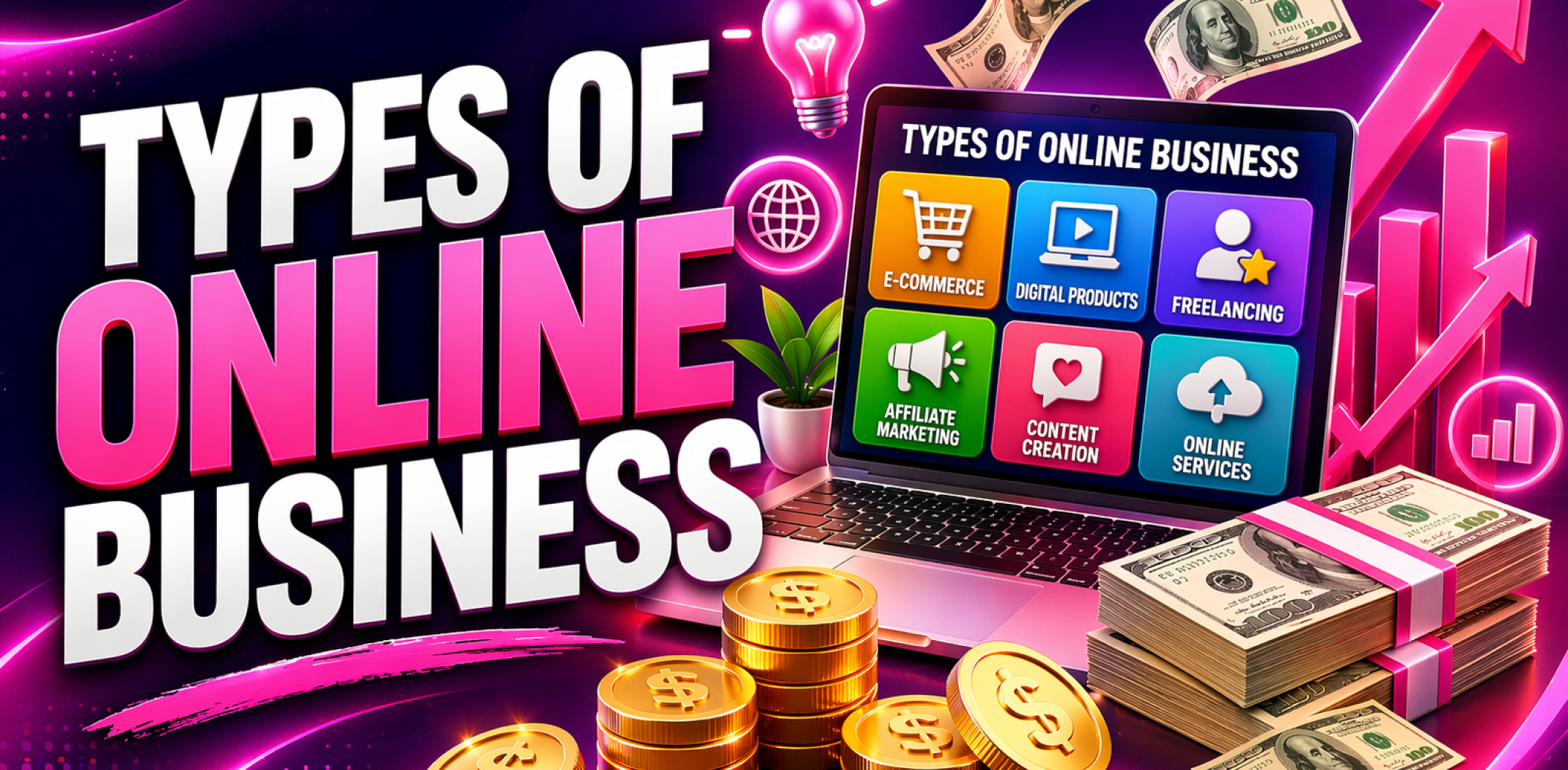
You are searching for ideas for online businesses – and you have landed in the right place. Global ecommerce is set to surpass $6.8 trillion in 2026, and real people all across the country are building income from home without a business degree, without a big investment, and without quitting their day job to get started.
The problem is that most lists of “online business ideas” either point you toward get-rich schemes that do not deliver, or toward models so complex that a beginner has no chance. This guide is different. Below you will find 17 legitimate, tested online business ideas ranked by effort and earning potential – so you can choose the one that actually fits where you are right now.
Quick Answer: The best ideas for online businesses in 2026 include selling digital products, freelancing, affiliate marketing, and starting an online store. Selling digital products through a ready-built store stands out for beginners – no inventory, no shipping, and income potential of $30–$80/day within 60–90 days with consistent effort.
Whatever your situation – working two jobs, living on a fixed income, or just tired of trading all your hours for someone else’s dream – one of these ideas can realistically change your financial picture. The key is picking the right one for your starting point and sticking with it long enough to see results.
What are online businesses and why do they matter in 2026?
An online business is any venture where you sell, serve, and earn entirely over the internet. That could be a single person selling digital guides from a phone, a freelancer writing copy for clients across the country, or a store owner building a brand around a niche they love – all from home, on their own schedule.
What makes 2026 different from even five years ago is how low the barriers have become. Payment tools, automation, no-code platforms, and ready-built store solutions have eliminated most of the friction that used to stop everyday people from starting. You no longer need a tech background, a business plan, or thousands in startup capital.
That said, “easy to start” is not the same as “guaranteed to succeed.” Every model on this list requires real effort and smart decisions. What separates people who build sustainable income from those who give up after 30 days is usually two things: choosing the right model for their situation and sticking with it long enough for momentum to build.
Why this works in 2026: Consumer spending online has never been higher, and mobile commerce now accounts for over 60% of global transactions – meaning there has never been a larger, more accessible market for new online entrepreneurs.
How much can you realistically earn from an online business?
Income potential varies a lot depending on the model you choose, how much time you put in, and how quickly you learn from early mistakes. Here is an honest side-by-side comparison of the most popular ideas:
These figures come from real ranges reported across verified income communities – not the outlier screenshots you see in ads. Most beginners land in the lower third of each range during their first 60–90 days, then grow from there with consistency.
One note on the ceiling figures: The upper ranges above reflect full-time operators who have been at it for 6–18 months. Reaching $5,000/month in most models typically takes 3–6 months of active effort. “Full-time effort” means 20–40 hours per week during the launch phase, not 2 hours on weekends.
The models that scale best – selling digital products, affiliate marketing, and online stores – share one trait: once the system is working, income can grow without you adding proportionally more hours. That is the real reason to build an online business rather than just freelancing your time.
The 17 best ideas for online businesses in 2026
These ideas are grouped by category. Each one includes an honest breakdown of what it takes to get started and what you can realistically expect in your first few months.
Ecommerce and product-based businesses
1. Selling digital products through a ready-built store
This is the most beginner-friendly ecommerce model available in 2026. You get a store that is already built, stocked with digital products – guides, courses, checklists, and tools – and connected to a built-in advertising system. When a customer buys, the product is delivered instantly and digitally. No packing. No shipping. No inventory.
With a platform like Sellvia, you keep 50–70% of every sale. The products are created for you. The ads are managed for you. Most store owners who activate the built-in ad system start seeing orders on the same day. For someone who has never run a business before, this is the fastest path from zero to first sale.
Earning potential: $500–$4,000+/month depending on ad budget, niche, and consistency.
2. Print-on-demand
Print-on-demand works like a digital product store but for custom-designed physical items – t-shirts, mugs, phone cases, wall art. You upload a design, a supplier prints and ships it when an order comes in. No inventory, no upfront cost.
The challenge is that margins are thinner and design quality matters a great deal. Stores focused on tight niches – nurses, pet owners, a specific hobby community – consistently outperform generic shops. Expect $10–$40/day once you land designs that connect with an audience.
Earning potential: $200–$1,500/month for part-time operators with strong niche focus.
3. Selling handmade or vintage items
If you make candles, jewelry, ceramics, or clothing – or if you enjoy sourcing vintage finds – platforms like Etsy give you a built-in audience of buyers who search specifically for unique goods. This model is more hands-on than digital options but carries strong margins and loyal repeat customers.
The key is treating it like a real business: professional photography, keyword-rich listings, and consistent production. Sellers with 20–50 active listings typically earn more than those with 5, simply because they show up in more searches.
Earning potential: $300–$2,500/month depending on product, volume, and pricing.
4. Amazon FBA
With Amazon FBA, you source products, ship them to Amazon warehouses, and Amazon handles storage, packing, and delivery. You benefit from Amazon’s massive customer base and fast shipping reputation.
The barrier is higher than other models: you typically need $1,000–$3,000 in startup capital to buy initial inventory, and competition on popular categories is fierce. The upside is that successful FBA stores are highly scalable and can be sold for significant multiples once established.
Earning potential: $1,000–$8,000/month for experienced sellers; lower in the first 6 months while finding the right product.
Service-based online businesses
5. Freelancing
Freelancing – offering skills like writing, graphic design, video editing, or social media management to clients – is the fastest path to online income if you already have a marketable skill. You can be earning within days on platforms like Upwork or Fiverr.
How to get started freelancing
Build 3–5 sample projects even if unpaid at first. Set up a clean profile on two or three platforms and start with competitive pricing to earn your first reviews. Once you have 10–20 completed jobs with solid ratings, you can raise your rates significantly. Many freelancers go from $15/hour to $60–$100/hour within 12–18 months by specializing in a high-value niche.
Earning potential: $800–$6,000/month for full-time freelancers, depending on skill and specialization.
6. Virtual assistant services
Virtual assistants handle tasks for business owners remotely – email management, scheduling, customer support, data entry, research, and social media posting. It is one of the most accessible ideas for online businesses because it requires general organizational skills rather than a specialized background.
Entry-level VAs charge $12–$20/hour. Experienced VAs with specialized skills like bookkeeping or CRM setup can charge $35–$65/hour. Most successful VAs work with 3–5 ongoing clients at once, which creates reliable monthly income without chasing new work constantly.
Earning potential: $600–$3,500/month for part-time to full-time VA work.
7. Online tutoring and teaching
If you have expertise in a subject, a language, a musical instrument, or a professional skill, online tutoring is a direct path to consistent income. Platforms like Preply, Wyzant, and Cambly connect tutors with students worldwide, and sessions happen over Zoom from wherever you are.
ESL (English as a Second Language) tutors are in especially high demand – you can book 20–30 hours per week within a few months on established platforms. Tutors in STEM subjects often charge $40–$80/hour once they have solid reviews.
Earning potential: $400–$2,000/month part-time; $2,000–$5,000/month for full-time specialists.
8. Consulting and coaching
If you have professional experience – in marketing, finance, fitness, nutrition, or any other field – you can package that knowledge as consulting or coaching and charge premium rates. Unlike freelancing, where you do the work, consulting means advising clients on strategy.
Business coaches and marketing consultants typically charge $150–$500/hour, or package services into monthly retainers of $1,000–$3,000. The challenge is positioning: you need a clear niche, credible case studies, and a consistent way to generate leads – usually LinkedIn, content, or referrals.
Earning potential: $2,000–$10,000+/month for established consultants with a defined niche.
Content and digital product businesses
9. Affiliate marketing
Affiliate marketing means earning commissions by promoting other companies’ products. When someone clicks your link and buys, you earn a cut – usually 3–30% depending on the product category. Amazon Associates, ShareASale, and individual brand programs are the most common starting points.
The key to sustainable affiliate income is building an audience first – through a blog, YouTube channel, or newsletter – and then recommending products that genuinely help that audience. Thin review sites stuffed with keywords no longer rank well. Google in 2026 rewards real expertise and original content.
Earning potential: $200–$3,000+/month; high-commission niches like software and finance can go significantly higher.
10. Blogging and content publishing
Blogging as a business combines several income streams: display advertising, affiliate marketing, sponsored content, and selling your own products or services. A well-ranked niche article can generate income for years after you publish it.
The honest timeline: most blogs do not see meaningful traffic until month 6–12. After 12–18 months of consistent quality content, blogs in competitive niches typically earn $500–$3,000/month. Tightly focused niche sites can earn more with less traffic because they attract buyers, not just browsers.
Earning potential: $200–$5,000+/month after 12–24 months of consistent effort.
11. YouTube channel
YouTube combines the reach of content marketing with the trust of video. Channels earn through AdSense, sponsorships, affiliate links, and memberships. Educational, how-to, and product review channels perform especially well because they attract viewers who are already looking to buy or learn.
Channel growth is gradual but compounds over time. Most creators do not earn meaningful AdSense revenue until they reach 10,000–50,000 subscribers. But sponsorships and affiliate income can start earlier if you are in a product-heavy niche. Finance, tech, fitness, and business channels tend to have the highest ad rates.
Earning potential: $100–$2,500+/month from AdSense alone; substantially more with sponsorships and affiliate links.
12. Selling digital products you create
Digital products you create yourself – ebooks, templates, Notion dashboards, Lightroom presets, stock photos – are among the highest-margin products you can sell online. Create once, sell indefinitely with no delivery cost per unit. Platforms like Gumroad and Teachable handle the rest.
The challenge is discoverability. Without an existing audience, launching into a vacuum rarely works. The most reliable path is to build a small email list first – even 500–1,000 engaged subscribers – then launch to them before depending on search traffic.
Earning potential: $300–$4,000+/month once you have a distribution channel; product bundles raise average order value significantly.
13. Online courses and memberships
If you can teach a skill or share specialized knowledge, online courses are one of the most scalable products that exist. A single course at $97–$297 sold to a warm audience of a few hundred people can generate $10,000–$50,000 in a launch week. Ongoing memberships create predictable monthly income.
What separates a course that sells from one that does not is transformation – the clearer the before-and-after result you can show, the more persuasive your marketing becomes. Platforms like Kajabi and Teachable have made the technical side manageable even for beginners.
Earning potential: $1,000–$10,000+/month for course creators with an established audience and proven curriculum.
Tech and automation-based businesses
14. No-code apps and SaaS tools
No-code platforms like Bubble, Glide, and Webflow let you build functional web applications without writing a single line of code. Entrepreneurs are using these tools to create niche software products – booking systems, client portals, project management tools for specific industries – and charging monthly fees.
This model has high upside but also high complexity. Finding a genuine problem people will pay to solve, then validating it before building, is the step most first-timers skip. The entrepreneurs who succeed here do heavy research and customer interviews before writing a single feature.
Earning potential: $500–$10,000+/month for established SaaS products with paying subscribers.
15. AI-powered services
AI tools have created an entirely new category of online businesses. Entrepreneurs are packaging AI capabilities into specialized services – automated ad copy for specific industries, SEO audits, AI-assisted video editing, chatbot development for small businesses. The model is essentially AI plus human judgment, and clients pay for the outcome, not the tool.
Entry-level AI service providers earn $500–$2,000/month. Those who build proprietary workflows and target high-value clients like agencies or ecommerce brands can earn significantly more. Specialization matters more than ever as the market matures.
Earning potential: $800–$5,000+/month depending on specialization and client quality.
16. Web design and development
Demand for web design has not slowed despite the rise of website builders. Businesses still want custom, fast, conversion-focused sites, and they pay $1,500–$8,000+ for a professional build. Designers who add strategy and conversion thinking – not just visual work – command even higher rates.
No-code tools like Webflow have lowered the skill floor, so designers without traditional coding backgrounds can build high-quality sites. The most profitable freelance web businesses focus on a specific industry – restaurants, therapists, real estate agents – rather than taking any job that comes in.
Earning potential: $2,000–$8,000/month for established web designers with a niche focus.
17. Social media management
Businesses of every size need consistent social media presence but lack the time to manage it themselves. Social media managers handle content creation, scheduling, community engagement, and reporting for clients – typically on monthly retainers of $500–$2,500 per client.
Managing 4–6 clients at once is realistic for a full-time social media manager, putting monthly income in the $3,000–$10,000 range. The highest earners specialize in one platform or one industry rather than offering a generic “we do everything” package.
Earning potential: $1,500–$6,000/month for full-time social media managers with 4–6 retainer clients.
Legal and ethical considerations for online businesses
Starting an online business does not mean skipping your obligations. The low barriers to entry in digital entrepreneurship mean that cutting corners is tempting – and more visible to customers and platforms than ever before.
Here are the most important areas to get right from day one:
- Business registration: In the US, most online entrepreneurs start as sole proprietors and move to an LLC once income is consistent. Check your local rules before your first sale.
- Tax obligations: Online income is taxable income. Keep records of every transaction from the beginning. In the US, the self-employment tax rate is 15.3% on net earnings, plus income tax. Many states require quarterly estimated payments once you cross a threshold.
- Platform terms of service: Whether you are on Etsy, Upwork, or any ad network, violating platform rules can get you banned – and those bans are extremely hard to reverse. Read the rules carefully, especially around review solicitation and prohibited content.
- Consumer protection: If you sell products or services, you are subject to consumer protection laws in the regions you sell to. State refund policies, delivery timelines, and contact information clearly on your store.
Key principle: Build your online business the same way you would want a business to treat you – transparently, reliably, and with clear communication at every step.
Important: Fake reviews, misleading income claims, and review manipulation are not just unethical – they violate platform policies, FTC guidelines, and consumer protection laws in most states.
How to choose the right online business idea for you
With 17 options in front of you, paralysis is a real risk. Here is how to cut through it by matching the model to where you actually are right now.
Complete beginners
If you have no prior business experience, limited funds, and are still figuring out the basics, start with either selling digital products through a ready-built store or freelancing. A ready-built store gives you a business that does not require selling your time. Freelancing lets you earn quickly using skills you already have. Both have low financial risk and large communities of people who have done it before.
Intermediate / part-time operators
If you already have some online income or business experience and want to build something more scalable, look at affiliate marketing, creating your own digital products, or growing an online store into a real brand. These reward the content and SEO skills you have likely developed, and they can run alongside existing income while they grow.
Advanced / full-time goal
If you are serious about replacing a full-time salary within 12–18 months, the highest-ceiling models are consulting, online courses, SaaS, and a well-branded digital products store. Each requires significant upfront time investment – and in some cases capital – but all have documented six-figure annual income potential for people who commit fully.
People who want freedom, not another job
If your primary goal is income that does not require you to be present every day, selling digital products and running an automated online store are your two best bets in 2026. Both can be largely automated once the initial systems are in place – especially with a platform like Sellvia that handles the advertising and delivery for you.
Whatever your starting point, the most important thing is choosing one model, committing to it for at least 90 days, and measuring results honestly before deciding to pivot or double down. The biggest mistake new online entrepreneurs make is jumping between ideas before any single one has had time to gain traction.
Why Sellvia is a game-changer for your online store 🚀
Sellvia isn’t just another ecommerce tool. We are a trusted name in the industry, recognized by Forbes and even ranked in Inc.’s list of the 5,000 fastest-growing companies in the U.S. So if you’re serious about starting as a solopreneur, this is a smart place to begin.
Starting an online business can feel overwhelming, but that’s exactly where Sellvia steps in. It takes care of the tricky parts, so you can focus on making sales and growing your brand. Let’s break down what makes it such a great choice.
Get a ready-to-go store hassle-free 🎯
Want to start selling but don’t know where to begin? No worries! Just share your ideas, and Sellvia’s team will build a free ecommerce website that’s fully set up and ready to take orders from day one. No coding, no stress – just a store that works right out of the box.
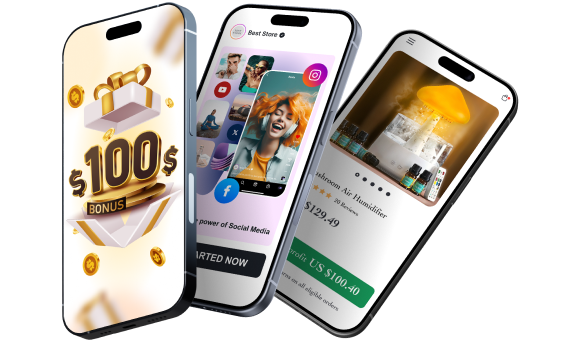
A $100 welcome gift to grow your business faster 🎁
Starting a business takes momentum – and Sellvia gives you a head start. When you claim your free store today, you also get a $100 welcome gift to put toward growing your business. Use it to upgrade your store, boost your marketing, or unlock new tools. It is a real dollar value, handed to you on day one, with no catch and no hoops to jump through.
A massive catalog of digital products to sell 🏆
One of the biggest struggles in starting an online business is figuring out what to sell. Sellvia solves that completely. Your store comes pre-loaded with digital products – guides, courses, checklists, and tools – all created by Sellvia. You keep 50–70% of every sale. No inventory. No shipping. No logistics headaches.
Everything in one easy-to-use platform 🔥
Managing an online store shouldn’t be complicated. With Sellvia, you can handle orders, add new products, and even chat with customers – all from a simple and user-friendly platform. No need to mess with confusing tools or deal with unnecessary tech stuff. It’s all smooth sailing.
No upfront costs, just start selling 💰
A big reason people hesitate to start an online business is the cost. But here’s the good news: With Sellvia, you don’t need to invest in stock, storage, or anything upfront. You can run your store with no upfront costs, keeping things low-risk while still making money.
Support that’s always got your back 🤝
Running a business comes with questions, but you’re never alone. Sellvia’s dedicated support team is available 24/7 to help with anything you need. Whether it’s a small question or a big challenge, they’ve got you covered.
Of all the ideas for online businesses in this guide, starting a digital products store with Sellvia stands out for its combination of no upfront cost, done-for-you products, and built-in advertising. Claim your free store today and start building income on your own terms.
What are the best ideas for online businesses in 2026?
Which online business can I start with no money?
Several online business models require almost no startup capital. Freelancing is the most accessible – if you have a skill, you can create a profile on Upwork or Fiverr for free. Affiliate marketing requires only a website or social media presence, which can be created at minimal cost. Sellvia offers a free 14-day trial that includes a fully built store, digital products to sell, and a 40 dollar ad coupon – so you can test the model before spending anything. Print-on-demand is another zero-inventory option where you only pay production costs after a sale is made.
How long does it take to make money from an online business?
The timeline depends heavily on the model you choose and how much effort you put in. Freelancers with in-demand skills can earn their first income within 1 to 2 weeks of setting up a profile. Online store owners using a built-in ad system like Sellvia often see first orders on the same day ads are activated. Affiliate marketing and blogging typically take 6 to 12 months before producing meaningful monthly income. On average, people who commit 20 or more hours per week during the first 90 days see faster results than those treating it as a casual side project.
Is selling digital products still a good online business idea in 2026?
Yes, selling digital products is one of the strongest online business ideas available in 2026. Digital delivery is instant, margins are high at 50 to 70 percent per sale, and there is no inventory or shipping involved. The model works especially well when the products are already created for you – which is exactly what Sellvia provides. Store owners simply activate their built-in advertising, and most who do so begin receiving orders on day one. The global demand for online guides, tools, and courses continues to grow year over year.
What online business ideas have the most income potential?
The online business models with the strongest income potential are selling digital products through an automated store, consulting and coaching, online courses, and SaaS products. Digital product stores scale well because income can grow without a proportional increase in hours once the advertising system is running. Consultants and coaches with defined niches regularly earn 2,000 to 10,000 dollars per month. Online courses can generate 10,000 dollars or more in a single launch week for creators with an established audience. Most of these models require 3 to 6 months of consistent effort before income becomes truly predictable.