If you have ever searched “how to make extra money from home,” you already know the feeling – too many options, not enough honest answers. Side hustle apps promise fast cash, but the reality is messier. Some pay well. Some waste your time. And a few are not worth downloading at all.
This guide cuts through the noise. Below you will find the best side hustle apps of 2026 – what they pay, who they are best for, and how to get the most out of each one. Whether you have a few spare hours a week or are serious about building a real second income, there is something here for you.
Quick Answer: The best side hustle apps in 2026 include DoorDash, Upwork, Fiverr, Rover, Swagbucks, and Honeygain – covering everything from delivery gigs to freelance work to passive earnings. Most are free to join and pay within a week.
What are side hustle apps?
Side hustle apps are platforms – usually available on your phone – that let you earn money outside of your regular job. They cover a wide range of work: delivering food, completing freelance projects, taking surveys, selling digital products, or sharing your internet connection in the background.
What makes them different from a second job is flexibility. You work when you want, take on as much or as little as you like, and most platforms pay quickly – often within days. That makes them popular with parents, shift workers, people on fixed incomes, and anyone trying to close the gap between what they earn and what they need.
But not all apps are equal. Some reward consistent effort with real money. Others deliver pennies for hours of work. The key is knowing the difference before you download anything.
How much can you realistically earn from side hustle apps?
This is the question most guides skip over. Earnings vary enormously depending on the app, your location, your skills, and how many hours you put in. Here is an honest breakdown.
Delivery and rideshare apps offer the most reliable hourly income, but you trade time directly for money – stop working, stop earning. Freelancing can pay much more, but it takes time to build a client base and reputation. Survey apps are the easiest entry point but have a very low ceiling. Digital product selling has the highest upside because you are not limited by hours worked.
One note on earning potential: The figures above reflect realistic averages, not outliers. Most people using side hustle apps as a supplement to a day job earn between $200 and $600 a month. Reaching $1,000 or more typically requires either strong freelancing skills or a scalable income source like selling digital products.
The best side hustle apps in 2026
We have grouped the top apps by category so you can quickly find the ones that fit your lifestyle. Each entry covers what you actually earn, who it works best for, and one practical tip to get more out of it.
Gig economy and delivery apps
These are the most popular side hustle apps – and for good reason. If you have a car, a bike, or just a pair of hands and a free afternoon, you can start earning the same day you sign up.
DoorDash
DoorDash is one of the most widely used delivery apps in the US. You pick up food orders from restaurants and deliver them to customers nearby. Pay is a combination of base fee, promotions, and customer tips – and tips often make up a significant chunk of your total.
Most dashers earn between $15 and $22 an hour during busy periods. Lunch and dinner peaks – roughly 11am to 2pm and 5pm to 9pm – tend to generate the highest volume of orders. Working those windows consistently is one of the easiest ways to maximize your hourly rate.
Earning potential: $15–$22/hr during peak hours, with experienced dashers in busy cities reporting $800–$1,200/month for part-time hours.
Uber and Lyft
Rideshare driving remains one of the best-paying gig options for car owners. You set your own hours, accept or decline rides as you choose, and benefit from surge pricing during evenings, weekends, and special events. Both platforms offer instant payout options so you do not have to wait for weekly deposits.
The biggest variable is your market. Drivers in major metros consistently earn more than those in suburban or rural areas. If you live near a city, a stadium, or an airport, rideshare driving can be a genuinely strong earner – especially evenings and weekends.
Earning potential: $18–$30/hr in busy markets, lower in smaller towns.
Rover
Rover connects pet owners with dog walkers, pet sitters, and boarding hosts. If you like animals, it barely feels like work. You set your own rates, choose which services to offer, and build up repeat clients over time. Many Rover providers earn the bulk of their income from a handful of loyal, regular customers rather than chasing new bookings constantly.
A strong profile – clear photos, quick response times, and a few solid reviews – makes a big difference in the early weeks. Once you have a consistent roster of clients, Rover income becomes some of the most reliable gig money available.
Earning potential: $200–$600/month part-time; higher for those offering boarding or taking multiple clients per day.
Freelancing and skill-based apps
If you have a skill – writing, design, coding, video editing, social media, translation, customer service – freelance platforms let you turn that directly into income. The ceiling is much higher than gig apps, but it takes longer to ramp up.
Upwork
Upwork is the largest freelance marketplace in the world, with clients ranging from solo entrepreneurs to Fortune 500 companies. You can find work in virtually any skill category: writing, graphic design, web development, data entry, marketing, and more.
Getting started on Upwork takes patience. The platform rewards reputation – your first few projects need to be competitive on price to get early reviews. Once you have a handful of five-star ratings and a strong profile, you can raise your rates and go after larger, higher-paying contracts. Many experienced Upwork freelancers earn $3,000–$8,000 a month working part-time.
Earning potential: $20–$80/hr depending on skill and niche; $500–$5,000+/month for consistent part-time work.
Fiverr
Fiverr is where beginners often take their first steps in freelancing. You create “gigs” – short service listings – and buyers come to you. Unlike Upwork, where you apply for jobs, Fiverr is more like a storefront: optimize your listing well enough and clients find you.
Base prices start at $5, but packages and add-ons are where real money is made. A logo designer offering a basic package at $30 might upsell a brand kit and rush delivery, ending up at $150 or more per order. The sellers who earn well on Fiverr are not the cheapest – they are the best at packaging and presenting their service.
Earning potential: $100–$2,000+/month depending on skill, niche, and how well your listings are optimized.
Passive income and microtask apps
These apps will not replace a paycheck. But they are genuinely low-effort ways to earn a little extra from things you already do – browsing the internet, watching videos, or just having your phone connected to wifi.
Honeygain
Honeygain pays you to share your unused internet bandwidth. You install the app, leave it running in the background, and the app does the rest. There is nothing to click, no surveys to complete, and no active time required at all.
The earning ceiling is low – most users make between $2 and $10 a month. That is not life-changing money, but it is also completely hands-off. Think of it as a small bonus for internet you were already paying for.
Earning potential: $2–$10/month – best used alongside other side hustle apps, not as a standalone earner.
Swagbucks and InboxDollars
Both platforms reward you for completing surveys, watching short videos, searching the web, and shopping online through their portals. Swagbucks is the larger and more established of the two; InboxDollars pays in cash rather than points, which some users prefer.
Neither will make you rich. Realistic earnings run between $10 and $50 a month for casual use. That said, if you are sitting in front of the TV in the evenings anyway, running a survey or two during that time is easy money for zero extra effort. The trick is sticking to higher-paying survey categories and using the cashback shopping feature for purchases you would make regardless.
Earning potential: $10–$50/month; higher with consistent daily use and cashback shopping stacked on top.
Digital product and creator apps
Selling digital products is one of the most underrated ways to earn online – and one of the few side hustle methods where income can genuinely grow without you trading more hours for it. Once a product is created and listed, every sale is essentially pure profit with no additional work.
Stan
Stan is a creator-focused platform that lets you sell digital products directly to your audience: guides, templates, mini-courses, presets, and more. It is designed to be simple – you set up a storefront, connect it to your social media, and start selling. There are no complex tech setups and no monthly fees for the basic plan.
Stan works best for people who already have a social media following, even a small one. If you have 500 engaged followers on Instagram or TikTok and a skill or knowledge others want, a well-priced digital product can start generating real money quickly.
Earning potential: $100–$2,000+/month depending on audience size, product quality, and how actively you promote it.
Gig aggregator apps
Not sure which gig platform to use? Aggregator apps pull opportunities from multiple sources into one place, making it easier to compare pay, hours, and requirements without hopping between five different apps.
AppJobs
AppJobs is the most well-known gig aggregator in the US. It lists delivery gigs, freelance tasks, odd jobs, and more – all in one feed you can filter by location, pay rate, and work type. It is not a platform itself; it is more of a discovery tool that points you toward legitimate opportunities.
AppJobs is especially useful if you are new to side hustles and want to compare what is available in your area before committing to a single app. Browse the listings, pick two or three that match your schedule, and go from there.
Earning potential: Varies by the gigs you choose – but having all options in one place saves time and helps you pick the most profitable combinations.
Tips for getting more out of side hustle apps
Most people who try side hustle apps give up within a few weeks – not because the apps do not work, but because they do not approach them with a strategy. A little structure goes a long way.
Match the app to your actual life
The best side hustle app is the one that fits around what you already do. If you have a car and free evenings, delivery or rideshare makes sense. If you write, design, or code professionally, freelancing platforms give you a direct path to extra income. If you have almost no free time, a passive app like Honeygain at least earns something in the background. Start with one app, not five.
Track your real hourly rate
Apps often advertise attractive averages that include high earners or peak conditions. The only number that matters is what you personally make per hour – and that means tracking your time honestly. A simple notes app works fine. Once you know your actual hourly rate, you can decide whether to stick with an app, try a different one, or shift your hours to more profitable windows.
Focus on the high-value work
Every platform has tasks that pay better than others. On survey apps, longer surveys pay more per minute than short ones. On delivery apps, restaurant locations near clusters of residential buildings generate more orders per hour.
On freelance platforms, clients with ongoing needs pay better than one-off buyers. Spending fifteen minutes learning what the high-value work looks like on any given platform will pay off every time you use it.
Keep it sustainable
Burning out on a side hustle in week three helps no one. A realistic schedule – two or three sessions a week, or thirty to sixty minutes a day – compounds into real money over time without taking a toll on your regular life. Side income should reduce your stress, not add to it.
Think about what scales
Delivery pays $18 an hour whether you have been doing it for a week or three years. Freelancing can grow as your reputation builds. Selling digital products can generate income from sales you made months ago. If your goal is not just extra cash but real financial freedom, the most important question to ask about any side hustle is: does this get better over time, or does it stay flat?
Which side hustle app is right for you?
The honest answer depends on where you are starting from. Here is a quick breakdown by situation.
Complete beginners
If you have never done any kind of side hustle before, delivery apps are the easiest starting point. DoorDash and Rover get you earning within a day of signing up, with no skills required and no learning curve. Use the first few weeks to get comfortable with the rhythm of gig work, then consider adding a second income stream once the first one is running smoothly.
People with a marketable skill
If you write, design, code, edit video, or manage social media – even at an amateur level – freelance platforms like Upwork and Fiverr have a direct path to money for you. The early stage takes patience, but the income ceiling is far higher than gig work. A skilled freelancer who builds a strong profile can earn more in twenty hours a week than most people earn in a full-time job.
People with almost no free time
If your schedule is genuinely packed and you can only afford a few minutes a day, passive apps like Honeygain or survey apps like Swagbucks are low-effort starting points. The income is modest, but the time investment is minimal. The bigger opportunity – when you are ready – is something that earns in the background without requiring your active time at all, like a digital product store.
People ready to build something real
If you want income that grows over time, does not depend entirely on your hours, and gives you something to be proud of, selling digital products is the direction to look. Whether through Stan or a purpose-built store, digital products are how side income becomes financial freedom – not eventually, but realistically, within sixty to ninety days of consistent effort.
Legal and ethical things to keep in mind
Side hustle income is real income – which means it is taxable. In the US, any earnings above $600 from a single platform in a year typically need to be reported. Most platforms will send you a 1099 form if you hit that threshold, but you are responsible for reporting everything regardless of whether you receive a form.
Beyond taxes, a few other rules apply across most gig and freelance platforms.
Key principle: Do not create fake reviews, inflate your ratings, or misrepresent your skills or availability on any platform – accounts that do this get banned, and some platforms share ban records with each other.
On freelance platforms specifically, always deliver what you promise. Scope creep is real – clients often ask for more than they contracted for. It is fine to accommodate small extras once, but build the habit of politely redirecting out-of-scope requests to a new contract. This keeps your income predictable and your working relationships professional.
Finally, keep a simple record of your earnings and hours from the start. Doing so makes tax time straightforward, helps you evaluate which apps are actually worth your time, and gives you a clear picture of your progress toward your income goals.
Final thoughts: choosing the right path for your income goals
Side hustle apps are a real and legitimate way to earn extra money. The best ones – DoorDash, Upwork, Fiverr, Rover – have paid millions of people real money for real work. The key is matching the right app to your life, putting in consistent effort, and being honest about what your time is worth.
But apps have a ceiling. Delivery pays per mile. Surveys pay per minute. Freelancing pays per project. At some point, if your goal is genuine financial freedom – not just a few extra hundred dollars a month – you need something that scales beyond your available hours.
That is where digital product selling changes the conversation. One sale of a digital guide at $47 with a 60% profit margin earns more than two hours of delivery driving. And unlike driving, that guide can sell again tomorrow, next week, and next month without any additional work from you.
In 2026, the gap between people who earn from time and people who earn from products is only growing. If you are ready to close that gap, the tools to do it have never been more accessible.
Why Sellvia is a game-changer for your online store 🚀
Sellvia isn’t just another ecommerce tool. We are a trusted name in the industry, recognized by Forbes and even ranked in Inc.’s list of the 5,000 fastest-growing companies in the U.S. So if you’re serious about starting as a solopreneur, this is a smart place to begin.
Starting an online business can feel overwhelming, but that’s exactly where Sellvia steps in. It takes care of the tricky parts, so you can focus on making sales and growing your brand. Let’s break down what makes it such a great choice.
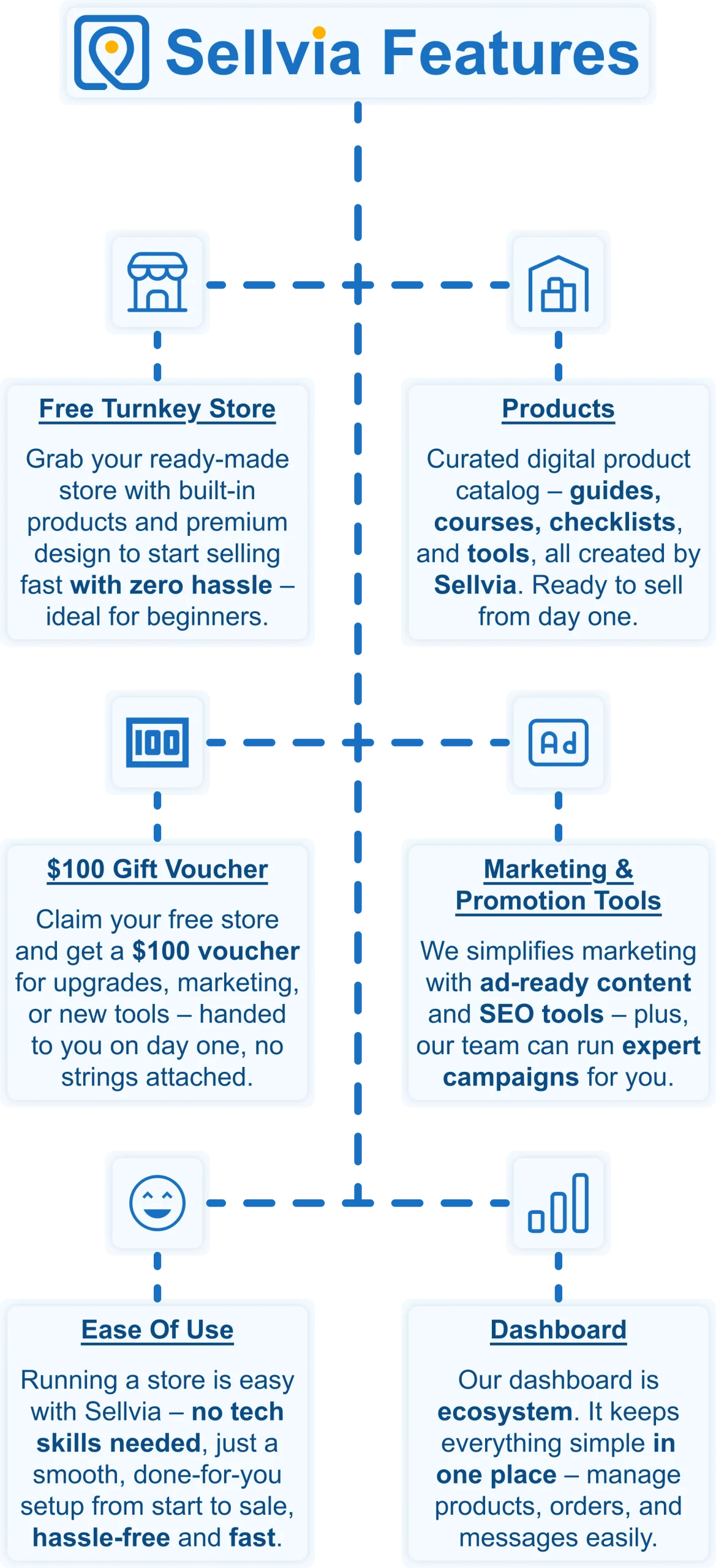
Get a ready-to-go store hassle-free 🎯
Want to start selling but don’t know where to begin? No worries! Just share your ideas, and Sellvia’s team will build a free ecommerce website that’s fully set up and ready to take orders from day one. No coding, no stress – just a store that works right out of the box.
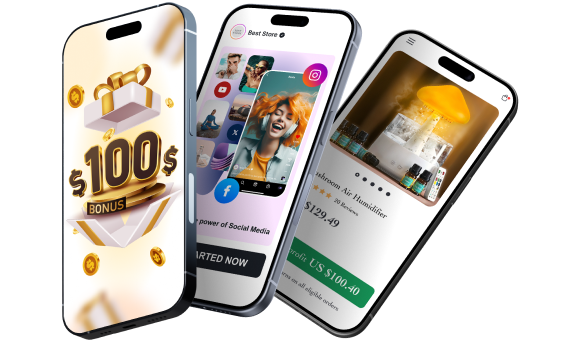
A $100 gift voucher to grow your business faster 🎁
Starting a business takes momentum – and Sellvia gives you a head start. When you claim your free store today, you also get a $100 gift voucher to put toward growing your business. Use it to upgrade your store, boost your marketing, or unlock new tools. It is a real dollar value, handed to you on day one, with no catch and no hoops to jump through.
A massive catalog of digital products to sell 🏆
One of the biggest struggles in starting an online business is figuring out what to sell. Sellvia solves that completely. Your store comes pre-loaded with digital products – guides, courses, checklists, and tools – all created by Sellvia. You keep 50–70% of every sale. No inventory. No shipping. No logistics headaches.
Everything in one easy-to-use platform 🔥
Managing an online store shouldn’t be complicated. With Sellvia, you can handle orders, add new products, and even chat with customers – all from a simple and user-friendly platform. No need to mess with confusing tools or deal with unnecessary tech stuff. It’s all smooth sailing.
No upfront costs, just start selling 💰
A big reason people hesitate to start an online business is the cost. But here’s the good news: With Sellvia, you don’t need to invest in stock, storage, or shipping supplies. You can run your store with no upfront costs, keeping things low-risk while still making money.
Support that’s always got your back 🤝
Running a business comes with questions, but you’re never alone. Sellvia’s dedicated support team is available 24/7 to help with anything you need. Whether it’s a small question or a big challenge, they’ve got you covered.
If side hustle apps have shown you what earning online looks like, Sellvia shows you what building real income looks like. Claim your free store today and start selling digital products with a business built for you.
What are the best side hustle apps for beginners?
How much can you earn with side hustle apps?
Earnings from side hustle apps vary widely depending on the app, your location, and how many hours you commit. Delivery and rideshare drivers typically earn 15 to 25 dollars per hour in busy markets. Freelancers on platforms like Upwork or Fiverr can earn 20 to 80 dollars per hour once they build a track record. Survey and microtask apps generally pay 10 to 50 dollars per month, while selling digital products through a platform like Sellvia can generate 200 to 2,000 dollars or more each month with consistent effort.
Are side hustle apps worth the time and effort?
Side hustle apps are worth it if you pick the ones that match your skills and schedule. Delivery and rideshare apps offer reliable hourly income with minimal startup. Freelance platforms take longer to ramp up but have a higher income ceiling. Passive apps like Honeygain and Swagbucks are low effort but also low return. The biggest mistake most people make is trying too many apps at once instead of mastering one first.
Do side hustle apps work in small towns and rural areas?
Not all side hustle apps are equally available in smaller towns and rural areas. Delivery apps like DoorDash tend to have limited coverage outside urban and suburban zones. Rideshare services also perform best in cities and near airports. Freelancing platforms like Upwork and Fiverr work anywhere with internet access, making them a better fit for people in smaller communities. Digital product stores have no location restrictions at all and can sell to customers across the entire country.
What is the highest paying side hustle app in 2026?
In 2026, freelancing platforms like Upwork consistently produce the highest hourly rates for skilled workers, with experienced freelancers earning 50 to 80 dollars per hour or more in competitive niches like software development, copywriting, and UX design. For people without specialized skills, rideshare and delivery apps typically offer the best active hourly income at 18 to 30 dollars per hour in busy markets. For overall income potential without a ceiling tied to hours worked, selling digital products through a ready-made online store offers the most room to grow over time.