Global online sales are on track to surpass $6.8 trillion in 2025 – and that number keeps climbing. If you have been thinking about how to start an ecommerce business, the window is wide open right now. But most guides skip the part where they tell you what it actually takes to get going, how long it realistically takes to earn consistent income, and which model fits your situation.
This guide covers all of that. Whether you are starting from zero with a tight budget or ready to turn a side hustle into a full-time income, you will find an honest breakdown of what it looks like to start an ecommerce business in 2026 – and how to pick the right path forward.
Quick Answer: You can start an ecommerce business in 2026 with little to no money upfront. Most new store owners see their first consistent sales within 60–90 days of launch with focused effort. The fastest low-risk path for beginners is a store built around digital products – nothing to ship, nothing to store, and instant delivery on every sale.
Online business is no longer just for people with tech skills or big startup budgets. Platforms have made it possible to launch a store in days, sell products you never have to touch, and reach customers across the country from your phone. The real question is not whether it is possible – it is which path makes the most sense for you right now.
What is an ecommerce business?
An ecommerce business is any business that sells products or services through the internet. That covers a wide range – from a solo seller running a niche store on a smartphone to a large brand with thousands of products. The defining feature is simple: the buying experience happens online.
What makes it so attractive in 2026 is the low barrier to entry. You do not need a physical storefront, a stockroom, or years of retail experience. You can build a real, working store in a matter of days, load it with products that are ready to sell, and start reaching customers almost immediately.
The main models you will come across when you start an ecommerce business are:
- Digital products – you sell downloadable items like guides, courses, checklists, and tools. No inventory, no shipping, instant delivery on every sale. This is the model Sellvia is built around.
- Print-on-demand – you design custom products like t-shirts or mugs, and a fulfillment partner prints and ships them per order.
- Wholesale / private label – you buy products in bulk or manufacture your own brand and ship from your own stock.
Each model has a different upfront cost, profit potential, and effort level. For most beginners in 2026, digital products offer the fastest path to a live store with real products and minimal risk – no logistics, no delays, and a profit of 50–70% on every sale.
How much can you realistically earn?
This is the question every new seller wants answered honestly. The short version: income from an ecommerce business varies depending on your model, your niche, and how consistently you show up. Here is a practical look at what different models actually produce.
Digital products offer the best risk-to-reward ratio for beginners. No inventory, no shipping costs, and a profit of 50–70% on each sale means more of what you earn stays in your pocket. Wholesale and private label have higher ceilings but require meaningful upfront investment and logistics management.
One note on ceiling figures: The higher end of these ranges reflects established stores with a proven product catalog and repeat customers – not a store in its first month. A realistic goal for a new Sellvia store in the first 90 days is $30–$80/day in revenue. Full-time income of $3,000–$5,000+/month typically takes 6–12 months of consistent effort.
The good news is that ecommerce has a compounding effect. Every customer you earn, every sale you make, and every review you collect makes the next sale easier. The stores that succeed are not always the ones with the biggest starting budgets – they are the ones that stay consistent long enough for it to start working.
How to start an ecommerce business: Step by step
Starting an online business does not need to be complicated, but it does need to be done in the right order. Here is a practical walkthrough of the process most successful store owners follow.
Step 1: Choose your business model and niche
The first real decision you need to make is how you will source and sell your products. For most beginners in 2026, digital products are the most practical starting point – no stock to hold, no shipping to manage, and instant delivery on every sale.
Once you have chosen a model, narrow your niche. A focused store consistently outperforms a general one because it is easier to market, easier to find customers for, and more likely to build loyalty over time.
When evaluating a niche, look for consistent demand, products or content your target customer actively searches for, and a topic you can speak about naturally. With Sellvia, this step is largely done for you – your store comes pre-loaded with ready-made digital products across proven categories.
Step 2: Set up your store
Your store is the foundation everything else is built on. In 2026, the best online stores share a few things in common: they load fast on a phone, they are easy to navigate, and they clearly communicate what they sell and why someone should trust them.
Before you go live, make sure you have the essentials in place:
- A clean, mobile-friendly design
- A homepage that explains what you sell within the first few seconds
- Product pages with honest descriptions and visible reviews
- A secure checkout with at least two payment options
- A clear policy page so customers know what to expect
With Sellvia, all of this is handled for you. Your store is built, designed, and loaded with products – ready to take orders from day one without any coding or technical setup.
Step 3: Load your products
Once your store is live, it needs products. For a digital products store, this means guides, courses, checklists, and tools that people are actively looking for and willing to pay for.
The key is not just having products – it is having the right ones: items with real demand, clear value, and a price point that makes sense for your audience. With Sellvia, this step is already done. Your store comes pre-loaded with a full catalog of digital products created by Sellvia’s team, covering dozens of proven niches. You keep 50–70% of every sale.
Important: You do not create the products yourself. Sellvia creates and maintains the entire catalog. Your job is to market the store and make sales.
Step 4: Drive traffic to your store
A live store with no traffic earns nothing. Traffic is the one variable most new ecommerce owners underestimate – not because it is hard to get, but because it takes longer than expected on organic channels alone.
The main traffic sources for a new online store are:
- Built-in advertising (Sellvia) – Sellvia’s built-in ad system handles targeting, creatives, and optimization for you. You set a daily budget of $10–$50 and the system does the rest. Most store owners who activate ads start receiving orders the same day.
- Social media – TikTok and Instagram in particular have shown strong organic reach for product-focused content. Short videos and demos regularly drive real traffic with zero ad spend.
- SEO and content – slower to build (3–6 months to see meaningful results), but produces compounding traffic over time with no per-click cost once it kicks in.
- Email marketing – often overlooked by beginners, but email consistently delivers some of the highest returns of any channel. Start building your list from day one.
Step 5: Optimize and grow
Getting traffic is only half the equation. A store that converts well earns far more than one with the same traffic but a weaker buying experience. The difference usually comes down to trust signals, page speed, and how clearly your value is communicated.
A few quick wins that improve results for most new stores:
- Add genuine customer reviews – even a handful makes a big difference
- Display a clear, simple return policy on every product page
- Reduce checkout friction: fewer steps, more payment options
- Follow up with customers after their first purchase to encourage repeat business
Retention is where the real money builds. A customer who comes back twice is worth far more than two one-time buyers – and email follow-ups, loyalty offers, and relevant new products are what make that happen.
Ecommerce business models compared: Which one fits you?
Choosing the right model when you start an ecommerce business is one of the most important decisions you will make. The wrong model for your situation does not mean failure – but it does mean more friction and slower progress.
Digital products have the most beginner-friendly entry point. No inventory to manage, no fulfillment to coordinate, and a profit of 50–70% on every sale. It is not a get-rich-quick model – but it is a genuinely scalable business when run consistently with the right tools and realistic expectations.
The honest reality is that all of these models work. The difference between a store that earns $200/month and one that earns $5,000/month almost never comes down to the model itself – it comes down to consistency, finding the right customers, and learning from the data over time.
Legal and financial considerations when starting an online store
This part of starting an ecommerce business is easy to skip when you are focused on products and traffic. But getting the basics right from the start protects you from headaches down the road.
Business registration and taxes
In most countries, you are legally required to register your business once you begin earning income. In the US, most small online store owners start as a sole proprietor or upgrade to an LLC as revenue grows. An LLC typically costs $50–$500 to register depending on your state and provides personal liability protection. If you are unsure which structure fits your situation, it is worth consulting a local accountant early.
Sales tax is the area that catches most new ecommerce sellers off guard. In the US, most states require you to collect sales tax from customers in states where you have a business presence. Most ecommerce platforms have built-in tools that handle the calculation automatically – but understanding your obligations before you start generating significant revenue is worth the time.
What to avoid absolutely
There are some practices that circulate in online business communities that look like shortcuts but carry real legal and reputational risk:
- Fake reviews – buying or generating fabricated reviews violates platform terms of service and consumer protection law in many states. It is not worth the risk.
- Misleading product descriptions – overstating what a product delivers, especially in health-related categories, can lead to refund disputes and complaints at scale.
- Hidden fees at checkout – surprise costs at the final step are the single biggest driver of abandoned purchases and negative reviews. Be transparent from the start.
What to do instead
Build trust through transparency. Display real reviews, even mixed ones – a store with only perfect ratings looks suspicious to most shoppers. Be upfront about how your products are delivered and what the customer gets. For a digital products store, this is straightforward: instant delivery, clear product descriptions, and a support team available if anything goes wrong.
Key principle: An online business built on honest product presentation and reliable delivery will always outlast one built on shortcuts and inflated claims.
Which ecommerce path is right for you?
There is no single correct way to start an ecommerce business – but there is a best starting point depending on where you are right now.
Complete beginner
If you have never run an online store before, start with a model that handles the technical setup for you. Focus on one niche, learn how your customers respond, and spend the first 60 days understanding what drives sales before scaling. Do not try to build a perfect store – build a working one and improve it based on real customer behavior.
Sellvia is built exactly for this stage. Your store is set up for you, the products are loaded, and the built-in ad system removes the need to figure out advertising from scratch.
Intermediate / part-time seller
If you already have some online business experience but are running a store alongside a day job, the highest-leverage move is usually to double down on what is already working rather than keep adding new products. Automate as much as possible so the business does not require your constant attention.
At this stage, your email list and repeat customers are your most valuable assets. Nurturing them consistently produces better returns than chasing new traffic every week.
Advanced / full-time goal
If your target is a full-time income of $5,000–$15,000/month from an ecommerce business, the path runs through product testing at scale, building a recognizable brand, and owning your customer relationships through email. At this level, the difference between a good store and a great one is almost entirely in the marketing – who you are reaching, what you say to them, and how consistently you follow up.
Ecommerce as a whole continues to grow at roughly 10–15% per year globally. The share of retail happening online is still expanding in most markets. That means the opportunity is not shrinking – but the bar for a basic store keeps rising. The sellers who launch in 2026 and succeed will be the ones who invest in genuine value, real customer relationships, and a store identity people remember.
Why Sellvia is a game-changer for your online store 🚀
Sellvia isn’t just another ecommerce tool. We are a trusted name in the industry, recognized by Forbes and even ranked in Inc.’s list of the 5,000 fastest-growing companies in the U.S. So if you’re serious about starting as a solopreneur, this is a smart place to begin.
Starting an online business can feel overwhelming, but that’s exactly where Sellvia steps in. It takes care of the tricky parts, so you can focus on making sales and growing your brand. Let’s break down what makes it such a great choice.
Get a ready-to-go store hassle-free 🎯
Want to start selling but don’t know where to begin? No worries! Just share your ideas, and Sellvia’s team will build a free ecommerce website that’s fully set up and ready to take orders from day one. No coding, no stress – just a store that works right out of the box.
A $100 welcome gift to grow your business faster 🎁
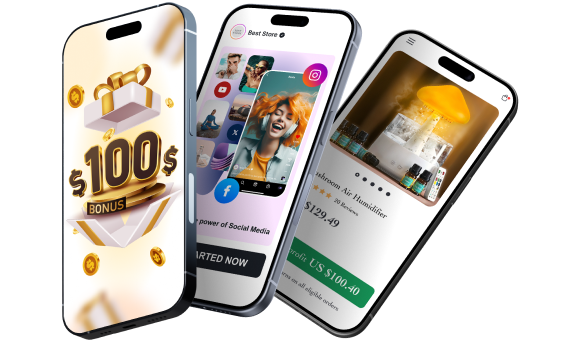
Starting a business takes momentum – and Sellvia gives you a head start. When you claim your free store today, you also get a $100 welcome gift to put toward growing your business. Use it to upgrade your store, boost your marketing, or unlock new tools. It is a real dollar value, handed to you on day one, with no catch and no hoops to jump through.
A massive catalog of digital products to sell 🏆
One of the biggest struggles in starting an online business is figuring out what to sell. Sellvia solves that completely. Your store comes pre-loaded with digital products – guides, courses, checklists, and tools – all created by Sellvia. You keep 50–70% of every sale. No inventory. No shipping. No logistics headaches.
Everything in one easy-to-use platform 🔥
Managing an online store shouldn’t be complicated. With Sellvia, you can handle orders, add new products, and even chat with customers – all from a simple and user-friendly platform. No need to mess with confusing tools or deal with unnecessary tech stuff. It’s all smooth sailing.
No upfront costs, just start selling 💰
A big reason people hesitate to start an online business is the cost. But here’s the good news: With Sellvia, you don’t need to invest in stock, storage, or shipping supplies. You can run your store with no upfront costs, keeping things low-risk while still making money.
Support that’s always got your back 🤝
Running a business comes with questions, but you’re never alone. Sellvia’s dedicated support team is available 24/7 to help with anything you need. Whether it’s a small question or a big challenge, they’ve got you covered.
If you are ready to start an ecommerce business without the overwhelm, Sellvia gives you everything you need in one place. Claim your free store today and get your $100 welcome gift to help you grow from day one.
How do I start an ecommerce business with no money?
How long does it take to make money from an ecommerce business?
Most new ecommerce store owners begin seeing their first consistent sales within 60 to 90 days, assuming they are actively driving traffic through the built-in ad system, social media, or content. Reaching a reliable monthly income of 1,000 to 3,000 dollars typically takes 4 to 6 months of consistent effort. Full-time income of 5,000 dollars or more per month usually requires 6 to 12 months of product testing, audience building, and refining your marketing approach. Stores that activate the built-in advertising system early and stay consistent tend to reach profitability faster than those relying on organic traffic alone.
What is the best ecommerce business model for beginners?
Digital products are widely considered the most beginner-friendly ecommerce model because they require no inventory, no fulfillment, and no product creation. With Sellvia, your store comes pre-loaded with a full catalog of digital products created by the Sellvia team – guides, courses, checklists, and tools across proven niches. You keep 50 to 70 percent of every sale, and each product is delivered instantly to the customer with no action required from you. The built-in advertising system handles targeting and promotion, so you do not need prior marketing experience to start getting orders.
Do I need to register a business to sell online?
In most countries, you are legally required to register your business once you begin earning income from it. In the United States, many small ecommerce sellers start as a sole proprietor, which requires minimal paperwork, and upgrade to an LLC as revenue grows. An LLC typically costs between 50 and 500 dollars to register depending on the state and provides personal liability protection. It is worth consulting a local accountant early to understand your tax and reporting obligations before your store starts generating significant revenue.
How much does it cost to start an ecommerce business in 2026?
Starting a digital products store with Sellvia can cost as little as 0 dollars during the 14-day free trial, which includes a ready-built store, a full product catalog, and a 40 dollar ad coupon. After the trial, the monthly plan is 39 dollars – roughly 1 dollar and 30 cents per day – plus order processing fees on sales made. Print-on-demand stores can typically be launched for under 100 dollars. Wholesale and private label models require significantly more upfront capital, usually between 1,000 and 10,000 dollars depending on minimum order quantities and branding costs. Most beginners budget an additional 10 to 50 dollars per day for advertising once they are ready to scale.