If you have been thinking about starting an online store, 2026 is honestly one of the best times to do it. The tools are better, the barriers are lower, and millions of people just like you have already figured out how to turn a simple store into real, consistent income.
Quick Answer: Starting an online store means choosing a business model, picking what you want to sell, setting up your site, and getting customers to it. Most beginners can launch within days – and with consistent effort, earning $30–$80/day within 60–90 days is a realistic target.
The honest truth is that the gap between “I want to start” and “I am actually making sales” comes down to two things: picking the right model for your situation, and taking action instead of waiting for the perfect moment. This guide walks you through both.
What is starting an online store, and why does it matter in 2026?
Starting an online store means setting up a website where you list products, accept payments from customers, and get those products delivered – all without needing a physical location or a storefront. You run everything from home, on your own schedule, with your phone or laptop.
In 2026, global online shopping continues to grow year over year. More people than ever buy things online every single day. That means there is a real, growing market waiting for independent store owners who are willing to show up and sell to it.
The three models most beginners start with are selling digital products (guides, courses, tools), selling physical goods through a supplier who ships directly to your customers, and print-on-demand (custom items made when ordered). Each has a different risk level, startup cost, and income ceiling – and we will break all three down in plain language below.
Why this works in 2026: Platforms like Sellvia now handle store setup, product loading, and even advertising for you – things that used to require a developer, a warehouse, and months of setup. The bar to getting started has never been lower.
How much can you realistically earn from an online store?
This is the question everyone searches for first – and you deserve a straight answer. Income from an online store is real, but it is not instant. Here is what the numbers actually look like based on where most store owners land at different stages.
The ranges above are based on consistent effort – not best-case outliers. Most beginners who start part-time should plan for $30–$100/day as a realistic 90-day goal. That is not a fortune, but it is real supplemental income that can grow. The sellers who reach $300–$500/day are typically 6–12 months in and treating their store like an actual business.
One note on the ceiling figures: The high-end numbers reflect people who are well past their first sale – running ads, testing products, and reinvesting their profits. Your first milestone is your first $30 day, not your first $300 day.
The most important variable is not the platform you use or the niche you pick – it is consistency. Store owners who keep showing up, testing what works, and learning from what does not will always outperform those who set up a store and wait for magic to happen.
The main ways to start selling online in 2026
There is no single right path to starting an online store. The best model for you depends on your budget, how much time you have, and how fast you need to see results. Here are the four most proven options for beginners right now.
Selling digital products
How it works
Digital products are things like guides, courses, checklists, and online tools. When a customer buys one, it is delivered instantly – no packaging, no shipping, no inventory. You keep 50–70% of every sale. The products already exist in a catalog; you do not have to create them yourself. That is what makes this model so powerful for complete beginners with no prior business experience.
Sellvia’s stores come pre-loaded with digital products from their own catalog, so you are not starting from zero. You have a full store, ready to sell, on day one.
Earning potential: $30–$80/day within 60–90 days with consistent effort and the built-in ad system running.
Why digital products are beginner-friendly
There is no upfront cost for stock, no shipping delays to manage, and no customer complaints about damaged goods arriving. When a sale comes in, it processes instantly and automatically. For someone working two jobs or caring for a family at home, that kind of simplicity is not just convenient – it is essential.
Selling your own physical products
Getting started with physical products
If you make handmade items, source wholesale goods, or want to build a branded product line, selling your own physical products gives you the highest profit margins. You are fully in control of pricing, quality, and the customer experience. The trade-off is that it requires more upfront work and some initial investment in inventory.
Starting small – with 20 to 50 units – lets you test whether a product actually sells before committing to a large order. Many successful store owners start as a hybrid: their own branded products alongside digital products to fill out the catalog.
Earning potential: $100–$1,000+/day for sellers with an established product line and steady traffic.
Print-on-demand
What print-on-demand actually involves
Print-on-demand lets you sell custom products – t-shirts, mugs, phone cases – without holding any stock. A third-party service prints and ships each item only when a customer orders it. Your margin per item is lower than other models, but your financial risk is close to zero.
The catch is discoverability. Most print-on-demand sellers also spend significant time building an audience on social media to drive traffic to their store. If you are not already a content creator or designer, this path can take longer to gain traction than a model with built-in traffic tools.
Earning potential: $10–$50/day once you have 30–50 products live and a consistent traffic source sending visitors to your store.
Your own store vs. selling on marketplaces
Marketplaces like Etsy, Amazon, or eBay
Selling on a marketplace gives you built-in traffic from day one. The trade-off is real: platform fees eat 8–15% of every sale, you have almost no control over branding, and one algorithm change can cut your visibility overnight. You are building on rented land.
Your own store
Your own store costs more to drive traffic to upfront, but everything you build – your email list, your returning customers, your SEO – belongs to you permanently. Over time, that compounds into a business that no platform can take away from you.
Important note: Running a marketplace account alongside your own store is a smart early strategy. Use the marketplace for discovery, then move customers to your own store for repeat purchases where your margins are higher.
How to get customers to your new online store
A store with no visitors earns nothing. Traffic is where most new store owners underinvest – not necessarily in money, but in time and consistency. Here are the four channels that deliver the most reliable results for beginners right now.
Short-form video on TikTok and Instagram is the fastest route to free traffic for product stores. A single video showing your product solving a real problem can bring hundreds of visitors to your store in a day. Pinterest is slower but extremely durable – content there continues driving traffic for months after you post it.
Organic social media
The most effective social content for store owners is not promotional – it is useful or entertaining. Show the product being used. Show the problem it solves. Show what someone gets when they buy. Posts that lead with the customer’s problem and arrive at your product as the natural answer consistently outperform direct “buy this” content.
Built-in advertising (the Sellvia advantage)
Most platforms require you to figure out advertising entirely on your own – creating ad accounts, writing copy, targeting audiences, and optimizing spend. That learning curve is steep and expensive for a first-time store owner.
Sellvia’s built-in advertising system handles all of that for you. You choose your daily budget ($10 to $50), activate the ads, and the system handles targeting, creatives, and optimization. Most Sellvia store owners who activate their ads start receiving orders the same day. A $40 ad coupon is included free with your trial, so you can test the system before spending a dollar of your own money.
SEO for your store
SEO takes longer than paid ads, but it pays the highest long-term dividends. For a new store, the fastest SEO win is writing product descriptions that actually answer what customers are searching for – not just listing features, but addressing what they want to know before buying. A simple blog section on your store targeting question-based searches (“how to organize a small bedroom”) can bring steady, free traffic month after month once it ranks.
Email from day one
Most beginners ignore email at the start. That is a mistake. A simple offer of a small discount in exchange for an email address – from your very first week – means you are building an audience you own in parallel with everything else. By the time you have 500 subscribers, a single email can generate hundreds of dollars in sales in a single afternoon.
Legal and ethical considerations when starting an online store
Most people focus entirely on products and traffic, then get blindsided by the legal and operational side. Here is what you actually need to know before you get too far in.
Business registration and taxes
In most countries, you are required to register your business once you start earning regularly. In the US, forming an LLC costs $50–$300 depending on your state and provides basic liability protection. You will also need to understand sales tax: most states require you to collect sales tax from customers once you cross certain revenue thresholds.
Important: Even if your store is small and not yet profitable, keeping a separate business bank account from day one makes tax time dramatically simpler and protects your personal finances.
What to avoid absolutely
Some shortcuts look tempting early on but carry real consequences:
- Fake reviews: Manufacturing or buying fake product reviews violates the terms of every major platform and FTC guidelines. Penalties include account bans and fines.
- Misleading product descriptions: Overstating what a product does or does not do leads to returns, chargebacks, and payment processor problems that can end a new store quickly.
- Misleading shipping or delivery claims: If your product takes two weeks to arrive, say so. Customers who feel misled leave negative reviews and file disputes.
- No refund policy: Having a clear, honest refund policy is a legal requirement in most countries and dramatically reduces payment disputes.
Key principle: Run your store the way you would want to be treated as a customer – honest pricing, real product descriptions, and a clear path to resolution if something goes wrong.
What to do instead
Build trust actively from the start. Add a real contact method. Show accurate product information. Respond to customer questions quickly. These things cost nothing but time and they compound – a store with a genuine reputation for good service converts better, earns repeat customers, and generates word-of-mouth that no ad budget can buy.
How to choose your approach: recommendations by situation
Not every path works for every person. Here is a honest breakdown based on where you are starting from.
Complete beginner with limited budget
If you are new to online business and working with under $100 to start, a ready-built store with digital products is the most practical path. You do not need to know how to code, design a website, or source suppliers. You get a fully set-up store loaded with products and a built-in ad system to send traffic to it. Focus your first 30 days on learning how the ad system works and checking your results daily.
Intermediate, part-time commitment
If you have tried selling online before, or you can commit 10–15 hours a week, the next step is adding organic social content alongside your ads. A consistent presence on TikTok or Pinterest – even two to three posts per week – can significantly reduce your reliance on paid traffic over time. At this stage, also start capturing email addresses so you own an audience that no algorithm can take from you.
Advanced, full-time income goal
If you are targeting $200–$500/day as a sustained income, the shift is from “how do I get my first sale?” to “what system lets me scale?” That means treating your store like a real business – reinvesting a portion of earnings into ads, building your email list systematically, and analyzing what is working versus what is not. Most sellers at this level also diversify their traffic: ads plus social content plus email, working together.
Why this works in 2026: The online business market is maturing, but it is still growing. Independent store owners who start now with a focused approach and real products are positioned well ahead of where most beginners will be in 18 months.
Why Sellvia is a game-changer for your online store 🚀
Sellvia isn’t just another ecommerce tool. We are a trusted name in the industry, recognized by Forbes and even ranked in Inc.’s list of the 5,000 fastest-growing companies in the U.S. So if you’re serious about starting as a solopreneur, this is a smart place to begin.
Starting an online business can feel overwhelming, but that’s exactly where Sellvia steps in. It takes care of the tricky parts, so you can focus on making sales and growing your brand. Let’s break down what makes it such a great choice.
Get a ready-to-go store hassle-free 🎯
Want to start selling but don’t know where to begin? No worries! Just share your ideas, and Sellvia’s team will build a free ecommerce website that’s fully set up and ready to take orders from day one. No coding, no stress – just a store that works right out of the box.
A $100 welcome gift to grow your business faster 🎁
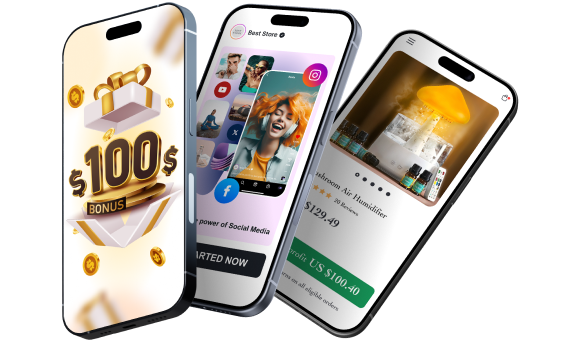
Starting a business takes momentum – and Sellvia gives you a head start. When you claim your free store today, you also get a $100 welcome gift to put toward growing your business. Use it to upgrade your store, boost your marketing, or unlock new tools. It is a real dollar value, handed to you on day one, with no catch and no hoops to jump through.
A massive catalog of digital products to sell 🏆
One of the biggest struggles in starting an online business is figuring out what to sell. Sellvia solves that completely. Your store comes pre-loaded with digital products – guides, courses, checklists, and tools – all created by Sellvia. You keep 50–70% of every sale. No inventory. No shipping. No logistics headaches.
Everything in one easy-to-use platform 🔥
Managing an online store shouldn’t be complicated. With Sellvia, you can handle orders, add new products, and even chat with customers – all from a simple and user-friendly platform. No need to mess with confusing tools or deal with unnecessary tech stuff. It’s all smooth sailing.
No upfront costs, just start selling 💰
A big reason people hesitate to start an online business is the cost. But here’s the good news: With Sellvia, you don’t need to invest in stock, storage, or shipping supplies. You can run your store with no upfront costs, keeping things low-risk while still making money.
Support that’s always got your back 🤝
Running a business comes with questions, but you’re never alone. Sellvia’s dedicated support team is available 24/7 to help with anything you need. Whether it’s a small question or a big challenge, they’ve got you covered.
Starting an online store is one of the most accessible ways to build real income in 2026 – and Sellvia gives you everything you need to go from zero to your first sale without the technical headaches. Claim your free store today and start building the income you have been working toward.
What is the cheapest way to start an online store?
How long does it take to make money starting an online store?
Most beginners see their first sale within 2 to 4 weeks of launching if they are actively using their ads or posting on social media. Reaching a consistent 30 to 80 dollars per day typically takes 60 to 90 days of focused effort. Building to a full-time income of 200 dollars or more per day is realistic within 6 to 12 months for store owners who treat the business seriously. Results vary based on niche, effort level, and consistency.
Do I need a business license to start an online store?
Requirements vary by location, but in most countries you are not required to register a business before making your first sale. Once you are earning consistently, most regions do require some form of business registration. In the US, forming an LLC costs between 50 and 300 dollars depending on your state and provides basic legal protection. It is worth speaking with a local accountant or advisor once your store starts generating regular revenue.
What should I sell when starting an online store?
The best products for a new online store are ones with consistent year-round demand and a clear problem they solve for the buyer. Digital products such as guides, checklists, and tools are a strong starting point because they have no inventory or logistics involved. Categories like home organization, personal finance tools, and productivity guides perform reliably across most traffic channels. Sellvia stores come pre-loaded with digital products from their own catalog, so you do not have to figure out what to sell on your own.
Is starting an online store worth it in 2026?
Yes, starting an online store is absolutely worth it in 2026 for motivated beginners willing to invest consistent effort over 3 to 6 months. Online shopping continues to grow year over year, and independent store owners have better tools and platforms available today than at any previous point. The main reason stores fail is not the market – it is quitting too early before results have had time to build. Sellers who stay consistent, test what works, and keep improving tend to build profitable stores within their first year.