You already spend money on groceries, gas, and everyday purchases. What if a small part of that spending came back to you every single week? That is exactly what the best cash back apps are designed to do. They run quietly in the background while you shop the way you normally would – and send a slice of that spending back to your wallet.
Quick Answer: The best cash back apps in 2026 include Ibotta, Rakuten, Fetch Rewards, Upside, and Dosh. Each one rewards you for purchases you are already making – no lifestyle change required. Most users earn between $20 and $150 per month depending on how many apps they stack and how consistently they use them.
These apps will not replace a paycheck. But they can soften the pressure. A few dollars here, a few dollars there – and suddenly your streaming subscription is covered, or you have a little extra at the end of the month. Small wins matter when every dollar counts.
What are cash back apps?
Cash back apps are free tools that reward you for shopping at participating stores, restaurants, and websites. Stores and brands pay a fee to attract customers. The app takes a cut of that fee and passes some of it back to you as cash or points. You are not getting something for nothing – the stores are paying for your attention and loyalty. You are just collecting your share.
Most apps work in one of three ways. Some ask you to scan your paper receipt after a purchase. Others link to your debit or credit card and automatically track spending at partner stores. A third type gives you a shopping portal – you click through the app before buying online, and the rebate is credited to your account.
Payouts vary. Some apps pay cash through PayPal or direct deposit. Others issue gift cards or points you can redeem for rewards. The best cash back apps offer real cash options – because points you can not easily spend are not as useful as money in your account.
How much can you realistically earn with cash back apps?
The honest answer is: it depends on how much you spend and how many apps you stack. Casual users who only use one app might see $5 to $20 per month. Regular users who combine apps across groceries, gas, and online shopping can push that closer to $50 to $150 per month. Heavy users who stack apps, use referral bonuses, and chase seasonal promotions report $200 or more in some months.
One note on the ceiling figures: The top range assumes consistent use across multiple apps, active referral promotion, and taking advantage of seasonal deals. For most people using 2–3 apps on everyday shopping, 30 to 80 dollars per month is a realistic and achievable goal within the first 60 to 90 days.
Cash back is a great supplement to your regular income. It is not a replacement. If you are looking to build something bigger – an actual income stream that grows – there are better paths worth exploring. More on that later in this article.
The 16 best cash back apps in 2026
Not every app fits every lifestyle. The best cash back apps are the ones that match where you already spend your money. Below is a breakdown by category so you can find the right fit fast.
Grocery and everyday shopping
If most of your budget goes to food and household supplies, these apps will give you the best return on your regular spending.
1. Ibotta
Ibotta is one of the most popular cash back apps for grocery shoppers. You browse offers before your trip, buy the qualifying items, then scan your receipt to claim your cash. It works at major chains like Walmart, Kroger, Target, and hundreds of smaller stores.
Earning potential: $10–$40 per month for regular grocery shoppers who check offers before each trip.
Pros: Wide store coverage, consistent offers, reliable payouts. Cons: Some offers are brand-specific, so you may need to switch products to qualify.
Payout options: Direct deposit, PayPal, or gift cards.
2. Fetch Rewards
Fetch Rewards is the most beginner-friendly app on this list. You do not need to pre-select offers. Just scan any receipt from any store after you shop, and points are automatically added to your account. Points convert to gift cards at major retailers.
Earning potential: $5–$20 per month for everyday shoppers who scan receipts consistently.
Pros: Works at almost any store, zero setup required. Cons: Points only convert to gift cards, not cash.
Payout options: Gift cards only.
3. Shopkick
Shopkick is a little different. You earn “kicks” not just for buying things but for walking into stores and scanning product barcodes. If you like earning without always spending, this one has an edge.
Earning potential: $5–$15 per month with regular store visits and purchases.
Pros: Multiple ways to earn, fun and easy to use. Cons: Payouts are lower than dedicated cash back apps.
Payout options: Gift cards or PayPal.
Gas and travel
If fuel costs are eating into your budget, these apps target exactly that. Even saving a few cents per gallon adds up fast for regular commuters.
4. Upside
Upside is built for people who drive often. Open the app, find a participating gas station nearby, pay as usual, and claim your cash back. It also works at restaurants and hotels, making it versatile for travel.
Earning potential: $15–$50 per month for daily commuters who fill up regularly.
Pros: High rebates on fuel, easy to use, no receipt scanning needed. Cons: Coverage can be thin in rural areas.
Payout options: Direct deposit, PayPal, or gift cards.
5. Dosh
Dosh is the most hands-off cash back app available. Link your debit or credit card once, and it automatically tracks your spending at thousands of participating stores, restaurants, and hotels. No receipts, no clicking through portals – it just happens.
Earning potential: $10–$30 per month for users who regularly visit partner locations.
Pros: Fully automatic, no effort required after setup. Cons: Merchant network is smaller than some competitors.
Payout options: PayPal or Venmo.
Online shopping
If you shop online regularly – Amazon, Target, clothing, electronics – these tools sit inside your browser and work without you even thinking about them.
6. Rakuten
Rakuten is the gold standard for online cash back. You shop through the Rakuten portal or install the browser extension, and you earn a percentage back at over 3,500 retailers. Their quarterly “Big Fat Check” payout is one of the most popular features.
Earning potential: $20–$100 per month for active online shoppers who use the extension consistently.
Pros: Huge retailer network, strong sign-up bonus, in-store cash back also available. Cons: In-store offers require activating the deal in the app first.
Payout options: Check, PayPal, or American Express points.
7. PayPal Honey
Honey automatically finds and applies coupon codes at checkout when you shop online. On top of that, you earn Honey Gold points on purchases at participating retailers, which convert to gift cards.
Earning potential: $5–$25 per month in combined savings and rewards for regular online shoppers.
Pros: Automatic coupon hunting, stacks with other rewards. Cons: Points take time to reach the gift card redemption threshold.
Payout options: PayPal Rewards or gift cards.
8. Capital One Shopping
This browser extension does two things: it compares prices across retailers to make sure you are getting the best deal, and it earns you rewards automatically when you shop online at participating stores.
Earning potential: Variable – most useful for the price comparison feature, which can save $10–$50 on larger purchases.
Pros: No receipts, no setup beyond installing the extension. Cons: Rewards mainly come as gift cards rather than cash.
Payout options: Gift cards.
Dining and food delivery
If you order delivery or eat out regularly, these apps can help you recover a slice of that spending.
9. Seated
Seated rewards you for booking restaurant reservations through the app. The more you dine at partner restaurants, the more points you collect – redeemable for gift cards at popular retailers.
Earning potential: $10–$30 per month for users who dine out multiple times a week.
Pros: Easy to use, great for restaurant regulars. Cons: Partner coverage is stronger in cities than in smaller towns.
Payout options: Gift cards.
10. DoorDash cash back
DoorDash does not have a built-in cash back program, but it partners with several cash back platforms. By activating offers through apps like Dosh or Rakuten before placing your order, you can earn a percentage back on deliveries.
Earning potential: $5–$20 per month for regular delivery users who remember to activate offers first.
Pros: Stacks with other apps, wide delivery network. Cons: You need to remember to activate the deal before ordering.
11. Grubhub cash back
Similar to DoorDash, Grubhub runs promotions through partner cash back apps and cards. Linking your payment method or activating a deal before you order is all it takes to save on each delivery.
Earning potential: $5–$15 per month for consistent Grubhub users.
Pros: Works with major cash back apps, no complex setup. Cons: Promotions are not always available and vary by location.
All-in-one rewards apps
These apps go beyond shopping. You can earn points or cash through surveys, videos, and small tasks – great for adding a little income during downtime.
12. Swagbucks
Swagbucks is one of the most established rewards platforms online. You earn “SB” points by shopping, watching videos, answering surveys, and completing small tasks. Points convert to PayPal cash or gift cards.
Earning potential: $20–$60 per month for active users who combine shopping, surveys, and daily tasks.
Pros: Multiple earning methods, reliable payouts, long track record. Cons: Individual tasks pay modestly – consistency is what builds earnings over time.
Payout options: PayPal or gift cards.
13. MyPoints
MyPoints leans more heavily toward online shopping and email offers. You earn points for clicking links in emails, making purchases through the portal, and taking surveys. Points can be traded for cash, gift cards, or travel miles.
Earning potential: $10–$40 per month for users who combine shopping offers and survey activity.
Pros: Several earning options, frequent promotions. Cons: Gift card processing can be slow compared to other platforms.
Payout options: PayPal, gift cards, or travel miles.
Niche and up-and-coming apps
These apps are simpler and more focused – good picks if you want a low-effort starting point.
14. CoinOut
CoinOut lets you earn rewards by scanning receipts from any store – no pre-selected offers, no loyalty programs to join. Just scan and earn. It is as simple as cash back apps get.
Earning potential: $2–$10 per month. Best used as a supplement to a primary cash back app.
Pros: Extremely simple, works at any store. Cons: Individual payouts per receipt are small.
Payout options: Direct deposit or gift cards.
15. Receipt Hog
Receipt Hog gamifies the receipt-scanning experience. You submit receipts, earn coins, and trade them for PayPal cash or gift cards. There is a slot machine element that makes it more entertaining than a standard scan-and-earn app.
Earning potential: $5–$15 per month for consistent receipt submitters.
Pros: Fun interface, works at almost any store. Cons: Reward accumulation is slower than dedicated grocery apps.
Payout options: PayPal or gift cards.
16. Drop
Drop links to your debit or credit card and automatically earns points when you shop at partner retailers. A standout feature is the option to redeem points for gift cards or cryptocurrency – making it one of the more modern options on this list.
Earning potential: $5–$20 per month for users who regularly shop at partner stores.
Pros: Hands-off earning, crypto redemption option, good for younger users. Cons: Merchant selection is more limited than Rakuten or Dosh.
Payout options: Gift cards or cryptocurrency.
How to get the most out of cash back apps
Using one app is a good start. Using several strategically is where earnings actually grow. Here are four habits that make a real difference.
Stack apps on the same purchase
Many apps do not compete with each other. You can use Ibotta to claim a grocery rebate and also earn points on Fetch Rewards from the same receipt. Pair either of those with a cash back credit card and you have three layers of savings on one transaction.
Use the referral program
Almost every app on this list has a referral bonus. Ibotta pays up to $10 per referral. Fetch Rewards gives both you and your friend bonus points. Rakuten offers a referral bonus when your friend makes their first qualifying purchase. Sharing an app with five friends can easily add $25 to $50 in bonus earnings with minimal effort.
Track seasonal promotions
Apps like Rakuten and Ibotta run significantly higher rebates around the holidays, back-to-school season, and major retail events. Checking for limited-time offers before big shopping trips can double or triple your normal cash back on a single purchase.
Focus on your highest-spend categories
Match apps to where your money actually goes. If fuel is your biggest expense, Upside is your priority. If you order delivery several times a week, stacking Rakuten or Dosh with your delivery app makes more sense than downloading an app for a store you never visit.
What to watch out for
Cash back apps are generally safe and legitimate – but a few things are worth keeping in mind before you link your card or sign up for everything at once.
Privacy and data use
Most apps track your spending habits to match you with offers. That is how they work. Before linking a card or account, read the privacy policy and understand what data is collected and whether it is shared with third parties. Reputable apps like Rakuten, Ibotta, and Dosh are transparent about this. Be more careful with lesser-known apps that lack clear documentation.
Minimum withdrawal thresholds
Some apps require you to accumulate $20 or more before you can cash out. If you only use the app occasionally, it can take months to hit that threshold. Stick with apps where the payout minimum is achievable given your spending patterns.
Spotting fake cash back apps
Key principle: Any app that asks for an upfront payment or promises hundreds of dollars per day from minimal activity is not legitimate. Real cash back apps earn money from merchant partnerships – they do not need to charge you to use them. Stick with apps that have documented payout records and verified reviews on the App Store or Google Play.
Overspending to earn
Important: Never buy something you would not normally purchase just to earn cash back. The math never works in your favor. Cash back apps reward you for spending you were already going to do – not for creating new spending habits.
Which cash back apps are right for you?
The best combination depends on your spending habits and how much time you want to spend managing apps. Here is a quick guide by profile.
Complete beginner
Start with Fetch Rewards and Rakuten. Fetch Rewards requires no setup or pre-planning – just scan receipts. Rakuten works automatically online if you install the browser extension. Together, these two apps cover your grocery and online spending with almost zero extra effort.
Regular shopper wanting steady savings
Add Ibotta for grocery-specific rebates, Upside if you drive regularly, and Dosh for automatic card-linked rewards. With this stack, a household spending $500 per month on groceries, gas, and dining can realistically save $40 to $80 per month.
Someone looking for more than savings
If you have gotten comfortable with cash back apps and want to move toward actual income – not just savings – the next step is building something that earns on its own. Cash back apps cap out. A business grows. The gap between the two is worth thinking about seriously.
Why Sellvia is a game-changer for your online store 🚀
Sellvia isn’t just another ecommerce tool. We are a trusted name in the industry, recognized by Forbes and even ranked in Inc.’s list of the 5,000 fastest-growing companies in the U.S. So if you’re serious about starting as a solopreneur, this is a smart place to begin.
Starting an online business can feel overwhelming, but that’s exactly where Sellvia steps in. It takes care of the tricky parts, so you can focus on making sales and growing your brand. Let’s break down what makes it such a great choice.
Get a ready-to-go store hassle-free 🎯
Want to start selling but don’t know where to begin? No worries! Just share your ideas, and Sellvia’s team will build a free ecommerce website that’s fully set up and ready to take orders from day one. No coding, no stress – just a store that works right out of the box.
A $100 welcome gift to grow your business faster 🎁
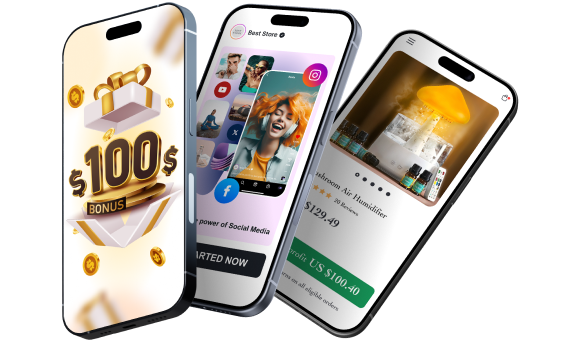
Starting a business takes momentum – and Sellvia gives you a head start. When you claim your free store today, you also get a $100 welcome gift to put toward growing your business. Use it to upgrade your store, boost your marketing, or unlock new tools. It is a real dollar value, handed to you on day one, with no catch and no hoops to jump through.
A massive catalog of digital products to sell 🏆
One of the biggest struggles in starting an online business is figuring out what to sell. Sellvia solves that completely. Your store comes pre-loaded with digital products – guides, courses, checklists, and tools – all created by Sellvia. You keep 50–70% of every sale. No inventory. No shipping. No logistics headaches.
Everything in one easy-to-use platform 🔥
Managing an online store shouldn’t be complicated. With Sellvia, you can handle orders, add new products, and even chat with customers – all from a simple and user-friendly platform. No need to mess with confusing tools or deal with unnecessary tech stuff. It’s all smooth sailing.
No upfront costs, just start selling 💰
A big reason people hesitate to start an online business is the cost. But here’s the good news: With Sellvia, you don’t need to invest in stock, storage, or shipping supplies. You can run your store with no upfront costs, keeping things low-risk while still making money.
Support that’s always got your back 🤝
Running a business comes with questions, but you’re never alone. Sellvia’s dedicated support team is available 24/7 to help with anything you need. Whether it’s a small question or a big challenge, they’ve got you covered.
Cash back apps are a smart way to save – but a Sellvia store is how you start earning on your own terms. Claim your free store today and see what real income can look like.
What are the best cash back apps for groceries in 2026?
How do cash back apps actually work?
Cash back apps earn money through partnerships with stores and brands that pay fees to attract shoppers. The app shares a portion of those fees with you as rewards when you buy qualifying products or shop at partner locations. Most apps track purchases through receipt scanning, linked debit or credit cards, or online shopping portals. When you earn enough rewards, you can redeem them for PayPal cash, direct deposit, or gift cards depending on the platform.
Can you use multiple cash back apps at the same time?
Yes, you can often use multiple cash back apps on the same purchase without any conflict. For example, you can scan a grocery receipt in both Ibotta and Fetch Rewards and earn from both simultaneously. Pairing a receipt-based app with a card-linked app like Dosh and a cash back credit card creates 3 separate reward streams from one transaction. Always check the individual terms of each app to confirm there are no restrictions on combining offers.
How much can you realistically earn from cash back apps per month?
Most casual users who stick to 1 or 2 apps earn between 5 and 20 dollars per month. Regular shoppers who use 3 to 5 apps across groceries, gas, and online purchases typically earn 50 to 150 dollars per month. Heavy users who stack apps, take advantage of referral programs, and chase seasonal promotions have reported earning 200 dollars or more in strong months. The most realistic expectation for a new user is 30 to 80 dollars per month within the first 60 to 90 days of consistent use.
Are cash back apps safe to use with your bank or card information?
Reputable cash back apps like Ibotta, Rakuten, Dosh, and Fetch Rewards use bank-level encryption to protect your personal and financial data. These companies have long operating histories and documented security practices that are publicly available. It is always wise to read the privacy policy of any app before linking a payment account, since some platforms share anonymized spending data with third-party advertisers. Stick with apps that have strong ratings on the App Store or Google Play and verified customer reviews, and avoid any app that requests an upfront payment or promises unrealistic daily earnings.