You’ve probably done this without noticing.
You’re chilling on TikTok or Instagram, scrolling for fun… and suddenly you’re watching a 12-second product clip. Someone shows a quick demo, the comments are full of “WHERE DID YOU GET THIS,” and the creator casually drops a link.
Here’s the part most people miss: that clip isn’t random content. It’s a storefront. And the people who understand this are quietly making money while everyone else thinks they’re “just posting.”
In this article, we’re taking a shopping tour through real stores that sell through short videos. You’ll see what they post, how those videos are structured, and why some accounts make buying feel almost automatic.
And at the end, you’ll see a simple way to launch the same kind of business for yourself – with a ready-made store built for TikTok and Instagram, even if you’ve never sold online before.
Let’s get into it.
Instagram & TikTok store
All for FREE when you act here and now!
TikTok stores that sell inside the feed
You’ve seen these types of videos before – now let’s look at the stores that actually make money from them. These stores don’t need a long “About Us” page. Their videos do the selling for them.
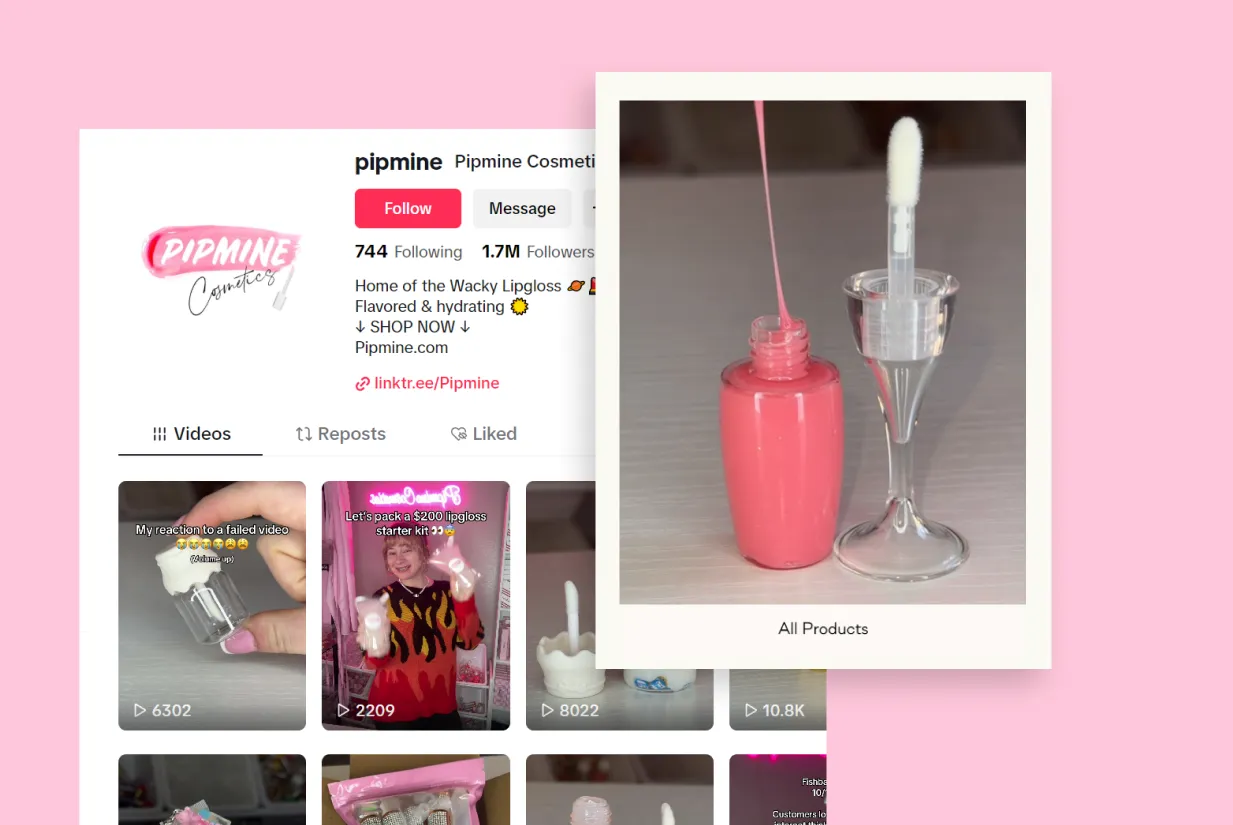
1) Pipmine / @pipmine
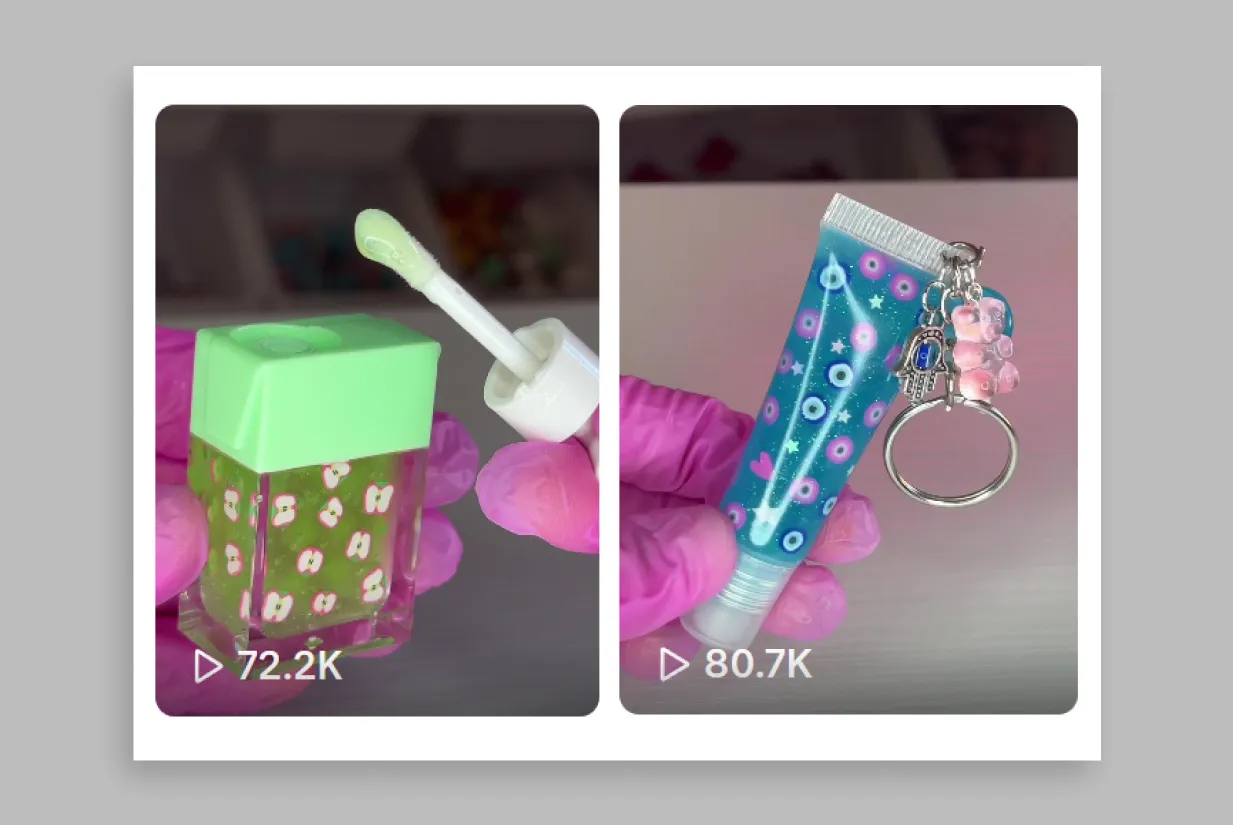
They sell collectible, flavor-inspired lip gloss that practically markets itself on camera – and starter kits for anyone who wants to turn the same idea into a simple first business.
1) Why their videos sell:
Pipmine understands one thing perfectly: humans are sensory creatures. We buy the idea of a gloss, not just what it does – shine on the lips. We go for the nice smell, the cute theme, the aesthetic, the “OMG, that’s so cute” moment.
Pipmine’s strongest videos usually start with a super specific promise (a flavor/scent claim). Then the camera stays tight: mixing, filling, close-ups of texture, the packaging, the final reveal. It’s basically a mini product page – just more satisfying.
2) How buying works (customer path):
A viewer sees a flavor/theme they like, taps the profile, and shops via the link (products or kits). The content creates the craving – the profile link catches the purchase.
They pick one signature attribute (smell, texture, color, limited edition theme) and turn it into a series people recognize instantly: “it smells like…” / “wait for the finish…” / “watch the texture.” And it works perfectly.
Exciting, isn’t it? Now let’s talk about other examples.
Instagram & TikTok store
All for FREE when you act here and now!
2) Scrub Gun / @myscrub.gun
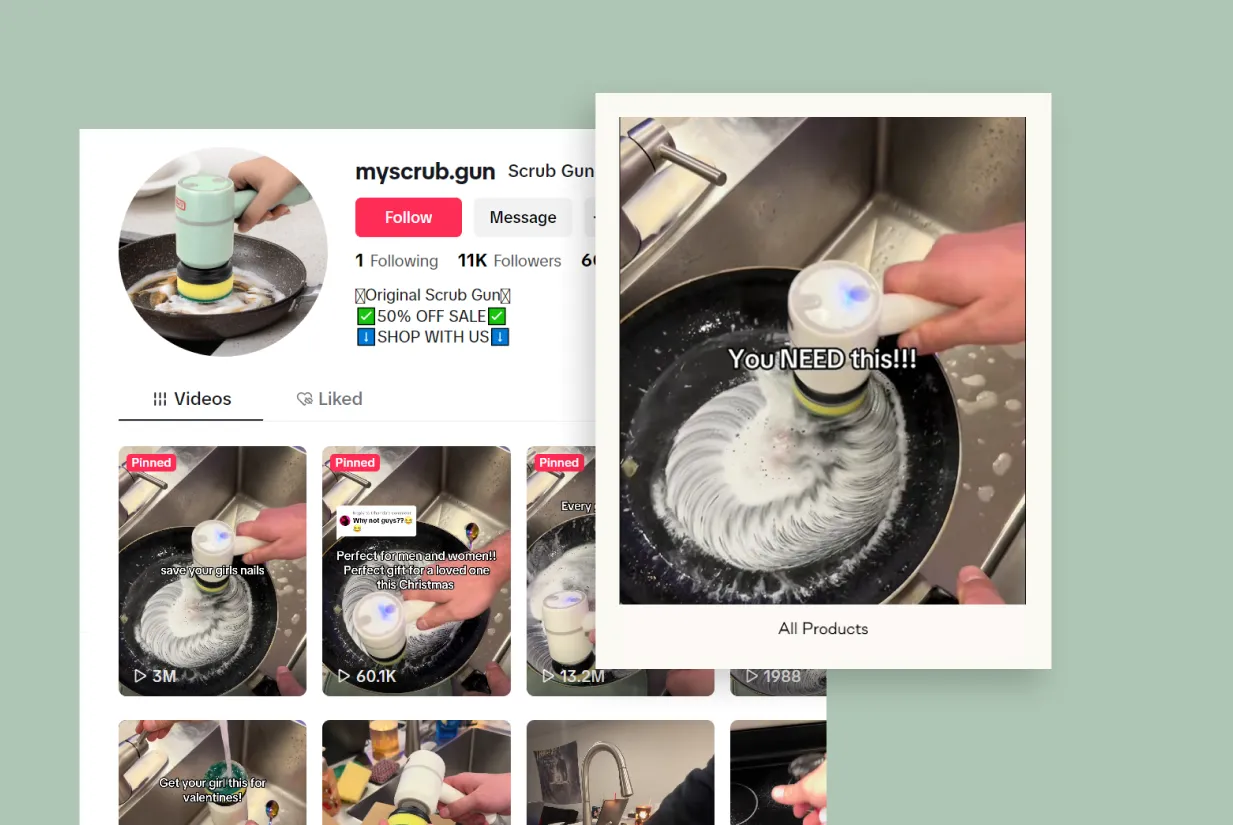
They sell a handheld power scrubber that turns cleaning into a quick, satisfying “watch it work” moment – built for people who love hacks, before/after results, and anything that saves effort.
1) Why their videos sell:
This is a classic CleanTok category – and it sells because it’s visual. A spinning brush + grime lifting is the kind of proof you don’t need to explain. And who doesn’t like seeing things get clean and shiny? There’s a whole genre of videos like that.
Scrub Gun leans into a smart psychological trick: they frame the product like it’s already validated (“TikTok made me buy it”). Even if an account’s recent numbers look uneven, one breakout hit plus consistent posting can carry a store for months.
2) How buying works (customer path):
They typically push two paths depending on the post: either “link in bio” to a product page, or direct TikTok Shop intent. The key is: the CTA is never vague – it tells you exactly what to do next.
There’s a simple content machine:
- one hero demo video that does huge numbers (“wow, it works”)
- plus smaller repeat posts that push urgency (“on sale today,” “limited stock,” “today only”
That combo keeps the algorithm fed and keeps buyers moving.
3) Scrub Daddy / @scrubdaddy
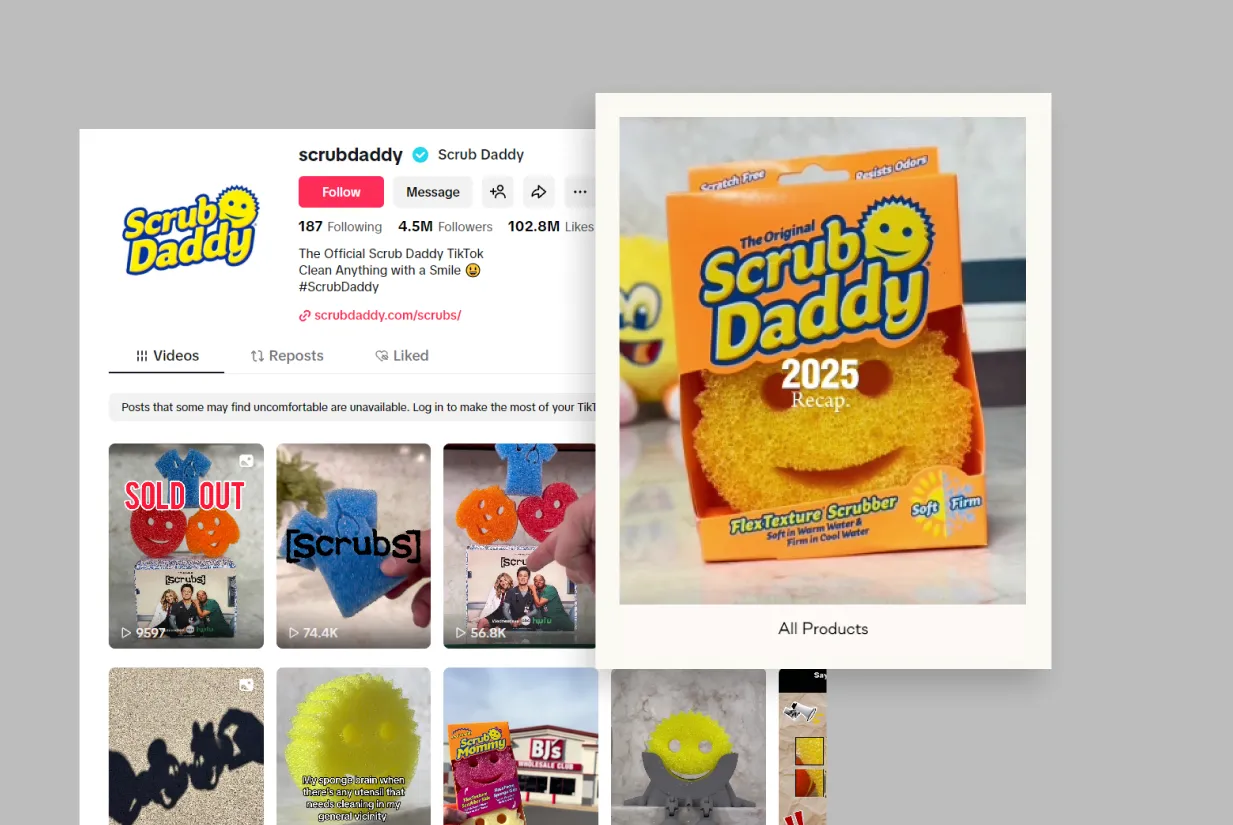
They sell familiar, trusted cleaning products – and use short, entertaining videos to prove the payoff fast and make buying feel effortless for everyday households.
1) Why their videos sell:
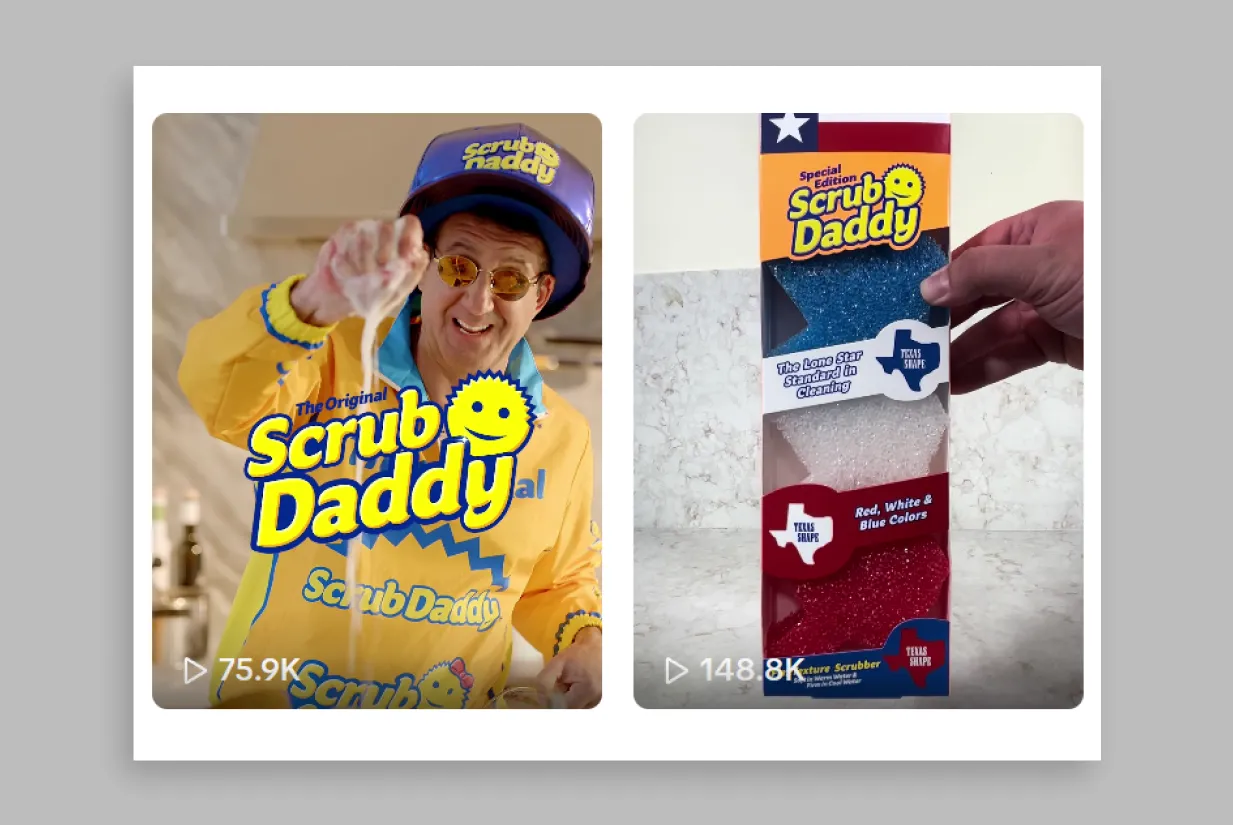
Scrub Daddy is proof that even a household-name brand still has to earn attention in the feed. Their winning move is simple: content feels native. It opens like entertainment (POV style, humor, trends), then the product shows up as part of the story.
And when it’s time to convert? They don’t overcomplicate it. The CTA is blunt and easy: “grab it here,” “buy it at X,” “get a pack today.” No confusion.
2) How buying works (customer path):
They often turn the purchase step into one obvious action: buy at a known retailer or click through from the profile. Less thinking = more conversions.
Instagram & TikTok store
All for FREE when you act here and now!
What do these TikTok stores have in common?
Different niches, same engine: the video is the product page.
Pipmine sells with sensory storytelling. Scrub Gun sells with satisfying proof and urgency triggers. Scrub Daddy sells by keeping ads native and the buying step painfully simple.
Now let’s look at Instagram, where the feed has an extra power: it can feel like a curated storefront.
Instagram reels: Where a profile becomes the storefront
Reels rewards speed and proof just like TikTok – but Instagram adds something valuable: layout. When a profile looks coherent and polished, people trust it faster and shop with less hesitation.
Here are three Instagram stores worth studying.
4) Mejuri / @mejuri
They sell everyday fine jewelry that’s designed to look effortless – perfect for people who want wearable luxury that feels personal, giftable, and easy to style on repeat.
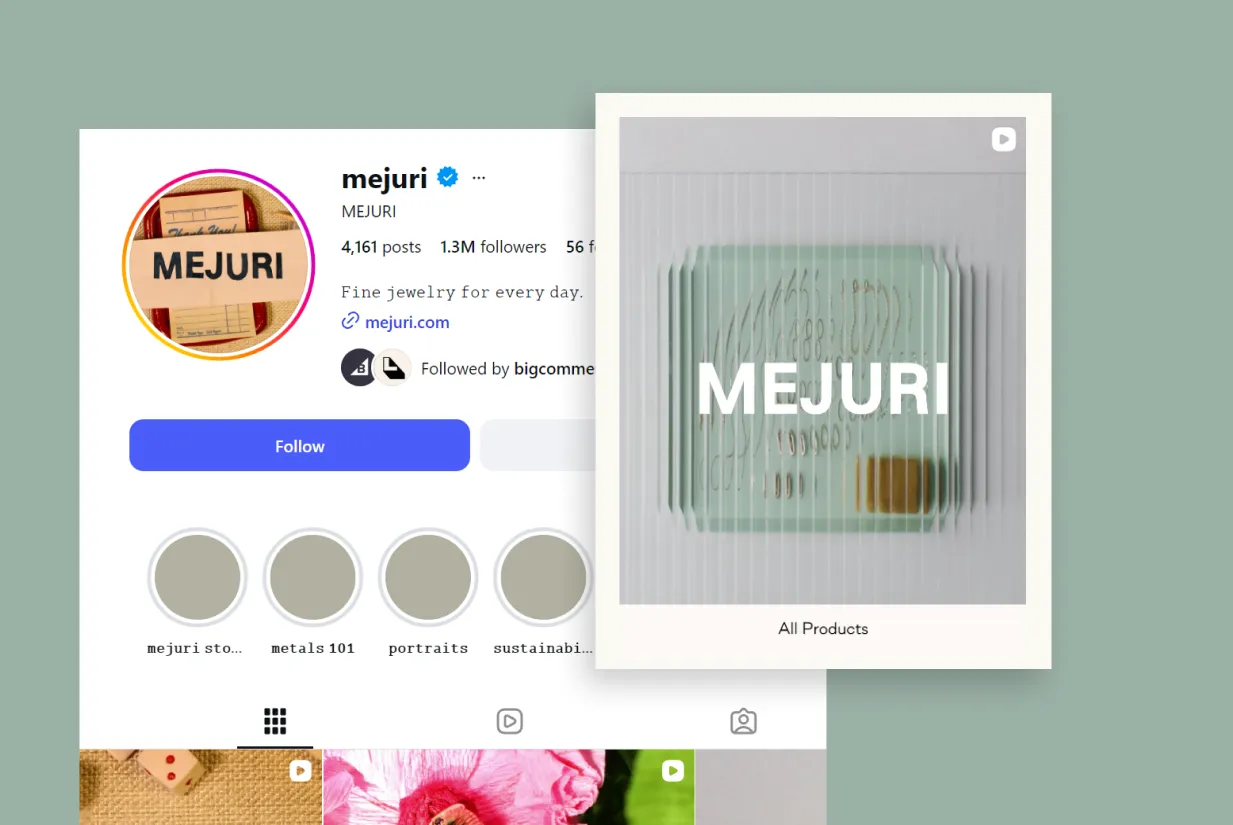
1) Why their reels sell:
Mejuri doesn’t try to be loud. Their Reels feel premium because they’re clean, minimal, and emotionally framed. The hook is identity: “this is personal,” “this is your everyday piece,” “this is the vibe.”
Then the visuals do the selling: close-ups, styling shots, how it sits on the body. That’s the product page, but prettier.
2) How buying works (customer path):
A Reel builds desire (personal/luxury/gift), then the buyer clicks through to shop on the site.

Next business you must have heard of!
Instagram & TikTok store
All for FREE when you act here and now!
5) Crumbl / @crumbl
They sell rotating weekly desserts that feel like a drop – built for impulse snack shoppers who don’t want to miss whatever flavor is trending this week.
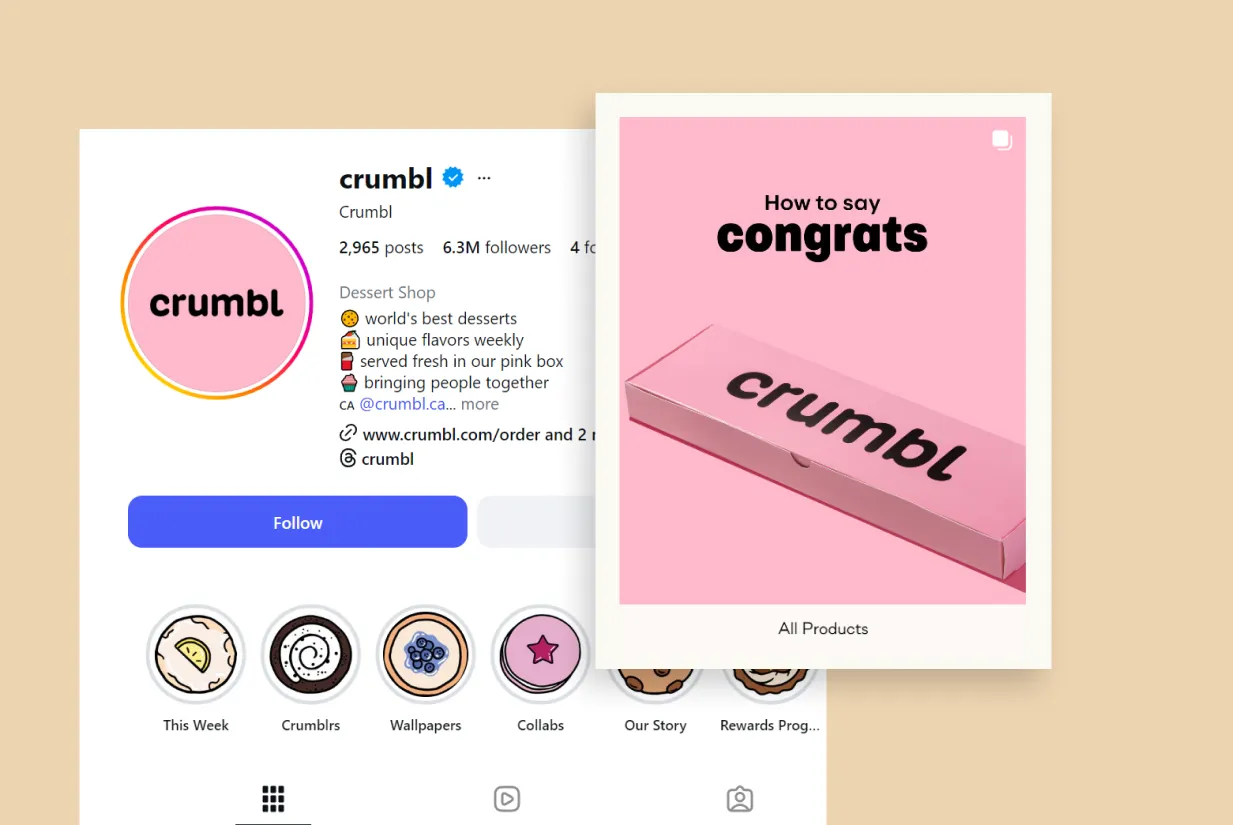
1) Why their reels sell:
Crumbl makes shopping feel like pop culture. Humor, texture shots, box reveals – and the rotation creates built-in urgency.
When your product lineup changes constantly, you just need to make people feel like they’re missing out if they don’t try this week’s selection of cookies or whatever the product is.
2) How buying works (customer path):
Reels create the craving, then users follow through via the site/app for pickup or delivery.
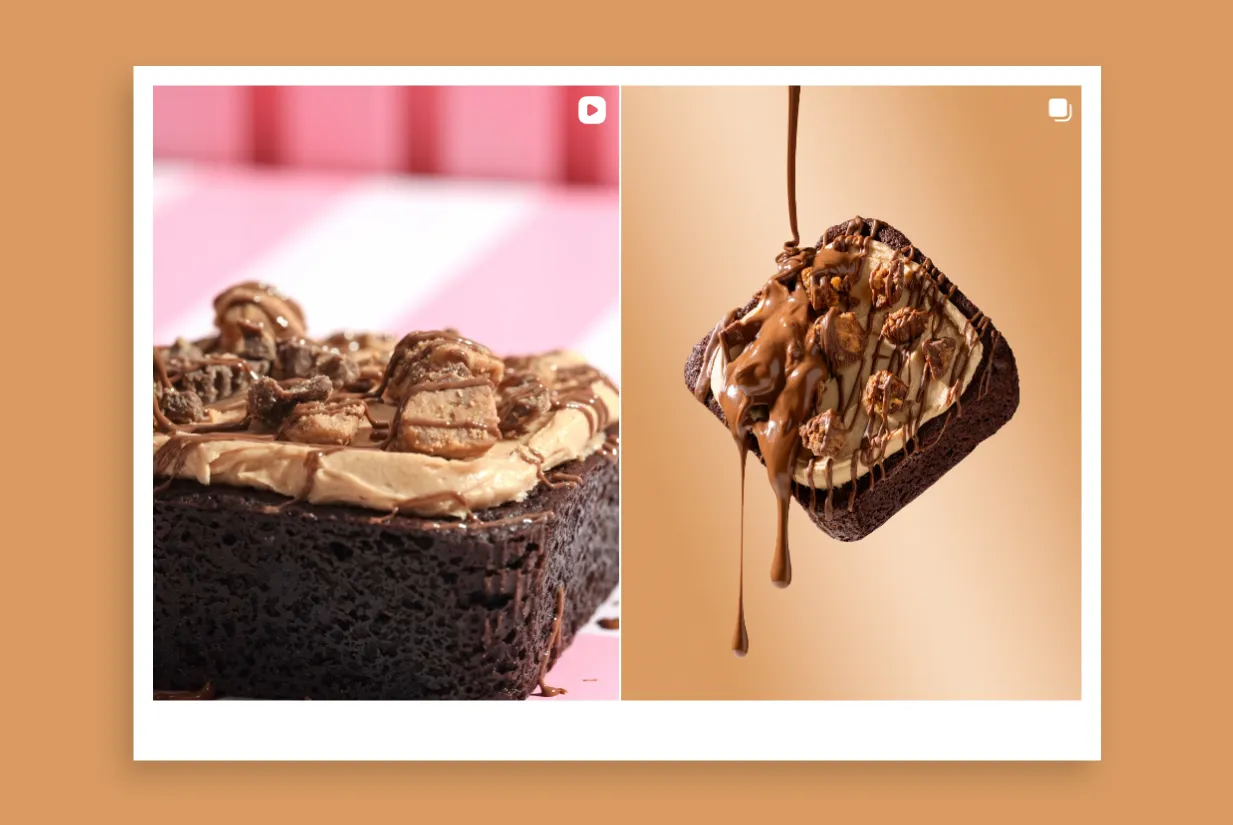
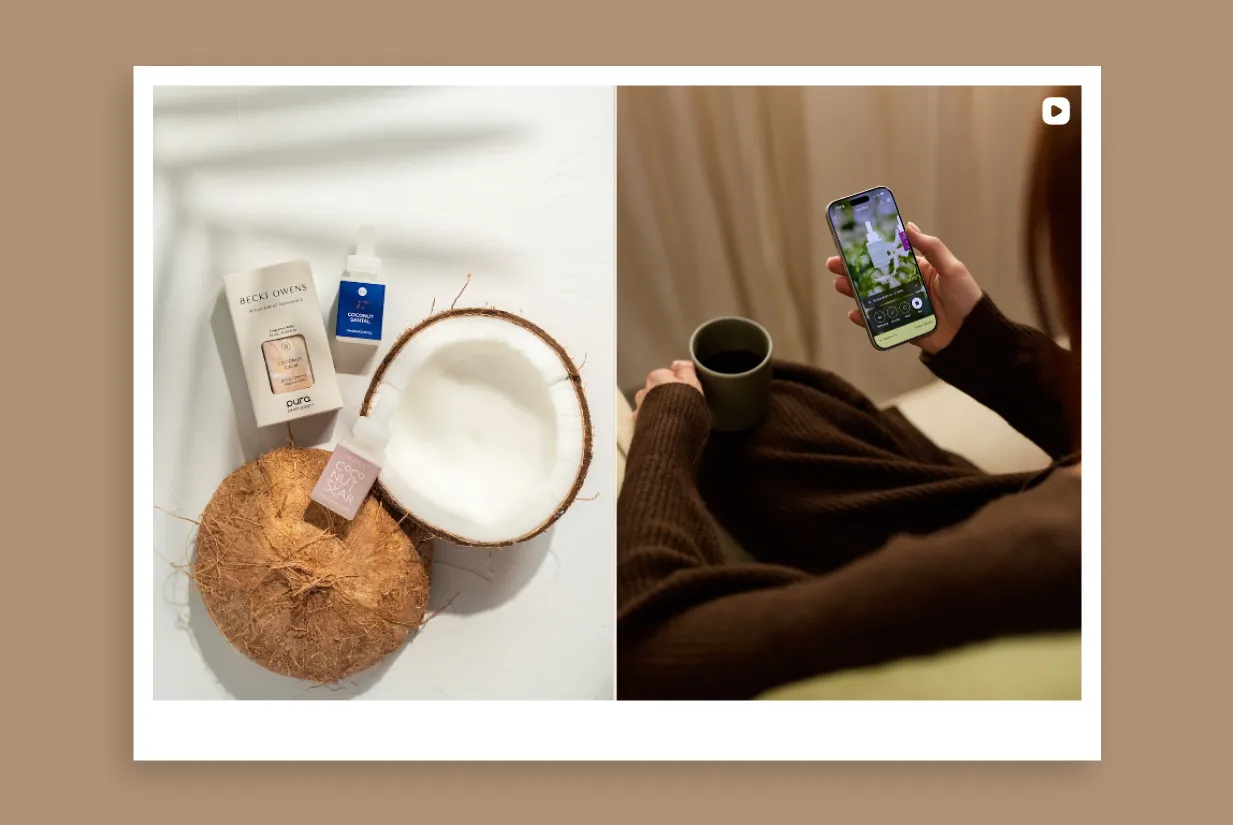
6) Pura / @pura
They sell smart home fragrance diffusers and scent refills, packaged as a daily routine – perfect for home-obsessed shoppers who want ambiance on autopilot.
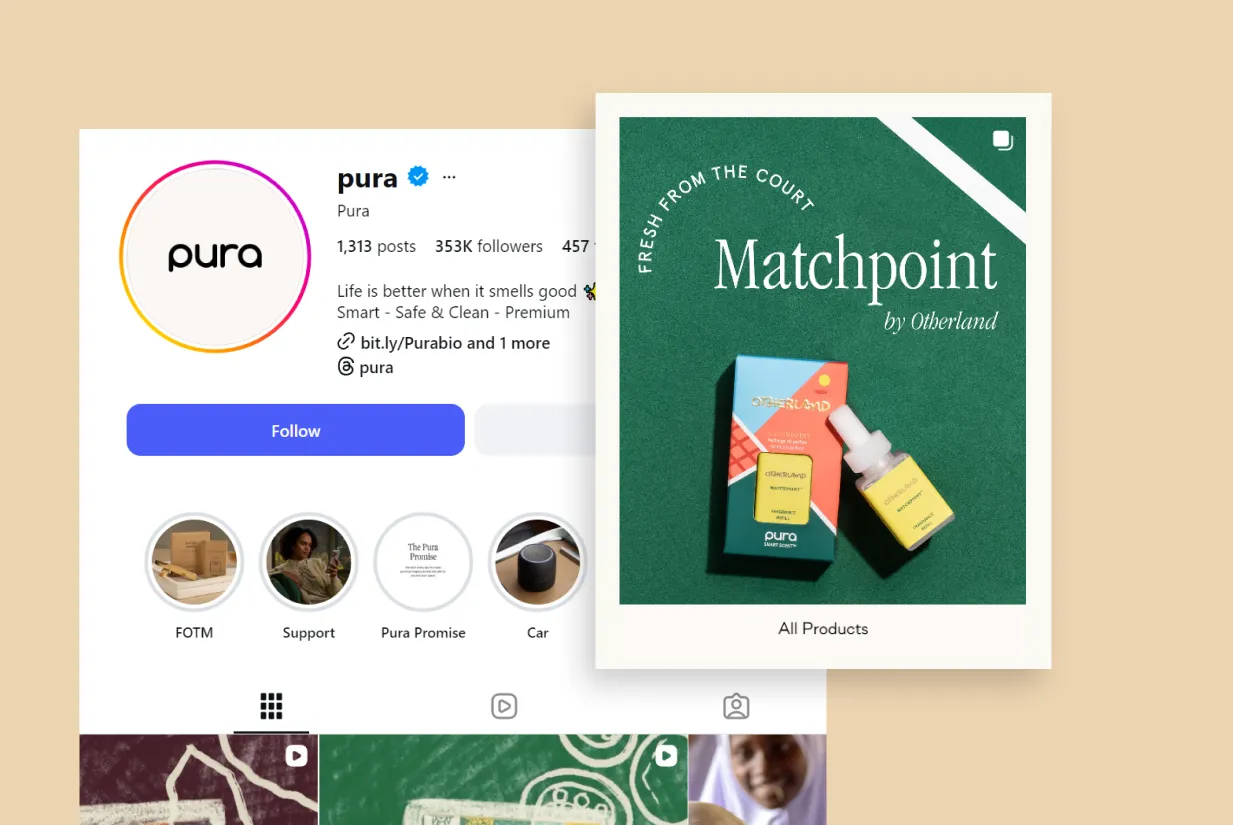
1) Why their reels sell:
Pura sells a feeling first: restoration, calm, “my home is a sanctuary.” Then they make the product feel smart without tech jargon by showing the routine – scheduling scent, setting it up, living with it.
It’s a great example of how to sell something “invisible” (smell, mood, ambiance) through visible routines.
2) How buying works (customer path):
Reels establish the lifestyle + explain the feature quickly, then users click through to buy on the official site.
What all these stores have in common (and why it matters for beginners)
After seeing totally different niches – lip gloss, cleaning gadgets, jewelry, desserts, home fragrance, and one thing becomes obvious:
the products change, but the selling engine stays the same.
These stores are good at one specific thing: they make buying feel effortless inside the feed. The video does the convincing, and the next step is always simple.
That’s the real reason short-form shopping works so well for beginners: you don’t need a complicated promo system or massive website with endless pages.
For a beginner, that’s a huge advantage. You don’t need a complex funnel or a massive website. Just something that looks good on camera, a video format that proves it fast, and a clean place to send people when they’re ready to buy.
And that’s where many newcomers get stuck.
The real beginner problem: “Heavy start”
When people say “I tried ecommerce and it didn’t work,” it’s often not the “selling” that didn’t work. They mean the starting didn’t work.
Because the typical path is brutal: choose a platform, design the store, upload products, write descriptions, connect payments, organize everything, make it look trustworthy… all before you’ve even posted your first real video. And oh, by the way, suppliers! Talking to them is a whole another job to take care of.
So instead of throwing you into the deep end, here’s the simplest way to start with the same kind of storefront these brands use.
The shortcut: A ready-made store built for TikTok + Instagram

That’s why this offer exists: a free ecommerce website plus a turnkey Instagram & TikTok store, ready to sell from day one.
Here’s what that means for you as a beginner:
- You get a fully working online store that is ready to sell and accept orders.
- You don’t have to wonder what to sell first either – the store comes with proven best-sellers available to add and scale.
- You’ll have a personal manager and 24/7 tech support in case of anything.
- No upfront investments. You don’t risk your funds whatsoever.
The bonus part is the coolest part: you also get a pre-built Instagram & TikTok store with viral products, plus professional promo videos and optimized captions, so you’re not staring at an empty profile wondering what to post.
How do you get the stores?
You claim the offer, answer a short survey about your preferences, and your store is available right away – access details come to your inbox. If you want to do this business without spending weeks building a store, Sellvia removes the biggest beginner bottleneck: starting from zero.
It couldn’t get any simpler
You don’t need to be a marketing genius to start. The stores we looked at aren’t doing secret tactics – they’re doing the basics consistently: clear demo videos, fast proof, and a simple place to buy.
If you want to try this business out without it being a stressful “build everything from scratch” project, the easiest next step is to start with the ready-made setup: free online store + Instagram & TikTok store bonus.
When the store is already handled, you can spend your energy where it actually matters: making the kind of short videos people already buy from.
If you want a low-risk way to try selling through TikTok and Reels, start with the ready-made online stores and enter social media with a system backing you up.
![Best Dropshipping Products To Sell Now [Updated Weekly]](https://sellvia.com/wp-content/uploads/2024/09/Banner-min.png)
![Quick Path To $6,000/week: Tom’s Dropshipping Strategy [Success Story]](https://sellvia.com/wp-content/uploads/2024/08/Ban-v1-min.png)