If you have been thinking about starting a business but feel completely overwhelmed by the options, you are not alone. One of the first questions most new entrepreneurs ask is: what are the different types of business models, and which one should I actually choose?
The answer depends on your goals, your starting budget, and how much time you can realistically commit – but the good news is that 2026 offers more accessible entry points than ever before.
Quick Answer: The main types of business models include online stores, digital products, freelancing, affiliate marketing, content creation, consulting, and SaaS. Each has a different cost structure, income ceiling, and time-to-profit. Digital product stores rank among the lowest-barrier options for beginners starting with little or no upfront investment.
This guide breaks down each model clearly – what it involves, how much you can realistically earn, and what it actually takes to get started. Whether you are completely new or ready to scale, you will find a clear comparison of your options here.
What are types of business models?
A business model is simply the framework that explains how a business creates value, delivers it to customers, and makes money in the process. When people talk about types of business models, they are referring to the underlying structure: who you sell to, what you sell, how you deliver it, and how revenue flows back to you.
Understanding this upfront matters more than most beginner guides acknowledge. Two businesses can sell similar products and yet operate under completely different models – one holding physical inventory and shipping from a warehouse, another selling digital products with instant delivery and zero logistics cost. The products can be similar. The risk, the cost structure, and the profit are completely different.
In 2026, the gap between “I have an idea” and “I have a running business” has narrowed significantly for several model types. You no longer need a physical location, a large team, or significant startup capital to build a legitimate, revenue-generating business. What you do need is a clear understanding of which model fits your situation.
Why this works in 2026: Global ecommerce is on track to surpass $7 trillion in annual sales, and the share captured by individual entrepreneurs continues to grow as platform tools, automation, and digital product networks become increasingly accessible to everyday people.
How much can you realistically earn from each business model?
Before diving into the individual models, it helps to anchor your expectations with honest numbers. Income figures online are almost always best-case scenarios – the top earners who have refined their approach over months or years. Here is a realistic comparison across the most common model types:
The table above gives you a framework, not a guarantee. Digital product stores stand out for beginners because they combine a low startup cost with a realistic path to income within 60–90 days. Freelancing pays well but trades time directly for money. SaaS has the highest ceiling but requires technical skills and a long runway before meaningful revenue appears.
One note on ceiling figures: The upper ranges shown above reflect operators putting in full-time effort and optimizing their approach over 6 to 12 months. Part-time operators should expect the lower half of each range, especially in the first 90 days.
What matters most is choosing a model that fits your actual situation – not the one with the highest theoretical ceiling. A model you can execute consistently at a moderate level will outperform a high-ceiling model you only manage part-time and inconsistently.
The main types of business models explained
Below is a thorough breakdown of each major model type – what it is, how it works in practice, what it costs to start, and what a realistic first-year outcome looks like.
Product-based business models
Digital products
Selling digital products – guides, templates, courses, checklists, online tools – is one of the highest-margin business models available to everyday people in 2026. You sell a product that is delivered instantly and digitally. There is no inventory, no packing, no shipping, and no logistics headaches. Once your store is live and traffic is coming in, each sale requires almost no additional work on your part.
The challenge for most beginners used to be the creation side: producing a digital product worth paying for takes real effort. But platforms now exist that solve this completely. Sellvia gives you a store pre-loaded with ready-made digital products – guides, courses, checklists, and tools – all created by Sellvia. You keep 50–70% of every sale. You did not have to create a single product.
Earning potential: $20–$150/day once your store is live and ads are running. Margins are typically 50–70% since there are no supplier costs per sale.
Traditional ecommerce (holding inventory)
Traditional ecommerce means you buy stock upfront, store it, and ship it yourself or through a fulfillment center. The margins can be higher because you negotiate bulk pricing, but the upfront capital requirement is also much higher. This model suits entrepreneurs who already have supplier relationships or access to wholesale pricing.
The risk profile is significant – if products do not sell, you are sitting on dead stock. For first-time business owners, this makes it a less forgiving starting point compared to digital products or online stores with no inventory requirement.
Earning potential: $50–$500/day once inventory is moving, but typically requires $2,000–$10,000 in startup capital to get meaningful traction.
Service-based business models
Freelancing
Freelancing means selling your skills directly to clients – writing, design, development, video editing, marketing strategy, and dozens of other disciplines. Platforms like Upwork and Fiverr connect you with clients globally, and skilled freelancers can command strong hourly or project rates.
The model is simple and has a fast path to first income – sometimes within days of creating a profile. The ceiling is limited by your time, however. Every project requires your direct involvement, which means freelancing does not scale the way a digital product store does.
Earning potential: $500–$5,000/month for most skilled freelancers, with specialists in high-demand areas earning significantly more.
Consulting and coaching
Consulting is freelancing with a higher price point and a more structured deliverable. You are not billing by the hour for task execution – you are being paid for strategic advice, frameworks, and outcomes. Coaches operate similarly, typically focusing on personal development, business growth, or career transitions.
Both models require credibility and a personal brand to attract clients at premium rates. They are high-effort in the client acquisition phase but can generate strong per-project income once you have a track record.
Earning potential: $2,000–$15,000/month for established consultants or coaches with a defined niche and demonstrable results.
Platform and traffic-based business models
Affiliate marketing
Affiliate marketing means promoting other companies’ products or services and earning a commission on each sale or lead you generate. You do not handle the product, the customer service, or the delivery – your job is to drive qualified traffic through content, search engine optimization, paid ads, or social media.
The model has a slow start. Building an audience or ranking content in search engines takes time – typically 6 to 12 months before you see meaningful, consistent income. Once the traffic is there, however, it can generate income with relatively little ongoing effort.
Earning potential: $100–$3,000/month for most content-based affiliates, with high-ticket affiliates in finance or software niches earning considerably more.
Content creation and ad revenue
YouTube channels, blogs, newsletters, and podcasts can generate income through advertising revenue, sponsorships, and audience monetization. This model requires building an audience first, which means months of content production before any meaningful income appears.
Ad revenue per 1,000 views or page impressions is modest – most creators combine ad revenue with affiliate links and their own product sales to build a sustainable income. It is a long-term play, not a fast path to financial freedom.
Earning potential: $200–$2,000/month for mid-size audiences of 50,000–200,000 monthly visitors or views, scaling significantly with audience growth and diversified monetization.
SaaS (software as a service)
SaaS is arguably the most scalable business model in existence. You build a software product once and charge customers a recurring monthly or annual fee to use it. The revenue compounds as you add customers without proportionally increasing costs.
The barrier to entry is significant. You need technical skills or the capital to hire developers, a strong product concept backed by real market demand, and the patience to sustain 12 to 24 months of development and early-stage marketing before meaningful revenue appears. Most SaaS ideas never reach product-market fit.
Earning potential: Essentially uncapped, but the realistic range for a bootstrapped solo SaaS after 18 months is $1,000–$15,000/month. It is a high-ceiling, high-effort, long-runway model.
How to evaluate which business model fits your situation
Choosing between the types of business models covered above is not about finding the “best” one in the abstract. It is about finding the best fit given your specific constraints. Four questions will narrow this down quickly.
How much startup capital do you have?
If your starting budget is under $500, your realistic options are freelancing, affiliate marketing, and digital product stores. Traditional ecommerce requires inventory capital. SaaS requires development resources. These two are effectively off the table without meaningful capital or technical skills.
Digital product stores stand out in this category because Sellvia gives you a free store – fully built, stocked with digital products, and ready to take orders. The 14-day free trial includes a $40 ad coupon so you can start getting orders before you spend a dollar out of pocket.
How much time can you commit per week?
Freelancing and consulting require active, ongoing time investment – every dollar earned involves your direct effort. A digital product store, once live and running ads, can generate sales without requiring your attention on every transaction. Affiliate marketing and content creation require heavy upfront time investment before revenue begins to flow.
If you have 5–10 hours per week, a digital product store with Sellvia’s built-in ad system is one of the most time-efficient models available. If you have 20+ hours per week and want fast first income, freelancing gets you paid sooner. If you have 10–15 hours per week and want long-term scalable income, a digital product store makes strong sense.
Do you want to trade time for money, or build an asset?
Freelancing and consulting are high-income but non-scalable. When you stop working, the income stops. Online stores and digital product libraries are assets – they generate income independently of your daily hours once they are established and running ads consistently.
Key principle: If your goal is financial freedom rather than a higher-paying job, prioritize asset-building models over time-for-money models, even if the asset takes longer to generate its first dollar.
What is your risk tolerance?
Traditional ecommerce and SaaS carry the most downside risk – invested capital or time can be lost if the product does not find a market. Freelancing carries almost no financial risk. A digital product store sits in the low-risk category: there is no inventory to purchase, no physical stock to worry about, and Sellvia’s 14-day free trial means you can test the platform before committing to the $39/month plan.
Legal and ethical considerations when starting a business
Whichever of the types of business models you choose, there are legal and ethical foundations that apply universally. Ignoring them in the early stages is one of the most common ways new entrepreneurs create problems for themselves down the line.
Business registration and taxes
Even a one-person online store is a business in the eyes of tax authorities. In most states and countries, you are required to report income above a certain threshold and pay applicable taxes. Register your business early, keep clear records of income and expenses from day one, and consult a local accountant if you are unsure about your obligations.
Important: Operating without proper registration does not protect you from tax liability – it simply delays it and adds penalties.
Product and income claim compliance
If you run an online store and promote it through social media or ads, be careful about the claims you make. Advertising regulations in the US (FTC) require that income claims be substantiated and that sponsored content be clearly disclosed.
What to avoid absolutely: fake testimonials, fabricated income screenshots, undisclosed affiliate relationships, and misleading product descriptions. These tactics might generate short-term clicks but create long-term legal exposure and destroy trust.
Key principle: Promote your store honestly, show real results when you have them, and always disclose when content is promotional.
Which business model is right for you: Final recommendations by reader profile
After covering all the main types of business models in detail, here is a practical summary based on where you are right now.
Complete beginner with limited budget
Start with a digital product store through Sellvia. You get a fully built store, pre-loaded with digital products to sell, and a 14-day free trial that includes a $40 ad coupon to get your first orders. No technical skills required. No inventory to buy. Sellvia’s team builds the store for you.
Expect your first consistent sales within 60–90 days if you put in 5–10 hours per week on marketing and use the built-in ad system. Most customers who activate ads see orders on the same day.
Intermediate / part-time operator
If you already have some online income and want to diversify or scale, adding a digital product store creates a parallel income stream that does not require your constant attention. The built-in ad system handles targeting, creatives, and optimization for you, so your store can generate orders while you are focused elsewhere.
At this stage, you are also well-positioned to take full advantage of Sellvia’s 50–70% profit margin on every sale – significantly better than most affiliate commission rates or ad revenue payouts.
Advanced / full-time income goal
If your goal is to replace a full-time income within 12 months, focus intensively on one model rather than spreading across several. A Sellvia digital product store with consistent ad spend is one of the most proven paths to full-time income within a realistic timeframe.
Operators running focused stores with $10–$50/day ad spend commonly reach $100–$300/day in revenue within 90 days of active optimization. The income potential scales directly with your ad budget and product selection.
Skill-based professional
If you have a marketable skill – design, development, writing, marketing – freelancing gives you the fastest path to meaningful income. Use that income to fund a parallel asset-building model like a Sellvia store so that over 12–18 months you are building something that earns independently of your hours.
The common thread across all successful profiles is starting before conditions feel perfect. The entrepreneurs generating $100–$300/day from their stores today started with the same uncertainty you are feeling now – the difference is they launched, stayed consistent, and did not overthink it.
Why Sellvia is a game-changer for your online store 🚀
Sellvia isn’t just another ecommerce tool. We are a trusted name in the industry, recognized by Forbes and even ranked in Inc.’s list of the 5,000 fastest-growing companies in the U.S. So if you’re serious about starting as a solopreneur, this is a smart place to begin.
Starting an online business can feel overwhelming, but that’s exactly where Sellvia steps in. It takes care of the tricky parts, so you can focus on making sales and growing your brand. Let’s break down what makes it such a great choice.
Get a ready-to-go store hassle-free 🎯
Want to start selling but don’t know where to begin? No worries! Just share your ideas, and Sellvia’s team will build a free ecommerce website that’s fully set up and ready to take orders from day one. No coding, no stress – just a store that works right out of the box.
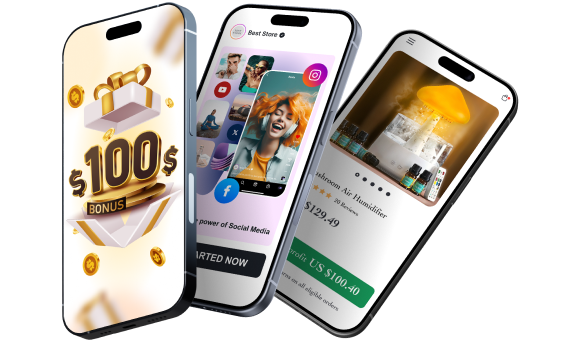
A $100 welcome gift to grow your business faster 🎁
Starting a business takes momentum – and Sellvia gives you a head start. When you claim your free store today, you also get a $100 welcome gift to put toward growing your business. Use it to upgrade your store, boost your marketing, or unlock new tools. It is a real dollar value, handed to you on day one, with no catch and no hoops to jump through.
A massive catalog of digital products to sell 🏆
One of the biggest struggles in starting an online business is figuring out what to sell. Sellvia solves that completely. Your store comes pre-loaded with digital products – guides, courses, checklists, and tools – all created by Sellvia. You keep 50–70% of every sale. No inventory. No shipping. No logistics headaches.
Everything in one easy-to-use platform 🔥
Managing an online store shouldn’t be complicated. With Sellvia, you can handle orders, add new products, and even chat with customers – all from a simple and user-friendly platform. No need to mess with confusing tools or deal with unnecessary tech stuff. It’s all smooth sailing.
No upfront costs, just start selling 💰
A big reason people hesitate to start an online business is the cost. But here’s the good news: With Sellvia, you don’t need to invest in stock, storage, or shipping supplies. You can run your store with no upfront costs, keeping things low-risk while still making money.
Support that’s always got your back 🤝
Running a business comes with questions, but you’re never alone. Sellvia’s dedicated support team is available 24/7 to help with anything you need. Whether it’s a small question or a big challenge, they’ve got you covered.
Of all the types of business models covered in this guide, selling digital products through Sellvia offers beginners the clearest path from zero to a functioning, income-ready store. Claim your free store today and start building your online income.
What are the main types of business models?
Which business model is best for beginners with no money?
Digital product stores are consistently among the best starting points for beginners with minimal capital. Both require little to no upfront investment, no inventory to manage, and can be launched quickly through platforms like Sellvia. A free turnkey store removes the setup barrier entirely, allowing new entrepreneurs to focus on marketing and sales from day one. Most beginners in these models see their first consistent sales within 60 to 90 days of active effort. The 14-day free trial that includes a 40 dollar ad coupon means you can test the model before spending a dollar of your own money.
What is the most profitable business model in 2026?
Profitability depends on effort, niche selection, and model fit. Digital product stores carry strong margins since there are no per-unit supplier costs after setup, and sellers keep 50 to 70 percent of every sale. SaaS has the highest theoretical ceiling but requires significant technical resources and a 12 to 24 month runway before meaningful revenue appears. For most individual entrepreneurs without large starting capital or technical skills, digital product stores and focused online businesses offer the most realistic high-margin returns in 2026. Results vary based on how consistently you market your store and manage your ad spend.
How do types of business models differ in terms of risk?
Risk varies significantly across types of business models. Traditional ecommerce requires upfront inventory investment, meaning unsold stock is a direct financial loss. SaaS demands technical development time and capital with no guarantee of product-market fit. Freelancing carries almost no financial risk but provides no income when you stop working. Digital product stores sit in a low-risk category because there is no inventory to purchase upfront – you only pay order processing fees after a customer has already paid you. This makes it one of the safest starting points for first-time business owners.
Can you run multiple types of business models at the same time?
Yes, running complementary business models simultaneously is a common strategy among experienced online entrepreneurs. A popular combination is freelancing for immediate income while building a digital product store as a long-term asset. The freelancing income covers living costs and ad spend while the store builds momentum over 60 to 90 days. Once the store reaches consistent daily sales, many operators reduce their freelance hours and focus more on scaling the asset-based income stream. Starting with one model and adding a second once the first is stable tends to produce better results than splitting focus equally from the beginning.