If you have been trying to figure out what to sell online, you are not alone. With thousands of product categories, dozens of platforms, and no shortage of conflicting advice, it is easy to feel stuck before you even get started. The good news? You do not need to reinvent the wheel. The products that consistently sell well share a few key traits – and once you know what to look for, the path forward becomes a lot clearer.
Quick answer: The best things to sell online in 2026 are high-margin items with steady demand – think beauty tools, home accessories, pet supplies, fitness gear, and digital products. Many people are already building full-time income selling these products from home, with no experience and no technical background required.
This guide breaks down the top products to sell online this year, how much you can realistically earn, and how to choose the right fit for where you are starting from.
What does “what to sell online” actually mean in 2026?
Choosing what to sell online is not just about picking a popular item. It is about finding the right intersection of demand, margin, and simplicity – especially if you are starting without experience or a big budget. A product that works well for someone with a warehouse and a large advertising team may be the wrong fit entirely for someone working from their kitchen table.
In 2026, the online selling landscape has matured. Competition on general marketplaces like Amazon and eBay has intensified, and margins have compressed for anyone trying to sell commodity products without a clear angle. The opportunity has not disappeared – it has shifted. Focused stores built around a specific audience and a curated product selection consistently outperform general storefronts trying to sell everything to everyone.
Important note: Trend-chasing – jumping from one viral product to the next – is one of the most common mistakes new sellers make. The categories covered below are chosen for sustained demand, not short-lived spikes.
How much can you realistically earn selling online?
Earnings vary widely depending on the product category, how much time you invest, and whether you use paid or organic traffic. Here is a realistic snapshot of what different approaches typically deliver:
An online store with a focused niche remains the lowest-barrier entry point for most beginners. Most people reach their first $500–$1,000/month within 60–90 days of consistent effort, assuming a clear product focus and a reliable way to bring in traffic.
One note on ceiling figures: The upper end of any range above reflects full-time commitment and an established store with steady traffic. Part-time sellers working 10–15 hours per week realistically target $30–$80/day once their store is set up and generating sales.
Top things to sell online in 2026
The categories below are not random picks. They are chosen based on consistent search demand, healthy profit margins, and realistic starting costs for independent sellers. Within each category you will find specific product examples and earning benchmarks.
Beauty and personal care
Beauty remains one of the most resilient product categories in online selling. Buyers purchase beauty products repeatedly, are willing to try new brands from independent stores, and respond strongly to before-and-after content – making social media promotion highly effective here.
Facial tools and skincare devices
LED face masks, gua sha stones, microcurrent devices, and jade rollers have maintained strong demand well beyond any initial viral spike. These items are lightweight, photograph well, and retail at $25–$120 with sourcing costs of $5–$20 – margins that hold up even with advertising costs factored in.
Earning potential: $40–$120/day with a focused skincare tool store running paid or organic social traffic.
Hair care accessories
Silk pillowcases, heat-free curl sets, scalp massagers, and satin-lined bonnets are perennial bestsellers with a broad audience, low return rates, and strong bundling potential to increase average order value.
Nail care and at-home manicure kits
Gel nail kits, UV lamps, nail art supplies, and press-on nail sets have retained a loyal buyer base since 2020. The repeat-purchase nature of nail products makes this category especially attractive for building a returning customer base.
Why this works in 2026: At-home beauty treatments continue to displace salon spending for budget-conscious consumers, and focused independent stores outperform large marketplaces because buyers trust curation over volume.
Home and kitchen
Home and kitchen is one of the most consistently profitable categories for independent online sellers. Products here benefit from high average order values, strong gifting demand, and year-round relevance.
Kitchen organization and storage
Stackable containers, drawer dividers, lazy Susans, spice rack systems, and under-sink organizers have built enormous audiences on Pinterest and YouTube. These items source for $3–$15 per unit and retail for $20–$60, with bundling potential that pushes average orders well above $50.
Portable and space-saving appliances
Mini waffle makers, compact air fryers, portable blenders, and single-serve coffee makers target apartment dwellers, college students, and travelers – an audience actively searching for solutions. Products in this niche sit in a $30–$80 retail range that converts well.
Candles, diffusers, and home fragrance
Home fragrance is a feel-good category with outstanding gifting appeal. Candles, reed diffusers, wax melts, and essential oil blends are lightweight, easy to source, and carry margins of 50–70% when sourced smartly. The category peaks around holidays but sustains solid baseline sales year-round.
Earning potential: $25–$70/day for a home decor or fragrance-focused store with consistent Instagram or Pinterest traffic.
Pet supplies
The global pet care market is projected to exceed $300 billion by 2030, and online pet supply stores consistently see strong repeat purchase rates. Pet owners are emotionally invested buyers – they do not shop purely on price, and they come back.
Interactive toys and enrichment products
Puzzle feeders, snuffle mats, laser toys, and treat dispensers solve a real problem and attract buyers who actively search for solutions rather than browse passively. Margins on these products typically sit at 50–65%, with sourcing costs of $4–$15 and retail prices of $15–$45.
Pet accessories and wearables
Personalized collars, harnesses, pet bandanas, and waterproof dog boots occupy the gift-driven end of the market. These items are frequently shared organically on social media by pet owners, which reduces your paid acquisition costs significantly.
Travel and outdoor pet gear
Collapsible water bowls, pet carrier backpacks, car seat covers for dogs, and portable pet beds target the fast-growing outdoor lifestyle segment. Products here attract buyers willing to pay $40–$120 per item, which expands your margin significantly versus entry-level pet toys.
Fitness and wellness
Home fitness has permanently shifted buyer habits. Even as gyms reopened, a large segment of consumers continued to prefer working out at home – and the market for home fitness gear and recovery tools reflects that directly.
Resistance bands and mobility tools
Resistance bands remain one of the highest-converting fitness products available. They are lightweight, inexpensive to source ($3–$6), universally appealing across fitness levels, and search volume has remained stable for four consecutive years. A resistance band set retails confidently at $18–$35 – a margin structure that is hard to beat.
Recovery and massage tools
Foam rollers, massage guns, acupressure mats, and cold therapy wraps address the post-workout recovery market, which has grown steadily as fitness culture has expanded beyond exercise to include rest and recovery as equal priorities. Massage guns in particular carry retail prices of $40–$90 with sourcing costs of $12–$25.
Yoga and mindfulness accessories
Cork yoga blocks, alignment straps, meditation cushions, and non-slip printed yoga mats appeal to a rich demographic: women aged 25–45, wellness enthusiasts, and professionals managing stress. These buyers shop intentionally and respond well to brand storytelling.
Earning potential: $35–$90/day for a focused fitness accessories store with organic content or targeted Facebook and Pinterest ads.
Baby and kids products
Parents are among the most motivated buyers online. They research extensively, prioritize quality over price in key categories, and make repeat purchases consistently as their children grow – making this a reliable category for any online store.
Educational toys and learning materials
Wooden puzzle sets, sensory bins, shape sorters, and open-ended building toys have surged as parents shift away from screen-heavy entertainment. The educational toy search category on Google has grown consistently for five years. Sourcing costs for quality wooden toys sit at $4–$18, with retail prices of $20–$65.
Baby safety and nursery accessories
Corner guards, outlet covers, drawer locks, and baby monitors are necessity purchases – not discretionary. Buyers here are not comparison shopping for the cheapest option; they are buying the item that looks safest. This creates a pricing dynamic where quality presentation matters more than price matching.
Kids room decor and personalized gifts
Personalized name prints, growth charts, custom night lights, and themed bedding sets are gift-driven purchases with high emotional value and low price sensitivity. These items perform especially well in Q4 but maintain strong sales year-round as baby shower, birthday, and holiday gift purchases.
Tech accessories and gadgets
Consumer electronics accessories are a perennially strong space. Demand is enormous, buyers are always searching for the latest compatible accessory, and new device releases create recurring product refresh cycles that keep stores relevant year after year.
Phone cases and accessories
With new smartphone releases every year, phone case demand resets with every device generation. MagSafe-compatible wallets, ring holders, charging stands, and protective cases are lightweight, cheap to source ($1–$8), and sell at $15–$35 with strong margin. Stores focused on a specific aesthetic consistently outperform generic shops.
Laptop and desk accessories
Laptop stands, cable management systems, USB-C hubs, keyboard wrist rests, and monitor risers target the remote worker and student segments – both of which remain large. Average order values in this subcategory are naturally higher ($30–$90), and buyers often purchase multiple complementary items in a single session.
Portable power and charging solutions
Power banks, solar chargers, multi-port charging stations, and wireless charging pads have become everyday essentials rather than luxury gadgets. This means stable, year-round demand without the volatility that affects trend-driven tech products. Margins of 40–60% are achievable with reliable sourcing.
Earning potential: $30–$80/day for a focused tech accessories store with consistent paid or organic traffic.
Legal and ethical considerations when selling online
Online selling is a legitimate business – and like any business, it comes with responsibilities that protect both you and your customers. Getting this right from the start prevents costly problems later.
Product safety and compliance
Some product categories – especially baby items, electronics, and supplements – are subject to safety regulations and certification requirements. Before listing any product in these categories, verify that your supplier can provide relevant certifications (CE, ASTM, FDA compliance where applicable).
Key principle: If a product makes a health or safety claim, verify that claim is supported by documentation before listing it in your store.
Intellectual property and counterfeit goods
Never source or sell products that replicate branded items – counterfeit goods, replica designer products, or items bearing unlicensed trademarks. This applies equally to custom-printed products: using sports team logos, movie characters, or copyrighted artwork without a license is infringement, not a grey area. Platforms will remove listings and suspend accounts for these violations.
Transparent pricing and return policies
Customers have a right to clear pricing, accurate product descriptions, and accessible return policies. Publishing a clear returns policy reduces chargebacks and builds trust. Misleading descriptions – overstating dimensions, omitting key limitations – generate disputes that hurt your reputation across every platform.
Tax obligations
Online sellers in the US are subject to sales tax collection requirements that vary by state. Most states now require collection above certain thresholds under economic nexus laws. Treating tax compliance as optional is a risk no serious seller should take.
How to choose what to sell online based on your situation
There is no universally “best” product to sell online – only the best product for your situation. Here is how to think through the choice depending on where you are starting from.
Complete beginner
If you are starting with limited capital and no prior experience, choose a lightweight, low-cost category with strong visual appeal – beauty tools, home organization, or pet accessories. These categories require minimal customer education, have reliable supplier availability, and perform well on social platforms where organic traffic is achievable. Start with a focused product selection rather than trying to sell everything at once.
Intermediate / part-time seller
If you have some experience or budget and are targeting $500–$2,000/month as a part-time income, explore higher-margin categories like fitness gear, tech accessories, or baby products. Running small-budget ad campaigns ($5–$20/day) alongside content creation accelerates results. Consider digital products as a complementary line to increase your catalog without any inventory risk.
Advanced / full-time goal
If your goal is full-time income ($3,000–$10,000+/month), your product strategy needs to go beyond trend-chasing. This means identifying a niche where you can build a store that a customer remembers and returns to. A focused brand identity, combined with a systematic content and ad strategy, is the path most full-time sellers follow. Plan for 90–180 days of consistent effort before hitting sustainable full-time income levels.
Regardless of your experience level, the single most common mistake is spreading too wide too fast. The online sellers making the most money in 2026 are not selling everything – they are selling fewer things to a clearly defined audience, better than anyone else in that space.
Why Sellvia is a game-changer for your online store 🚀
Sellvia isn’t just another ecommerce tool. We are a trusted name in the industry, recognized by Forbes and even ranked in Inc.’s list of the 5,000 fastest-growing companies in the U.S. So if you’re serious about starting as a solopreneur, this is a smart place to begin.
Starting an online business can feel overwhelming, but that’s exactly where Sellvia steps in. It takes care of the tricky parts, so you can focus on making sales and growing your brand. Let’s break down what makes it such a great choice.
Get a ready-to-go store hassle-free 🎯
Want to start selling but don’t know where to begin? No worries! Just share your ideas, and Sellvia’s team will build a free ecommerce website that’s fully set up and ready to take orders from day one. No coding, no stress – just a store that works right out of the box.
A $100 welcome gift to grow your business faster 🎁
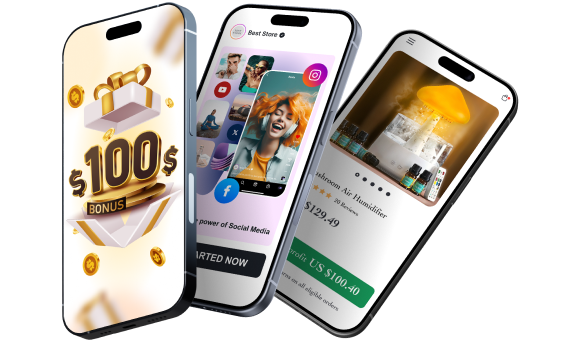
Starting a business takes momentum – and Sellvia gives you a head start. When you claim your free store today, you also get a $100 welcome gift to put toward growing your business. Use it to upgrade your store, boost your marketing, or unlock new tools. It is a real dollar value, handed to you on day one, with no catch and no hoops to jump through.
A massive catalog of digital products to sell 🏆
One of the biggest struggles in starting an online business is figuring out what to sell. Sellvia solves that completely. Your store comes pre-loaded with digital products – guides, courses, checklists, and tools – all created by Sellvia. You keep 50–70% of every sale. No inventory. No shipping. No logistics headaches.
Everything in one easy-to-use platform 🔥
Managing an online store shouldn’t be complicated. With Sellvia, you can handle orders, add new products, and even chat with customers – all from a simple and user-friendly platform. No need to mess with confusing tools or deal with unnecessary tech stuff. It’s all smooth sailing.
No upfront costs, just start selling 💰
A big reason people hesitate to start an online business is the cost. But here’s the good news: With Sellvia, you don’t need to invest in stock, storage, or shipping supplies. You can run your store with no upfront costs, keeping things low-risk while still making money.
Support that’s always got your back 🤝
Running a business comes with questions, but you’re never alone. Sellvia’s dedicated support team is available 24/7 to help with anything you need. Whether it’s a small question or a big challenge, they’ve got you covered.
Knowing what to sell online is the first step – having a store that sells it for you is the second. Get your free store today and start earning from the products people are already buying.