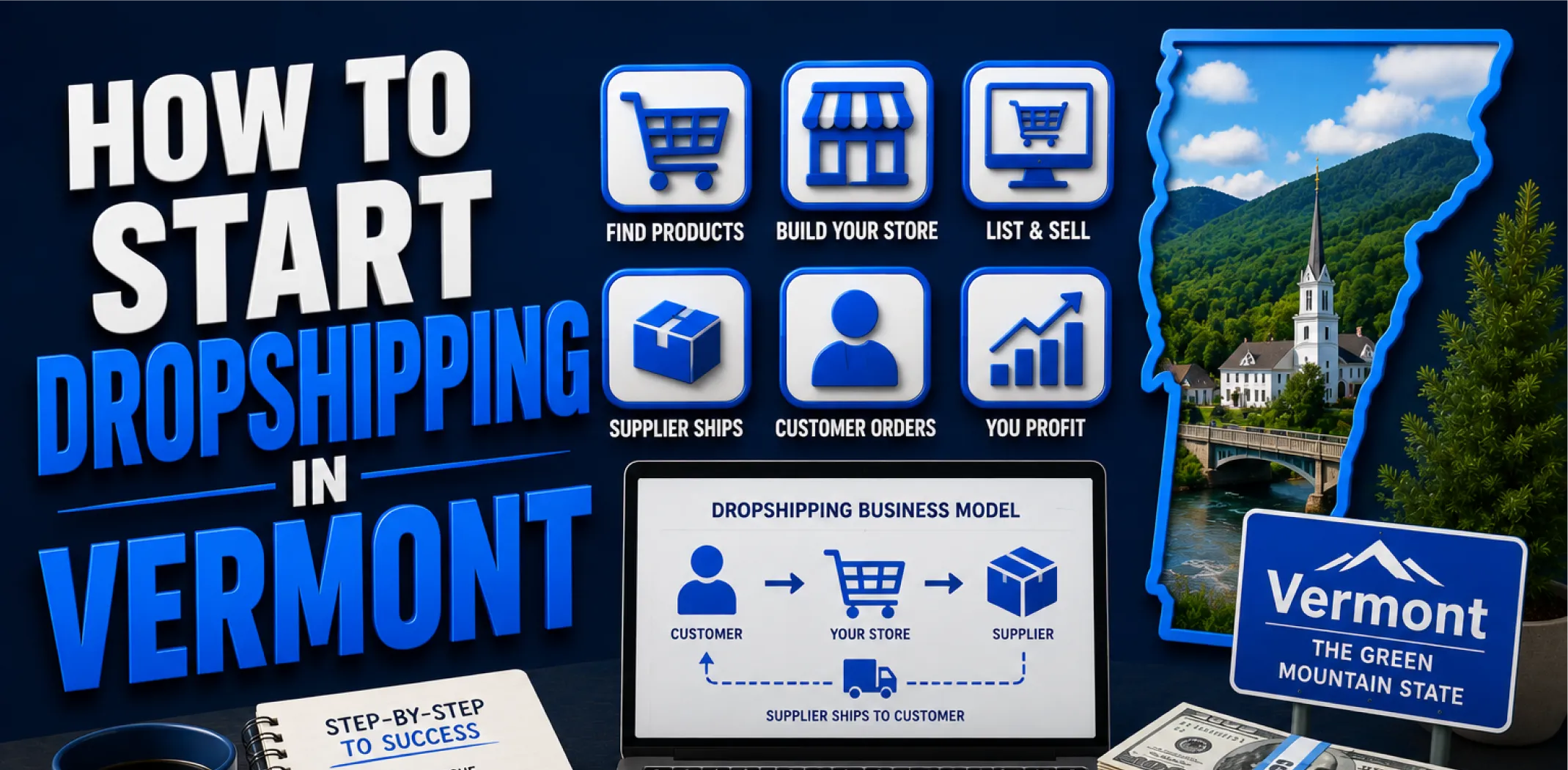
A lot of Vermont residents searching for ways to start an online product business from home land on the same idea: find a supplier, list products, take orders, and let someone else handle the shipping. It sounds simple on paper.
The reality is more complicated – supplier relationships take time to build, margins on physical products are often razor-thin, and logistics eat into profit fast. If you have been looking into starting an online product business in Vermont, there is a model worth understanding that removes most of those headaches entirely.
Selling digital products online skips the supplier, the inventory, and the shipping altogether. A customer pays, a product is delivered instantly, and you keep 50–70% of the sale. No warehouse. No fulfillment delays. No returns on damaged goods.
For Vermont residents – especially those in rural areas where logistics are already a friction point – this model is worth a serious look before committing to anything more complicated.
Quick Answer: Starting an online product business in Vermont is straightforward. You can operate as a sole proprietor with no state registration fee, Vermont has a 6% sales tax rate with most digital products currently exempt, and platforms like Sellvia let you launch a fully built store with 1,000 ready-made digital products on a free 14-day trial. The digital products model outperforms physical product selling on startup cost, margin, and complexity for most Vermont beginners.
Why online selling works in Vermont
Vermont may be the second-least-populated state in the country, but its residents are highly connected online. Approximately 87% of Vermont households have internet access – one of the higher broadband adoption rates in New England – and the state has invested heavily through the Vermont Community Broadband Board to close remaining rural coverage gaps.
That connectivity matters: running an online business from a farmhouse in Addison County or a small town in the Northeast Kingdom is genuinely viable in a way it was not a decade ago.
Vermont’s median household income sits at around $67,600 according to U.S. Census Bureau data – below the national median of roughly $74,500. That gap is felt across the state, particularly in areas where the local job market leans heavily on seasonal tourism, agriculture, and healthcare.
Many Vermonters are not looking to get rich quickly – they are looking for a reliable income source that does not depend on a single employer or a seasonal economy.
Online retail adoption among Vermont consumers continues to grow. Rural Vermonters in particular shop online at high rates because driving 30 to 60 minutes to the nearest retail center is a regular part of life.
That same consumer behavior – comfort with online transactions, familiarity with digital purchases – translates directly into demand for online sellers. The market is there. The question is which model best fits the Vermont context.
Digital products fit Vermont well for a specific reason: there are no logistics involved. No supplier in another state. No shipping delays caused by Vermont winters. No fulfillment costs that scale with every order. The product is created once and delivered automatically every time it sells – whether you are in Burlington or Barton.
Online business models for Vermont residents – a real comparison
Before committing to any model, it helps to see them side by side. Here is an honest comparison of the four most common ways Vermont residents start selling online – what each requires, and what you can realistically earn.
The physical product model carries the most complexity and the lowest margin per sale. Affiliate marketing is genuinely passive once established but takes the longest to produce meaningful income.
Freelancing is fast to start but permanently tied to your time. The digital product store model combines a low barrier to entry with one of the higher earning ceilings – and for someone starting with no experience in Vermont, that combination is hard to beat.
Tax considerations for online sellers in Vermont
Vermont’s tax picture for online sellers is manageable, but there are a few things worth understanding before your first sale.
Sales tax rate: Vermont charges a 6% state sales tax. However, most downloadable digital products – guides, courses, checklists, software tools – are currently exempt from Vermont sales tax under state law. Vermont follows the Streamlined Sales and Use Tax Agreement, and purely digital delivered goods generally do not trigger a collection obligation.
That said, the rules can depend on the specific product category, so confirm your product type with the Vermont Department of Taxes at tax.vermont.gov before scaling.
Economic nexus threshold: Vermont requires out-of-state sellers to collect sales tax once they exceed $100,000 in annual Vermont sales or 200 separate transactions in a calendar year. For most new online sellers, this threshold is not a concern in the first year – but it is worth knowing as your business grows.
Marketplace facilitator law: Vermont has a marketplace facilitator law, which means that if you sell through a qualifying marketplace platform, the platform is responsible for collecting and remitting Vermont sales tax on your behalf. If you are selling through your own independent store, that obligation falls to you once you exceed the nexus threshold.
Income tax: Vermont has a graduated state income tax. Online business earnings are taxed as personal income for sole proprietors. Rates start at 3.35% and rise to 8.75% for higher income brackets. Federal self-employment tax adds another 15.3% on net earnings. Setting aside 25–30% of your online income for taxes from the start is a sound practice.
If you expect to owe more than $1,000 in Vermont taxes for the year, quarterly estimated payments are required – typically due in April, June, September, and January.
Key principle: Track every business expense from day one – platform fees, advertising spend, and any tools you pay for are all potentially deductible against your taxable income.
See your state tax breakdown at a glance
Simply enter your annual net profit, select your state, and the calculator will instantly generate a detailed tax breakdown while showing how your state’s tax burden compares to others.
How to register your online business in Vermont
Vermont keeps business registration relatively simple, especially for online businesses just getting started.
A sole proprietorship operating under your legal name requires no formal state registration and no filing fee. You can begin selling online today without submitting a single form to the state. If you want to operate under a business name, you file a DBA (“doing business as”) with your county clerk’s office – typically under $20 depending on the county.
An LLC costs $125 to file online through the Vermont Secretary of State, with processing typically completed within 1–3 business days. An LLC provides personal liability protection and a more formal business structure. Annual reports cost $35 and are due by March 15 each year. Most first-time online sellers start as sole proprietors and move to an LLC once they are generating consistent income.
Vermont does not require a general state business license for most online businesses. Selling digital products online does not typically require any additional permits beyond your business structure registration.
You can register your business and check name availability through the Vermont Secretary of State at sos.vermont.gov/corporations/starting-a-business/.
Step-by-step guide to starting an online product business in Vermont
Once you understand the landscape, the actual steps to launch are more straightforward than most people expect. Here is a practical guide built for Vermont residents starting from scratch.
Step 1: Choose what to sell
This is where most people get stuck. The instinct is to spend weeks researching niches, comparing products, and trying to predict what will sell. The faster path is to start with a model where the products are already chosen and validated for you.
Digital products – guides, courses, checklists, tools – have no production cost per unit and no logistics complexity. Every sale is pure margin. If you are starting with no experience and no product ideas, a platform that provides ready-made products removes the single biggest decision most new sellers face. You can refine your niche over time once you have real data from real customers.
Why this works in 2026: The global digital content market continues to grow, and Vermont consumers – like consumers everywhere – are comfortable purchasing and receiving products digitally. Demand is not the problem. Getting your store in front of the right audience is.
Step 2: Register your business in Vermont
For most beginners, start as a sole proprietor. It costs nothing, requires no paperwork with the state, and lets you begin immediately. Register a DBA at your county clerk if you want a business name. Plan to form an LLC once you are generating $1,000+ per month consistently – the $125 filing fee is worth the liability protection at that point.
For a full breakdown of Vermont registration requirements, business structure options, and tax obligations, see our complete guide on how to start an online business in Vermont.
Step 3: Set up your store
Your store is your storefront. For digital products, you need a platform that handles automatic delivery – so when a customer buys, they receive their product instantly without any manual action from you. Sellvia’s free 14-day trial gives you a fully built store pre-loaded with 1,000 digital products, no coding required, no design work needed. You can be live and ready to take orders within a day.
After the trial, the monthly plan is $39 – roughly $1.30 per day. Most sellers who activate the built-in advertising system see their first orders during the trial period itself.
Step 4: Handle Vermont taxes
Before your first sale, set up a simple system for tracking income and expenses. A free spreadsheet works fine at the start. Open a separate bank account for your business income – even a free checking account – so your business and personal finances stay separate from day one.
Set aside 25–30% of every payment for taxes. Register for a Vermont Business Tax Account if you expect to exceed the sales tax nexus threshold – you can do this at tax.vermont.gov/business/register.
Step 5: Start marketing and making sales
A live store with no traffic earns nothing. Marketing is what bridges the gap between being open and making sales. Sellvia includes a built-in advertising system – set a daily budget between $10 and $50, activate with one click, and the system drives targeted traffic to your store. No marketing expertise required. Many customers who activate ads see orders on the same day.
Beyond paid ads, consistent social media posting, engagement in online communities relevant to your niche, and basic search optimization all build organic traffic over time. Start with one channel, do it consistently for 30 days, and measure the results before adding more.
Best niches for Vermont online sellers
Vermont has a distinct culture and economy, and the best niches for Vermont online sellers reflect that. Here are five that align well with the state’s demographics and the digital products model.
Outdoor and rural living
Vermont’s outdoor culture – hiking, skiing, hunting, fishing, homesteading, maple production – creates strong demand for practical guides and how-to content.
Digital products in this niche (guides to homesteading basics, seasonal preparation checklists, outdoor skills resources) connect directly with Vermont’s existing consumer interests and translate well to a national audience of people with similar lifestyles. Vermont sellers have authentic credibility in this space.
Personal finance and budgeting
With a median household income below the national average and a cost of living that includes significant heating and housing expenses, Vermont consumers are actively looking for practical financial guidance. Budgeting guides, debt management tools, and savings planning resources address a genuine need – and this niche has broad national appeal beyond Vermont’s borders.
Health and wellness
Vermont consistently ranks among the healthiest states in the country and has a strong culture around fitness, nutrition, and mental wellness. Digital products in this niche – workout guides, meal planning tools, stress management resources – have proven consistent demand nationally and fit well with Vermont’s health-conscious consumer base.
Remote work and career development
Vermont has seen significant growth in remote workers relocating to the state over the past several years, drawn by quality of life and lower housing costs relative to Boston and New York. This population actively seeks career development resources, productivity tools, and remote work guides. Selling digital products in this niche targets both new Vermont residents and the national remote work audience simultaneously.
Education and skill building
Vermont has a highly educated population – roughly 40% of Vermont adults hold a bachelor’s degree or higher according to U.S. Census data. Demand for skill-building courses, professional development guides, and learning resources is strong. Digital products in this category – from language learning tools to professional writing guides – sell consistently and require no ongoing updates from you once created.
Common challenges for Vermont online sellers
Understanding the obstacles ahead of time makes them easier to navigate. Here are the most common challenges Vermont residents face when starting an online product business – and practical solutions for each.
Challenge 1: Rural internet reliability
Vermont has made significant investments in broadband expansion, but coverage gaps still exist in parts of the Northeast Kingdom, southern Vermont, and more remote rural areas. An unreliable connection can disrupt your ability to manage your store, run ads, and respond to customers.
Before committing to an online business model, verify your coverage at computervt.org. If your home connection is inconsistent, a mobile data backup plan costs $20–$40/month and can serve as a reliable fallback. Solving the connectivity problem before you start is far less stressful than troubleshooting it after your store is live.
Challenge 2: Knowing what to sell and where to start
The decision paralysis around product selection is the most common reason people delay starting an online business indefinitely. The practical solution is to start with a model that removes that decision entirely.
A store pre-loaded with 1,000 digital products across multiple niches lets you launch immediately and learn from real customer behavior which products resonate – rather than spending months guessing before you ever make a sale.
Challenge 3: Seasonal income expectations
Vermont’s economy runs on seasons – tourism peaks in fall and winter, construction picks up in spring and summer, and everything slows down in mud season. Many Vermont residents unconsciously apply that seasonal thinking to their online business expectations.
The reality is that digital product sales are not seasonal. Demand for guides, courses, and tools runs year-round, and your online store does not take a mud season break. Set consistent daily habits rather than seasonal pushes, and your results will reflect that consistency.
Resources for Vermont online sellers
Vermont has a strong support network for small business owners. These are the most useful resources for someone starting an online product business in the state.
Vermont Small Business Development Center (VtSBDC) – Free one-on-one advising for online business owners. Locations statewide including Burlington, Rutland, and St. Johnsbury. vtsbdc.org
SCORE Vermont – Free mentorship from experienced business professionals. In-person and virtual sessions available. Particularly useful for first-time sellers who want guidance before launching. vermont.score.org
SBA Vermont District Office – Free business counseling, workshops, and access to loan programs. Based in Montpelier. sba.gov/offices/district/vt/montpelier
Vermont Secretary of State – Business Services – Official portal for business registration, LLC filing, and annual reports. sos.vermont.gov/corporations/
Vermont Department of Taxes – Guidance on income tax and sales tax obligations for online sellers. tax.vermont.gov/business
Vermont Economic Development Authority (VEDA) – Microloan and working capital programs for Vermont small businesses. Worth exploring once your business is generating consistent revenue. veda.org
Why Sellvia is a game-changer for your online store 🚀
Sellvia isn’t just another ecommerce tool. We are a trusted name in the industry, recognized by Forbes and even ranked in Inc.’s list of the 5,000 fastest-growing companies in the U.S. So if you’re serious about starting as a solopreneur, this is a smart place to begin.
Starting an online business can feel overwhelming, but that’s exactly where Sellvia steps in. It takes care of the tricky parts, so you can focus on making sales and growing your brand. Let’s break down what makes it such a great choice.
Get a ready-to-go store hassle-free 🎯
Want to start selling but don’t know where to begin? No worries! Just share your ideas, and Sellvia’s team will build a free ecommerce website that’s fully set up and ready to take orders from day one. No coding, no stress – just a store that works right out of the box.
1,000 digital products ready to sell from day one 🎁
Not sure what to sell? Sellvia solves that instantly. Your store comes pre-loaded with 1,000 ready-made digital products – guides, courses, checklists, and tools – all created by Sellvia. No writing, no recording, no product creation needed. Just pick your niche, and the products are already there waiting for your first customer.
A massive catalog of digital products to sell 🏆
One of the biggest struggles in starting an online business is figuring out what to sell. Sellvia solves that completely. Your store comes pre-loaded with digital products – guides, courses, checklists, and tools – all created by Sellvia. You keep 50–70% of every sale. No inventory. No shipping. No logistics headaches.
Everything in one easy-to-use platform 🔥
Managing an online store shouldn’t be complicated. With Sellvia, you can handle orders, add new products, and even chat with customers – all from a simple and user-friendly platform. No need to mess with confusing tools or deal with unnecessary tech stuff. It’s all smooth sailing.
No upfront costs, just start selling 💰
A big reason people hesitate to start an online business is the cost. But here’s the good news: With Sellvia, you don’t need to invest in stock, storage, or shipping supplies. You can run your store with no upfront costs, keeping things low-risk while still making money.
Support that’s always got your back 🤝
Running a business comes with questions, but you’re never alone. Sellvia’s dedicated support team is available 24/7 to help with anything you need. Whether it’s a small question or a big challenge, they’ve got you covered.
Vermont residents who want to sell online without the complexity of physical products and logistics now have a faster, smarter path available. Get your free store with 1,000 digital products ready to sell.
How do I start an online store in Vermont?
Do I need a business license to sell online in Vermont?
Vermont does not require a general state business license for most online businesses. A sole proprietor operating under their legal name can begin selling immediately without any formal state registration. If you want to use a business name, a DBA filing with your county clerk typically costs under 20 dollars. An LLC costs 125 dollars to register with the Vermont Secretary of State and provides personal liability protection. Certain regulated industries require specific permits, but selling digital products online does not typically require any additional licensing beyond your business structure.
How much does it cost to start an online store in Vermont?
Startup costs for an online store in Vermont depend on your business structure and the platform you choose. Operating as a sole proprietor with no business name costs nothing to register. An LLC costs 125 dollars to form plus 35 dollars per year in annual report fees. A Sellvia free trial lets you launch a fully built store with 1,000 products at no cost for 14 days. After the trial, the monthly plan is 39 dollars. Most digital product sellers cover that monthly cost within their first few sales, and the total first-year cost for a solo online seller is far lower than starting a physical product business.
What do online sellers pay in taxes in Vermont?
Vermont online sellers owe state income tax on their earnings at graduated rates starting at 3.35 percent. Federal self-employment tax adds 15.3 percent on net earnings. Vermont has a 6 percent sales tax, but most downloadable digital products are currently exempt under Vermont law. Vermont requires online sellers to collect sales tax only after exceeding 100,000 dollars in annual Vermont sales or 200 transactions in a calendar year. Most new sellers do not reach this threshold in their first year. Setting aside 25 to 30 percent of online income for taxes from the start is a sound habit.
What is the easiest online business to start in Vermont?
The easiest online business to start in Vermont for someone with no experience is a digital product store. It requires no product creation, no supplier relationships, no inventory management, and no fulfillment logistics. Platforms like Sellvia build the store for you and load it with 1,000 ready-made products. You keep 50 to 70 percent of every sale, delivery is instant and automated, and you can be live within a day of signing up. For Vermont residents who want to start earning online without a steep learning curve, this model has the lowest barrier to entry of any serious income option available.


